Matthew 11
Ġaġek Mewis · Tap a verse to see its cross-references.
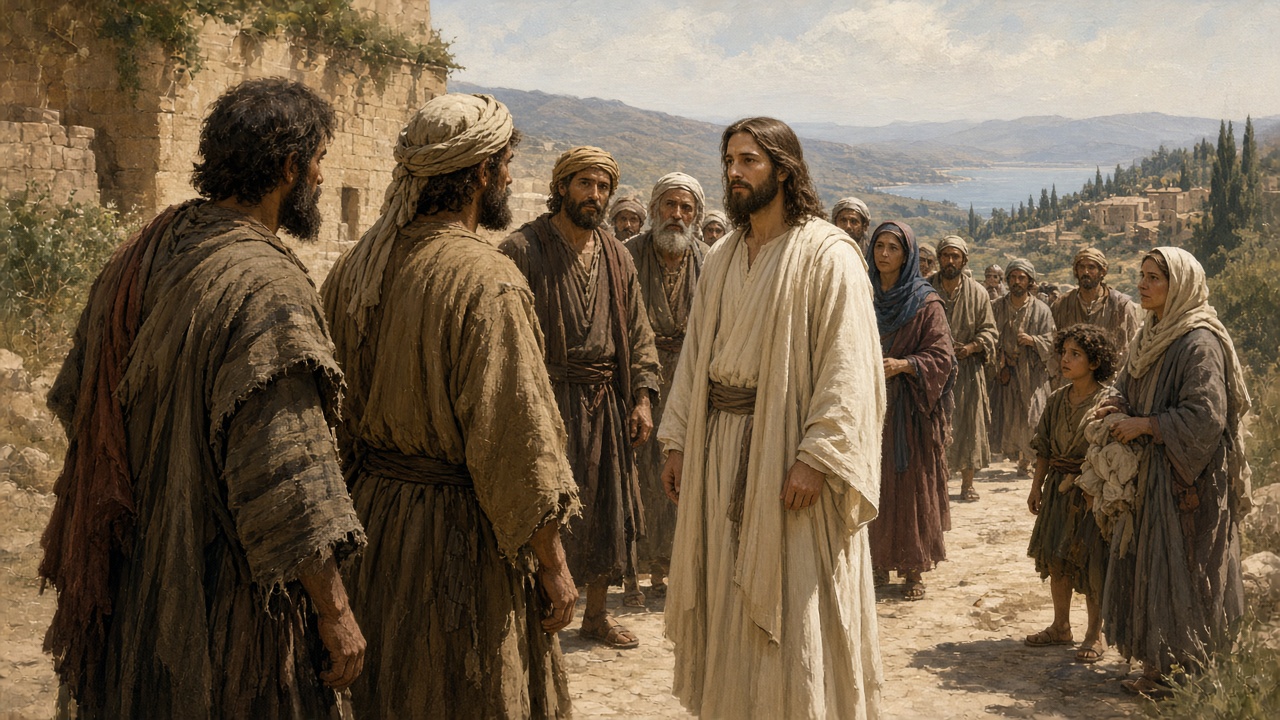
Mehö-neripek-alam Jon Vonġ Yi Hur Maluh Deya Vu Yesu
1Yesu nër ġaġek saga vu yi hur maluh nemadluho-bevidek-luu ggovek, log kedi raḳ beya begganġ-bu sën deneggëp dus vu nyëġ saga in bë tateḳin ġaġek vu sir.
2Log Mehö-neripek-alam Jon nedo ḳarabus genġo nġaa böp sën Kerisi* nevonġ lo bengö, lob vonġ yi hur maluh la deya vu Yesu in bë dedoḳ tepëḳ in yi nabë, 3“Maḳ honġ mehö sën Jon nër bengöm bë rëḳ ġenam lo sënë, ma he rëḳ medo ġeġin yi rë?”
4Lob Yesu nër yah vu sir bë, “Ham nah mena nanër nġaa sën ham nġo los ham lë lo vu Jon nabë, 5alam malaj ḳenod denelë nyëġ ggökin, galam vahaj paya deneya aggata, galam nij sevuuḳ nij veseek neraḳ galam nengaj mir denenġo ġaġek, galam sën denediiḳ lo vesaj neloḳ yah, log alam sën denedo paya in nġaa navij yi lo denenġo Bengö Nivesa. 6Mehöti sën su kwa luu luu in sa rë lo, og kwa vesa!”
Yesu Vonġ Tepëḳ Raḳ Nġaa Nġahiseḳë In Jon
7Lob Jon yi hur maluh deyah loḳ mëm Yesu yom nër Jon degwa vu alam yu böpata saga nebë, “Wirek ham ya nyëġ-yumeris in bë ham gwelë mehö nebë va? Ham bë gwelë ayööng neḳo dee menekepë yah geneyom-a? 8Ma ham ya in bë gwelë mehö nebë va? Ham bë gwelë mehöti neröp tob niyes mala nġeri nġeri? Ma! Alam sën deneröp tob niyes nebë saga, og denedo alam-los-bengöj bej. 9Ma ham ya in bë gwelë mehö nebë va? Mehö-nenër-ġaġek-ranġahsën ti? Ëë, om mëm sa nanër vu ham nabë mëm yi mehö-nenër-ġaġek-ranġahsën bekesuu alam-denenër-ġaġek-ranġahsën lo pin. 10Yiḳ mehö saga sën dekevu ġaġek raḳ yi loḳ Anutu-yi-ḳapiya nebë:
‘Gwenġo rë! Sëḳ ġevonġ sa hur ti namuġin,
mena negetonġin aggata in honġ!’
11Sa nanër vu ham yönon nabë Mehö-neripek-alam Jon arë böp rot kesuu alam pin sën ataj neḳo sir vu dob agi. Rëḳ mu alam sën denesepa loḳ sa bedenetu Anutu-yi-alam lo pin, og rëḳ dekesuu Jon. 12Loḳ buk sën Mehö-neripek-alam Jon yam dob lo, lob nġaa maggin vonġin bë kepë Nyëġ-yaġek-yi beyam verup gwëbeng, galam nijpaya denesis beġö vu Nyëġ-yaġek-yi niwëëk ata benij wëëk rot in bë deduḳ na medegeḳo. 13Ġaġek pin sën alam-denenër-ġaġek-ranġahsën dekevu lo los horek pin, neggëp in mala negët Jon sënë. 14Lob ham bë jaḳ ni nabë saga, og ham gwevonġ geving mehö sënë lo nabë Elia sën denenër bë rëḳ nom lo. 15Mehöti bë nenga neggëp, og genġo sa ġaġek. 16Ma sëḳ tateḳin ham alam buk sënë jaḳ va? Ham nebë hurmahen sën ggëp deneggök telig bedenetahi hurmahen vahi bë:
17‘He nasis ggaġeng rëḳ ma
geham su nelöö rë.
Gehe nasu kwamin paya paya,
rëḳ ham su nesu menepengah ham rë.’
18In Mehö-neripek-alam Jon yam, lob su negga nos los nenum wain rë, rëḳ ham nër yi nebë, ‘Memö neloḳ vu yi!’ 19Lob Mehönon Nalu yam benegga los nenum, lob ham nër yi bë, ‘Ham gwelë mehö sënë! Mehö ahëta los nenum wain panġsën, alam-deneḳo-takës* losho alam nijpaya hir mehö yi!’ Rëḳ mu nabë hil ġalë Anutu yi huk og hil ajaḳ ni nabë yi mehö los kwa.”
Yesu Kwa Pesivin Alam Sën Su Denevonġ Ving Rë
20Log Yesu vonġ ġaġek raḳ nyëġ vahi sën nevonġ nġaa böp nġahiseḳë loḳ rëḳ su deneggërin sir yah vu Anutu rë lo nebë, 21“Wöp-o! Ham Korasin! Gëp in ham! Ham Betsaida! Gëp in ham! Bë mehöti gevonġ nġaa böp gëp alam Ture los Sidon hir nyëġ nabë sën sa hevonġ loḳ ham nyëġ agi, og rëḳ ayoj maggin in devonġ nġaa nipaya medegërin sir nom, medegeyeh vahek duum gededev tamut jak sir gedemedo doḳ vewev degwa. 22Om sa nanër vu ham nabë, doḳ Buk-nyëvewen-yi, og ham rëḳ gweḳo maggin böpata rot kesuu alam Ture los Sidon. 23Geham alam Kapernaum, ham bë kwerë ham jaḳ na vavunë? Ma! Rëḳ ham duḳ na Nyëġ-nengwah-yi. Bë mehöti gevonġ nġaa böp gëp Sodom nabë sën sa hevonġ ggëp ham nyëġ lo, og rëḳ Sodom nahën medo rot beberup doḳ buk sënë. 24Om sa nanër vu ham nabë doḳ Buk-nyëvewen-yi, og ham rëḳ gweḳo maggin böpata rot kesuu Sodom hir maggin!”
Yesu Nër Bë, “Ham Nam Vu Sa Mesewah”
25Vu buk saga Yesu jom raḳ bë, “O Amaġ! Honġ Mehöböp vu yaġek los dob. Sahëġ nivesa rot vu honġ in nġaa pin sënë neggëp vunsën in alam los kwaj, gaḳ ġetato vu alam sën su deluḳ dub böp rë lo. 26Yönon Amaġ! In yiḳ nġo kwam nevo bë gwevonġ nabë saga in nivesa.” 27Log nër ving bë, “Amaġ vo nġaa pin loḳ yam sa nemaġ ggovek ya. Gemehöti su raḳ Nalu ni rë, gaḳ Ama yö timu raḳ ni. Gemehöti su raḳ Ama ni rë, gaḳ yiḳ Nalu yö timu raḳ ni. Galam sën Nalu tato Ama vu sir lo, og deraḳ ni ving. 28Ham sën nekwerë nġaa maggin, beham nevimengin menedo lo, ham pin nam vu sa, in sa ġaḳo maggin vër in ham geham sewah. 29Ham natu sa hur, beham gweḳo kwa vu sa. In sa mehö malaġ yes, gesa su nehaḳo sa raḳ loḳ ayoġ rë, lob ham ayomin rëḳ geto megëp revuh. 30Kë! Huk sën sebo vu ham lo saga su rëḳ deġinengin ham rë, genġaa maggin sën sëḳ ġevonġ vu ham in ham kwerë lo, saga yiḳ sepëp!”
Did you know?
John's question and the cities that did not repent
- From prison, John sent his disciples to ask whether Jesus was the one who was to come. Jesus told the crowds that John was more than a prophet—the messenger sent ahead to prepare the way—and, if they were willing to accept it, the Elijah who was to come. A Bible dictionary calls John the forerunner and says his mission was already the subject of prophecy, citing Isaiah 40:3 and Malachi 3:1; it also introduces Elijah as the Elias of the New Testament.Sources: the Bible text itself · John the Baptist · Elijah
- Jesus then denounced Chorazin, Bethsaida, and Capernaum, where most of his miracles had been performed, because they did not repent. A dictionary identifies Chorazin with modern Kerazeh, about two and a half miles up the Wady Kerazeh from Capernaum, and says that Capernaum, absent from the Old Testament, became Jesus' own city after he left Nazareth. It places Bethsaida on the east side of the lake, two miles up the Jordan in Gaulonitis, enlarged by Philip the tetrarch and named Julias after the emperor's daughter, though some have supposed there was only one Bethsaida, near where the Jordan enters the lake.Sources: the Bible text itself · Chorazin · Capernaum · Bethsaida
- He set those cities against Tyre and Sidon, which he said would have repented long ago in sackcloth and ashes, and against Sodom, which he said would have remained to this day. Sidon, on the Mediterranean coast about twenty-five miles north of Tyre, was the oldest Phoenician city there and the mother city of Tyre. A dictionary says the commerce of the whole world was gathered into Tyre's warehouses, and that Sodom, in the vale of Siddim, was destroyed by fire from heaven so completely that no trace of it has been found.Sources: the Bible text itself · Sidon · Tyre · Sodom
Notes written with AI assistance from open sources (Theographic Bible Metadata, CC BY-SA 4.0; Easton’s Bible Dictionary, public domain) and reviewed before publishing.
Places in this chapter
- Galilee · 32.760, 35.527 · verse 1
- Sidon · Today: Sandikli archaeological site in Sidon · 33.561, 35.372 · verses 21, 22
- Tyre · 33.271, 35.196 · verses 21, 22
Only places identified with high confidence are shown (90% or more according to the scholarly sources compiled by OpenBible). Period map: DARE (Digital Atlas of the Roman Empire), CC BY 4.0; modern map: © OpenStreetMap contributors; places: OpenBible.info (CC BY 4.0).
Credits and license for this translation
Ġaġek Mewis
The New Testament in the Central/Mapos dialect of the Buang language of Papua New Guinea
Nupela Testamen long tokples Buang Mapos long Niugini
Copyright © 2003 The Bible Society of Papua New Guinea
Language: Buang, Central/Mapos (Buang)
Dialect: Central/Mapos
Translation by: Wycliffe Bible Translators
This translation is made available to you under the terms of the
Creative Commons Attribution-Noncommercial-No Derivatives license 4.0.
You may share and redistribute this Bible translation or extracts from it in any format, provided that:
You include the above copyright and source information.
You do not sell this work for a profit.
You do not change any of the words or punctuation of the Scriptures.
Pictures included with Scriptures and other documents on this site are licensed just for use with those Scriptures and documents.
For other uses, please contact the respective copyright owners.
2015-01-02
Source: http://png.bible/bzh/ · eBible.org