Genesis 5
Tte Pa̱'a̱li̱ Me' Skëköl tö Se' a̱ · Tap a verse to see its cross-references.
Adán aleripa
1Mik Skëköl tö s'ditsö tsá̱ yö', eta̱ iyuéitö we̱s ie' wák es. Ie'pa yuéitö wëm ena alaköl. Ie' e̱r buaë ché ie'pa a̱. Ie' tö ie'pa yué, e' diwö shà̱ ta̱ ikiè méka̱itö s'ditsö. I' dör Adán aleripa e'pa kiè.
3Mik Adán ki̱ duas de cien eyök ki̱ dabom mañayök (130), eta̱ ie' alà ku̱ne eköl, e' dör we̱s ie' wák es, ikiè méka̱itö Set. 4E' ukuöki̱ ta̱ ie' kí̱ se̱neia̱ duas cien paryök (800). E' shu̱a̱ ie' ala'r kí̱ ku̱ne wëpa ena alakölpa. 5Es ie' ki̱ duas deka̱ se̱raa̱ cien su̱li̱yök ki̱ dabom mañayök (930) eta̱ ie' blënewa̱.
6Mik Set ki̱ duas de cien eyök ki̱ ske̱l (105), eta̱ ie' alà wëm kiè Enós, e' ku̱ne. 7E' ukuöki̱ ta̱ ie' kí̱ se̱neia̱ duas cien kuryök ki̱ kul (807). E' shu̱a̱ ie' ala'r kí̱ ku̱ne wëpa ena alakölpa. 8Es ie' ki̱ duas deka̱ se̱raa̱ cien su̱li̱yök ki̱ dabom eyök ki̱ bök (912) ta̱ iblënewa̱.
9Mik Enós ki̱ duas de dabom su̱li̱yök (90), eta̱ ie' alà wëm kiè Cainán, e' ku̱ne. 10E' ukuöki̱ ta̱ ie' kí̱ se̱neia̱ duas cien paryök ki̱ dabom eyök ki̱ ske̱l (815). E' shu̱a̱ ie' ala'r kí̱ ku̱ne wëpa ena alakölpa. 11Es ie' ki̱ duas deka̱ se̱raa̱ cien su̱li̱yök ki̱ ske̱l (905) ta̱ iblënewa̱.
12Mik Cainán ki̱ duas de dabom kuryök (70), eta̱ ie' alà wëm kiè Mahalalel, e' ku̱ne. 13E' ukuöki̱ ta̱, ie' kí̱ se̱neia̱ duas cien paryök ki̱ dabom tkëyök (840). E' shu̱a̱ ie' ala'r kí̱ ku̱ne wëpa ena alakölpa. 14Es ie' ki̱ duas deka̱ se̱raa̱ cien su̱li̱yök ki̱ dabop (910) ta̱ iblënewa̱.
15Mik Mahalalel ki̱ duas de dabom teryök ki̱ ske̱l (65), eta̱ ie' alà wëm kiè Jéred, e' ku̱ne. 16E' ukuöki̱ ta̱, ie' kí̱ se̱neia̱ duas cien paryök ki̱ dabom mañayök (830). E' shu̱a̱ ie' ala'r kí̱ ku̱ne wëpa ena alakölpa. 17Es ie' ki̱ duas deka̱ se̱raa̱ cien paryök ki̱ dabom su̱li̱yök ki̱ ske̱l (895) ta̱ iblënewa̱.
18Mik Jéred ki̱ duas de cien eyök ki̱ dabom teryök ki̱ bök (162), eta̱ ie' alà wëm kiè Enoc, e' ku̱ne. 19E' ukuöki̱ ta̱, ie' kí̱ se̱neia̱ duas cien paryök (800). E' shu̱a̱ ie' ala'r kí̱ ku̱ne wëpa ena alakölpa. 20Es ie' ki̱ duas deka̱ se̱raa̱ cien su̱li̱yök ki̱ dabom teryök ki̱ bök (962) ta̱ iblënewa̱.
21Mik Enoc ki̱ duas de dabom teryök ki̱ ske̱l (65), eta̱ ie' alà wëm kiè Matusalén, e' ku̱ne. 22Ie' tö Skëköl ttö̀ ë̀ dalöieke. Matusalén ku̱ne, eta̱ ie' kí̱ se̱neia̱ duas cien mañayök (300). E' shu̱a̱ ie' ala'r kí̱ ku̱ne wëpa ena alakölpa. 23Es ie' ki̱ duas deka̱ se̱raa̱ cien mañayök ki̱ dabom teryök ki̱ ske̱l (365). 24Ie' se̱ne' buaë Skëköl ta̱, e' kue̱ki̱ ká̱ et ta̱ Skëköl wa̱ ie' mítse̱r ttsë'ka, e' kue̱ki̱ kë̀ ie' ku̱'ia̱.
25Mik Matusalén ki̱ duas de cien eyök ki̱ dabom paryök ki̱ kul (187), eta̱ ie' alà wëm kiè Lámec, e' ku̱ne. 26E' ukuöki̱ ta̱, ie' kí̱ se̱neia̱ duas cien kuryök ki̱ dabom paryök ki̱ bök (782). E' shu̱a̱ ie' ala'r kí̱ ku̱ne wëpa ena alakölpa. 27Es ie' ki̱ duas deka̱ se̱raa̱ cien su̱li̱yök ki̱ dabom teryök ki̱ su̱li̱tu (969) ta̱ iblënewa̱.
28Mik Lámec ki̱ duas de cien eyök ki̱ dabom paryök ki̱ bök (182), eta̱ ie' alà ku̱ne wëm. 29E' kiè méka̱itö Noé. Mik ie' tö ilà kiè méka̱, eta̱ ie' tö iché: “Jehová tö íyök suluo̱'wa̱. E' kue̱ki̱ se' ka̱wöta̱ kaneblök darërë ikuatkoie; erë alà i' tö se' keraë e̱nuk.” 30Noé ku̱ne, e' itöki̱ Lámec kí̱ se̱neia̱ duas cien ske̱yök ki̱ dabom su̱li̱yök ki̱ ske̱l (595). E' shu̱a̱ ila'r ki̱ ku̱ne wëpa alakölpa; 31Es ie' ki̱ duas deka̱ se̱raa̱ cien kuryök ki̱ dabom kuryök ki̱ kul (777) ta̱ iblënewa̱.
32Noé ki̱ duas de cien ske̱yök, e' itöki̱ ila'r ku̱ne mañal. Ikibi kiè Sem. Ishu̱ ë́k kiè Cam. Ibata ë́k kiè Jafet.
Did you know?
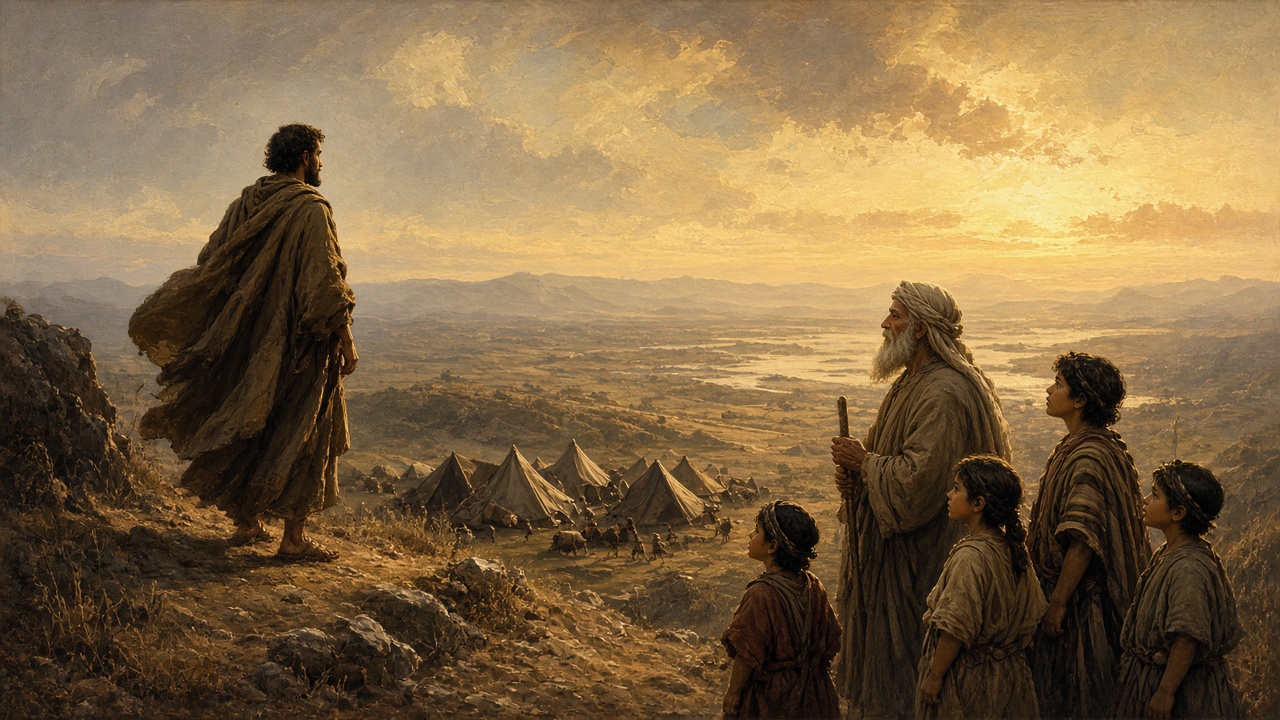
The generations of Adam
- This chapter introduces itself as "the book of the generations of Adam." Easton's Bible Dictionary (1897) explains Adam as a Babylonian word meaning "red," the generic name for man, with the same meaning in Hebrew and Assyrian, and connects the name with his being formed from the dust of the earth. Seth, born in Adam's own likeness, bears a name meaning "appointed" or "a substitute": his mother said God had appointed her another child instead of Abel, whom Cain had killed.Sources: the Bible text itself · Adam · Seth
- Enoch, son of Jared and father of Methuselah, is the only person in this list not said to have died. The chapter says that after Methuselah's birth he walked with God for 300 years, and that at 365 years he "was no more, because God had taken him away." Easton's Bible Dictionary (1897) calls this a translation without tasting death, notes that he is the seventh from Adam—unlike another Enoch, the son of Cain—and observes that, so far as recorded, only Adam had yet died a natural death and Noah was not yet born.Sources: the Bible text itself · Enoch (father of Methuselah)
- Methuselah, whose name Easton's Bible Dictionary (1897) gives as "man of the dart," lived 969 years, the longest life in this genealogy; the dictionary states that he died in the year of the Flood. His grandson Noah, a name meaning "rest," was named by Lamech in the hope that he would comfort them in the labor and toil caused by the ground the LORD had cursed.Sources: the Bible text itself · Methuselah · Noah
Notes written with AI assistance from open sources (Theographic Bible Metadata, CC BY-SA 4.0; Easton’s Bible Dictionary, public domain) and reviewed before publishing.
Credits and license for this translation
Tte Pa̱'a̱li̱ Me' Skëköl tö Se' a̱
New Testament and Shorter Old Testament in Bribri (CS:bzd:Bribri)
copyright © 2010 Wycliffe Bible Translators, Inc.
Language: Bribri
Translation by: Wycliffe Bible Translators, Inc.
Bribri
bzd
Costa Rica
Copyright Information
© 2010, Wycliffe Bible Translators, Inc. All rights reserved.
This translation text is made available to you under the
terms of the Creative Commons License: Attribution-Noncommercial-No Derivative Works.
( http://creativecommons.org/licenses/by-nc-nd/3.0/ )
In addition, you have permission to port the text to different file formats, as long as you
do not change any of the text or punctuation of the Bible.
You may share, copy, distribute, transmit, and extract portions
or quotations from this work, provided that you include the above copyright
information:
You must give Attribution to the work.
You do not sell this work for a profit.
You do not make any derivative works that change any of the actual words or punctuation of the Scriptures.
Permissions beyond the scope of this license may be
available if you contact
us with your request.
The New Testament and Shorter Old Testament
in Bribri
© 2010, Wycliffe Bible Translators, Inc. All rights reserved.
This translation is made available to you under the terms of the
Creative Commons Attribution-Noncommercial-No Derivatives license 4.0.
You may share and redistribute this Bible translation or extracts from it in any format, provided that:
You include the above copyright and source information.
You do not sell this work for a profit.
You do not change any of the words or punctuation of the Scriptures.
Pictures included with Scriptures and other documents on this site are licensed just for use with those Scriptures and documents.
For other uses, please contact the respective copyright owners.
2014-04-22
Source: http://ebible.org/bzdNTpo/ · eBible.org