Genesis 44
Tte Pa̱'a̱li̱ Me' Skëköl tö Se' a̱ · Tap a verse to see its cross-references.
José tka̱' tso' iwa̱ wayè
1E' ukuöki̱ ta̱ iu kue̱blu kiére José tö ta̱ ichéitö ia̱:
—Ie'pa sku' ko̱s wà iö́ka̱ chië chkewö wa. Ñies ie'pa inuköl iö́ka̱ne isku' ko̱s kkö̀ ki̱. 2Ñies ye' tka̱' yöule inukölchka wa tso' ye' wa̱ wayè e' iö́ka̱ ie'pa ël tsirla e' sku' kkö̀ ki̱, inuköl chkewö patuo̱ e' ta̱ ñita̱.
Eta̱ u kue̱blu tö iwakanewé̱ we̱s José tö iché ia̱ es. 3Bule es bla'mi diwö tskine ta̱ José tö iëlpa a̱ ka̱wö mé shkökne iu a̱ iburroë. 4Ka̱m ie'pa dö̀mi ka̱mië, eta̱ ie' tö iché iu kue̱blu a̱:
—Be' yú ie'pa itöki̱. Mik be' ikué̱, eta̱ ichö́ ia̱: ‘Ye' e̱' wé̱ buaë a' ta̱, ¿iö́k a' e̱' wamblé sulu ye' ki̱? ¿Iö́k a' tö ye' wökir tka̱' yöule inukölchka wa, 5e' dör wayè ena íyi tötkoie, e' bléwa̱bitu̱ a' tö? A' e̱' wamblé suluë.’
6Mik ie' ikué̱rak, eta̱ ichéitö we̱s iwökir tö iché ia̱ es. 7Eta̱ ie'pa tö iiu̱té:
—¿Iö́k be' tö ttè e' ché sa' a̱ es? Kë̀ ekkë chö́k sa' e̱' wamblö̀pa. 8Sa' bite̱ Canaán tkörö í̱e̱ inuköl mìne sa' sku' a̱ e' mukne. ¿We̱s be' ibikeitsèmi tö sa' tö inukölchka ö orochka e' blèwa̱mi be' wökir u a̱? 9Sa' sku' shu̱yulö́. Yi icha a̱ ikué̱bö, a̱s e' wák duö̀wa̱. Sa' male̱pa a̱te̱ be' kanè mésopaie.
10Ie' tö iché ie'pa a̱:
—Iwà tköraë we̱s a' tö iché es. Erë wé̱ ë́k sku' a̱ iku̱newa̱ e' ë̀ döraë ye' kanè mésoie. A' male̱pa kë̀ iane iwiie. A' mi'mine buaë.
11E' bet ie'pa ulitane tö isku' éwa i̱ski̱ ta̱ ikkö̀ wöttsélor. 12U kue̱blu tö sku' shu̱yulérak ikibi ë́k ke̱we dö̀ itsirla Benjamín ska'. Eta̱ Benjamín sku' kkö̀ a̱ tka̱' àr. 13Ie'pa datsi' jchélor e̱riane tai̱ë kue̱ki̱. Ie'pa dalì payuéne burro ki̱ ta̱ ibite̱yalne José ska'. 14Mik Judá ena iëlpa demine José ska', eta̱ José duria̱. Ie'pa wöéwa i̱ski̱ iwörki̱. 15E' dalewa ie' tö iché ia̱rak:
—¿Iö́k a' e̱' wamblö̀ es? ¿A' kë̀ wa̱ ijche̱r tö wëm dör we̱s ye' es, e' s'tötkè buaë?
16Judá tö iiu̱té:
—¿I̱ma sa' tö be' iu̱tèmi? ¿Ì wa sa' tö be' a̱ ikkachèmi tö sa' kë̀ wa̱ ì sulu wamblëne? Ì wamblëule sulu sa' wa̱ e' sué̱ Skëköl tö. I' sa' iëte̱r be' wörki̱. Sa' klö'ú̱ be' kanè mésoie. Yi sku' a̱ be' tka̱' ku̱ne e' klö'ú̱ ñies.
17Erë ie' tö iiu̱té:
—Kë̀ ye' a̱ e' wamblënuk es. Yi sku' a̱ ye' tka̱' ku̱ne, e' ë̀ a̱te̱ ye' kanè mésoie. A' male̱pa mi'mine buaë a' yë́ ska'. Kë̀ yi tö a' tsiriwe̱pa.
Judá kköché sia̱rla Benjamín dalërmik
18Eta̱ Judá debitu̱ José wörki̱ tsi̱net, eta̱ ichéitö ia̱:
—A këkëpa, be' we'ikèyö, mishka ttök se' böl ë̀. Be' dalö̀ dör we̱s Egipto blú dalö̀ es e' kue̱ki̱ kë̀ be' ulunuk ye' ki̱. 19Be' tö sa' a̱ ichaki' tö sa' yë́ ta̱', sa' ël skà ta̱'. 20Sa' tö be' iu̱të' tö́, sa' yë́ ta̱' këkëpalatke, ñies sa' ël ta̱' eköl ià̱ duladula. E' ku̱ne mik sa' yë́ kënewa̱tke eta̱. Sa' be' a̱ iyë' tö sa' yë́ ki̱ tai̱ë ilà tsirla ë́k kiar. Alà e' ë̀ a̱té̱a̱t imì a̱. Ie' ël blënewa̱. 21Be' tö sa' a̱ iyë' tö alà e' tsú̱bitu̱ suè̱yö. 22Sa' tö be' a̱ iyë' tö kë̀ ie' dö̀pa. Kë̀ ie' a̱ iyë́ menuka̱t ekörla. Mik ie' tö iyë́ méa̱t eköl, eta̱ iyë́ duöwa̱mi ie' dalërmik. 23Erë be' sa' a̱ iyë' tö sa' kë̀ wa̱ ie' dë', e' ta̱ be' kë̀ sa' kiepawa̱.
24“Mik sa' dë'mine sa' yë́ wörki̱, eta̱ ì ko̱s yë' be' tö sa' a̱, e' paké sa' tö ie' a̱. 25Ie' tö sa' a̱ iché: ‘A' yúne chkewö ta̱u̱k.’ 26Erë sa' tö iiu̱té: ‘Sa' ka̱wöta̱ sa' ël tsirla tsu̱kmi. Sa' kë̀ wa̱ ie' mìne, e' ta̱ wëm e' kë̀ tö sa' kiepawa̱.’ 27Ie' tö sa' iu̱té: ‘A' wa̱ ijche̱r buaë tö ye' alaköl e' tö ye' a̱ alà mé böl ë̀. 28Ia̱ia̱ë eköl minea̱ ye' yöki̱, kë̀ ye' wa̱ isu̱neia̱. Ye' iklö'wé̱ tö ie' kötwa̱ iyiwak sulusi tö. 29A' wa̱ ye' alà bata i' mítse̱r ta̱ ì sulu tka ie' ta̱ ñala̱ wa, e' ta̱ wö'kela i' duörawa̱ e̱riar ë̀ wa̱. Itka es, e' ta̱ a' iane iwiie.’
30“Sa' yë́ é̱na ilà dalër tai̱ë. E' kue̱ki̱ sa' demine ie' ska', erë ie' isué̱ tö ilà tsirla kë̀ dë'ne sa' wa̱, e' ta̱ ie' duörawa̱ e̱riar ë̀ wa̱. E' wiie sa' iardaë. 32Ye' tö ye' yë́ a̱ iyë': ‘Ye' e̱' chö̀ be' alà tsirla kkö'nuk. Ye' kë̀ wa̱ idë'ne, e' ta̱ ye' iane iwiie ke̱kraë.’ 33E' kue̱ki̱ ye' kköchö̀ be' a̱ tö ye' tsú̱a̱t be' kanè mésoie, alà tsirla skéie. Ie' ö́mi a̱s imi' iëlpa ta̱. 34Alà tsirla kë̀ minene ye' ta̱, e' ta̱ ¿we̱s ye' mi'mine ye' yë́ ska'? Ye' kë̀ ki̱ ye' yë́ kiane suè̱ weinuk sia̱rë.”
Did you know?
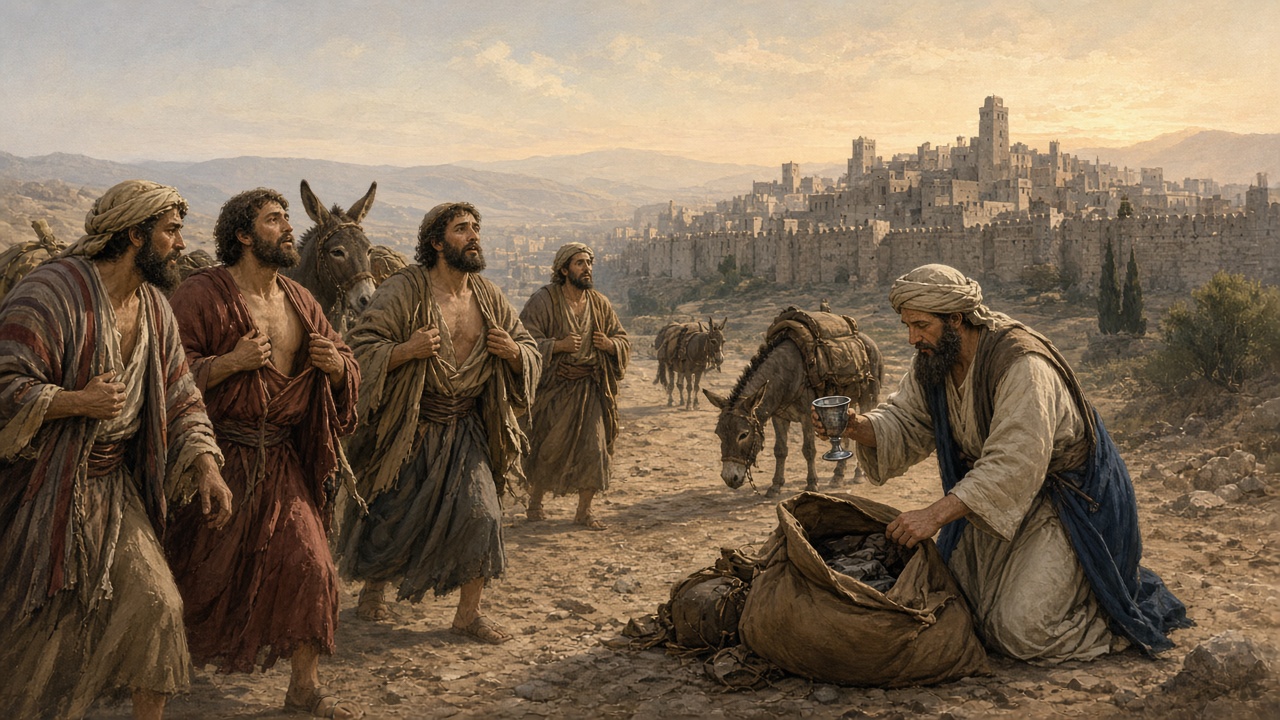
The Hidden Cup and Judah's Plea
- Judah, Jacob's fourth son by Leah, speaks for the brothers and offers to remain as a slave in the boy's place so that Benjamin may return with his brothers. Easton's Bible Dictionary (1897) notes that Judah had earlier intervened to spare Joseph's life, and that he took the lead in the family's affairs, including in the appeal recorded in this chapter.Sources: Judah (patriarch) · the Bible text itself
- Benjamin was the younger of Jacob's two sons by Rachel; she died giving birth to him and called him Ben-oni, "son of my pain," before his father named him Benjamin. The brothers tell Joseph that the boy is the only son of his mother still living, and that their father believes the other was torn to pieces. They say this to Joseph himself—Rachel's elder son, loved by Jacob as the child of his old age—while still speaking to him as a lord equal to Pharaoh.Sources: Benjamin (patriarch) · Joseph (son of Jacob) · the Bible text itself
- On Joseph's orders, the steward hid Joseph's silver cup—the cup he drank from and used for divination—in Benjamin's sack, along with the silver paid for the grain. When it was found, the brothers tore their clothes and returned to the city. Joseph then asked whether they did not know that a man like him could divine the truth, although the narrative shows that he had arranged for the cup to be found.Sources: the Bible text itself
Notes written with AI assistance from open sources (Theographic Bible Metadata, CC BY-SA 4.0; Easton’s Bible Dictionary, public domain) and reviewed before publishing.
Places in this chapter
- Canaan · 32.767, 35.333 · verse 8
Only places identified with high confidence are shown (90% or more according to the scholarly sources compiled by OpenBible). Period map: DARE (Digital Atlas of the Roman Empire), CC BY 4.0; modern map: © OpenStreetMap contributors; places: OpenBible.info (CC BY 4.0).
Credits and license for this translation
Tte Pa̱'a̱li̱ Me' Skëköl tö Se' a̱
New Testament and Shorter Old Testament in Bribri (CS:bzd:Bribri)
copyright © 2010 Wycliffe Bible Translators, Inc.
Language: Bribri
Translation by: Wycliffe Bible Translators, Inc.
Bribri
bzd
Costa Rica
Copyright Information
© 2010, Wycliffe Bible Translators, Inc. All rights reserved.
This translation text is made available to you under the
terms of the Creative Commons License: Attribution-Noncommercial-No Derivative Works.
( http://creativecommons.org/licenses/by-nc-nd/3.0/ )
In addition, you have permission to port the text to different file formats, as long as you
do not change any of the text or punctuation of the Bible.
You may share, copy, distribute, transmit, and extract portions
or quotations from this work, provided that you include the above copyright
information:
You must give Attribution to the work.
You do not sell this work for a profit.
You do not make any derivative works that change any of the actual words or punctuation of the Scriptures.
Permissions beyond the scope of this license may be
available if you contact
us with your request.
The New Testament and Shorter Old Testament
in Bribri
© 2010, Wycliffe Bible Translators, Inc. All rights reserved.
This translation is made available to you under the terms of the
Creative Commons Attribution-Noncommercial-No Derivatives license 4.0.
You may share and redistribute this Bible translation or extracts from it in any format, provided that:
You include the above copyright and source information.
You do not sell this work for a profit.
You do not change any of the words or punctuation of the Scriptures.
Pictures included with Scriptures and other documents on this site are licensed just for use with those Scriptures and documents.
For other uses, please contact the respective copyright owners.
2014-04-22
Source: http://ebible.org/bzdNTpo/ · eBible.org