Genesis 42
Tte Pa̱'a̱li̱ Me' Skëköl tö Se' a̱ · Tap a verse to see its cross-references.
José ëlpa mía̱ Egipto
1Mik Jacob wa̱ ijche̱newa̱ tö chkewö tso' Egipto watuè̱, eta̱ ila'r a̱ ichéitö: “¿Iö́k a' iëte̱r ñì sa̱u̱k ë̀? 2Ye' a̱ iyëne tö chkewö tso' Egipto. A' yú ee̱ chkewö ta̱u̱k a̱s kë̀ se' duö̀lur ketba wa̱.”
3Eta̱ José ëlpa döka̱ dabop, e'pa míyal Egipto chkewö ta̱u̱k. 4Erë Jacob kë̀ wa̱ ilà Benjamín, e' dör José ël táie imì wa, e' patkënemi iëlpa ta̱ ie' ibikeitsé dö' ì tkö̀ ita̱ ñala̱ ki̱. 5Ketba tso' tai̱ë Canaán e' kue̱ki̱ tai̱ë Canaánwakpa míyal chkewö ta̱u̱k Egipto. Esepa shu̱a̱ Jacob ala'r mirwa̱rak chkewö ta̱u̱k ñies.
6José dör Egipto ká̱ kue̱blu. Ie' tö chkewö watue̱ke sulitane datse̱ ita̱u̱k e'pa a̱. Mik iëlpa demi iwörki̱, eta̱ ie'pa wöéwa dö̀ i̱ski̱ ie' dalöiök. 7Ie' tö ie'pa sué̱wa̱ bet tö ie'pa dör iëlpa. Erë ie' e̱' éwa iyöki̱ we̱s kë̀ ie' wa̱ isu̱ule es. Kë̀ ie' e̱' kkayënewa̱ ie'pa a̱ tö ie' dör ie'pa ël. Eta̱ ie' tö iëlpa chaké kësik wa:
—¿Wé̱ a' se̱kkëpa bite̱?
Ie'pa tö iiu̱té:
—Sa' bite̱ Canaán chkewö ta̱u̱k be' ska'.
8Ie' tö ie'pa sué̱wa̱, erë ie'pa kë̀ wa̱ ie' su̱newa̱. 9Ie' tö iëlpa kébisu̱' e' a̱newa̱ ie' é̱na. Ie' tö iché ie'pa a̱:
—A' dör sa' bolökpa datse̱ sa' sa̱u̱k tö we̱s a' döwa̱mi ñippök sa' ta̱ e̱' aloka̱ sa' ki̱.
10Ie'pa iiu̱té:
—A këkëpa, e' kë̀ dör es. Sa' kë̀ dör a' bolökpa. Sa' debitu̱ chkewö ë̀ ta̱u̱k. 11Sa' ko̱s i' e' yë́ dör eköl ë̀. Sa' se̱rke buaë yësyësë. Kë̀ sa' dör yi bolökpa.
12Ie' tö ichéne ie'pa a̱:
—Au. A' se̱kkë tso' ka̱chök. A' datse̱ sa' ká̱ sa̱u̱k tö we̱s a' döwa̱mi ñippök sa' ta̱ e̱' aloka̱ sa' ki̱.
13Erë ie'pa tö iiu̱té:
—Sa' tso' be' wörki̱ we̱s be' kanè mésopa es. Sa' döka̱ dabom eyök ki̱ böl (12). Sa' yë́ dör eköl ë̀. Sa' se̱rke Canaán. Sa' ël tsirla ë́k e' a̱te̱ sa' yë́ ta̱. Iëköl blënewa̱tke.
14Erë ie' tö iskà chénerakia̱:
—Ye' ichétke tö a' dör sa' bolökpa. 15Egipto blú ttö̀ wa yö ichè a' a̱ tö a' kë̀ wa̱ a' ël tsirla e' dë' í̱e̱, e' ta̱ a' kë̀ mi'pa ká̱ i' ki̱. Es ye' isuè̱mi tö a' ttö̀ moki̱. 16A' eköl yú a' tsirla tsu̱kbitu̱. A' male̱pa a̱te̱ wötëule. Es ye' wa̱ ijche̱rmi tö a' ttöke e' dör moki̱. E' kë̀ yëne, e' ta̱ a' dör sa' bolökpa. E' chéyö Egipto blú ttö̀ wa.
17Ie' tö ie'pa wötéwa̱ se̱kka̱ döka̱ ká̱ mañat. 18Ká̱ de mañat eta̱ ie' tö iché ia̱rak:
—Ye' tö Skëköl dalötse̱ta̱'ka̱. Ì cheke ye' tö a' a̱ e' ú̱, e' ta̱ ye' kë̀ tö a' ttökwa̱ patkepa. 19Yëne tö a' dör wëpa ttö̀ moki̱ ese, e' ta̱ a' eköl múa̱t wötëule. A' male̱pa yúne, chkewö tsú̱mi a' yamipa tteke ketba tö e'pa a̱. 20E' ukuöki̱ ta̱ a' ël tsirla e' tsú̱bitu̱ ye' a̱ suè̱. Es ye' tö isuè̱mi tö a' ttöke e' dör moki̱. E' kë̀ dör es, eta̱ a' duöralur.
Eta̱ ie'pa tö iché: “E' dör buaë sa' a̱.” 21Eta̱ ichérakitö ñì a̱:
—Moki̱ë se' e̱' wamblë' suluë se' ël José ta̱. Mik ie' kköyë' tai̱ë se' a̱ tö ì sulu kë̀ wamblar ie' ki̱ erë́ se' isu̱' tö tai̱ë ie' e̱riane, erë kë̀ e' ska' se' tkine. E' nuí̱ ki̱ se' weirke i̱'ñe.
22Eta̱ Rubén tö iiu̱té:
—Ye' tö iyë' a' a̱: “Kë̀ ì wamblar José ki̱.” Erë a' kë̀ wa̱ ye' ttö̀ iu̱tëne. E' kue̱ki̱ i̱'ñe ta̱ se' ka̱wöta̱ idu'wa̱ e' nuí̱ patau̱k.
23José ttöke iëlpa ta̱ egiptowak ttö̀ wa e' pakekene o̱'ka tö ie'pa a̱ iwakpa ttö̀ wa. E' kue̱ki̱ ie'pa kë̀ wa̱ ijche̱r tö ie'pa ttöke e' a̱ne ie' é̱na. 24Mik ie' tö ie'pa ttöke e' ttsé, eta̱ ie' e̱' skéttsa̱ mía̱ bánet i̱u̱k. Mik ie' e̱r deka̱ne ttoie, eta̱ ie' dene ie'pa ska'. Ie' tö Simeón yöktsa̱ patké ta̱ ipayuéwa̱rakitö iëlpa wörki̱. 25E' ukuöki̱ ta̱ ie' tö ikanè mésopa patké iëlpa sku' wà iök chkewö wa. Ñies ichéitö ia̱rak: “Ie'pa chkewö e' ské iö́wa̱ iwakpa bil ekkë sku' a̱. Ñies chkè bakö́mirakia̱ ñè ñala̱ ki̱.” Eta̱ ie'pa tö iwé̱ we̱s ie' tö iché ia̱rak es. 26E' ukuöki̱ ta̱ ie'pa tö ichkewö méka̱ iburro ki̱ ta̱ imíyal.
27Mik ie'pa demi ñala̱ ki̱ wé̱ ie'pa kapökerö ee̱ eta̱ ie'pa eköl tö isku' a̱ burro chkö̀ tso' e' kkö̀ wöttsée iburro tioie ta̱ isué̱ tö inuköl àr sku' shu̱a̱. 28Ie' tö iché iëlpa a̱:
—¡Isa̱ú̱! Ye' inuköl mébitu̱ne ie'pa tö e' àr sku' a̱.
Ie'pa ulitane suane tai̱ë e̱riane tai̱ë. Ichérakitö ñì a̱:
—¿Ì wamblök Skëköl tso' se' ta̱?
29Mik ie'pa demine Canaán, eta̱ ì tka ie'pa ta̱ Egipto e' ko̱s pakérakitö iyë́ a̱. Ie'pa tö iché ia̱:
30—Ká̱ e' wökir e' tté sa' ta̱ kësik wa. Ie' tö iché tö sa' dör ie'pa bolökpa. 31Sa' tö iché ia̱: “Sa' se̱rke buaë. Kë̀ sa' dör yi bolökpa. 32Sa' döka̱ dabom eyök ki̱ böl. Sa' yë́ dör eköl ë̀. Sa' ël eköl blënewa̱tke, iëköl a̱te̱ sa' yë́ ta̱ Canaán.” 33Eta̱ ie' tö sa' iu̱té: “A' ttö̀ moki̱, e' ta̱ a' ël eköl e' múa̱t í̱e̱ ye' ska' eta̱ chkewö tsú̱mi a' yamipa a̱. 34Erë a' ël tsirla ë́k e' tsú̱bitu̱ ña suè̱. Es ye' wa̱ ijche̱rmi tö a' ttö̀ moki̱. A' tö iwé̱ es, e' ta̱ ye' tö a' ël èmimine. Ñies a' íyi tuè̱mi bua' sa' ká̱ i' ki̱.”
35Mik José ëlpa tso' isku' wakkau̱k, eta̱ ie'pa isué̱ sku' a̱ inuköl deyal parratulewa̱. Mik e' sué̱, eta̱ ie'pa tkirulune iyë́ ñies. 36Jacob tö iché ia̱rak:
—A' tso' ye' muka̱t alà kë̀ ta̱'. José blënewa̱ se' yöki̱. Simeón ñies, kë̀ ku̱' se' ta̱. I' ta̱ Benjamín kiane tsè̱mi a' ki̱ darë wa. Ke̱kraë ye' weirke.
37Rubén tö iché iyë́ a̱:
—Bejamín múmi ye' a̱. Ye' tö ikkö'neraë buaë. Ye' wa̱ idörane be' a̱. Ye' kë̀ wa̱ idë'ne, e' ta̱ ye' alà böl e' ttö́lur.
38Ie' tö iiu̱té:
—Ye' alà kë̀ mìne a' ta̱. Iël José du'wa̱ ta̱ ie' ë̀ dawa̱ia̱. Dö' ì sulu tkö̀ ie' ta̱ ñala̱ ki̱, e' ta̱ këkëla i' duömiwa̱ ilà dalërmik ta̱ a' iane iwiie.
Did you know?
The Brothers Come to Egypt for Grain
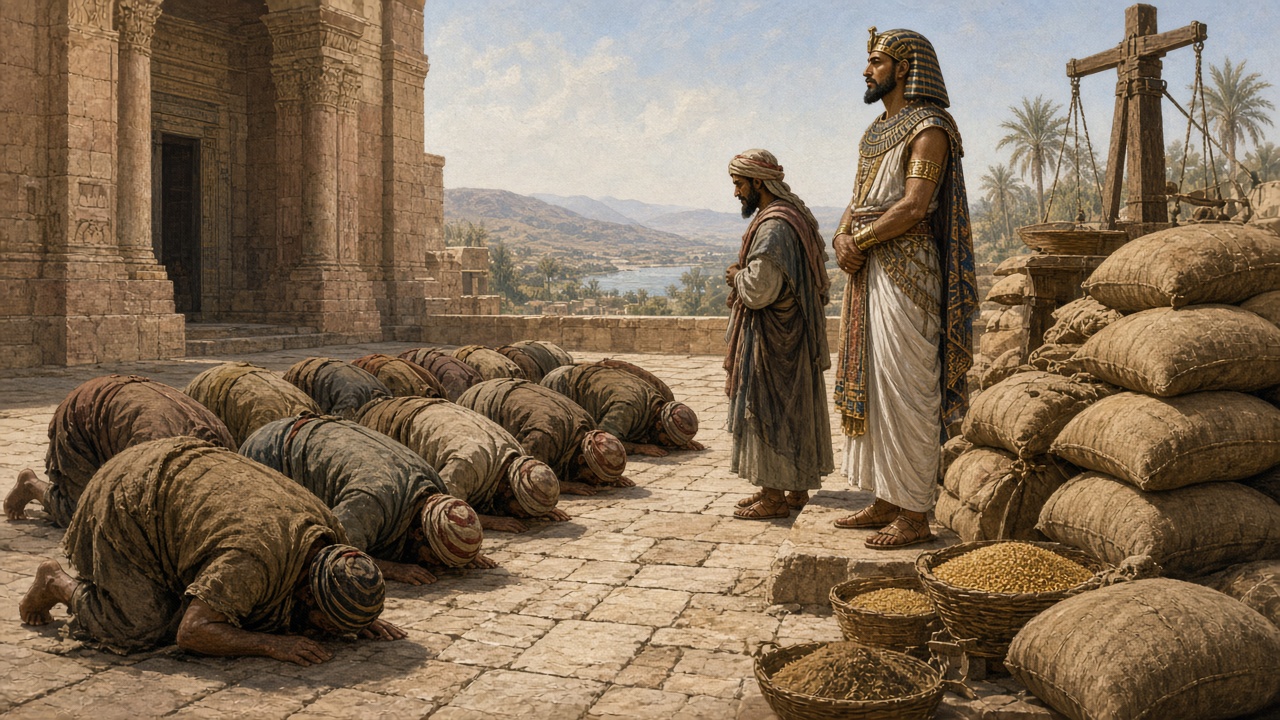
- Jacob heard that there was grain in Egypt, the land of the Nile, and sent ten of his sons from Canaan to buy some so the family would not die in the famine. The seven-year famine is dated to a beginning in 1707 BC, and the brothers' journey to Egypt to 1706 BC.Sources: the Bible text itself · Egypt · 7 years of famine · Joseph's brothers go to Egypt
- Joseph, ruler of the land and the one who sold grain to its people, recognized his brothers when they bowed before him, but they did not recognize him. An interpreter stood between them, so they did not realize that he understood what they said. He turned away and wept, then had Simeon, Jacob's second son by Leah, bound before their eyes and held as a hostage.Sources: the Bible text itself · Simeon
- Benjamin, the younger son of Jacob and Rachel, stayed behind with his father; Joseph was Rachel's elder son, and Jacob believed that brother was already dead. Jacob refused to let Benjamin go down to Egypt, saying that harm to him would bring his gray hair down to Sheol in sorrow. Reuben, the eldest son of Jacob and Leah, who had earlier saved Joseph when the other brothers would have put him to death, pledged his own life and the lives of his two sons if he failed to bring Benjamin back.Sources: the Bible text itself · Benjamin (patriarch) · Joseph (son of Jacob) · Reuben
Notes written with AI assistance from open sources (Theographic Bible Metadata, CC BY-SA 4.0; Easton’s Bible Dictionary, public domain) and reviewed before publishing.
Places in this chapter
Only places identified with high confidence are shown (90% or more according to the scholarly sources compiled by OpenBible). Period map: DARE (Digital Atlas of the Roman Empire), CC BY 4.0; modern map: © OpenStreetMap contributors; places: OpenBible.info (CC BY 4.0).
Credits and license for this translation
Tte Pa̱'a̱li̱ Me' Skëköl tö Se' a̱
New Testament and Shorter Old Testament in Bribri (CS:bzd:Bribri)
copyright © 2010 Wycliffe Bible Translators, Inc.
Language: Bribri
Translation by: Wycliffe Bible Translators, Inc.
Bribri
bzd
Costa Rica
Copyright Information
© 2010, Wycliffe Bible Translators, Inc. All rights reserved.
This translation text is made available to you under the
terms of the Creative Commons License: Attribution-Noncommercial-No Derivative Works.
( http://creativecommons.org/licenses/by-nc-nd/3.0/ )
In addition, you have permission to port the text to different file formats, as long as you
do not change any of the text or punctuation of the Bible.
You may share, copy, distribute, transmit, and extract portions
or quotations from this work, provided that you include the above copyright
information:
You must give Attribution to the work.
You do not sell this work for a profit.
You do not make any derivative works that change any of the actual words or punctuation of the Scriptures.
Permissions beyond the scope of this license may be
available if you contact
us with your request.
The New Testament and Shorter Old Testament
in Bribri
© 2010, Wycliffe Bible Translators, Inc. All rights reserved.
This translation is made available to you under the terms of the
Creative Commons Attribution-Noncommercial-No Derivatives license 4.0.
You may share and redistribute this Bible translation or extracts from it in any format, provided that:
You include the above copyright and source information.
You do not sell this work for a profit.
You do not change any of the words or punctuation of the Scriptures.
Pictures included with Scriptures and other documents on this site are licensed just for use with those Scriptures and documents.
For other uses, please contact the respective copyright owners.
2014-04-22
Source: http://ebible.org/bzdNTpo/ · eBible.org