Genesis 38
Tte Pa̱'a̱li̱ Me' Skëköl tö Se' a̱ · Tap a verse to see its cross-references.
Judá ena Tamar
1E' ké̱wö ska' ta̱ Judá e̱' batséttsa̱ iëlpa yöki̱ mía̱ se̱nuk wëm kiè Hirá e' ska'. E' se̱rke ká̱ kiè Adulam. 2Ee̱ Judá tö alaköl sué̱ eköl. E' dör wëm canaánwak kiè Súah e' alà busi, e' ta̱ ie' se̱néwa̱. 3E' ukuöki̱ ta̱ iduneka̱ ta̱ ilà ku̱ne wëm, e' kiè méka̱itö Er. 4E' ukuöki̱ ilà skà ku̱ne wëm, e' kiè méka̱itö Onán. 5E' ukuöki̱ ta̱ ilà skà ku̱ne wëm, e' kiè méka̱itö Selá. E' ku̱ne mik ie' se̱rke ká̱ kiè Quezib, ee̱ eta̱.
6Judá tö alaköl yulé se̱nowa̱ie ilà kibi kiè Er e' ta̱. E' kiè Tamar. 7Eta̱ Er se̱rke suluë shu̱te̱ Jehová wöa̱. E' kue̱ki̱ Jehová tö ittéwa̱. 8Eta̱ Judá tö iché Onán a̱:
—Be' ka̱wöta̱ se̱nukwa̱ be' dabököt ta̱ alà kö̀ka̱ be' ël blënewa̱ e' a̱ we̱s se' wakpa a̱ imenea̱tbak es.
9Onán é̱na ia̱ne tö ie' alà ku̱rmi ko̱s ischö́ ta̱, e' kë̀ dör ie' wák ala'r. E' kue̱ki̱ mik ie' se̱rke ischö́ ta̱, eta̱ bet ta̱ ie' e̱' skéu̱ bánet a̱s kë̀ alà kö̀ka̱ ischö́ ta̱. Es ie' kë̀ wa̱ iël a̱ iditséwö menea̱t. 10E' dör suluë ichö́k Jehová a̱, e' kue̱ki̱ ie' tö Onán ttéwa̱ ñies. 11Eta̱ Judá tö iché iyàk Tamar a̱:
—Be' yú se̱nuk be' yë́ u a̱ we̱s schö́ es dö̀ mik ye' alà Selá talane eta̱.
Erë Judá tso' Tamar ki̱tö'u̱k. Ie' ibikeitsé tö Selá duöwa̱mi we̱s iëlpa duolur es. Es Tamar minea̱ se̱nuk iyë́ ska'.
12Ká̱ de tai̱ë ta̱ Judá alaköl dör Súah alà busi e' blënewa̱. Ie' schö́ ké̱wö tka ta̱ ie' mía̱ ká̱ kiè Timnat, wé̱ itso'rak ie' obeja köyök tök ee̱. Ie' yami kiè Hirá e' dör adulamwak, e' mí ie' ta̱ ie' wapiöu̱k. 13Tamar tö isué̱ tö Judá alà kiè Selá, e' detke këchke erë kë̀ ie' se̱nèwa̱ ie' ta̱. E' wa ie' wa̱ ijche̱newa̱ tö Judá tö ie' ki̱tö'wé̱ Selá wa. E' kue̱ki̱ mik ie' wa̱ ijche̱newa̱ tö inua̱ki mía̱ Timnat iobeja köyök tök, eta̱ ie' e̱' paiöke schö́ie e' mane'wé̱ttsa̱neitö. Iwö pabakéwa̱ datsi'tak wa a̱s kë̀ yi a̱ iwërwa̱. Eta̱ imía̱ ká̱ kiè Enaim. Ee̱ ie' e̱' tkése̱r Timnat ñalé̱ kkö̀ a̱.
15Mik Judá tö Tamar sué̱ ta̱ ie' ibikeitsé tö e' dör alaköl sulusi iwö pabakéwa̱ e' kue̱ki̱. 16Eta̱ ie' mía̱ iwöki̱. Kë̀ ie' wa̱ ie̱ri ta̱' tö e' dör ie' yàk. Eta̱ ichéitö ia̱:
—¿Se' se̱r ñita̱?
Eta̱ Tamar tö iché ia̱:
—¿Ì meke be' tö ye' a̱ iskéie?
17Eta̱ Judá tö iiu̱té:
—Ye' chibo patköke be' a̱ etö iskéie.
Ie' iiu̱té:
—Ëkëkë. Erë be' íyi tsá̱ múa̱t ye' a̱ dö̀ mik be' tö chibola patké eta̱.
18Judá tö ie' a̱ ichaké:
—¿Ì kiane be' ki̱ tö ye' imèa̱t be' a̱?
Eta̱ ie' tö iiu̱té:
—Be' tabechka tso' e̱' kiè shtoie, e' múa̱t ye' a̱ ikichaë. Ñies be' shko kéli múa̱t ye' a̱.
Judá tö imé ia̱ ta̱ ie' se̱né ie' ta̱. Eta̱ alaköl duneka̱. 19E' ukuöki̱ ta̱ Tamar mía̱ iu a̱ eta̱ idatsi'tak wa iwö pabakéwa̱ e' yéttsa̱itö. Eta̱ ie' e̱' paiéne schö́ es.
20E' ukuöki̱ ta̱ Judá tö chibo patkémi iyami adulamwak e' ulà a̱ a̱s ie' tö imù alaköl a̱ a̱s alaköl e' tö ie' íyi méa̱t alaköl ulà a̱ e' mùbitu̱ne. Erë ie' yami kë̀ wa̱ alaköl e' ku̱neia̱. 21Eta̱ ie' tö ká̱ e' wakpa a̱ ichaké:
—Alaköl sulusi e' dör enaimwak a̱té̱a̱t ñala̱ ska', ¿wé̱ e'?
Eta̱ ie'pa tö iiu̱té:
—Í̱e̱ alakölpa sulusi kë̀ dë'.
22Eta̱ ie' bite̱a̱ne Judá wörki̱ ta̱ ichéitö ia̱:
—Kë̀ ye' wa̱ alaköl ku̱ne. Ye' tö ichaké ká̱ e' wakpa a̱. Ie'pa tö ye' a̱ iché: ‘Í̱e̱ alakölpa sulusi kë̀ dë'.’
23Judá tö iiu̱té:
—A̱s ye' íyi tsú̱a̱titö es kë̀ yi tö sa' jaëwe̱pa. Kë̀ ye' iane iwiie. Ye' tö ichibo patkémi be' ulà a̱, erë kë̀ be' wa̱ alaköl ku̱ne.
24Eta̱ si' mañat ulatök ta̱ Judá ki̱ biyö̀ de tö:
—Be' yàk Tamar e' se̱ne' wëpa kua̱'ki̱ ta̱. Ie' duneka̱.
Eta̱ Judá tö iché a̱neule:
—¡Iyö́ttsa̱ ta̱ iña'ú̱wa!
25Erë mik ie' yekettsa̱ ie'pa tö ttèwa̱, e' wösha̱ ie' ttè mémi inua̱ki a̱: “Yi íyi a'tse̱r ye' ulà a̱ i', e' wák tö ye' duéka̱. Be' isa̱ú̱. ¿Yi kiè shto tabechka i' ikichaë ena shko kéli i'? ¿e' su̱ule be' wa̱?” 26Mik Judá tö ie' íyi sué̱wa̱ iyàk ulà a̱ ta̱ ichéitö: “Alaköl i' dör buaë. Kë̀ ye' wa̱ iulabatse̱ ye' alà Selá ta̱. Ye' e̱' wamblé sulu ie' ki̱.” Eta̱ kë̀ ie' se̱neia̱ ie' ta̱.
27Tamar alà ku̱ne klö̀ wák dör wëpa. 28Itsörke e' wösha̱, eta̱ eköl ulà dettsa̱ ke̱we. Eta̱ ie' kkö'nukwak tö datsi'kicha batsë e' mué̱wa̱ ilà ulà mik ta̱ ichéitö: “I' ë́k ku̱ne ke̱we.” 29Erë e' wösha̱ë bet ta̱ alà ulà tié̱wa̱ne etökichane eta̱ iëk ku̱ne ke̱weie. Eta̱ ikkö'nukwak tö iché ia̱: “¿We̱s be' ku̱ne ke̱weie?” E' kue̱ki̱ ikiè méka̱itö Fares. 30E' ukuöki̱ ta̱, iulà a̱ datsi'kicha tkër batsë e' ku̱ne, e' kiè méka̱itö Zérah.
Did you know?
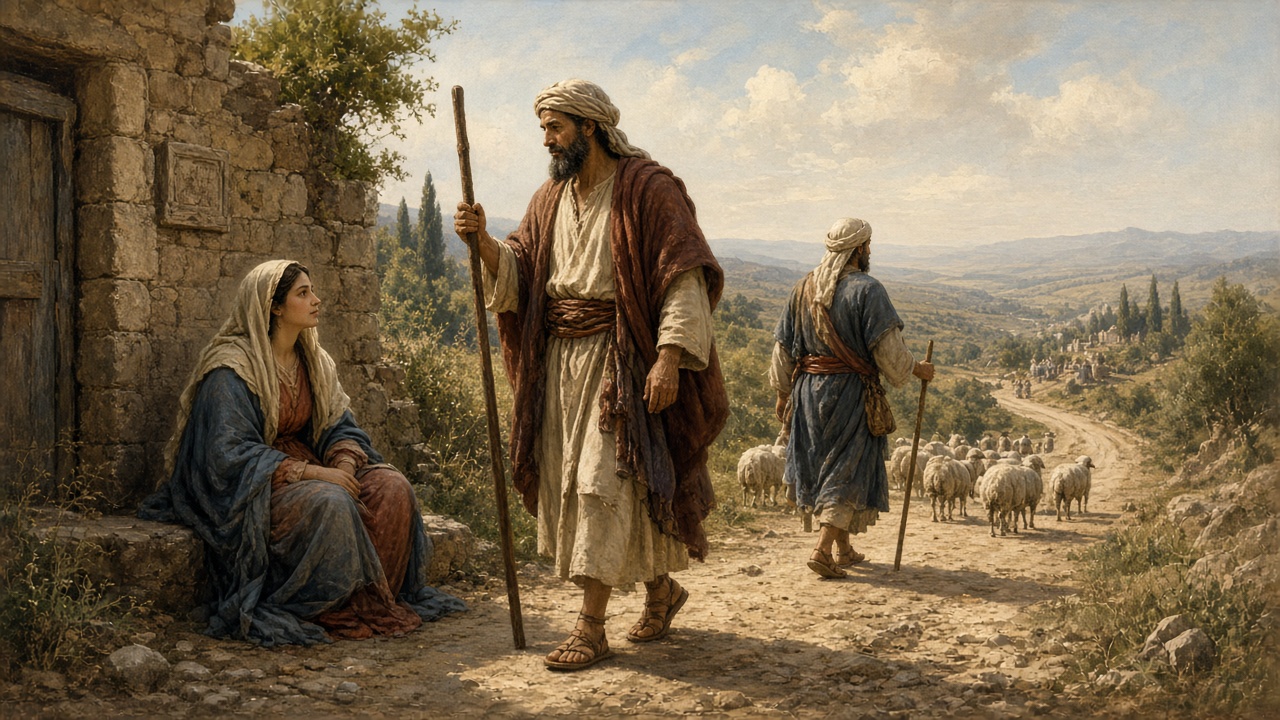
Judah and Tamar
- Soon after Joseph was sold to the Ishmaelites, Judah left his brothers and settled near Hirah, an Adullamite, and married the daughter of Shua, a Canaanite. She bore him Er, Onan, and Shelah; Shelah was born at Chezib, whose name means deceitful and is probably the same place as Achzib.Sources: Judah (patriarch) · Shuah · Chezib · the Bible text itself
- Judah took Tamar as a wife for his firstborn, Er. After Er died, he told Onan to sleep with her, fulfill a brother-in-law's duty, and raise up offspring for Er, but Onan would spill his seed on the ground so the child would not belong to him. Easton's Bible Dictionary (1897) compares that episode with Deuteronomy 25:5 and Matthew 22:24; Onan died before Jacob's family went down to Egypt, and Judah never gave Tamar to Shelah as promised.Sources: Tamar · Onan · the Bible text itself
- After the daughter of Shua died, Judah and his friend Hirah went up to his sheepshearers at Timnah, which Easton's Bible Dictionary (1897) describes as a town of Judah about twenty miles west of Jerusalem. Tamar veiled her face and waited at Enaim, on the way to Timnah—probably Enam, a city in the lowland or Shephelah—and Judah thought she was a prostitute because her face was covered. She later bore twins, and the child who broke out first was named Perez, a name that means breach.Sources: Timnah · Enaim · Pharez · the Bible text itself
Notes written with AI assistance from open sources (Theographic Bible Metadata, CC BY-SA 4.0; Easton’s Bible Dictionary, public domain) and reviewed before publishing.
Credits and license for this translation
Tte Pa̱'a̱li̱ Me' Skëköl tö Se' a̱
New Testament and Shorter Old Testament in Bribri (CS:bzd:Bribri)
copyright © 2010 Wycliffe Bible Translators, Inc.
Language: Bribri
Translation by: Wycliffe Bible Translators, Inc.
Bribri
bzd
Costa Rica
Copyright Information
© 2010, Wycliffe Bible Translators, Inc. All rights reserved.
This translation text is made available to you under the
terms of the Creative Commons License: Attribution-Noncommercial-No Derivative Works.
( http://creativecommons.org/licenses/by-nc-nd/3.0/ )
In addition, you have permission to port the text to different file formats, as long as you
do not change any of the text or punctuation of the Bible.
You may share, copy, distribute, transmit, and extract portions
or quotations from this work, provided that you include the above copyright
information:
You must give Attribution to the work.
You do not sell this work for a profit.
You do not make any derivative works that change any of the actual words or punctuation of the Scriptures.
Permissions beyond the scope of this license may be
available if you contact
us with your request.
The New Testament and Shorter Old Testament
in Bribri
© 2010, Wycliffe Bible Translators, Inc. All rights reserved.
This translation is made available to you under the terms of the
Creative Commons Attribution-Noncommercial-No Derivatives license 4.0.
You may share and redistribute this Bible translation or extracts from it in any format, provided that:
You include the above copyright and source information.
You do not sell this work for a profit.
You do not change any of the words or punctuation of the Scriptures.
Pictures included with Scriptures and other documents on this site are licensed just for use with those Scriptures and documents.
For other uses, please contact the respective copyright owners.
2014-04-22
Source: http://ebible.org/bzdNTpo/ · eBible.org