Genesis 3
Tte Pa̱'a̱li̱ Me' Skëköl tö Se' a̱ · Tap a verse to see its cross-references.
S'ditsö tö Skëköl ttö̀ dalöse̱wé̱wa̱
1Tkabë̀ tso' etö, e' e̱rbikö̀ tai̱ë s'ki̱tö'wo̱ie iyiwak kañiru yö' Skëköl Jehová tö, ekkë ko̱s tsa̱ta̱. Ká̱ et ta̱ ie' tö alaköl a̱ ichaké:
—¿Moki̱ Skëköl tö iyë'a̱t a' a̱ tö ká̱ buaë shu̱a̱ kal ulitane tso', e' wö kë̀ katar yës?
2Alaköl tö iiu̱té:
—Au, e' kë̀ dör es. Ie' tö sa' a̱ iché tö kal ulitane wö katarmi. 3Erë kal àr ká̱ i' shu̱sha̱ë, e' wö kë̀ katanuk, kë̀ e' kanuk sa' a̱. E' wamblé sa' tö, eta̱ sa' duöralur.
4Eta̱ tkabë̀ tö iché alaköl a̱:
—Au, e' dör ka̱che. A' kë̀ duö̀pawa̱. 5Ie' wa̱ ijche̱r buaë tö mik kalwö e' katéwa a' tö, eta̱ ì dör buaë, ì dör suluë e' jche̱rdaë a' wa̱ we̱s ie' wák wa̱ ijche̱r es.
6Eta̱ alaköl isué̱ tö kalwö e' wër buaë katè. Ie' é̱na ikatak íyi jche̱noie buaë. E' kue̱ki̱ ie' tö kalwö batsée, katéwaitö. E' ukuöki̱ ta̱ ie' tö imé iwëm a̱, eta̱ iwëm ikatéwa ñies. 7E' bet ta̱ ì dör sulu, ì dör buaë ese a̱ne ie'pa é̱na, eta̱ ie'pa wa̱ ijche̱newa̱ tö ie'pa iëte̱r sume. Eta̱ ie'pa tö kal kiè higuera, e' köyök yué banoie e' wa ie'pa e̱' patréwa̱.
8Siwa̱' bitsi̱rke tsá̱li̱, eta̱ wëm ena ilaköl tö Skëköl Jehová shkökedur ká̱ buaë shu̱a̱, e' ttsé. E' yöki̱ ie'pa e̱' blélur kal tso' tai̱ë ese shu̱a̱.
9Erë Skëköl Jehová tö wëm kié ta̱ ichaké:
—¿Wé̱ be' tso'?
10Wëm tö iiu̱té:
—Ye' tö ittsé tö be' shkökedur ká̱ buaala shu̱a̱. Ye' dur sume, e' kue̱ki̱ ye' suane be' yöki̱. E' kue̱ki̱ ye' e̱' bléwa̱ be' yöki̱.
11Eta̱ Skëköl tö ie' a̱ iché:
—¿Yi be' a̱ iché tö be' dur sume? Ichö́ ña tö kalwö yë'yö be' a̱ tö kë̀ ikatar ¿e' katébö?
12Ie' tö iiu̱té:
—Be' tö ye' a̱ alaköl me', ye' wapieie, e' tö ye' a̱ kalwö mé katè. E' katéwayö.
13Eta̱ Skëköl Jehová tö alaköl a̱ ichaké:
—¿Iö́k bö iwamblé?
Ie' tö iiu̱té:
—Tkabë̀ tö ye' ki̱téka̱, e' kue̱ki̱ ye' tö kalwö e' katéwa.
14Eta̱ Skëköl Jehová tö tkabë̀ a̱ iché:
—Ì wamblé be' tö, e' kue̱ki̱ ye' tö be' a̱ ichè tö iyiwak ko̱s shu̱a̱ be' ë̀ weirdaë michoë. Ke̱kraë be' shköraë e̱' ku̱ule be' batsi̱' ki̱ ta̱ be' kkö̀ a̱ ká̱ po mirawa̱. 15Be' ena alaköl meraa̱työ ñì bolökie. Be' aleripa ko̱s ena alaköl aleripa ko̱s, e'pa a̱te̱ ñì bolökie ñies. Alaköl aleri eköl tö be' wökir shka̱'we̱raë ena be' tö ie' klö̀ kaniñak shka̱'we̱raë.
16E' ukuöki̱ ta̱ ie' tö iché alaköl a̱:
—Mik be' alà ku̱rketke eta̱ be' weirdaë sia̱rë, idalë'r tai̱ë e' ttseraëbö. Erë be' ki̱ be' wëm kiardaë ena ie' döraë be' wökirie.
17E' ukuöki̱ ta̱ ie' tö iché wëm a̱:
—Be' tö be' alaköl ttö̀ iu̱té, kalwö yë'yö be' a̱ tö kë̀ ikatar, e' wà katébö. E' kue̱ki̱ be' weirdaë ñies. Be' kue̱ki̱ íyök sulu'we̱rawa̱yö. Be' kaneblöraë darërëë be' chkè yuloie. 18Íyök ki̱ dika'chka ena ka̱kö sulusi, alördaë. Ñies kalwö kañiru katerabö. 19Be' ka̱wöta̱ kaneblök darërëë chkoie dö̀ mik be' duowa̱, mía̱ne íyökie we̱s be' dör kuaë es eta̱. Be' yöne íyök wa, e' kue̱ki̱ be' dörane íyökie.
20Wëm tsá̱ yöne, e' kiè Adán. Ilaköl dör se' mì tsá̱. E' kue̱ki̱ Adán tö ikiè méka̱ Eva.
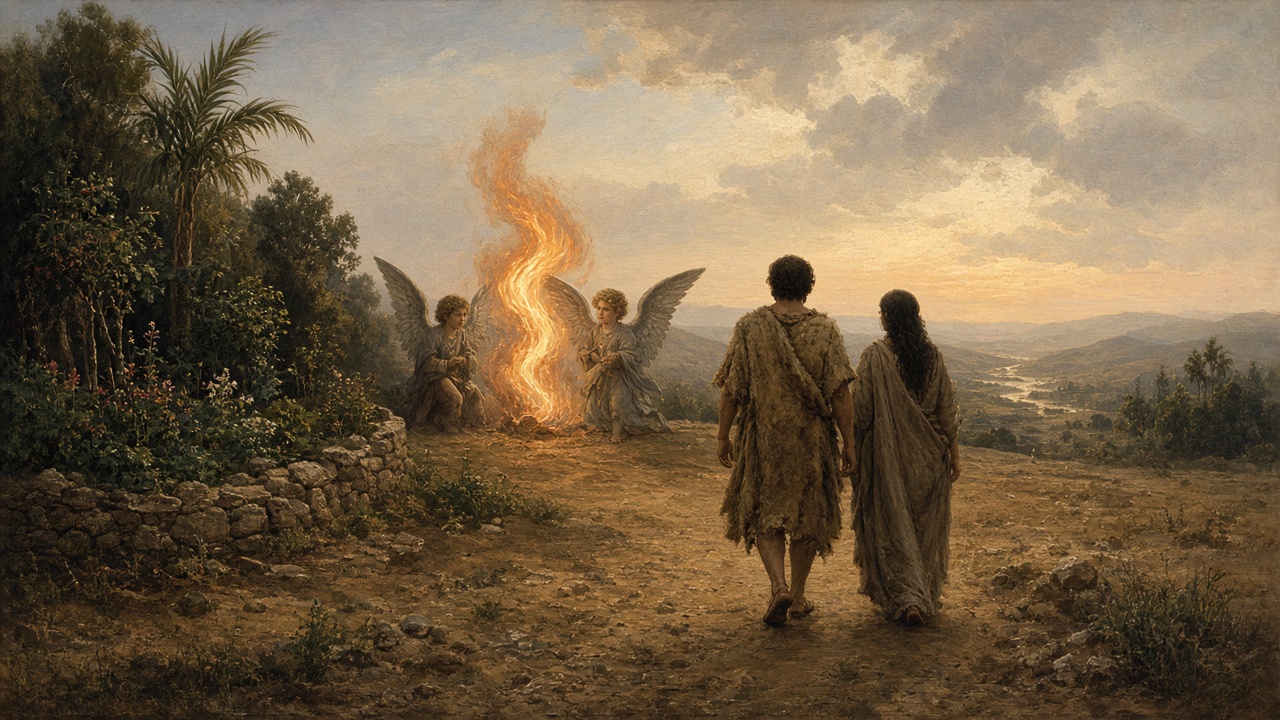
21Eta̱ Skëköl tö datsi' yué ie'pa a̱ iyiwak kkuölit wa, ta̱ ie'pa paiéitö. 22Eta̱ ie' tö iché: “I̱'ñe ì dör buaë ena ì dör suluë, e' jche̱r ditsö wa̱ we̱s se' wa̱ ijche̱r es. E' kue̱ki̱ dö' ie'pa mi', se̱ne michoë e' kéli wöbatsök katè ta̱ ise̱r michorak.”
23E' kue̱ki̱ ie' tö wëm ena ilaköl yéttsa̱ ká̱ buaala tso' Edén e' a̱, ta̱ ipatkémiitö íyök wakanéu̱k. Íyök wa wëm yöne e' ki̱ ipatkémi kaneblök. 24Ie' tö itrë'wé̱shka, e' ukuöki̱ ta̱ ì ttsë'ka pik ta̱' tso' ká̱ jaì a̱ kiè kérub, e'pa tuléwa̱itö ká̱ buaala e' ñalé̱ ska' diwö tskirke e' ëka̱ ikkö'nuk. Ñies tabè wöñarke dalölöë ratkear siwa̱' ki̱, e' méa̱titö a̱s kë̀ yi döwa̱ia̱ se̱ne michoë kéli ska'.
Did you know?
The Fall and Exile from Eden
- A traditional reference explains Adam as “red,” a Babylonian word used as the generic name for man, with the same meaning in Hebrew and Assyrian, and links the name to his being formed from the dust of the earth. In this chapter that origin returns in the judgment: he will toil for his food until he returns to the ground, for he is dust and to dust he will return, and he is sent to work the soil from which he was taken.Sources: Adam · the Bible text itself
- In this chapter Adam gives his wife the name Eve, meaning “life” or “living,” because she would be the mother of all the living.Sources: Eve · the Bible text itself
- The site of the garden of Eden, from which the man is driven in this chapter, has been much discussed and placed in Armenia, west of the Caspian Sea, in Media, near Damascus, in Palestine, in southern Arabia, and in Babylonia. A traditional geographical note looks for it along the Tigris and the Euphrates, in the land of Shinar, or Babylonia.Sources: Eden · the Bible text itself
Notes written with AI assistance from open sources (Theographic Bible Metadata, CC BY-SA 4.0; Easton’s Bible Dictionary, public domain) and reviewed before publishing.
Credits and license for this translation
Tte Pa̱'a̱li̱ Me' Skëköl tö Se' a̱
New Testament and Shorter Old Testament in Bribri (CS:bzd:Bribri)
copyright © 2010 Wycliffe Bible Translators, Inc.
Language: Bribri
Translation by: Wycliffe Bible Translators, Inc.
Bribri
bzd
Costa Rica
Copyright Information
© 2010, Wycliffe Bible Translators, Inc. All rights reserved.
This translation text is made available to you under the
terms of the Creative Commons License: Attribution-Noncommercial-No Derivative Works.
( http://creativecommons.org/licenses/by-nc-nd/3.0/ )
In addition, you have permission to port the text to different file formats, as long as you
do not change any of the text or punctuation of the Bible.
You may share, copy, distribute, transmit, and extract portions
or quotations from this work, provided that you include the above copyright
information:
You must give Attribution to the work.
You do not sell this work for a profit.
You do not make any derivative works that change any of the actual words or punctuation of the Scriptures.
Permissions beyond the scope of this license may be
available if you contact
us with your request.
The New Testament and Shorter Old Testament
in Bribri
© 2010, Wycliffe Bible Translators, Inc. All rights reserved.
This translation is made available to you under the terms of the
Creative Commons Attribution-Noncommercial-No Derivatives license 4.0.
You may share and redistribute this Bible translation or extracts from it in any format, provided that:
You include the above copyright and source information.
You do not sell this work for a profit.
You do not change any of the words or punctuation of the Scriptures.
Pictures included with Scriptures and other documents on this site are licensed just for use with those Scriptures and documents.
For other uses, please contact the respective copyright owners.
2014-04-22
Source: http://ebible.org/bzdNTpo/ · eBible.org