Genesis 18
Tte Pa̱'a̱li̱ Me' Skëköl tö Se' a̱ · Tap a verse to see its cross-references.
Jehová tö iché Abraham a̱ tö alà meraëyö be' a̱
1Ká̱ et dibata a̱ ta̱ Abraham tkër ie' ukkö a̱. Ie' u tso' wé̱ wëm kiè Mamré e' kós klö̀ wökir àr ee̱. Ie' tkër ee̱ eta̱ Jehová e̱' kkaché ie' a̱. 2E' wà pakè i' es: Abraham wökéka̱ ta̱ ie' isué̱ tö wëpa de iëte̱r ie' wörki̱ mañal. E' sué̱ ie' tö ta̱ bet ie' e̱' kéka̱, mía̱ ie'pa ñale̱tsu̱k ta̱ ie' e̱' té̱wa̱ i̱ski̱ ta̱ iwötsa̱ méwa̱ íyök ki̱ ie'pa shke̱'wo̱ie. 3Ie' tö iché:
—A këkëpa, be' we'ikèyö, kë̀ be' minuk bet. 4Ye' mi' di' tsu̱k a' klö̀ skuoie, e' ukuöki̱ ta̱ a' e̱nú bë̀rë kal i' diki̱a̱. 5A' detke ye' ska', eta̱ ilè mekeyö a' a̱ ñè a̱s a' diché iërne shkoie.
Eta̱ ie'pa tö ie' iu̱té:
—E̱'ma iú̱ we̱s be' tö iché es.
6Abraham tkawa̱ iu a̱, ta̱ ichéitö Sara a̱:
—Bet, harina bua'bua yulö́ kilo döka̱ dabom böyök (20) ekkë, e' wa pan yuö́.
7E' ukuöki̱ ta̱ bet ie' wák tu̱nemi baka pupula shu̱shtök wé̱ bua'bua ese klö'wé̱wa̱itö. E' mítse̱r ie' wa̱ méitö ikanè méso eköl a̱. Bet ta̱ ikanè méso tö ikanewé̱ ie' a̱ katè. 8Abraham tö baka chkà ena baka tsu'diö wösi ena baka tsu'diö pa̱'a̱li̱ e' mé ie'pa a̱. Ie'pa tulur chkök kal àr ukkö a̱ e' diki̱a̱. E' dalewa Abraham dur ie'pa tiök ee̱.
9E' dalewa ie'pa tö ichaké Abraham a̱:
—¿Wé̱ be' alaköl kiè Sara e'?
Ie' iiu̱té:
—Ie' tkër we̱shke̱.
10Eta̱ ie'pa eköl tö iché ia̱:
—Duas iëk e' wa ye' döne be' pakök. E' ké̱wö ta̱ be' alaköl Sara alà ta̱'tke.
E' dalewa Sara tkër Abraham tsi̱kka u wékkö a̱. Ie' tso' ie'pa ttöke, e' ttsök. 11Abraham ena ilaköl, e' dewa̱tke këkëpala. Bànet Sara kë̀ tö alakölpa duè sue̱ta̱'ia̱. 12E' kue̱ki̱ Sara kë̀ a̱ ja̱ñè wöklönuk ta̱ ibikeitsé: “¿We̱s ye' tö ttè i' klö'wè̱mi tö sa' kërulunetke e' dö̀mi alàë?” 13Jehová tö iché Abraham a̱:
—¿Ì kue̱ki̱ Sara ja̱ñéka̱? ¿Ì kue̱ki̱ ie' tö iché: “¿We̱s ye' kënewa̱tke e' dö̀mi alàë?” 14Kë̀ ì ta̱ ye' a̱ darërë. Duas iëk ye' döne, eta̱ ie' alà ta̱'tke.
15Sara suane e' kue̱ki̱ ichéitö: “Kë̀ ye' ja̱ñine'.”
Erë Jehová tö iché ia̱:
—E' kë̀ dör es. Moki̱ be' ja̱ñéka̱.
Abraham kköché Jehová a̱ Sodoma wakpa tsa̱tkö̀
16E' ukuöki̱ ta̱ ipakökwakpa e̱' duéka̱rak ta̱ imíyal dö̀ wé̱ Sodoma kí̱ wëne ee̱. Abraham tö iñalé̱ mére e̱' choa̱t ie'pa a̱. 17Eta̱ Jehová tö ibikeitsé: “Abraham aleripa alördaë tai̱ë diché ta̱' tai̱ë. Ye' tö iyë'a̱t ie' a̱ tö ie' batamik ye' e̱r buaë chöraë ká̱ ulitane wakpa a̱. Ye' tö ie' shu̱kit a̱s ie' tö ila'r ena ileripa a̱ ichö̀ tö ye' ttè dalöiö́ ñies tö ì ko̱s buaë yësyësë e' ú̱. Es ì ko̱s yë'yö ie' a̱ e' we̱raëyö. E' kue̱ki̱ ye' ka̱wöta̱ ichökia̱ tö iö́k ye' mí Sodoma.” 20E' kue̱ki̱ ie' tö iché Abraham a̱:
—Sodoma wakpa ena Gomorra wakpa e̱' wamblökerak suluë tai̱ë shu̱te̱, e' ché sulitane tö. 21E' kue̱ki̱ ye' mía̱ ee̱ isa̱u̱k tö yëne ie'pa e̱' wamblöke suluë ichö́k we̱s ye' a̱ ikkatëne es.
22Eta̱ Abraham pakökwakpa böl e̱' yéttsa̱ mía̱ Sodoma. Erë Abraham a̱te̱ dur Jehová ta̱. 23Ie' e̱' skéwa̱ tsi̱net Jehová ska' ta̱ ichakéitö ia̱:
—¿S'se̱r moki̱ë esepa e̱wè̱wamibö se' sulusipa ta̱? 24Isalema s'se̱r moki̱ë esepa tso' Sodoma döka̱ dabom ske̱yök (50), eta̱ ¿ká̱ e' wakpa e̱wè̱wamibö se̱raa̱? ¿Kë̀ be' tö ilo'yepa ie'pa ki̱ s'se̱r moki̱ë tso' döka̱ dabom ske̱yök (50), e'pa kue̱ki̱? 25¡Moki̱ be' kë̀ tö s'se̱r yësyësë esepa e̱we̱pawa se' sulusipa ta̱ ñita̱! Kë̀ bö iwamblepa es. ¡E' kë̀ wamblërpa! Be' dör sulitane shu̱lökwak e' kue̱ki̱ ¿we̱s e' kë̀ tö se' shu̱lepa yësyësë?
26Jehová tö iiu̱té:
—S'se̱r moki̱ë esepa kué̱yö döka̱ dabom ske̱yök (50) e' ta̱ e'pa dalërmik kë̀ ye' tö imale̱pa e̱we̱pawa.
27Eta̱ Abraham tö iskà chéne ia̱:
—Be' dör Skëköl. Ta̱ ye' dör we̱s ká̱ po ena mulu̱chka es be' wöa̱. E' tö be' chakè tai̱ë kë̀ suane. Isalema s'se̱r moki̱ë esepa kianeia̱ ske̱l (5) a̱s idöka̱ dabom ske̱yök (50). 28Ske̱l e' kianeia̱, e' ta̱ e'pa ë̀ kue̱ki̱ ¿ká̱ e' wakpa e̱wè̱wamibö?
Jehová tö iiu̱té:
—S'se̱r moki̱ë esepa kué̱yö döka̱ dabom tkëyök ki̱ ske̱l (45), e' ta̱ kë̀ ye' tö ká̱ e' wakpa e̱we̱pawa.
29Abraham tö iskà chaké:
—Dö' dabom tkëyök (40) ë̀ tso', e' ta̱ ¿be' tö ká̱ e' wakpa e̱wè̱wami?
Jehová iiu̱té:
—Au, kë̀ yö ká̱ e' wakpa e̱we̱pawa dabom tkëyök (40) e' dalërmik.
30Eta̱ Abraham tö ikí̱ ché ia̱:
—Tai̱ë be' tsiriwé̱yö, e' kue̱ki̱ kë̀ be' ulunuk ye' ki̱. Dö' s'se̱r yësyësë tso'ia̱ dabom mañayök (30) ë̀.
Jehová tö iiu̱téne:
—Au, dabom mañayök (30), e'pa dalërmik kë̀ yö ie̱we̱pawa.
31Abraham tö ikí̱ chaké ë̀me:
—A ye' Këköl, tai̱ë yö be' dalöse̱wé̱wa̱ be' chakök i' es, erë ká̱ ki̱ s'se̱r moki̱ë tso' dabom böyök (20) ë̀, e' ta̱ e'pa kue̱ki̱, ¿ká̱ e' wakpa e̱wè̱wamibö?
Jehová tö iiu̱té:
—Au, ie'pa dabom böyök (20), e' ë̀ dalërmik kë̀ ye' tö ká̱ e' wakpa e̱we̱pawa.
32Abraham tö ikí̱ chaké ta̱ ichéitö ia̱:
—Kë̀ be' ulunuk ye' ki̱. I' ë̀ chakekeyö be' a̱. S'se̱r moki̱ë esepa tso' döka̱ dabom eyök (10) ë̀, e' ta̱ ¿we̱s bö iwè̱mi? ¿ká̱ e' wakpa e̱wè̱wamibö?
Jehová tö iiu̱té:
—Dabom eyök ë̀ dalërmik kë̀ ye' tö ká̱ e' wakpa e̱we̱pawa.
33Mik ie'pa tté o̱ne ñita̱ eta̱ Jehová mía̱ne. Abraham bite̱a̱ne ie' u a̱.
Did you know?
Visitors at Mamre and a Plea for Sodom
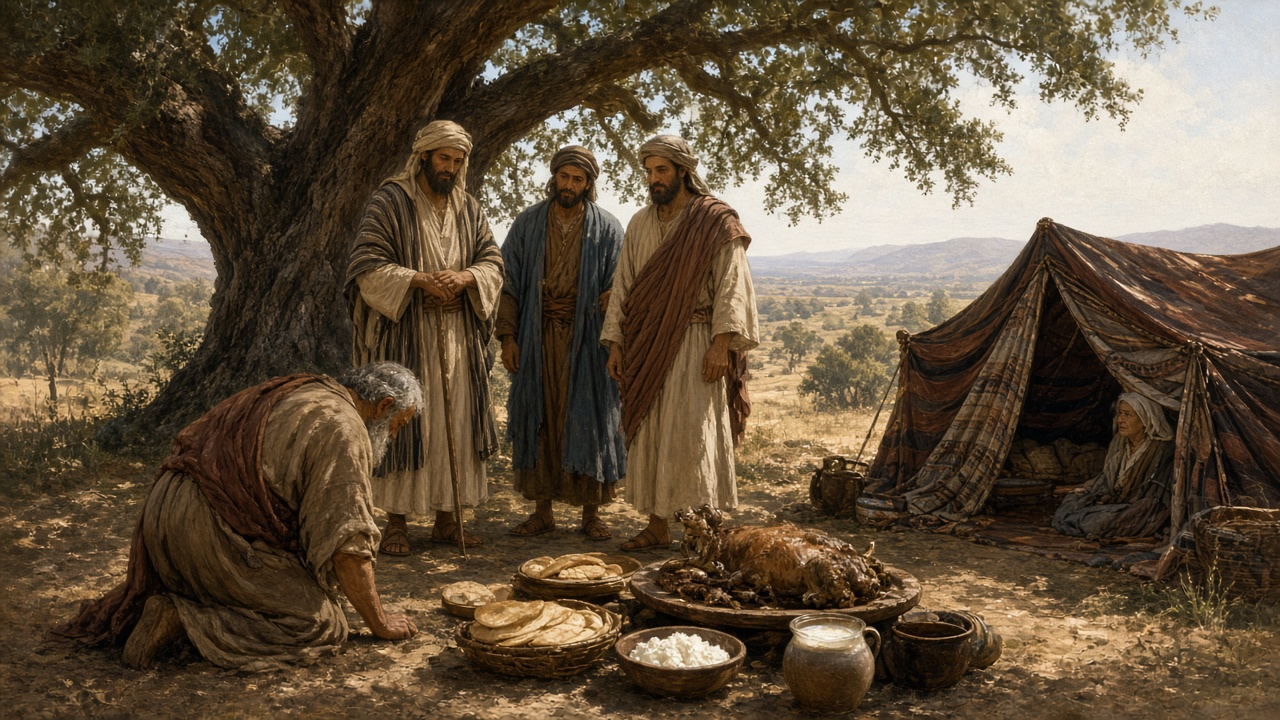
- In Genesis 18, the LORD appeared to Abraham by the Oaks of Mamre in the heat of the day, while Abraham sat at the entrance of his tent. Mamre was an Amorite chief in alliance with Abraham. Abraham ran to meet three men, bowed to the ground, offered them water for their feet and rest under the tree, and then set before them bread, a tender and choice calf, curds, and milk.Sources: the Bible text itself · Mamre
- Sarah, Abraham’s wife, is given the sense “Princess” in Easton's Bible Dictionary (1897), which says the name was given when it was announced that she would be the mother of the promised child. In Genesis 18 the LORD said he would return in about a year and Sarah would have a son, though both were already old and she had passed the age of childbearing. She laughed to herself and, because she was afraid, denied that she had laughed.Sources: Sarah · the Bible text itself
- Sodom, a city in the vale of Siddim, and Gomorrah, one of the five cities of that plain, are named together in Genesis 18 because of the great outcry against their grievous sin. Easton's Bible Dictionary (1897) says the cities of that plain probably stood close together near the northern end of what is now the Dead Sea, and explains Sodom and Gomorrah as “Burning; the walled” and “Submersion.” Two of the men went toward Sodom, while Abraham stayed and asked the LORD to spare the city for the sake of the righteous, lowering the number from fifty to ten.Sources: Sodom · Gomorrah · the Bible text itself
Notes written with AI assistance from open sources (Theographic Bible Metadata, CC BY-SA 4.0; Easton’s Bible Dictionary, public domain) and reviewed before publishing.
Credits and license for this translation
Tte Pa̱'a̱li̱ Me' Skëköl tö Se' a̱
New Testament and Shorter Old Testament in Bribri (CS:bzd:Bribri)
copyright © 2010 Wycliffe Bible Translators, Inc.
Language: Bribri
Translation by: Wycliffe Bible Translators, Inc.
Bribri
bzd
Costa Rica
Copyright Information
© 2010, Wycliffe Bible Translators, Inc. All rights reserved.
This translation text is made available to you under the
terms of the Creative Commons License: Attribution-Noncommercial-No Derivative Works.
( http://creativecommons.org/licenses/by-nc-nd/3.0/ )
In addition, you have permission to port the text to different file formats, as long as you
do not change any of the text or punctuation of the Bible.
You may share, copy, distribute, transmit, and extract portions
or quotations from this work, provided that you include the above copyright
information:
You must give Attribution to the work.
You do not sell this work for a profit.
You do not make any derivative works that change any of the actual words or punctuation of the Scriptures.
Permissions beyond the scope of this license may be
available if you contact
us with your request.
The New Testament and Shorter Old Testament
in Bribri
© 2010, Wycliffe Bible Translators, Inc. All rights reserved.
This translation is made available to you under the terms of the
Creative Commons Attribution-Noncommercial-No Derivatives license 4.0.
You may share and redistribute this Bible translation or extracts from it in any format, provided that:
You include the above copyright and source information.
You do not sell this work for a profit.
You do not change any of the words or punctuation of the Scriptures.
Pictures included with Scriptures and other documents on this site are licensed just for use with those Scriptures and documents.
For other uses, please contact the respective copyright owners.
2014-04-22
Source: http://ebible.org/bzdNTpo/ · eBible.org