Genesis 11
Tte Pa̱'a̱li̱ Me' Skëköl tö Se' a̱ · Tap a verse to see its cross-references.
Skëköl tö s'ditsö ké ttök kua̱'ki̱ kua̱'ki̱
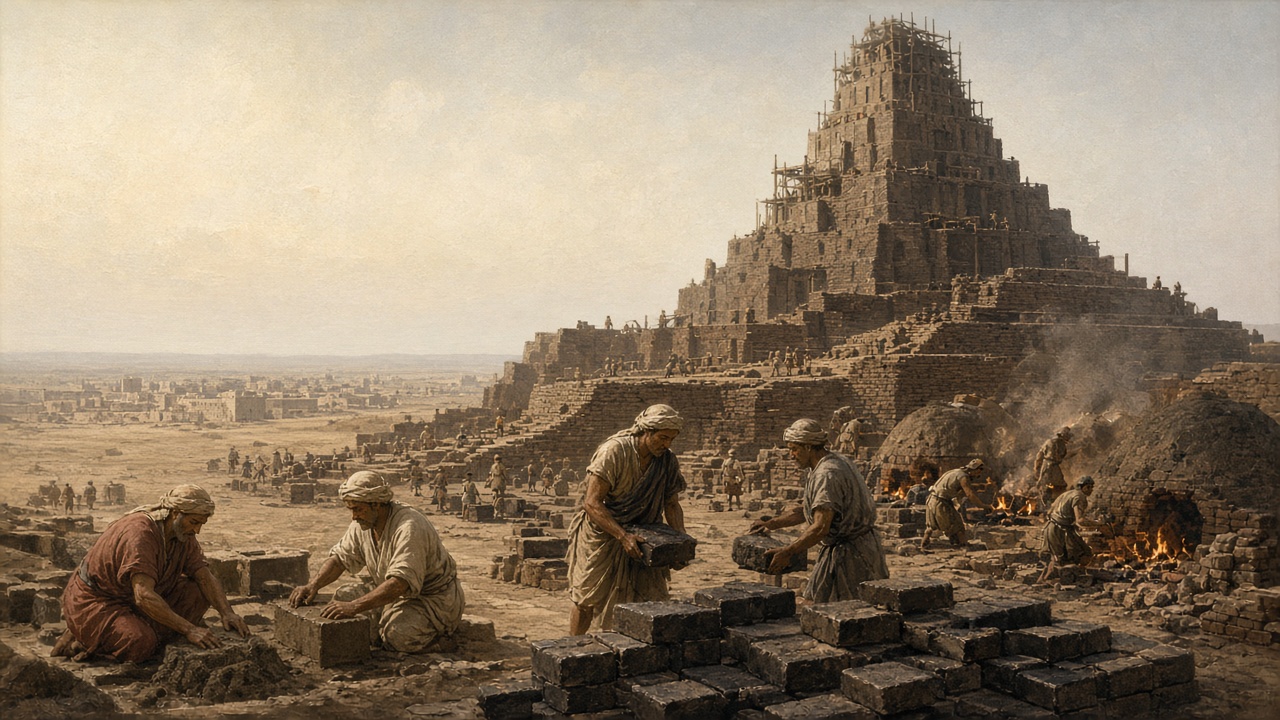
1Kuaë ta̱ sulitane ttöke ttè etökicha ë̀ wa. 2Mik ie'pa míyaldak diwö tskirke, e' ëka̱, demirak ka̱kkue kiè Sinar ee̱, eta̱ ee̱ ie'pa e̱' tsé̱a̱t se̱nuk. 3Ká̱ et ta̱ ie'pa iché ñì a̱: “Mishkarak ska̱u̱chka yuök blok sù̱, e' kukuèsö bö' a̱ a̱s imi'a̱ darërëë u yuoie.” Es iwakanewé̱rakitö ák skéie. Ñies kiöchka dalolo bötsböts ese wa ibatsérakitö ì tso' shu̱tuule ese skéie. 4E' ukuöki̱ ta̱ iskà chénerakitö ñì a̱: “Mishkarak ká̱ blublu yuök. E' shu̱a̱ u yuö̀sö ka̱kke̱ë döka̱ ká̱ jaì a̱. Es se' e̱' chö̀mi buaë këkëpa tai̱ë ena kë̀ se' ka̱wöta̱ ñì blabatsök ká̱ wa'ñe.”
5Erë Jehová e̱' éwa isa̱u̱krak tö ie'pa ká̱ blublu yueke ena u ka̱kke̱ë yuekerakitö. 6Eta̱ ie' tö ibikeitsé: “Ie'pa dör ká̱ etkë̀ wak ena ittörak etkë̀ ñies, e' kue̱ki̱ ie'pa tö kanè i' kéka̱mi. E' ukuöki̱ ta̱ kë̀ ì a̱ ie'pa wöklönuk. Ie'pa se̱rmi we̱s ie'pa ki̱ ikiane es. 7E' kue̱ki̱ sú̱yö ie'pa kè ttök kua̱'ki̱ kua̱'ki̱ a̱s kë̀ iñi ttö̀ a̱nia̱.”
8Es Jehová tö iblabatsérak ká̱ wa'ñe. Ee̱ ie'pa ká̱ yué e' kané wöpanere. 9Ká̱ e' ki̱ Jehová tö ie'pa ké ttök kua̱'ki̱ kua̱'ki̱ ena iblabatsérakitö ká̱ wa'ñe. E' kue̱ki̱ ká̱ e' kinewa̱ Babel.
Sem aleripa
10I' dör Sem aleripa kiè. Di' bak tai̱ë, e' ukuöki̱ duas bök, e' ké̱wö ska' ta̱ Sem ki̱ duas tso' cien eyök (100). Eta̱ ie' alà ku̱ne wëm kiè Arfaxad. 11Arfaxad ku̱ne, e' ukuöki̱ Sem kí̱ se̱neia̱ duas deka̱ cien ske̱yök (500), eta̱ ie' ala'r skà ku̱ne wëpa ena alakölpa.
12Mik Arfaxad ki̱ duas tso' dabom mañayök kí̱ ske̱l (35) eta̱ ie' alà ku̱ne wëm, e' kiè Sélah. 13Sélah ku̱ne, e' ukuöki̱ ta̱ Arfaxad kí̱ se̱neia̱ duas cien tkëyök kí̱ mañal (403), eta̱ ie' ala'r skà ku̱ne wëpa ena alakölpa.
14Mik Sélah ki̱ duas tso' dabom mañayök (30), eta̱ ilà ku̱ne, e' kiè Heber. 15Heber ku̱ne, e' ukuöki̱ ta̱ Sélah kí̱ se̱neia̱ duas cien tkëyök kí̱ mañal (403), eta̱ ie' ala'r skà ku̱ne wëpa ena alakölpa.
16Mik Heber ki̱ duas tso' dabom mañayök kí̱ tkël (34), eta̱ ilà ku̱ne, e' kiè Péleg. 17Péleg ku̱ne, e' ukuöki̱ ta̱ Heber kí̱ se̱neia̱ duas cien tkëyök kí̱ dabom mañayök (430), eta̱ ie' ala'r skà ku̱ne wëpa ena alakölpa.
18Mik Péleg ki̱ duas tso' dabom mañayök (30), eta̱ ilà ku̱ne, e' kiè Reú. 19Reú ku̱ne, e' ukuöki̱ ta̱ Péleg kí̱ se̱neia̱ duas cien böyök kí̱ su̱li̱tu (209), eta̱ ie' ala'r skà ku̱ne wëpa ena alakölpa.
20Mik Reú ki̱ duas tso' dabom mañayök kí̱ bök (32), eta̱ ilà ku̱ne, e' kiè Serug. 21Serug ku̱ne, e' ukuöki̱ ta̱ Reú kí̱ se̱neia̱ duas cien böyök kí̱ kul (207), eta̱ ie' ala'r skà ku̱ne wëpa ena alakölpa.
22Mik Serug ki̱ duas tso' dabom mañayök (30), eta̱ ilà ku̱ne, e' kiè Nahor. 23Nahor ku̱ne, e' ukuöki̱ ta̱ Serug kí̱ se̱neia̱ duas cien böyök (200), eta̱ ie' ala'r skà ku̱ne wëpa ena alakölpa.
24Mik Nahor ki̱ duas tso' dabom böyök kí̱ su̱li̱tu (29), eta̱ ilà ku̱ne, e' kiè Térah. 25Térah ku̱ne, e' ukuöki̱ ta̱ Nahor kí̱ se̱neia̱ duas cien eyök kí̱ dabom eyök kí̱ su̱li̱tu (119), eta̱ ie' ala'r skà ku̱ne wëpa ena alakölpa.
26Mik Térah ki̱ duas tso' dabom kuryök (70), e' ukuöki̱ ta̱ ie' ala'r ku̱ne mañal. Ala'r e'pa kiè Abram, Nahor ena Harán.
Térah ala'r
27E'pa dör Térah ala'r. Térah dör Abram, Nahor ena Harán, e'pa yë́. Harán, e' dör Lot yë́. 28Harán blënewa̱ ke̱we iyë́ Térah e' yöki̱ ká̱ kiè Ur ee̱. Ká̱ e' a̱te̱ Caldea. Ie' blënewa̱ wé̱ ie' ku̱ne ee̱.
29Abram se̱néwa̱ alaköl kiè Sarai, e' ta̱. Nahor se̱néwa̱ alaköl kiè Milcá, e' ta̱. Milcá dör Harán alà busi ena Iscá kutà. 30Sarai kë̀ döta̱' alàë.
31Térah e̱' yéttsa̱ Ur, dör caldeawak ká̱ e' a̱. Ie' alà Abram ena itala kiè Lot dör Harán alà ena iyàk kiè Sarai e'pa mía̱ ie' ta̱. Warma ie'pa mírö döka̱ ká̱ kiè Canaán ee̱, erë ie'pa demi ká̱ kiè Harán, eta̱ ee̱ ie'pa e̱' tsé̱a̱t se̱nuk. 32Ee̱ Térah blënewa̱. Ie' ki̱ duas tso' cien böyök ki̱ ske̱l (205).
Did you know?
Babel and the Road from Ur
- Travelers in this chapter settle on a plain in Shinar and build with baked brick and tar instead of stone and mortar. A dictionary treats Shinar as probably Babylonia or southern Mesopotamia, extending almost to the Persian Gulf, says the tower of Babel was built there, and describes the land's early inhabitants as people who made bricks and built cities.Sources: the Bible text itself · Shinar
- The unfinished city is named Babel because, the narrative says, there the Lord confused the language of the whole world and scattered its people. A dictionary explains the name as 'confusion' and suggests the tower was probably meant as a rallying-point on the wide plain of Shinar, after a migration from the uplands of Armenia, so the builders would not be scattered.Sources: the Bible text itself · Babel
- The chapter ends with Terah leaving Ur of the Chaldeans for Canaan with Abram, Sarai, and his grandson Lot, then settling in Haran, where he dies at 205; his son Haran had already died in Ur. A dictionary calls Ur that son's birthplace, the largest city of Shinar or northern Chaldea, and a center of trade and political power, and places Haran, now Harran and called Charran in the Greek Old Testament and in Acts, on the Belik, a Euphrates tributary in Upper Mesopotamia, where Abram stayed until Terah died.Sources: the Bible text itself · Terah · Ur of the Chaldees · Haran
Notes written with AI assistance from open sources (Theographic Bible Metadata, CC BY-SA 4.0; Easton’s Bible Dictionary, public domain) and reviewed before publishing.
Places in this chapter
- Shinar · Today: Babylonia · 32.543, 44.422 · verse 2
- Chaldea · 30.962, 46.104 · verses 28, 31
- Canaan · 32.767, 35.333 · verse 31
- Haran · Today: Harran · 36.864, 39.033 · verses 31, 32
Only places identified with high confidence are shown (90% or more according to the scholarly sources compiled by OpenBible). Period map: DARE (Digital Atlas of the Roman Empire), CC BY 4.0; modern map: © OpenStreetMap contributors; places: OpenBible.info (CC BY 4.0).
Credits and license for this translation
Tte Pa̱'a̱li̱ Me' Skëköl tö Se' a̱
New Testament and Shorter Old Testament in Bribri (CS:bzd:Bribri)
copyright © 2010 Wycliffe Bible Translators, Inc.
Language: Bribri
Translation by: Wycliffe Bible Translators, Inc.
Bribri
bzd
Costa Rica
Copyright Information
© 2010, Wycliffe Bible Translators, Inc. All rights reserved.
This translation text is made available to you under the
terms of the Creative Commons License: Attribution-Noncommercial-No Derivative Works.
( http://creativecommons.org/licenses/by-nc-nd/3.0/ )
In addition, you have permission to port the text to different file formats, as long as you
do not change any of the text or punctuation of the Bible.
You may share, copy, distribute, transmit, and extract portions
or quotations from this work, provided that you include the above copyright
information:
You must give Attribution to the work.
You do not sell this work for a profit.
You do not make any derivative works that change any of the actual words or punctuation of the Scriptures.
Permissions beyond the scope of this license may be
available if you contact
us with your request.
The New Testament and Shorter Old Testament
in Bribri
© 2010, Wycliffe Bible Translators, Inc. All rights reserved.
This translation is made available to you under the terms of the
Creative Commons Attribution-Noncommercial-No Derivatives license 4.0.
You may share and redistribute this Bible translation or extracts from it in any format, provided that:
You include the above copyright and source information.
You do not sell this work for a profit.
You do not change any of the words or punctuation of the Scriptures.
Pictures included with Scriptures and other documents on this site are licensed just for use with those Scriptures and documents.
For other uses, please contact the respective copyright owners.
2014-04-22
Source: http://ebible.org/bzdNTpo/ · eBible.org