Genesis 25
Yipma Genesis and New Testament · Tap a verse to see its cross-references.
Evɨraamɨ Keturaayavɨ kwala maryaaꞌ.
1Evɨraamɨ aꞌmwe pɨrɨꞌ Keturaayaꞌ kamaaraꞌ gawaalɨvaanga daraai daraai daraai mɨlaꞌ. Gawaalɨvavaavɨ yaya geꞌ geꞌ wɨdaꞌ “Pwai Sɨmɨranɨ, pwai Jokɨzaanɨ, pwai Methaanɨ, pwai Mɨthɨyanɨ, pwai Yɨzɨvaakɨ, pwai Sɨwaa.” Yaya woꞌnɨkera kamwaaleꞌ dɨvidaasaꞌ Keturaayavɨreraavɨ Evɨraamɨ gɨlyɨvɨta pwarɨ pɨrɨꞌna, pwarɨ pɨrɨꞌna wɨmaaryaka wɨdaasaka gannya gɨlyɨvɨta yuya Aazakɨmɨna wɨjaavaꞌ.
Evɨraamɨ balɨna yaaꞌ.
7Evɨraamɨ kwarame 175 kwavɨlavaꞌ balaꞌ. Kabalaꞌ gawaalɨvaangeraai Aazakɨjɨ Yɨzɨmelɨjɨ saraai Maakɨpela simaangevɨ Evɨraamɨ Seraavɨ wakakevɨ wakagi. Yɨ Gotɨyai Evɨraamɨmɨne tewaanna sara yakeꞌ yɨ Aazakɨmɨne tewaanna sara yaꞌ. Tewaanna yadaaꞌnyɨ Aazakɨ aalɨbunya Laaꞌeroi saba mwaalaꞌ.
Yɨzɨmelɨ balɨna yaaꞌ.
12Yɨzɨmelɨ kwaaka Yɨzɨpɨ pimagɨ mwaalyai kuvɨnɨmaangei gawaalɨvaanga sɨvɨlɨraai ata purɨdaasɨ pwaraalyaraavɨ wɨmwaaihaꞌ. Yɨzɨmelɨ mwaalakei mwaalakei balaꞌ.
Revekaaꞌ Jaikopɨjɨ Yɨzolyɨ saraarɨ mɨlyaaꞌ.
19Aazakɨmɨre aꞌmweꞌ Revekaaꞌ kaimɨraavɨmaayaꞌ mwaaidɨꞌnyɨ Aazakɨ Gotɨyarɨ Revekaavɨna kudaꞌ aꞌmwe kaimɨraavɨmunnakeꞌ mwaalaꞌ. Kaimɨraavɨmunnakaꞌ kamwaalaꞌ Gotɨyai wɨdaꞌ “Bwaranyaraai pwaraainesɨ. Aꞌmwe saraai yɨ pwai aꞌmwe pwaraavɨ kuvɨnɨmaangei yɨmaꞌnadelyɨ. Yɨ pwai aꞌmwe pwaraavɨ kuvɨnɨmaangei yɨmaꞌnadelyɨra. Pwai dɨragɨnna kamwaalojɨ pwai kɨbawana mwaaladelyɨra. Sɨraangei dɨviyarɨne wawɨnya wɨdaayadelyɨra,” wɨdaꞌ Gotɨyai. Dɨvidaaꞌnyɨ Revekaaꞌ avaalagaaꞌ bwaranyaraai pwaraai maaraꞌ. Kamaaraꞌ “Sɨraangarɨne yayaꞌ Yɨzoi dɨviyai Jaikopɨ,” sara dahi.
Sɨraangei Yɨzoi mubyaꞌna “Gɨmɨ sɨraangeigɨnyɨra,” wɨjaaꞌ.
27Kɨdaraai aꞌmweraai kyɨmaꞌnagi yɨ Yɨzoi yɨkurɨyaawɨhayaꞌna yakelyɨ. Yɨ Jaikopɨ gannya wawɨnyanna yɨwaainada angebanna mwaaidelyɨ. Yɨkurɨyaawia kamaaraꞌ waburyaꞌna wiakei Aazakɨ Yɨzorɨ yɨlaaya marina yaꞌ. Revekaaꞌ Jaikopɨmɨ yɨlaaya maryaꞌ. Pɨgaaꞌ Jaikopɨ yɨwaadabe yɨraaina yakegaaꞌ Yɨzoi mɨjɨka wiakei yɨꞌdaryavɨdaasɨ wɨlaabaꞌ. Wɨlaabaka Jaikopɨmɨ wɨdaꞌ “Wapaaya wayaaka pɨrɨꞌ nyɨjaama!” Miꞌna kudaꞌ Jaikopɨ wɨdaꞌ “Sɨnnawɨ sagaaꞌ sɨraangebwina gɨmubɨma! ‘Nɨmɨ aꞌmwe naanga yɨmaꞌnɨdeinyɨ,’ dena gɨthɨwa.” Yɨzoi wɨdaꞌ “Mɨjɨka naanga nyɨwakeꞌna nɨmɨ kabaimudɨkeinyɨra. Nɨmɨ aꞌmwe naangeinyɨ dadɨnyainyɨ dahaaꞌ aawano. Nɨmɨ aꞌmwe naangeinyɨ mamwaalyɨ yɨdeinyɨra. Aꞌmwe naangannyaꞌ waramaryana! Saꞌ maalɨkesɨra.” Sara kudaꞌ Jaikopɨ wɨdaꞌ “Kwaasɨ yagaala nanyɨdɨthɨka! Naangeꞌna nyɨdana!” Sara kudaꞌ Yɨzoi sara yaꞌ. Miꞌna kyaꞌ Jaikopɨ wapaaya kujaavaꞌ Yɨzoi naꞌ.
Did you know?
Abraham’s heirs and the twin brothers
- Keturah, whose name Easton's Bible Dictionary (1897) explains as “incense,” is introduced here as another wife of Abraham. That dictionary says he probably married her after Sarah’s death, though her nationality is unknown, and notes that 1 Chronicles calls her a concubine. She bore him six sons, including Jokshan and Midian, the father of the Midianites; while Abraham was still alive he gave gifts to the sons of his concubines and sent them away from Isaac to the land of the east.Sources: Keturah · Midian · the Bible text itself
- Isaac and Ishmael together buried Abraham in the cave of Machpelah near Mamre, in the field Abraham had bought from Ephron the Hittite, where Sarah already lay. Easton's Bible Dictionary (1897) explains Machpelah as “portion” or “double cave,” set on a hillside east of Hebron and facing Mamre, a place called the oaks—or, in a margin, the terebinths—of Mamre.Sources: Machpelah · Mamre · the Bible text itself
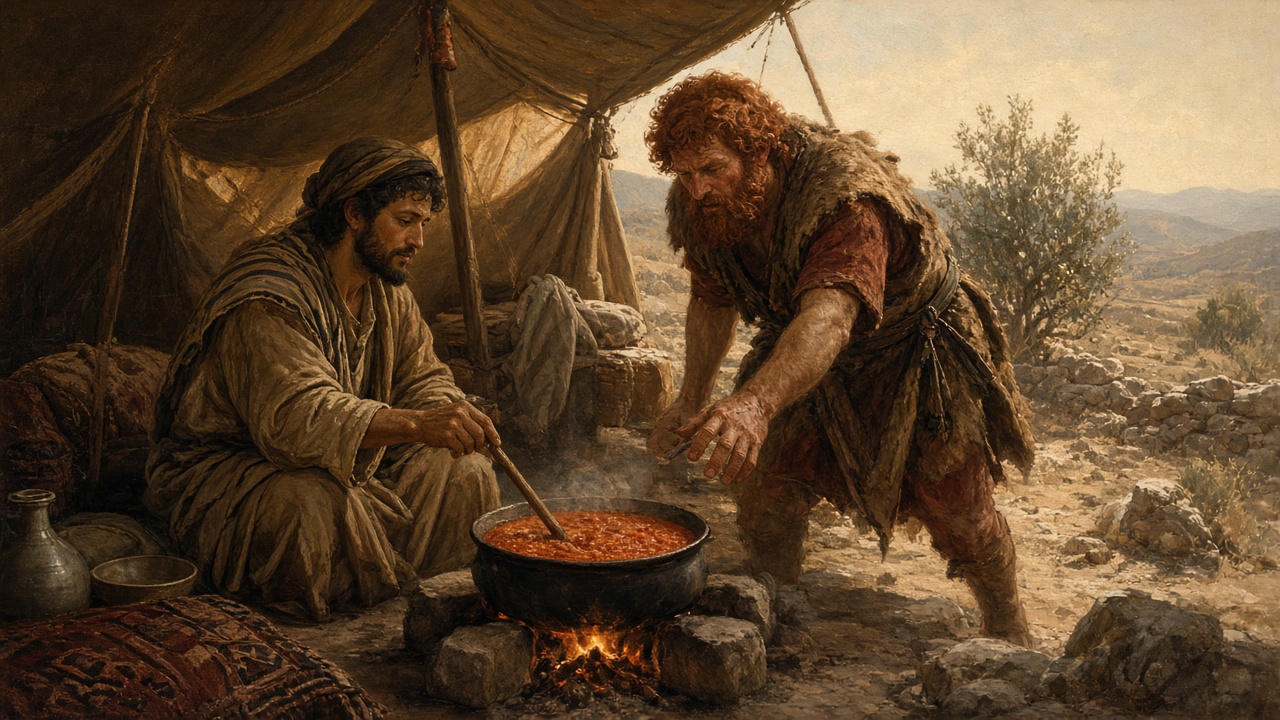
- Esau, Rebekah’s firstborn twin, was born red and covered with hair like a fur coat. Easton's Bible Dictionary (1897) links the further name Edom, “red,” to the red lentil stew for which he sold his birthright, and explains Jacob as “one who follows on another’s heels” or “supplanter,” matching the report that Jacob was born grasping Esau’s heel. Esau grew up as a skillful hunter and a man of the field, while Jacob was a quiet man who stayed at home.Sources: Esau (Edom) · Jacob (Israel) · the Bible text itself
Notes written with AI assistance from open sources (Theographic Bible Metadata, CC BY-SA 4.0; Easton’s Bible Dictionary, public domain) and reviewed before publishing.
Places in this chapter
- East · Today: region around Amman · 31.955, 35.934 · verse 6
- Machpelah · Today: Cave of the Patriarchs · 31.525, 35.111 · verse 9
- Negeb · 31.245, 34.841 · verse 11
- Assyria · 36.359, 43.153 · verse 18
- Egypt · 30.129, 31.308 · verse 18
Only places identified with high confidence are shown (90% or more according to the scholarly sources compiled by OpenBible). Period map: DARE (Digital Atlas of the Roman Empire), CC BY 4.0; modern map: © OpenStreetMap contributors; places: OpenBible.info (CC BY 4.0).
Credits and license for this translation
Yipma Genesis and New Testament
Genesis and The New Testament in the Yipma/Baruya language
Buk Stat na Nupela Testamen long tokples Yipma long Niugini
copyright © 1993, 1994 Wycliffe Bible Translators, Inc.
Language: Yipma (Baruya)
Translation by: Wycliffe Bible Translators
Video recording © The Jesus Film, a project of Cru.
This translation is made available to you under the terms of the
Creative Commons Attribution-Noncommercial-No Derivatives license 4.0.
You may share and redistribute this Bible translation or extracts from it in any format, provided that:
You include the above copyright and source information.
You do not sell this work for a profit.
You do not change any of the words or punctuation of the Scriptures.
Pictures included with Scriptures and other documents on this site are licensed just for use with those Scriptures and documents.
For other uses, please contact the respective copyright owners.
2013-02-07
Source: http://png.bible/byr/ · eBible.org