Genesis 14
Yipma Genesis and New Testament · Tap a verse to see its cross-references.
Evɨramɨ Lotɨmɨ padaihasamaaꞌna yaaꞌ.
1Pɨgaaꞌ aꞌmwe naanga kingɨya daraai daraalyarajɨ kumɨrerajɨ beva angeba Sothomɨ mwaalyarajɨ anga pɨbanyarajɨ saraavɨ baramakɨna. Baramakɨna kyeꞌ aꞌmwe kwalaalyara kabaleꞌ pwara mugunya pɨnɨngɨna lɨkaanya wɨna yeꞌ. Lɨkaanya wɨna kyeꞌ aꞌmwe naangera “Nedaayadɨvɨsarera,” deva Lotɨjɨ pwarajɨ saraavɨ wɨla galyɨrakɨna yeꞌ. Galyɨrakɨna yeva anga yuyabadaaꞌnyɨ gɨlyɨvɨta naanga yɨpalamaaꞌna. Yɨpalamaaꞌna kyeꞌ aꞌmwe pwai Evɨramɨmyawɨnna kaanyɨveꞌna wɨna yaka Evɨramɨmɨ wɨdaꞌ “Malyara anga Sothomɨ mwaalyaraavɨ baramakeva Lotɨmɨ wɨla yɨrakɨwaaꞌ.” Sara kudaꞌ Evɨramɨ gannya aawɨlasaraavɨ jaka wɨdaka malyaraavɨ mɨdɨnna yaꞌ. Mɨdɨnna kyaꞌ sawɨta kujɨnnaꞌ malyaraavɨ tamɨna kyeꞌ pwara lɨka wɨna kyeꞌ pwaraavɨ tamɨna yeꞌ. Tamɨna kyeꞌ Evɨramɨ Lotɨjɨ aꞌmwe pwarajɨ gɨlyɨvɨta naangejɨ ayawɨnna makabɨna yeꞌ.
Melɨkɨzɨthekɨ Evɨramɨmɨ yagaala tewaanyaꞌ wɨjaaꞌ.
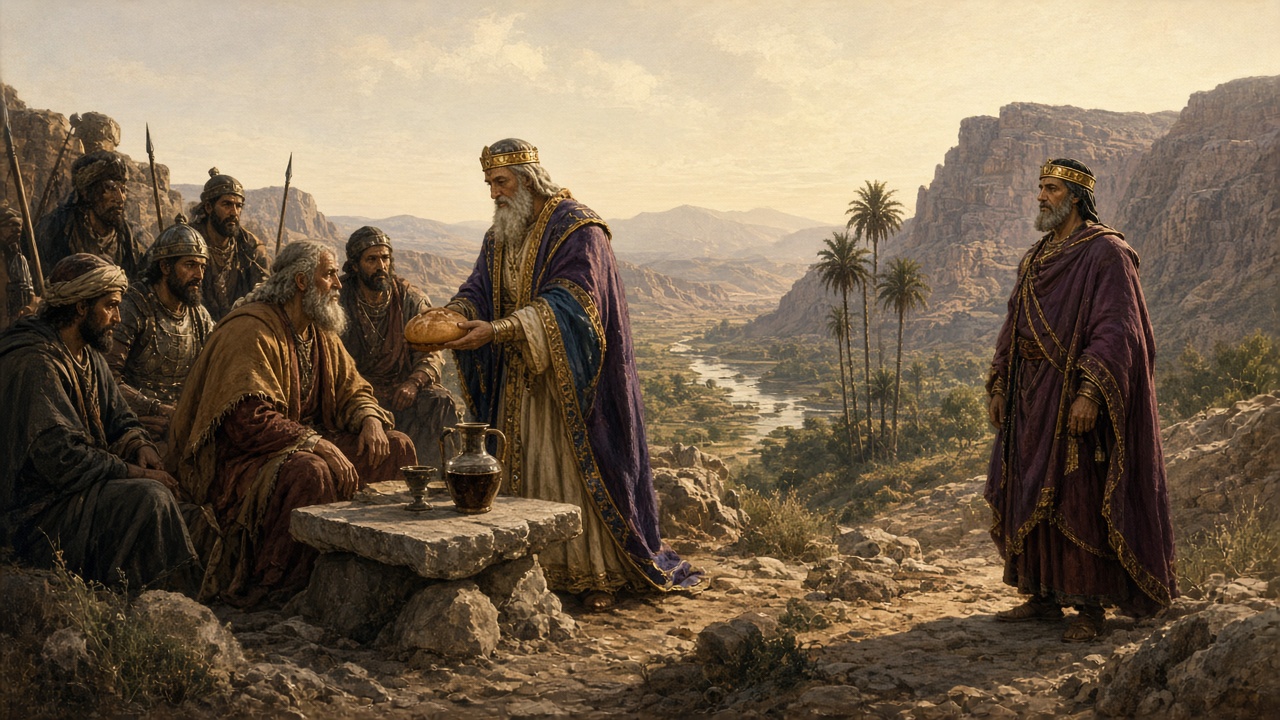
17Sothomɨ maremwaalakelyɨ Melɨkɨzɨthekɨ anga Saalemɨ maremwaalakelyɨ saraai Evɨramɨmɨ wɨjɨmaaꞌnyɨna yagi. Melɨkɨzɨthekɨ Evɨramɨmɨ wapaaya wɨjaavɨna yaka Gotɨyarei yagaala wɨdaꞌ “Gotɨyai sɨgunyasɨ kwaakesɨ wakyaakei gɨmɨnyɨ tewaanya gyɨnɨkelyɨra. Gamɨzai gɨmɨjɨ yagɨla gɨmɨnyɨne yɨkamaangeraavɨ yeꞌmwannaramyawaaihɨ. Gotɨyai tewaanyalyɨra.” Kudaꞌ Evɨramɨ gamɨre gɨlyɨvɨsa gazabazaba kwala marapɨgɨlaꞌna kyaꞌ gɨlyɨvɨta naanga atɨraalya waꞌdɨꞌnyɨ Evɨramɨ gɨlyɨvɨta pɨrɨꞌ Melɨkɨzɨthekɨ sarɨna yanga wɨjaavɨna yaꞌ.
21Sothomɨ maremwaalakei Evɨramɨmɨ wɨdaꞌ “Gɨmɨ maꞌmwaanyangɨdaasɨ aꞌmweraavɨjɨ aꞌmwengɨjɨ yanga nyɨjaama! Gɨlyɨvɨsa gɨmɨrengɨra.” Kudaꞌ Evɨramɨ wɨdaꞌ “Nemɨ wapaaya pɨnɨ nɨwo. Miꞌna nɨwoꞌna warana! Aꞌmwe daraai dalyarajɨ kumɨrerajɨ pwara nɨmɨnyɨ marɨgaidaaꞌna nyawaaihasaraavɨ gɨlyɨvɨta pɨnɨ dumaarya! Saꞌ Gotɨyai nyɨgaimwadelyɨra. Gɨmɨnyɨ gɨlyɨvɨsa mamaari yɨdeinyɨra. Nɨmɨ sara yaꞌmujɨ gɨmɨ nadɨthɨka ‘Nɨmɨ Evɨramɨmɨ aꞌmwe naangei wɨmwaaihe!’ dɨwa,” wɨdaꞌ.
Did you know?
The Campaign of the Four Kings
- Easton's Bible Dictionary (1897) identifies the four invading kings with names on ancient inscriptions: Chedorlaomer with Khudur-Lagamar of Elam, Amraphel with Khammu-rabi of Shinar (southern Chaldea), Arioch, king of Ellasar, with Eri-Aku of Larsa, and Tidal with Tudkhula. It explains Eri-Aku as an Elamite name meaning “servant of the moon-god,” later changed to Rimsin, and takes Goiim—“nations”—as Gutium, east of the Tigris and north of Elam.Sources: Chedorlaomer · Amraphel · Arioch (king of Ellasar) · Tidal
- The five local kings drew up for battle in the Valley of Siddim, which this chapter equates with the Salt Sea, and the valley was full of tar pits into which some of the fleeing men fell. Easton's Bible Dictionary places that valley at the south end of the Dead Sea, between Engedi and the cities of the plain, and calls the pits bitumen pits.Sources: the Bible text itself · Vale of Siddim
- Abram lived near the oaks of Mamre the Amorite, a brother of Eshcol and Aner, and the three were bound by treaty to him. Easton's Bible Dictionary calls Mamre and Eshcol Amorite chiefs and Aner a Canaanite chief, and notes that they joined Abram in pursuing Chedorlaomer and recovering Lot.Sources: the Bible text itself · Mamre · Eshcol · Aner
Notes written with AI assistance from open sources (Theographic Bible Metadata, CC BY-SA 4.0; Easton’s Bible Dictionary, public domain) and reviewed before publishing.
Places in this chapter
- Elam · 32.189, 48.258 · verses 1, 9
- Shinar · Today: Babylonia · 32.543, 44.422 · verses 1, 9
- Salt Sea · Today: Dead Sea · 31.500, 35.500 · verse 3
- Shaveh-kiriathaim · Today: within 1 km of Al Qurayyat · 31.541, 35.686 · verse 5
- Dan · Today: Tel Dan · 33.249, 35.652 · verse 14
- Damascus · 33.511, 36.306 · verse 15
- Valley of Shaveh · Today: intersection of Kidron Valley and Valley of Hinnom · 31.767, 35.236 · verse 17
- Salem · Today: Jerusalem · 31.777, 35.234 · verse 18
Only places identified with high confidence are shown (90% or more according to the scholarly sources compiled by OpenBible). Period map: DARE (Digital Atlas of the Roman Empire), CC BY 4.0; modern map: © OpenStreetMap contributors; places: OpenBible.info (CC BY 4.0).
Credits and license for this translation
Yipma Genesis and New Testament
Genesis and The New Testament in the Yipma/Baruya language
Buk Stat na Nupela Testamen long tokples Yipma long Niugini
copyright © 1993, 1994 Wycliffe Bible Translators, Inc.
Language: Yipma (Baruya)
Translation by: Wycliffe Bible Translators
Video recording © The Jesus Film, a project of Cru.
This translation is made available to you under the terms of the
Creative Commons Attribution-Noncommercial-No Derivatives license 4.0.
You may share and redistribute this Bible translation or extracts from it in any format, provided that:
You include the above copyright and source information.
You do not sell this work for a profit.
You do not change any of the words or punctuation of the Scriptures.
Pictures included with Scriptures and other documents on this site are licensed just for use with those Scriptures and documents.
For other uses, please contact the respective copyright owners.
2013-02-07
Source: http://png.bible/byr/ · eBible.org