Leviticus 1
Buka Tabuna Tefadi · Tap a verse to see its cross-references.
About this book
About Leviticus
- Easton's Bible Dictionary (1897) presents Leviticus as the third book of the Pentateuch and as the third book of Moses. The name, used in the Vulgate following the LXX, reflects the book's chief concern: the Levitical service.Sources: Easton: Leviticus
- Easton states that every ordinance in the book was delivered within one month, the first month of the second year after the Exodus. His entry on Sinai, also called Horeb, says the Hebrews reached that mountain district in the third month after the Exodus and remained encamped for about a whole year, and that the whole of Leviticus records what occurred there.Sources: Easton: Leviticus · Mount Sinai
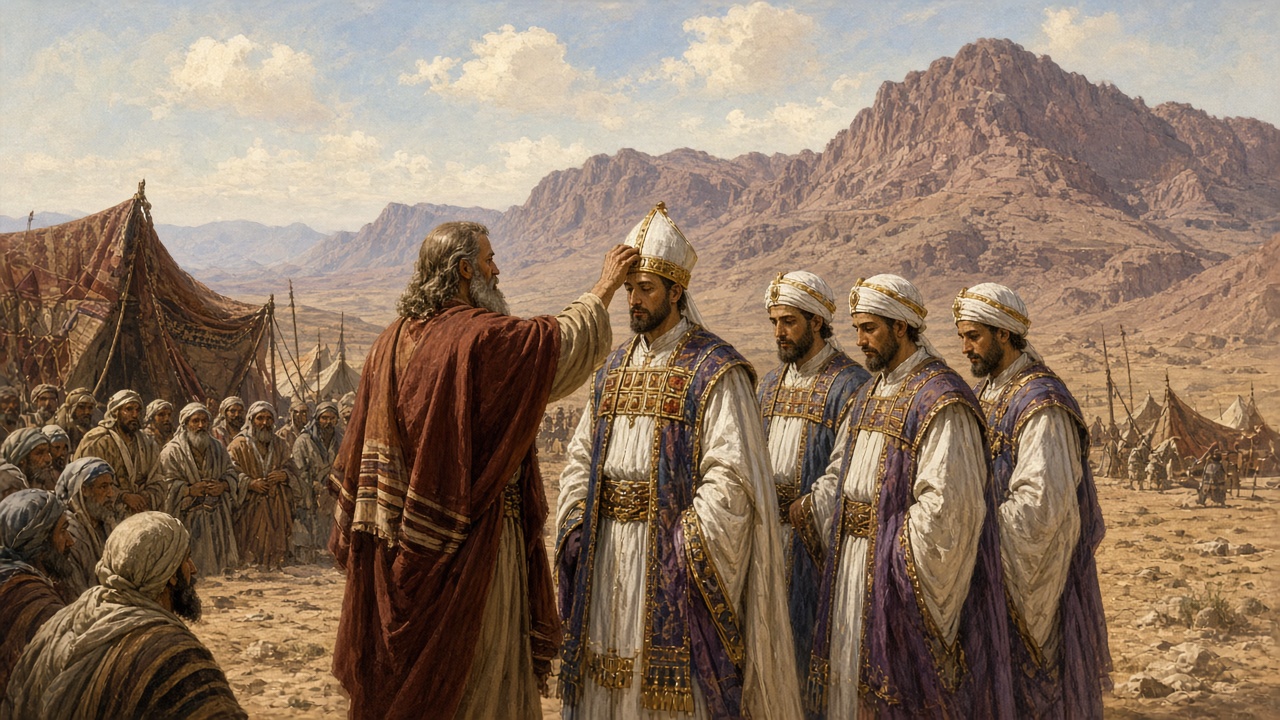
- Chapters 1–7 give laws for burnt offerings, meat offerings, and thank offerings, then for sin offerings and trespass offerings, and for the priests' duties in offering sacrifice. Chapters 8–10 recount the consecration of Aaron and his sons, Aaron's first offering for himself and the people, and the death of Nadab and Abihu, who were struck dead and buried outside the camp after offering strange, or common, fire not taken from the great brazen altar. Chapters 11–16 concern purity and the sacrifices and ordinances for putting impurity away.Sources: Easton: Leviticus · Nadab · Abihu
- Easton describes chapters 17–20 as laws marking the separation between Israel and other peoples. Further laws concern the priests' personal purity and their eating of holy things, offerings without blemish, and the due celebration of the great festivals in chapters 23 and 25. Promises and warnings about obedience follow, the book closes with a section on vows, and Easton notes that God is the direct speaker through almost the whole of it.Sources: Easton: Leviticus
- In the rites of chapter 16, one goat is associated with Azazel, which the Authorized Version renders scapegoat and the Revised Version leaves as Azazel. Easton reports that some Jewish interpreters take it as a place in the wilderness about twelve miles east of Jerusalem, while others take it as an evil spirit or even Satan, and he also notes a root meaning of separation.Sources: Azazel
Notes written with AI assistance from open sources (Theographic Bible Metadata, CC BY-SA 4.0; Easton’s Bible Dictionary, public domain) and reviewed before publishing.
Heyaya Famaisana Antalasamna
1Palai Tabuna yai Guyau ya yoga lau Mose lebena iyebom,
2Itete mate antalasam abiꞌabidi lau faꞌatadi. Isalaela dodogadi u falibadi uwe,
Sai yosiyosi ya antalasamen Guyau lisina yai mate gonowana bulumakau e sipi e gouti esega ya leyama ena Antalasam.
3Yena ena antalasam bulumakau, bena tamoꞌana tubutubu loholohona ya leyama Palai Tabuna e Tabanaikeli aba luhuluhu launa yai be haba Guyau ya ita faloholoho. 4Antalasam tau leyamana bena nimana ya tole lawen antalasam gabugabuna kuluna yai ya famala ena heyaya aba nuwa afulenna be Guyau haba ya ita faloholoho na ena heyaya ya nuwatuhu afuledi. 5Guyau matana yai bena bulumakau tamoꞌana gubufwauna ya lau funuhi na Elon nanatuna, iti antalasam tau gabugabudi haba yosiyosi ꞌwasinana ni sa abi be aba antalasam sadaidi fati sa lau sibusibuwedi Palai Tabuna aba luhuluhu launa yai. 6ꞌWapina ya papa na fisihona ya lau iboꞌiboi. 7Tau antalasam Elon, nanatuna tatau bena oyagi sa toledi aba antalasam hewana yai na sa yufi. 8Antalasam tau leyamana bena hoꞌowa ya abi be yosiyosi ganahewana yo ahena ya kaisudi na antalasam tau gabugabudi ya feledi. Piꞌadi, kuluna yo momona haba sa gabu faꞌofidi aba antalasam hewana yai. Ainauya te mate oyagi yai sa gabu na panena ya loholoho wananaha Guyau lisina yai. Guyau hinaga Mose ya faliba mate dodoga gonowana sipi, gouti, waliliya e bunebune gubugubufwauna ya famala edi antalasam gabugabuna. Antalasam gabugabudi lau faꞌatana mate ya fatalahadi.
Did you know?
The Burnt Offering
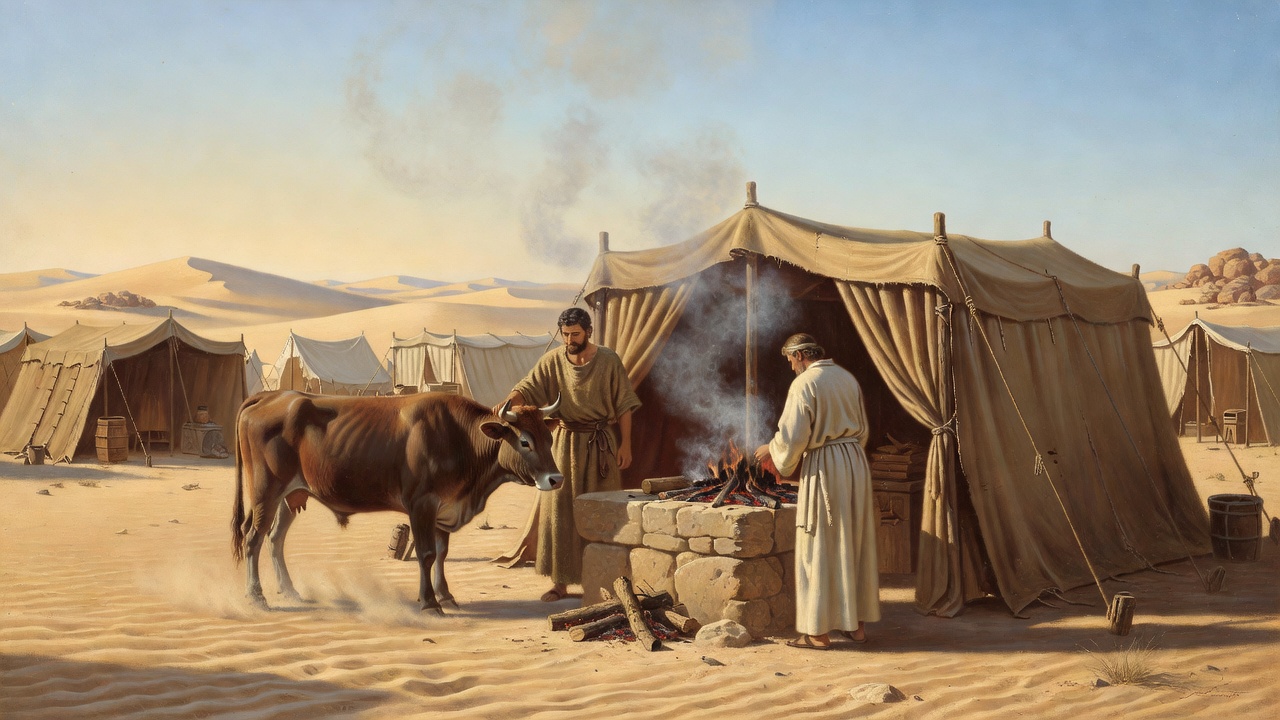
- The instructions for the burnt offering accommodate different economic means by allowing offerings from the herd, the flock (sheep or goats), or birds (turtledoves or young pigeons). For livestock, the animal was required to be a male without blemish.Sources: the Bible text itself
- The ritual required a clear division of roles between the worshiper and the priests. The worshiper brought the animal, laid a hand on its head for atonement, slaughtered it, skinned it, and washed its inner parts, while the sons of Aaron sprinkled the blood and burned the entire offering on the altar.Sources: the Bible text itself · Aaron
Notes written with AI assistance from open sources (Theographic Bible Metadata, CC BY-SA 4.0; Easton’s Bible Dictionary, public domain) and reviewed before publishing.
Credits and license for this translation
Buka Tabuna Tefadi
Mark, Acts, and selected excerpts of the Old Testament in the Buhutu language of Papua New Guinea
Buk Baibel long tokples Buhutu long Niugini
copyright © 2015 Wycliffe Bible Translators, Inc.
Language: Buhutu
Translation by: Wycliffe Bible Translators
This translation is made available to you under the terms of the
Creative Commons Attribution-Noncommercial-No Derivatives license 4.0.
You may share and redistribute this Bible translation or extracts from it in any format, provided that:
You include the above copyright and source information.
You do not sell this work for a profit.
You do not change any of the words or punctuation of the Scriptures.
Pictures included with Scriptures and other documents on this site are licensed just for use with those Scriptures and documents.
For other uses, please contact the respective copyright owners.
2015-10-06
Source: http://png.bible/bxh/ · eBible.org