Jeremiah 17
Buka Tabuna Tefadi · Tap a verse to see its cross-references.
Sibasiba Yaubada Lisina yai
5Guyau ya liba doha ite, iyen,
Yena sai laꞌi tanoꞌubu dogana ya sunumaꞌen,
yo ena fanufanuha moho ya laulau watanidi,
na Yau, Guyau, ya sana mulimuliyegu mate haba E kaumananaen.
6Itaꞌitana haba doha oyagi hige i in loholoho nuꞌu pitapitalina yai,
e doha tano aliꞌalitana yai, hige dodoga ti miyai, mate ya miya amainiya.
Bobonna asubena, ibege somo hesa loholohona i lobahi.
7Sai ya sunusunumaꞌegu haba loholoho E felen.
8In haba itaꞌitana doha oyagi hoꞌowa sadaina yai ya in hasa,
be lamna mate sa susu lau hoꞌowa.
Siuhwalo yai hige i mode.
Luguna mate sa lau idahe.
Yena hige usa mate ibege i mode.
Ya fuwa moho. (Samsi 1:3)
9Sai gonowana dodoga nuwadi ya sibaidi?
Fuya ouꞌouli sa buibuinidi,
be heyaya yo laulau bwalabwala doha bonu laꞌilaꞌidi,
na hige gonowana sai haba i faloholohodi.
10In moho Yau, Guyau, dodoga nuwadi E sibaidi.
Edi nuwatuhu yo edi amna E mainene komakomanidi,
Habahim esega - esega ena miyamiya yo ena paipaisowa, maisana E felen.
Did you know?
Trust, the Heart, and the Sabbath
- The iron stylus and diamond point were ancient tools used to carve deep, permanent inscriptions into hard stone or metal surfaces. Jeremiah invokes this image to emphasize that the idolatry of Judah was not a superficial slip, but deeply etched into their hearts and upon the horns of their altars.Sources: the Bible text itself
- Jeremiah contrasts a solitary shrub in the parched, salty desert with a flourishing tree planted by a stream. A tree with roots reaching into water stays green and continues bearing fruit even in years of drought, serving as an image of enduring life for those who trust in God rather than human strength.Sources: the Bible text itself
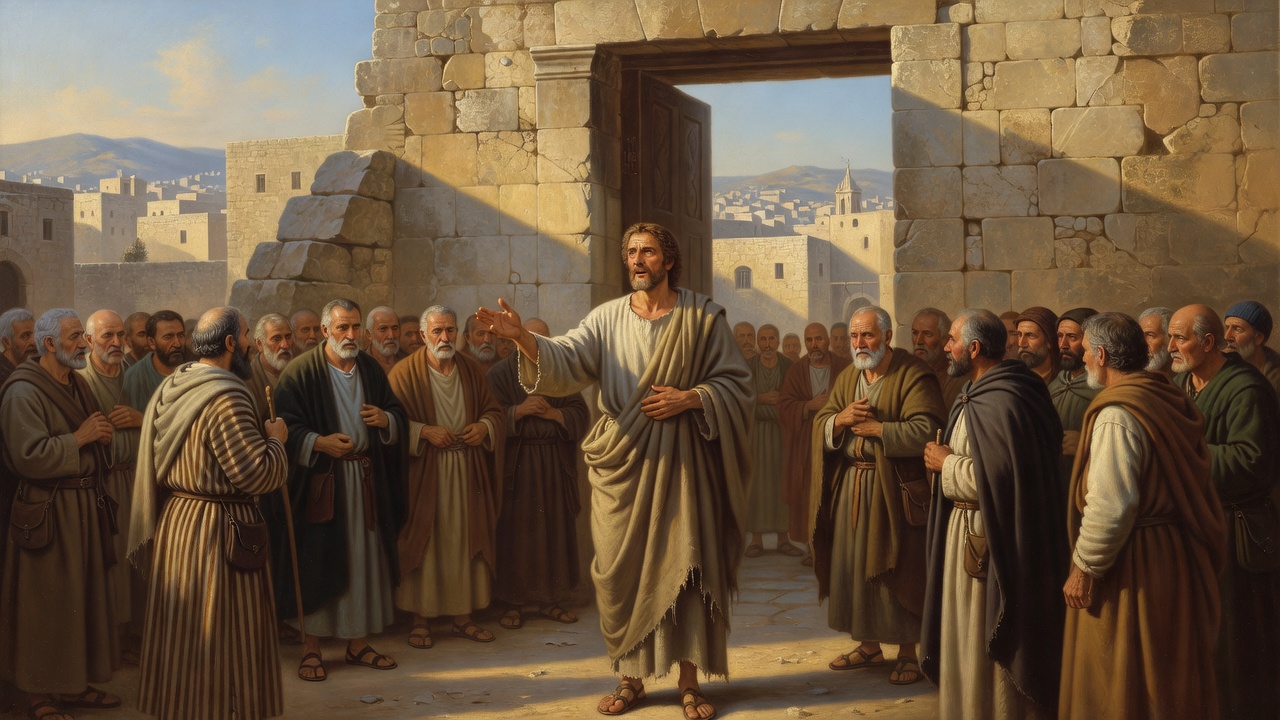
- Jeremiah was instructed to proclaim God's word at the gates of Jerusalem, specifically forbidding the carrying of commercial loads on the Sabbath. Keeping the Sabbath holy promised the continuation of kings on the throne of David and the arrival of worshippers from the territory of Benjamin, Judah, and the arid Negev.Sources: the Bible text itself · David · Benjamin (patriarch) · Jerusalem
Notes written with AI assistance from open sources (Theographic Bible Metadata, CC BY-SA 4.0; Easton’s Bible Dictionary, public domain) and reviewed before publishing.
Places in this chapter
- Arabah · 30.417, 35.151 · verse 6
- Jerusalem · 31.777, 35.234 · verses 19, 20, 21, 25, 26, 27
- People’s Gate · Today: in Jerusalem · 31.777, 35.234 · verse 19
- Negeb · 31.245, 34.841 · verse 26
- Shephelah · 31.692, 34.875 · verse 26
Only places identified with high confidence are shown (90% or more according to the scholarly sources compiled by OpenBible). Period map: DARE (Digital Atlas of the Roman Empire), CC BY 4.0; modern map: © OpenStreetMap contributors; places: OpenBible.info (CC BY 4.0).
Credits and license for this translation
Buka Tabuna Tefadi
Mark, Acts, and selected excerpts of the Old Testament in the Buhutu language of Papua New Guinea
Buk Baibel long tokples Buhutu long Niugini
copyright © 2015 Wycliffe Bible Translators, Inc.
Language: Buhutu
Translation by: Wycliffe Bible Translators
This translation is made available to you under the terms of the
Creative Commons Attribution-Noncommercial-No Derivatives license 4.0.
You may share and redistribute this Bible translation or extracts from it in any format, provided that:
You include the above copyright and source information.
You do not sell this work for a profit.
You do not change any of the words or punctuation of the Scriptures.
Pictures included with Scriptures and other documents on this site are licensed just for use with those Scriptures and documents.
For other uses, please contact the respective copyright owners.
2015-10-06
Source: http://png.bible/bxh/ · eBible.org