Judges 2
Buka Tabuna Tefadi · Tap a verse to see its cross-references.

About this book
About Judges
- The book is called Judges because it contains the history of Israel's deliverance and government by the men who bore that title. Easton's Bible Dictionary (1897) sets their story in repeated times of servitude under neighboring peoples and of deliverance by the judges, and it states that the chronology of the whole period is uncertain.Sources: Easton: Judges, Book of
- Easton's Bible Dictionary (1897) holds that the author was most probably Samuel, and that the book was probably composed during Saul's reign or at the very beginning of David's reign. Easton notes that the words in Judges 18:30–31 imply a date after the Philistines took the ark and after it was set up at Nob, whereas in David's reign the ark was at Gibeon.Sources: Easton: Judges, Book of
- As Easton outlines it, the book has an introduction (1–3:6) linking it with the narrative in Joshua, a history of thirteen judges (3:7–16:31) in four periods, and an appendix (chapters 17–21) with no formal connection to what goes before. If Eli and Samuel are included, Easton counts fifteen judges.Sources: Easton: Judges, Book of
- Easton's outline presents the setting as a succession of servitudes: under Chushan-rishathaim of Mesopotamia, under Eglon of Moab, under Jabin of Hazor in Canaan, under Midian with Amalek and the children of the east, under the Ammonites together with the Philistines, and again under the Philistines. Gideon, also called Jerubbaal, begins what Easton calls the second period; Jephthah, brought from Tob by the elders of Gilead, judged Israel for six years after delivering the people from the Ammonites; Samson, son of Manoah of Zorah, was a Nazirite to God from birth.Sources: Easton: Judges, Book of · Gideon · Jephthah · Samson
- The appendix records the conquest of Laish by a portion of the tribe of Dan, and the near extinction of Benjamin at the hands of the other tribes because Benjamin had assisted the men of Gibeah. Easton places these events only a few years after Joshua's death and says they show the people's religious and moral degeneracy. Easton also notes that Ruth originally formed part of Judges and was separated from it about A.D. 450, then placed in the Hebrew scriptures immediately after the Song of Solomon.Sources: Easton: Judges, Book of · Gibeah
Notes written with AI assistance from open sources (Theographic Bible Metadata, CC BY-SA 4.0; Easton’s Bible Dictionary, public domain) and reviewed before publishing.
Isalaela Dodogadi Guyau sa Nuwa Fuiyen
7Diyesuwa yo babada ma mwamwahulidi mate Isalaela dodogadi hola Guyau sa fafamuli watan. Guyau ginauli lalaꞌi ya lau ginauli enehedi mate mahudoꞌidi sa ita.
8Nun natuna, Diyesuwa mate Guyau tau famuli wataninna. Ena bolima 110 na ya peꞌi, 9be ena tanohi Guyau ya felen amainiya sa boꞌusai. Tanohina mate Timnata Helesi nuꞌuna yai, Efalaim piupiu hitidi yai, Gaꞌasi tuꞌana tefa lidilidina yai.
10Hiti te ya peꞌi mulina yai mate hiti mulita hige Guyau ti sibai yo somo ya laulau ginauli Isalaela enehedi hige ti sibai hinaga. 11Isalaela dodogadi heyaya sa ginauli Yaubada matana yai be Baꞌala oitaudi sa fadebasaedi. 12Afa wahadi Guyau edi Yaubada sa nuwa afulen, Logenana Idipi yai ya foya fahidi. Yaubada hahaisa sa famuli watanidi na dodoga sadasadaidi yai edi yaubada sa fadebasaedi be Guyau manana sa fabala. 13Guyau sa nuwa afulen be Baꞌala yo Asitoleti oitaudi sa fadebasaedi. 14Guyau ya manabala heyaheyaya Isalaela lebedi yai na ya ita afuledi tau lau kwaya lisidi yai be sa lau kwayaidi yo edi ginauli sa angafuhidi hinaga. Adi waiyunu sadasadaidi yai ya nuwa afuledi be sa lei hafihafitidi.
15Ibe Isalaela sa lau sa hiyala ibege Guyau i saguhidi be waiyunu haba sa lei hafihafitidi, doha haꞌa ya angwala lebedi yai. Yo fede nuwadi sa faiꞌabi.
16Habahim Guyau diyadi ya faꞌobiyodi be Isalaela dodogadi tau lau kwaya lisidi yai ya fasagufahidi.
17In moho Isalaela hige diyadi edi liba ti atahiyedi. Sa lau yaubada hahaisa sa famuli watandi yo sa fadebasaedi doha doga, tau matamata heyaya ya fafamuli watandi.
Iti hige doha afa wahadi, Guyau ena laugagayo sa famuli watandi. Edi laulau hige ti laulawen be feula, Guyau sa nuwa afulen.
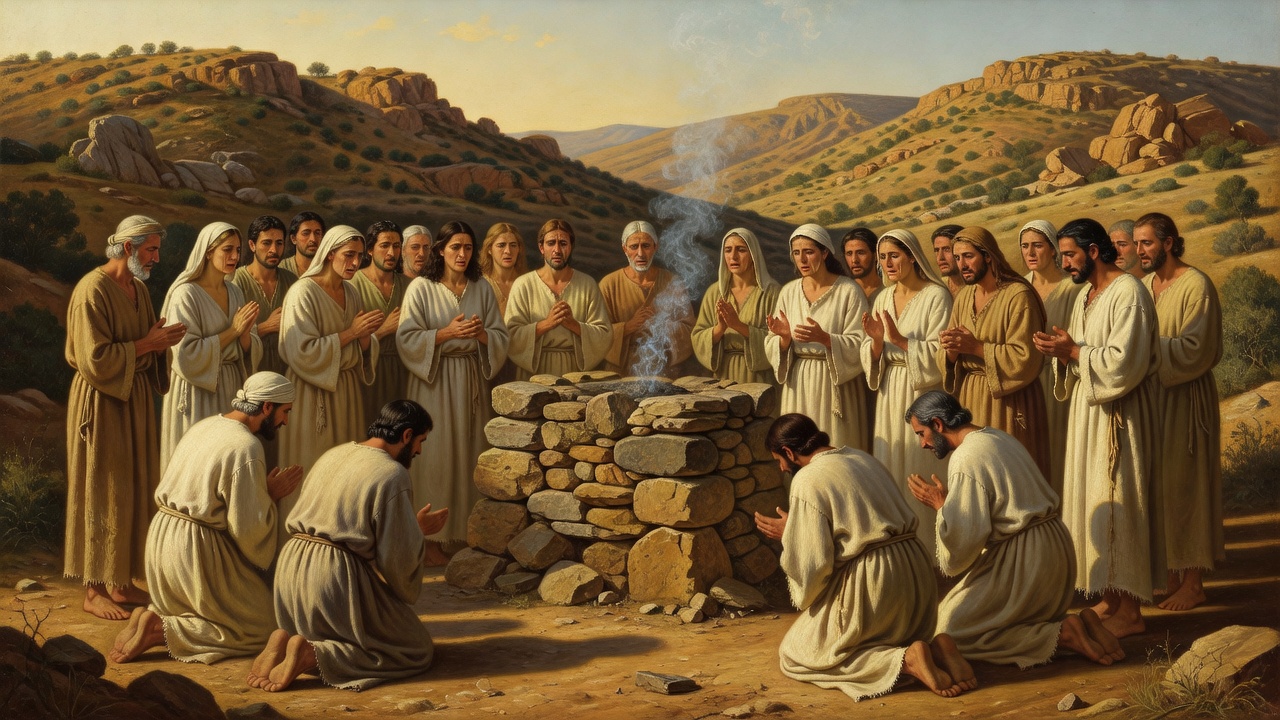
18Adi waiyunu mate, Isalaela sa fakamkamnadi yo sa abi heyayaidi Guyau ya atahi be diyadi ya fasinabo. Guyau, diyadi maꞌena na ya saguhi be adi waiyunu nimadi yai ya fofofahidi. Diyadi ena fuya yai mate Guyau, Isalaela dodogadi ya nuwatohatohaedi. 19Fuyanna diyadi ya peꞌi mate Guyau sa nuwa afulen yo sa heyaya wananaha habahim afa wahadi. Yaubada bwalabwaladi sa famuli watandi yo sa fadebasaedi. Hige gonowana laulau heyaheyayadi yo nuwa lau wata ti fatautau. Isalaela dodogadi maꞌedi Guyau sa angwala na fuyana laulau heyaheyayadi sa ginaulidi mate angwala sa utusi. Guyau ya manabala be nuwana ya fadosi bena ya lauꞌitadi. Yo fede hige i saguhidi, be taꞌowawa edi tanohi yai sa fageladi. Taꞌowawa edi laulau heyaheyayadi yai Isalaela sa lauꞌitadi, haba Guyau sa famuli watan doha afa wahadi?
Did you know?
Israel's Cycle of Disobedience and the Judges
- The name Bochim means "weepers." The site, likely situated between Gilgal and Shiloh, received this name after the Israelites wept aloud when the angel of the Lord rebuked them for making compromises with the inhabitants of the land.Sources: Bochim · the Bible text itself
- Joshua was buried at Timnath-heres, which means "portion of the sun," located north of the hill of Gaash in the hill country of Ephraim. He had led the Israelites following the death of Moses and died at the age of 110.Sources: Timnath-heres · Gaash · Joshua · the Bible text itself
- The term Baalim is the plural form referring to local manifestations of Baal, the principal male deity of the Phoenicians. Judges 2 establishes the book's recurring cycle: Israel abandons the Lord for regional gods, suffers under enemies, and is delivered when God raises up a judge.Sources: Baal · the Bible text itself
Notes written with AI assistance from open sources (Theographic Bible Metadata, CC BY-SA 4.0; Easton’s Bible Dictionary, public domain) and reviewed before publishing.
Places in this chapter
Only places identified with high confidence are shown (90% or more according to the scholarly sources compiled by OpenBible). Period map: DARE (Digital Atlas of the Roman Empire), CC BY 4.0; modern map: © OpenStreetMap contributors; places: OpenBible.info (CC BY 4.0).
Credits and license for this translation
Buka Tabuna Tefadi
Mark, Acts, and selected excerpts of the Old Testament in the Buhutu language of Papua New Guinea
Buk Baibel long tokples Buhutu long Niugini
copyright © 2015 Wycliffe Bible Translators, Inc.
Language: Buhutu
Translation by: Wycliffe Bible Translators
This translation is made available to you under the terms of the
Creative Commons Attribution-Noncommercial-No Derivatives license 4.0.
You may share and redistribute this Bible translation or extracts from it in any format, provided that:
You include the above copyright and source information.
You do not sell this work for a profit.
You do not change any of the words or punctuation of the Scriptures.
Pictures included with Scriptures and other documents on this site are licensed just for use with those Scriptures and documents.
For other uses, please contact the respective copyright owners.
2015-10-06
Source: http://png.bible/bxh/ · eBible.org