Isaiah 64
Buka Tabuna Tefadi · Tap a verse to see its cross-references.
Hige Yaubada hesa doha Um!
4Beyabeyana hige sai laꞌi yaubada hesa wasana i atahiyen
yo nenena i ita, doha Um.
Um ibom mate salumadi sa bagibagiyem enehedi wa paisowa.
5Wa laoma be salumadi ma nuwa amnadi dudulai sa laulau ginauli, wa saguhida.
Yo em laulau sa miyamiyaꞌedi, wa yoga hitinidi.
In moho heyaya hola E laulau ginauli, be manam E fabala.
Haba sidohana ema mwahumwahuli?
6Mahudoꞌimai tau heyaya.
Ema laulau dudulaidi mahudoꞌidi doha ahe sausau bidabidadi.
Ai E hohoya doha oyagi lugudi;
Yo doha hwayahwayau ema heyaya ya uya hudoꞌiyedi.
7Hige sai hesam yai i lauꞌuꞌula,
e, i miya esegahi lisim yai.
Be wa sana mulimuliyemai,
yo wa ita afulemai, be ema heyaya sa lawe hudoꞌiyemai.
8In moho, Guyau, um Tamamai.
Ai bwadagowa, na um tau falasa.
Nimam yai wa falasamai. (2 Kolinto 4:3)
9Guyau, tabu em manabala u falofa,
yo ema heyaheyaya tabu ai nuwam ti ota.
Ema lauꞌuꞌula u atahiyedi, be u nuwatohatohaemai
paꞌana mahudoꞌimai, em dodoga.
Did you know?
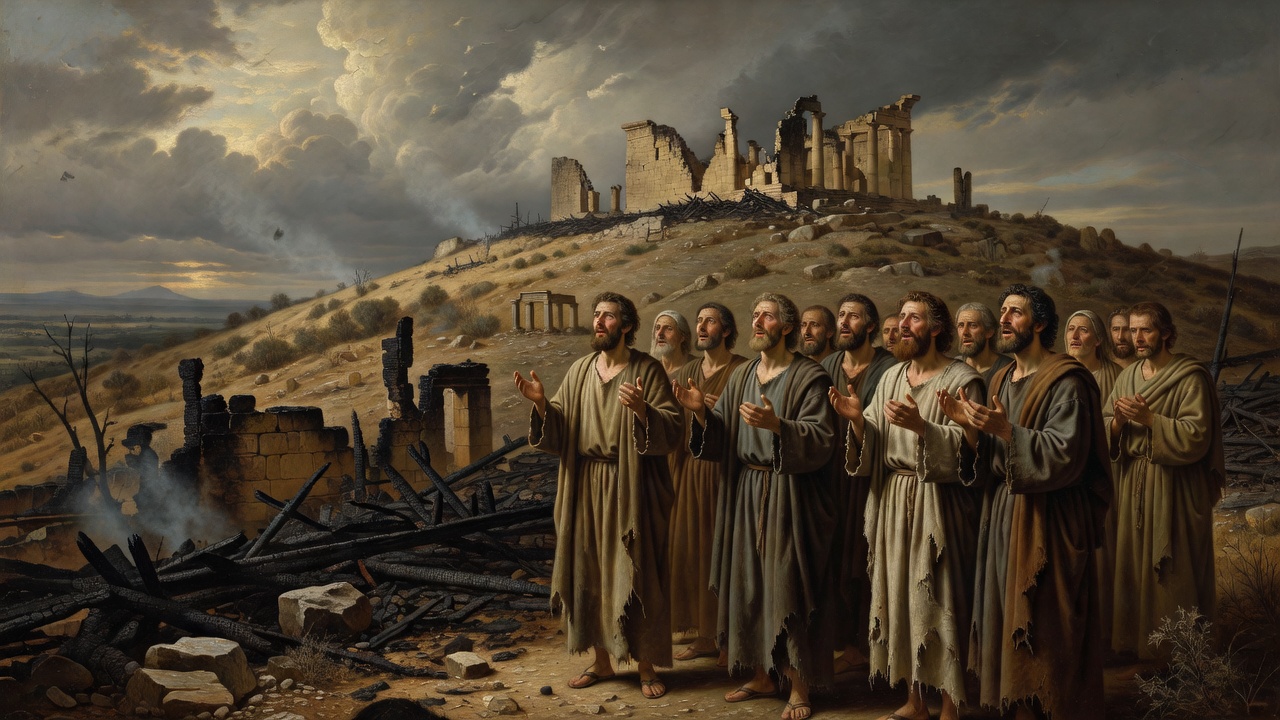
A Prayer for Mercy Amid Ruin
- The passage opens with a plea for God to rend the heavens and descend with world-shaking power, like fire that kindles brushwood. Yet it contrasts this desire for divine presence with a confession of human unworthiness, comparing people to withering leaves swept away by their own iniquities.Sources: the Bible text itself
- In Isaiah 64, the community appeals to God as a Father and craftsman, declaring, "we are the clay, and You are the potter." This imagery emphasizes human frailty and total dependence on God, pleading for divine mercy despite their acknowledged guilt.Sources: the Bible text itself
- The chapter laments the destruction of sacred spaces, describing Zion and Jerusalem as desolate wastelands. It specifically mourns the burning and ruin of the holy temple where past generations had offered praise.Sources: the Bible text itself · Zion · Jerusalem
Notes written with AI assistance from open sources (Theographic Bible Metadata, CC BY-SA 4.0; Easton’s Bible Dictionary, public domain) and reviewed before publishing.
Places in this chapter
Only places identified with high confidence are shown (90% or more according to the scholarly sources compiled by OpenBible). Period map: DARE (Digital Atlas of the Roman Empire), CC BY 4.0; modern map: © OpenStreetMap contributors; places: OpenBible.info (CC BY 4.0).
Credits and license for this translation
Buka Tabuna Tefadi
Mark, Acts, and selected excerpts of the Old Testament in the Buhutu language of Papua New Guinea
Buk Baibel long tokples Buhutu long Niugini
copyright © 2015 Wycliffe Bible Translators, Inc.
Language: Buhutu
Translation by: Wycliffe Bible Translators
This translation is made available to you under the terms of the
Creative Commons Attribution-Noncommercial-No Derivatives license 4.0.
You may share and redistribute this Bible translation or extracts from it in any format, provided that:
You include the above copyright and source information.
You do not sell this work for a profit.
You do not change any of the words or punctuation of the Scriptures.
Pictures included with Scriptures and other documents on this site are licensed just for use with those Scriptures and documents.
For other uses, please contact the respective copyright owners.
2015-10-06
Source: http://png.bible/bxh/ · eBible.org