Isaiah 56
Buka Tabuna Tefadi · Tap a verse to see its cross-references.
Nuꞌu hudoꞌi - hudoꞌi Hinaga haba Yaubada ena Loholoho sa Fahoina
1Guyau ena dodoga ya falibadi iyebom,
“Somo ya dudulai yo ya loholoho mate au ginauli,
yo miyamiya loholohodi bena ami miyamiyaꞌedi,
paꞌana begana haba E saguhimiu
yo egu dudulai wananahana E famahata.
6Taꞌowawa salumadi sa fele fuyoꞌidi Guyau lisina
bena ena sa paisowa,
bena Guyau hesana sa fanuha,
yo sa fadebasae,
salumadi mahudoꞌidi Sabati sa faꞌatitiyen yo hige ti kaiwegowegogoꞌen,
yo salumadi egu yali sa abi didin.
7Haba E lawemiu egu Tuꞌa Fafatabuna yai
yo egu aba lauꞌuꞌula lumana yai,
be kwade E felemiu.
Ainauya gabugabudi yo antalasam haisa haba nuwagu sa abi egu aba antalasam yai.
Egu Dubu mate Aba Laulauꞌuꞌula, egu dodoga nuꞌu ouꞌouli yai, enehedi.”
Did you know?
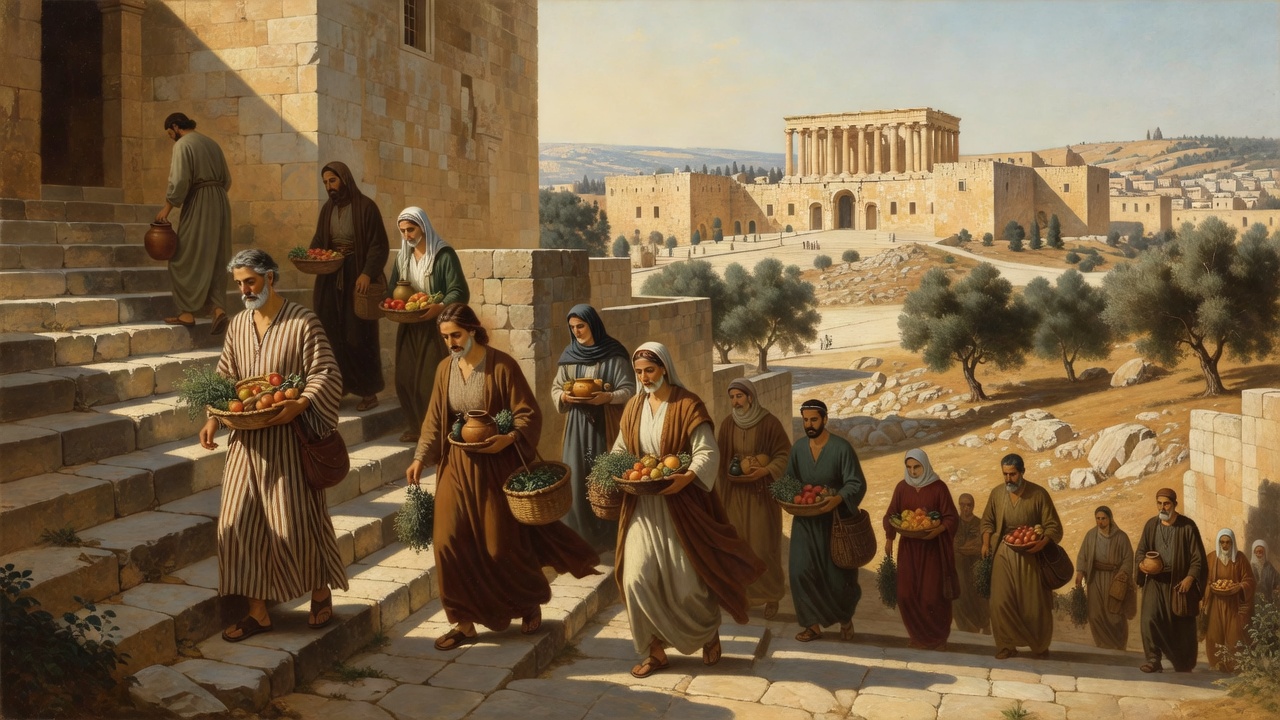
A House of Prayer for All Nations
- Isaiah 56 explicitly welcomes foreigners and eunuchs who honor the Sabbath and keep God's covenant, promising them an everlasting name and declaring that God's house will be called a house of prayer for all nations.Sources: the Bible text itself
- In sharp contrast to the faithful foreigners who join the Lord, the passage reproaches Israel's leaders and watchmen, describing them as blind, mute dogs and self-indulgent shepherds pursuing their own gain and drink.Sources: the Bible text itself
- Historical records of biblical chronology date the start of Isaiah's prophetic activity to around 758 BC, spanning a duration of approximately 62 years.Sources: Prophecies of Isaiah
Notes written with AI assistance from open sources (Theographic Bible Metadata, CC BY-SA 4.0; Easton’s Bible Dictionary, public domain) and reviewed before publishing.
Places in this chapter
- Jerusalem · 31.777, 35.234 · verse 7
Only places identified with high confidence are shown (90% or more according to the scholarly sources compiled by OpenBible). Period map: DARE (Digital Atlas of the Roman Empire), CC BY 4.0; modern map: © OpenStreetMap contributors; places: OpenBible.info (CC BY 4.0).
Credits and license for this translation
Buka Tabuna Tefadi
Mark, Acts, and selected excerpts of the Old Testament in the Buhutu language of Papua New Guinea
Buk Baibel long tokples Buhutu long Niugini
copyright © 2015 Wycliffe Bible Translators, Inc.
Language: Buhutu
Translation by: Wycliffe Bible Translators
This translation is made available to you under the terms of the
Creative Commons Attribution-Noncommercial-No Derivatives license 4.0.
You may share and redistribute this Bible translation or extracts from it in any format, provided that:
You include the above copyright and source information.
You do not sell this work for a profit.
You do not change any of the words or punctuation of the Scriptures.
Pictures included with Scriptures and other documents on this site are licensed just for use with those Scriptures and documents.
For other uses, please contact the respective copyright owners.
2015-10-06
Source: http://png.bible/bxh/ · eBible.org