Isaiah 5
Buka Tabuna Tefadi · Tap a verse to see its cross-references.
Wain Gabuna Wanana
1Hola lili te ya wanai na au atahi,
Hidagu ena wain gabuna lilina.
Lilina doha ite:
Hidagu mate ena wain gabuna uduhuli mahumahulana yai.
2Tanohina ya giyali na umeꞌehuna ya tanoi;
be wain loholohodi ya umahidi.
Aba itaꞌita wata lumana ya ginauli,
Wain uludi ena aba folofolodi galina laꞌilaꞌi sa pidi umeꞌehu yai.
Habahim wain uludi edi fuya nanau ya bagiyen,
in moho nanaudi mate sa tabulu.
3Yo fede hidagu iyen,
“Tau miya Yelusalem yai yo Diudeya yai,
egu gabu yo yau haga au fadosimai.
4Nuwana hige somo laꞌi ya ginauli
egu gabu yai te?
Be logena uludi sa tabulu
na yau egu fanuha wa, higeꞌe.
5Egu wain gabuna mate haba egu abiꞌabina doha ite;
wain gogolana ya in
be ya yabalu haba E anꞌoiꞌidi
yo ganaganana haba
E lopa fahi be suisui
adi banwawa yai ya fuyo.
6Haba E ita afulen be hawa sa in,
na ibege ya gula yawasidi e ya samuidi.
Yada haba E lau biliyedi,
be ibege i usa ai hewadi.”
7Wain gabuna
Hewa Wananaha Guyauna
ya umahi mate logena Isalaela Nuꞌuna
na wain mahinadi mate Diuda dodogadi
Ena fanuha bena loholoho sa ginaginauli.
In moho, ya itadi sa aiyunu.
Laulau dudulaidi ya fanuha bena sa ginaulidi.
In moho ya atahi sa tantan bena sidohana sagu sa lobahi. (Matiu 23:36)
Did you know?
The Song of the Vineyard and the Six Woes
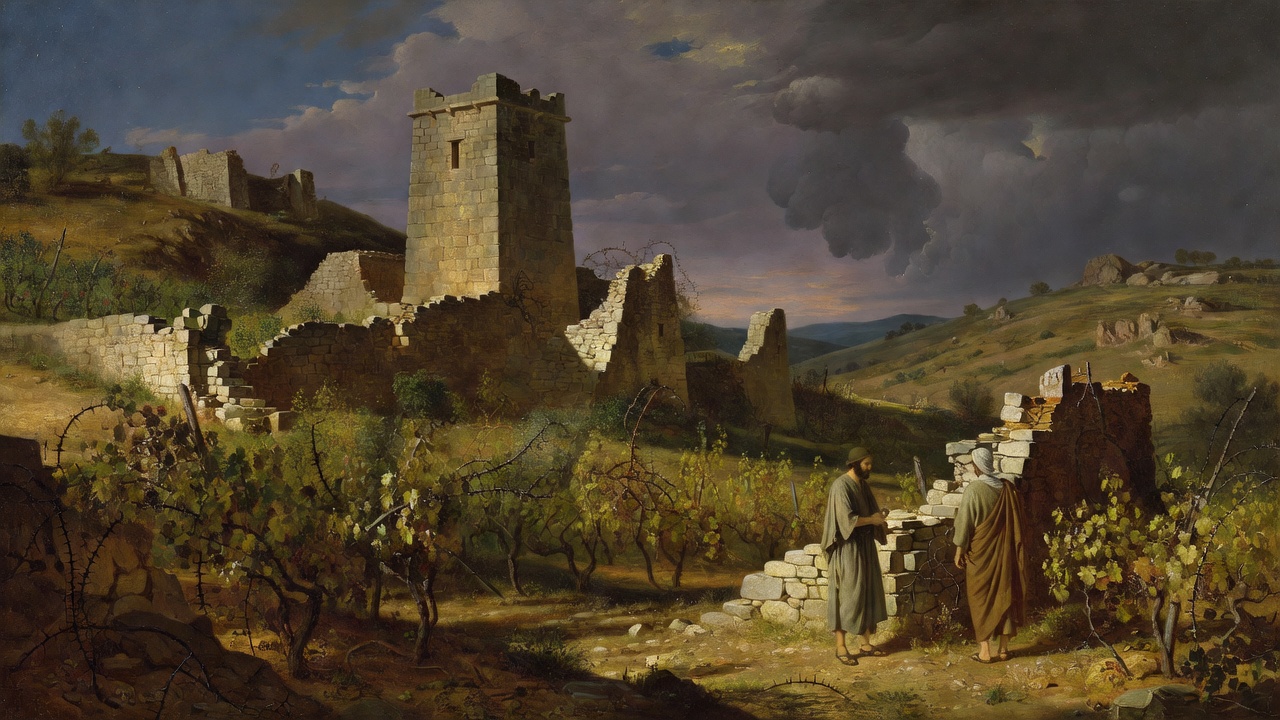
- The opening song in Isaiah 5 describes the elaborate labor of ancient Judean viticulture: clearing rocky hillsides of stones, building a protective stone watchtower, digging out a winepress in the bedrock, and planting prime vines surrounded by a protective hedge and wall. The poem turns into a legal parable where the vineyard represents the house of Israel and the people of Judah, from whom justice was expected instead of bloodshed.Sources: the Bible text itself
- The chapter delivers a series of six prophetic laments or woes, condemning specific social and moral abuses in Judah. These include wealthy landowners consolidating real estate by adding house to house and field to field, judges taking bribes to acquit the guilty while denying justice to the innocent, and leaders indulging in lavish feasting while ignoring divine instruction.Sources: the Bible text itself
- Isaiah's prophetic ministry in Jerusalem addressed the people of Judah over an extended period beginning in the mid-eighth century BC. The chapter concludes with a warning that the Lord would signal distant, disciplined foreign armies equipped with chariots, bows, and swift horses to execute judgment on the land.Sources: Jerusalem · Prophecies of Isaiah · the Bible text itself
Notes written with AI assistance from open sources (Theographic Bible Metadata, CC BY-SA 4.0; Easton’s Bible Dictionary, public domain) and reviewed before publishing.
Places in this chapter
Only places identified with high confidence are shown (90% or more according to the scholarly sources compiled by OpenBible). Period map: DARE (Digital Atlas of the Roman Empire), CC BY 4.0; modern map: © OpenStreetMap contributors; places: OpenBible.info (CC BY 4.0).
Credits and license for this translation
Buka Tabuna Tefadi
Mark, Acts, and selected excerpts of the Old Testament in the Buhutu language of Papua New Guinea
Buk Baibel long tokples Buhutu long Niugini
copyright © 2015 Wycliffe Bible Translators, Inc.
Language: Buhutu
Translation by: Wycliffe Bible Translators
This translation is made available to you under the terms of the
Creative Commons Attribution-Noncommercial-No Derivatives license 4.0.
You may share and redistribute this Bible translation or extracts from it in any format, provided that:
You include the above copyright and source information.
You do not sell this work for a profit.
You do not change any of the words or punctuation of the Scriptures.
Pictures included with Scriptures and other documents on this site are licensed just for use with those Scriptures and documents.
For other uses, please contact the respective copyright owners.
2015-10-06
Source: http://png.bible/bxh/ · eBible.org