Genesis 40
Buka Tabuna Tefadi · Tap a verse to see its cross-references.
Kin ana Kapu Tau Lawelawenina yo Fwalawa Tau Gabugabu
1Fuya fisa mulidi yai, Idipi edi kin ana wain kapuna tau lawelawenina yo fwalawa tau gabugabu babaꞌisadi, lau pono sa ginauli kin lisina yai. 2Ya manabala tau paisowa laꞌilaꞌidi luwaga te, lisidi yai, 3be ya falau delidi gati edi baꞌisa ena luma yai, somo yai Diyosepa ena aba falau delina.
4Gati edi baꞌisa, Diyosepa ya tole be ya ita watanidi.
Kaputi tau lawelawenina yo fwalawa tau gabugabu deli yai sa miya lahai fisa mulidi yai, sa faiꞌeno suwai iꞌipa esega yai. In moho eno suwaidi aniyodi hige gonogonowadi.
6Bobonna Diyosepa ya laoma ya itadi mate sa nuwa dubu.
7Yo fede ya fatiꞌoidi iyen,
Paꞌana somo nenemiu sa heyaya?
8Alinana sa bui tiyen,
Tataumai luwaga ama eno suwai hige sai hesa haba aniyodi i liba famahatadi.
Habahim Diyosepa ya falibadi iyen,
Yaubada in ibona mate eno suwai aniyodi ya fafamahatadi! Ami eno suwaidi au falibagu.
9Yo fede kapu tau lawenina ana eno suwai ya dedei Diyosepa lisina yai, iyen,
Agu eno suwai yai wain mahinana E ita nuwanuwagu yai, 10lagana faihona. Hige walolona ya taya, na wain uludi dulidi sa nanau. 11Falo ana kapu E abiꞌabiꞌi, na wain uludi E abidi be E folo kapu ni ganahewana yai na Falo E felen.
12Diyosepa ya faliba iyen,
Am eno suwai aniyona doha ite: Laga faihona aniyona mate lahai faihona. 13Lahai faihona mulidi yai Falo haba ya fafuyom be am paisowa wa abi fuyoi. Kapu haba wa felefelen doha ainiyadi. 14Na yena ginauli sa lau dudulai lebem yai mate aee–, u nuwatuhuigu yo u nuwatohatohaegu. Falo u faliba be i kam fahigu deli yai te, 15paꞌana Hebelu edi tanohi yai sa angafuhigu be sa laweguma amaiteꞌi. Amaiteꞌi hinaga hige somo hesa ya ginauli faheyaya be halana yai haba ti falau deligu.
16Fuyana kaputi tau lawelawenina, ana eno suwai aniyona Diyosepa ya dedei mate fwalawa tau gabugabu nuwana yai ya mahata, yo fede iyen,
Yau hinaga agu eno suwai: Kulugu yai mate fwalawa noho faihona. 17 Noho hewa yai mate kalahe gabugabudi hudoꞌi - hudoꞌi Kin ana. In moho nohona hewa yai, kalahedi ataiꞌa sa anidi.
18Diyosepa iyen,
Noho faihona aniyona mate lahai faihona. 19Lahai fafaihonadi yai Falo haba gadom ya ibo na ya fakautim ai oyagi. Na ataiꞌa haba taum sa aniꞌi.
20Lahai fafaihonana mate Falo ena fuya tubu fanuwa hitinina, be ena tau paisowa laꞌilaꞌidi mahudoꞌidi edi anꞌangogo ya ginauli. Kapu tau lawelawendi edi baꞌisa yo fwalawa tau gabugabudi edi baꞌisa deli yai Falo ya soꞌe fahidi be ya lawedi ena tau paisowa lalalaꞌi nuwanuwadi yai.
21Kapu tau lawelawendi edi baꞌisa ana paisowa ya fele fuyoi, be haba kapu ya tole bodai Falo ai nimana.
22Na fwalawa tau gabugabudi edi baꞌisa ya fakauti, doha eno suwaidi Diyosepa ya liba famahata lisidi yai.
23In moho, kapu tau lawelawenina edi baꞌisa hige Diyosepa i nuwatuhui, ya nuwa fuiyen.
Did you know?
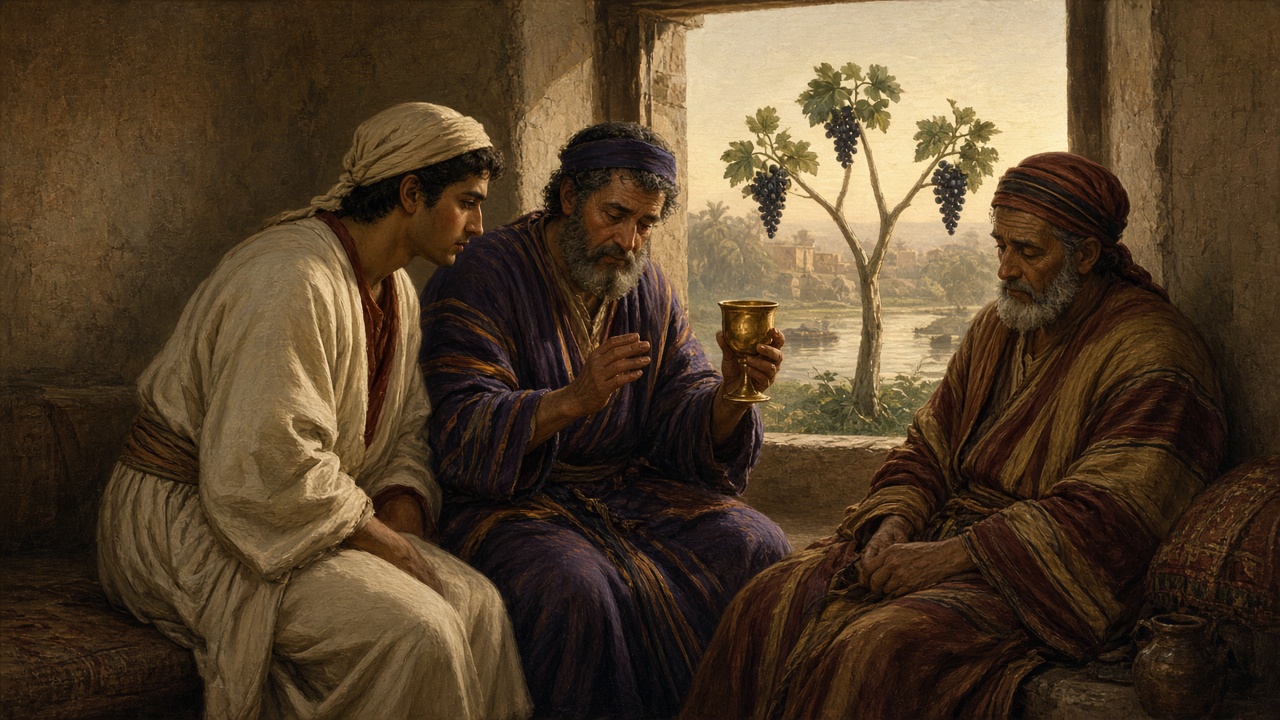
Dreams in Pharaoh's Prison
- Pharaoh was angry with two officers, the chief cupbearer and the chief baker, and put them in the house of the captain of the guard, the same prison where Joseph was confined. The captain assigned them to Joseph, who became their personal attendant.Sources: the Bible text itself
- On the same night the cupbearer and the baker each dreamed, and Joseph said that interpretations belong to God. He took the three branches and the three baskets to mean three days: Pharaoh would lift up the cupbearer's head and restore him, but lift off the baker's head and hang him on a tree. On the third day, Pharaoh's birthday, the king held a feast for his officials, restored the cupbearer, and hanged the baker.Sources: the Bible text itself
- Joseph asked the cupbearer to remember him and mention him to Pharaoh after his restoration. He said he had been kidnapped from the land of the Hebrews and had done nothing for which he should have been put in the dungeon. Easton's Bible Dictionary (1897) identifies the Pharaoh of Joseph's days as probably Apopi, or Apopis, the last of the Hyksos kings; some argue instead that Joseph came to Egypt later, under Thothmes III.Sources: the Bible text itself · Pharaoh (of Joseph)
Notes written with AI assistance from open sources (Theographic Bible Metadata, CC BY-SA 4.0; Easton’s Bible Dictionary, public domain) and reviewed before publishing.
Places in this chapter
Only places identified with high confidence are shown (90% or more according to the scholarly sources compiled by OpenBible). Period map: DARE (Digital Atlas of the Roman Empire), CC BY 4.0; modern map: © OpenStreetMap contributors; places: OpenBible.info (CC BY 4.0).
Credits and license for this translation
Buka Tabuna Tefadi
Mark, Acts, and selected excerpts of the Old Testament in the Buhutu language of Papua New Guinea
Buk Baibel long tokples Buhutu long Niugini
copyright © 2015 Wycliffe Bible Translators, Inc.
Language: Buhutu
Translation by: Wycliffe Bible Translators
This translation is made available to you under the terms of the
Creative Commons Attribution-Noncommercial-No Derivatives license 4.0.
You may share and redistribute this Bible translation or extracts from it in any format, provided that:
You include the above copyright and source information.
You do not sell this work for a profit.
You do not change any of the words or punctuation of the Scriptures.
Pictures included with Scriptures and other documents on this site are licensed just for use with those Scriptures and documents.
For other uses, please contact the respective copyright owners.
2015-10-06
Source: http://png.bible/bxh/ · eBible.org