2 Samuel 5
Buka Tabuna Tefadi · Tap a verse to see its cross-references.

About this book
About 2 Samuel
- Easton's Bible Dictionary (1897) says the books of Samuel were probably written by Samuel, Gad, and Nathan. According to that entry, Samuel penned the first twenty-four chapters of the first book; Gad, David's companion, continued the history, and Nathan completed it, probably arranging the whole. The entry gives no date of writing, but says Second Samuel covers perhaps fifty years, the reign of David.Sources: Easton: Samuel, Books of
- After Saul's death, David was made king over Judah and reigned in Hebron, while Abner, commander of Saul's army, had Ish-bosheth proclaimed king. Ish-bosheth reigned at Mahanaim, beyond the Jordan, and a state of war existed between the two kings. Joab, captain of the host throughout David's reign, led the assault on the fortress on Mount Zion in Jerusalem and for that service was raised to the rank of prince of the king's army.Sources: Abner · Mahanaim · Joab · Jerusalem
- Easton describes 2 Samuel as a history of David's reign, mainly in its political aspects: over Judah in chapters 1-4, and over all Israel in chapters 5-24. The last four chapters are treated as a sort of appendix, recording various events but not in chronological order. The books are not complete histories; frequent gaps appear because, in Easton's view, their aim is the gradual development of the kingdom of God rather than a full account of each reign.Sources: Easton: Samuel, Books of
- The Septuagint translators regarded the books of Samuel and of Kings as one continuous history, which they divided into four books called the Books of the Kingdom. The Vulgate followed this division but named them the Books of the Kings, so the books called First and Second Samuel in modern Protestant versions were the First and Second Books of Kings. Easton also notes that the account of David's sin in the matter of Bathsheba, in 2 Samuel 11:2-12:29, is omitted from the corresponding passage in 1 Chronicles 20.Sources: Easton: Samuel, Books of
Notes written with AI assistance from open sources (Theographic Bible Metadata, CC BY-SA 4.0; Easton’s Bible Dictionary, public domain) and reviewed before publishing.
Deiwidi Isalaela yai ya Kin
1Isalaela suludi mahudoꞌidi sa laoma Deiwidi lebena, Hebelon nuꞌuna yai na tiyen,
Ai afa efam. 2Beyabeyana, Saulo hola ma kinna um logem Isalaela eda tau hiyala wa foyahidi wa lau wa hiyahiyala be Guyau ya falibam iyen, “Um haba egu dodoga Isalaela wa ita watanidi doha sipi tau itaꞌitawata sipi ya ita watanidi yo haba wa famala edi baꞌisa.”
3Isalaela babadadi mahudoꞌidi sa laoma Kin Deiwidi lebena Hebelon nuꞌuna yai be maꞌedi sa angwala Yaubada matana yai. Habahim, oliwe uluna gilisina sa fagoi kuluna yai bena sa fawananaha mate Deiwidi Isalaela edi Kin.
4Deiwidi ena bolima 30 mate ya famala kin na ya ita wata ee–, boliman 40.
Did you know?
David King Over All Israel and the Capture of Jerusalem
- After ruling for seven and a half years in Hebron, David unified Israel and captured the mountain stronghold of Zion from the Jebusites. He renamed the fortress the City of David and expanded its defenses around the Millo, or supporting terraces.Sources: the Bible text itself · Zion · Millo · Hebron
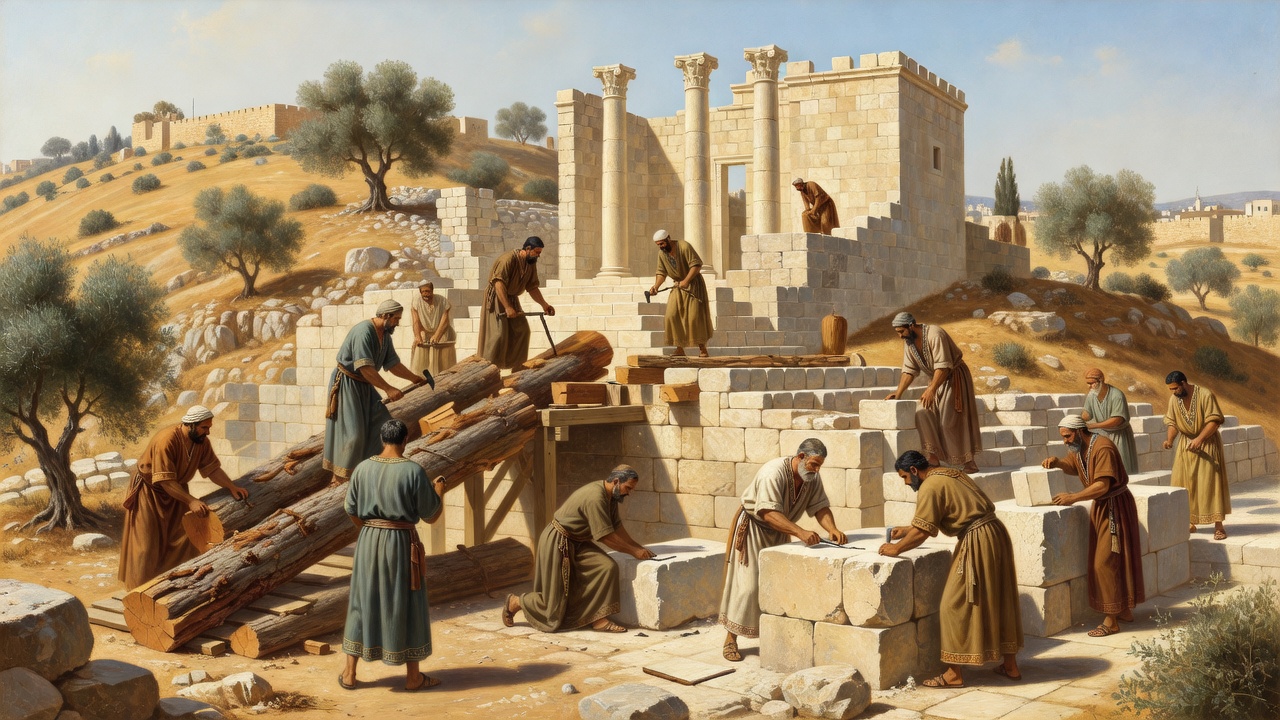
- Hiram, king of the Phoenician coastal city of Tyre, established an alliance with David by sending cedar timber, carpenters, and stonemasons to build a royal palace in Jerusalem.Sources: the Bible text itself · Hiram · Tyre
- Located southwest of Jerusalem, the Valley of Rephaim served as the staging ground for Philistine incursions once they learned David had been crowned king over all Israel.Sources: the Bible text itself · Valley of Rephaim
Notes written with AI assistance from open sources (Theographic Bible Metadata, CC BY-SA 4.0; Easton’s Bible Dictionary, public domain) and reviewed before publishing.
Places in this chapter
- Hebron · Today: Tel Rumeida · 31.525, 35.102 · verses 1, 3, 5, 13
- Jerusalem · 31.777, 35.234 · verses 5, 6, 13, 14
- City of David · 31.774, 35.236 · verses 7, 9
- Zion · Today: Jerusalem · 31.777, 35.234 · verse 7
- Tyre · 33.271, 35.196 · verse 11
- Valley of Rephaim · 31.763, 35.219 · verses 18, 22
- Gezer · Today: Tel Gezer · 31.859, 34.919 · verse 25
Only places identified with high confidence are shown (90% or more according to the scholarly sources compiled by OpenBible). Period map: DARE (Digital Atlas of the Roman Empire), CC BY 4.0; modern map: © OpenStreetMap contributors; places: OpenBible.info (CC BY 4.0).
Credits and license for this translation
Buka Tabuna Tefadi
Mark, Acts, and selected excerpts of the Old Testament in the Buhutu language of Papua New Guinea
Buk Baibel long tokples Buhutu long Niugini
copyright © 2015 Wycliffe Bible Translators, Inc.
Language: Buhutu
Translation by: Wycliffe Bible Translators
This translation is made available to you under the terms of the
Creative Commons Attribution-Noncommercial-No Derivatives license 4.0.
You may share and redistribute this Bible translation or extracts from it in any format, provided that:
You include the above copyright and source information.
You do not sell this work for a profit.
You do not change any of the words or punctuation of the Scriptures.
Pictures included with Scriptures and other documents on this site are licensed just for use with those Scriptures and documents.
For other uses, please contact the respective copyright owners.
2015-10-06
Source: http://png.bible/bxh/ · eBible.org