Matthew 11
Handr Taara · Tap a verse to see its cross-references.
Gupfo Yohansoke Iyesusmaants woshetswotsi
1Iyesus tzazihanotsi b́ danif tatse gitwotssh b́ imihakon manoki beyok man k'azk'rat bíyok karnts kitwotsitse nabonat daniyosh bíami.
2Gupfo Yohans tipi mootse b́ befere, Krstos fino b́shishtsotse b́ danif k'atswotsi woshat, 3«Weetwe eteetso neenemó? K'osho koronó?» err Iyesusi bo aatitwok'o b́woshi. 4Iyesuswere hank'o ett boosh bíaaniy, «Amr it bek'tsonat it shishts jamo Yohanssh keewwere. 5Hambe! dogwots bek'irunee, shokltswots káwdek't sha'irune, een shodetswots s'ayinirune, waazdoogwots shishirune, k'irtswots tuwirune, t'owwtssh doo shishiyo nabeyirwee, 6T jangosh t'arat'arerawo deereke.»
7Yohans woshtswots bo amiyakon, Iyesus Yohans jango hank'o ett ashuwotssh keewo dek't b́tuu, «Aab eeg s'iiloshe woorwomants keshat it weyi? Jongi giwshirw elto s'iilisheya? 8Andoor eeg bek'ishe kesh itweyi? Sheeng tah tahdek'ts asho s'iilisheya? Sheeng tah tahtswotsiyere naash naashi mootsne bo fa'oni. 9Eshe, eegoshe it keshi? Nebiyo bek'isheya? Ee, dab nebiyiwoniyere ayidek't bogo bek'ishe etirwe itsha. 10Bíye ‹Hambe, n shin shinatse sha'arr, n weerindo k'anitwo t woshtso n shinats woshitwe› ett guut'etsok'one. 11Arikon itsh etirwe, máátswots boshuuts ashotse gupfo Yohansiyere bogo tuuratse, ernmó dari mengstotse ayidek't muk'efo bíyere bogfe. 12Gupfo Yohans dúúrtson tuut hambetsish b́borfetso dari mengstu ayidek'atniye biingifniyeyiri, kup'shde maak'oritwotsmó bin daatsitune.
13«Nebiyi jamwots boimts danonat Muse kishatse imets nemo gupfo Yohansok b́borfetso bek'on keewrnee. 14Eshe bo bokeewtso dek'osh ekitute wotiyal, weetwe eteetso Eliyas hambe, bíhe Yohansiye. 15K'ebet waaz detstso k'ewe!
16«Ernmó dúranatsi ashuwotsi egontoniya arede t s'ileti k'úúna? Shiratse bedek't botohwotsi s'eegfetst, 17‹Turaro itsh fugronee duuwatste! no jawernowere epo k'azrtee!› etiru nana'úwotsiye boariyee. 18Mank'o gupfo Yohans b́woor mááyo b́marwonat woyini bíro b́úyawo b́waare, ‹Hanwo Fo'erawoniye bíatsotse fa'oni!› bísh boeti. 19Ash na'o ando mafetst, úshfetst b́waare, ‹Hanwo! jaaletsonat weyini ushkee, t'ilsh ko'ifuuwotsnat morretswots kod'i ashe!› boeti. Wotowa bako dani telefu arik bwoto b́danet b finone.»
Aman bok'aztsatse tuutson aatsniyets kitwotsi
20Manats dabt Iyesus k'osh kitwotsiyere bogo ay adits keewwotsi b́ fints kitwots, naandrone boerawotse hank'o ett wok'aso dek't b́tuwi, 21«Indowe neesha Korazine! Indowe neesha Betesayide! ititse k'aleets aditswots, T'irositsnat Sidon kitwotsitse k'alere wotink'ere manoke beyat teshts ashuwots shiyani taho tahde'er tulo boats buh de'er yoots naandrone etank'ne b́teshi! 22Mansh eshe angshi aawots, itiyere T'irosnat Sidonitse teshtswotsko fayo ketitwe etirwe. 23Neewere K'frnahome!, darots n borfetso dambaan tuwo geefiya? Si'olits oot'etune! n gitsotse k'aleets aditsanotsi, Sidonitse k'alere wotink'ere kitman b t'afrawon hambetsish beyank'aniye bteshi! 24Ari keewhanatse tuutsone neesh tkeewiri, angshi aawots Sedomi fayet fayo neen fayetwoniyere ketefee!»
Krstosn kashdek'o datsetuwok'o
25Manoor Iyesus hank'owa bíet «Daronat datsonsh doonzo nihono! keewan dantswotsnat t'iwintsitwotssh aatsat danawwotssh n kitstsotse neen udere, 26Ee! nihono! han k'alo n shuno wotere. 27Tnih jamkeewo taash imre, nihoniyere okoon naayo dantso konwor aaliye. Mank'o naayo niyere okoon niho dantso konwor aaliye, naayo b́kitsiyalabako konúwor niho dano falratse.
28«It angifinon maawtswotso! kuronweree itats b́mangts jamwots t maants woore! taawere kashdek'o itsh imetwe. 29T k'ambariyo itats kurde'eree, tiatsnowere s'iilr dande'ere, taa dingatonat ttooko dashan detsk taane, it kashush kashdek'o daatsitute. 30T k'ambaryonúwere kic'iratse, t kuronweree ketee.»
Did you know?
John's question and the cities that did not repent
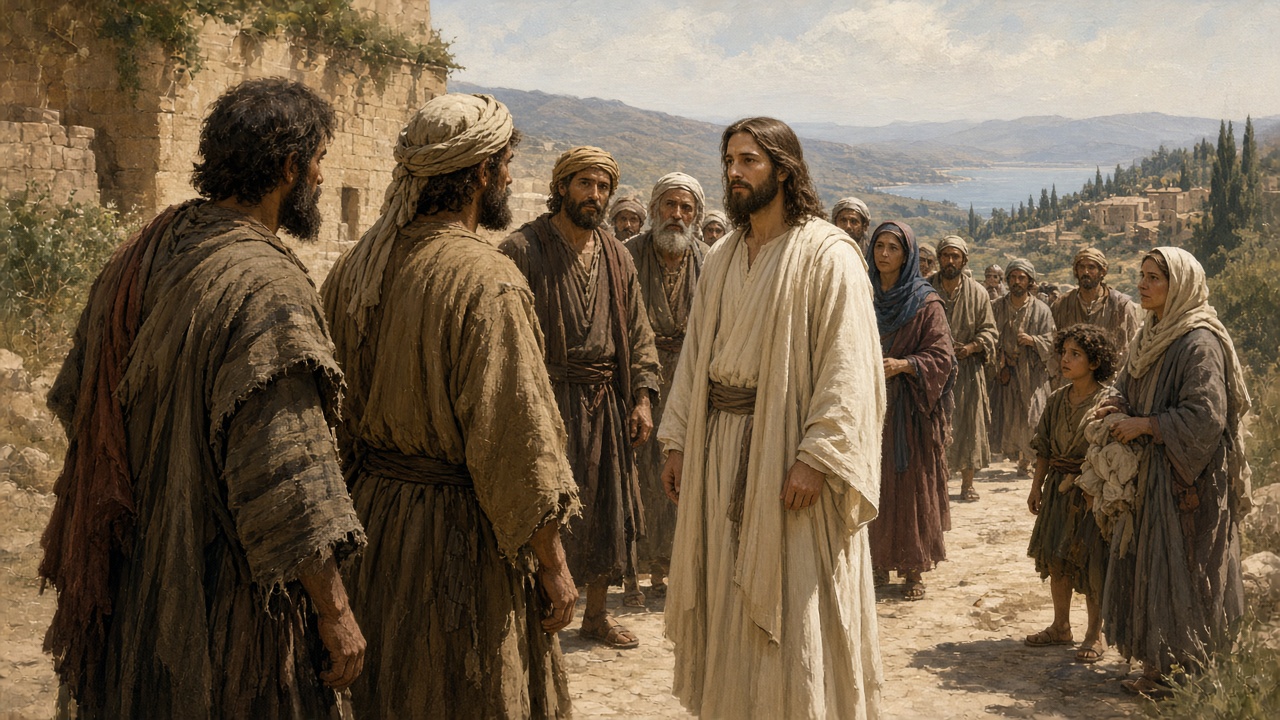
- From prison, John sent his disciples to ask whether Jesus was the one who was to come. Jesus told the crowds that John was more than a prophet—the messenger sent ahead to prepare the way—and, if they were willing to accept it, the Elijah who was to come. A Bible dictionary calls John the forerunner and says his mission was already the subject of prophecy, citing Isaiah 40:3 and Malachi 3:1; it also introduces Elijah as the Elias of the New Testament.Sources: the Bible text itself · John the Baptist · Elijah
- Jesus then denounced Chorazin, Bethsaida, and Capernaum, where most of his miracles had been performed, because they did not repent. A dictionary identifies Chorazin with modern Kerazeh, about two and a half miles up the Wady Kerazeh from Capernaum, and says that Capernaum, absent from the Old Testament, became Jesus' own city after he left Nazareth. It places Bethsaida on the east side of the lake, two miles up the Jordan in Gaulonitis, enlarged by Philip the tetrarch and named Julias after the emperor's daughter, though some have supposed there was only one Bethsaida, near where the Jordan enters the lake.Sources: the Bible text itself · Chorazin · Capernaum · Bethsaida
- He set those cities against Tyre and Sidon, which he said would have repented long ago in sackcloth and ashes, and against Sodom, which he said would have remained to this day. Sidon, on the Mediterranean coast about twenty-five miles north of Tyre, was the oldest Phoenician city there and the mother city of Tyre. A dictionary says the commerce of the whole world was gathered into Tyre's warehouses, and that Sodom, in the vale of Siddim, was destroyed by fire from heaven so completely that no trace of it has been found.Sources: the Bible text itself · Sidon · Tyre · Sodom
Notes written with AI assistance from open sources (Theographic Bible Metadata, CC BY-SA 4.0; Easton’s Bible Dictionary, public domain) and reviewed before publishing.
Places in this chapter
- Galilee · 32.760, 35.527 · verse 1
- Sidon · Today: Sandikli archaeological site in Sidon · 33.561, 35.372 · verses 21, 22
- Tyre · 33.271, 35.196 · verses 21, 22
Only places identified with high confidence are shown (90% or more according to the scholarly sources compiled by OpenBible). Period map: DARE (Digital Atlas of the Roman Empire), CC BY 4.0; modern map: © OpenStreetMap contributors; places: OpenBible.info (CC BY 4.0).
Credits and license for this translation
Handr Taara
The New Testament in the Borna Language of Ethiopia (Handr Taara)
copyright © 2018 The Word for the World International
Language: Borni (Borna)
Contributor: The Word for the World Southern Africa
Handr Taara
The New Testament in Borna in Latin version
The Word for the World
This translation is made available to you under the terms of the
Creative Commons Attribution license 4.0.
You may share and redistribute this Bible translation or extracts from it in any format, provided that:
You include the above copyright and source information.
If you make any changes to the text, you must indicate that you did so in a way that makes it clear that the original licensor is not necessarily endorsing your changes.
Pictures included with Scriptures and other documents on this site are licensed just for use with those Scriptures and documents.
For other uses, please contact the respective copyright owners.
Note that in addition to the rules above, revising and adapting God's Word involves a great responsibility to be true to God's Word. See Revelation 22:18-19.
2023-04-08
Source: http://ebible.org/bwo/ · eBible.org