2 Corinthians 8
Handr Taara · Tap a verse to see its cross-references.
Krstiyaniyots tewdo
1T eshuwotso! Ik'o Mek'odonin fa'a Ik' maa moowwotssh bí imts s'aato itsh daniyo shunfone. 2Bowere ay gond bek'on faderne, b́woteferoru bogen'úo ayidek't eene, ayidek't tugurtswotsi bo wotiyaloru dab een teudo woshrne. 3Bo faltsok'onat bofaltsoniyere bogo bo shunon bo imtsok'o taa boosh gawitwe, 4Yhud datsatse beyiru Kirstiyaniwots ash tep'i gowo boosh baziyerawok'o kup'idek't noon bok'oni. 5Bowere bo k'oltso no nokotirwoniyere boge, shin shin botoko doonzosh boimi, manats dabtnu Ik' shunok'on botoko noosh imrne. 6Finan shin shinon fintso Titoyi b́ wottsotse andoor bo teudi finan s'uwaats de'am b́ betsitwok'o bín k'onitwe 7It imnetiyon, noon keew keewon, danon, kup'on, nooke dan itdek'ts shunon jam keewono bogfte, tewd dooyi finannowere it bogetwok'o wotowe.
8Eshe, tietir azazonaliye, ernmó k'oshuwots imon kup' woto it kup' wotonton no nohir it shuno ar b́ woto shu'ar s'iilosha etaatniye. 9It no doonz Iyesus Krstos s'aato danfte bí eegoru dab gaaletsk b́ wotiyaloru bí tugurets wotat it galetswotsi it wotituwok'o itsha ett tugretsk b́ woti.
10Han jagosh itsh sheeng araat be'ets izo itsh imetwe, beshts dúron im mec'r b́ woterawo han k'alosh shini geetswots itne b́ teshi. 11Eshe imosh it detsts shúno finats jitsit s'uwo maants b́ bodetwok'o it faltsok'on it gawts man and k'aluwere. 12Imosh sheeng shun detstso b́ beyal ashman tewdi doon b́ detstso b́ imala boko bíangalon b́ímíshaliye.
13Hanowere ti etir it únets taalo it wotitwok'owa bako it imon it kic'efere k'oshwots bín kash bodek'isha etaatniyaliye 14It it kic'or bogizo it kic'ats b́ jinetwok'o and it gizo bok'ic'ats jinee, hank'on it dagotse manuts woto beetwe. 15Hanwere, «Ayi ko'itswotssh oreratse, múk' ko'itswotsshowere shapratse» ett guut'etsok'one.
Titonat b́tohuwotsn
16Taa itsh t shiyanirwok'o Titowere itsh b́ nibon b́ shiyanituwok'o woshts Ik'o údewe. 17Tito it maants b́weet b́ took shunon tuut gene'ona bako no nok'onts mec'roshaliye. 18Doo shishiy nabon Ik'maa jamooke údetso eshúwo bínton woshitwone. 19Haniyere dambon eshuwan no sheeng finan doonzo mangosh nofinorat finosh nodetsts sheeng shuno nokitsor noonton amt nofiinman b́ tep'etwok'o Ik'i moowwots n marat'etsoniye.
20Tewdi doon imets gizan nok'eezor noshútso b́ t'afrawok'o no atso kordek'etwone. 21Noo nogeyiru keewo doonzo shinatse s'uz b́woterawo ashuwots shinatse kááw wotts keewo k'ale.
22Ayoto ay weeron fadere kup'at fintso wotat daatsetso no'eshuwi Titowi bonton woshitwone, bí itatse b́detsts imnetiyo een b́wottsotse and finann iti tep'osh b́detsts kup'at fino awurtsooniyere boge. 23Tito jango dano b́geyitka wotiyal itn tep'osh taanton finirwo, fini weeron ttohe, bínton tohaat weyiru k'oshwots jango b́wotiyalowere bo Ik'i moowwotsatse naashuwots, Krstos mangosh need'tswotsiye. 24Mansh it shúno boosh kitswere, hank'on it shunonat itatse nodetsts it'o k'awtsalko b́ woterawok'o Ik'i maa jamwotssh kitsitute.
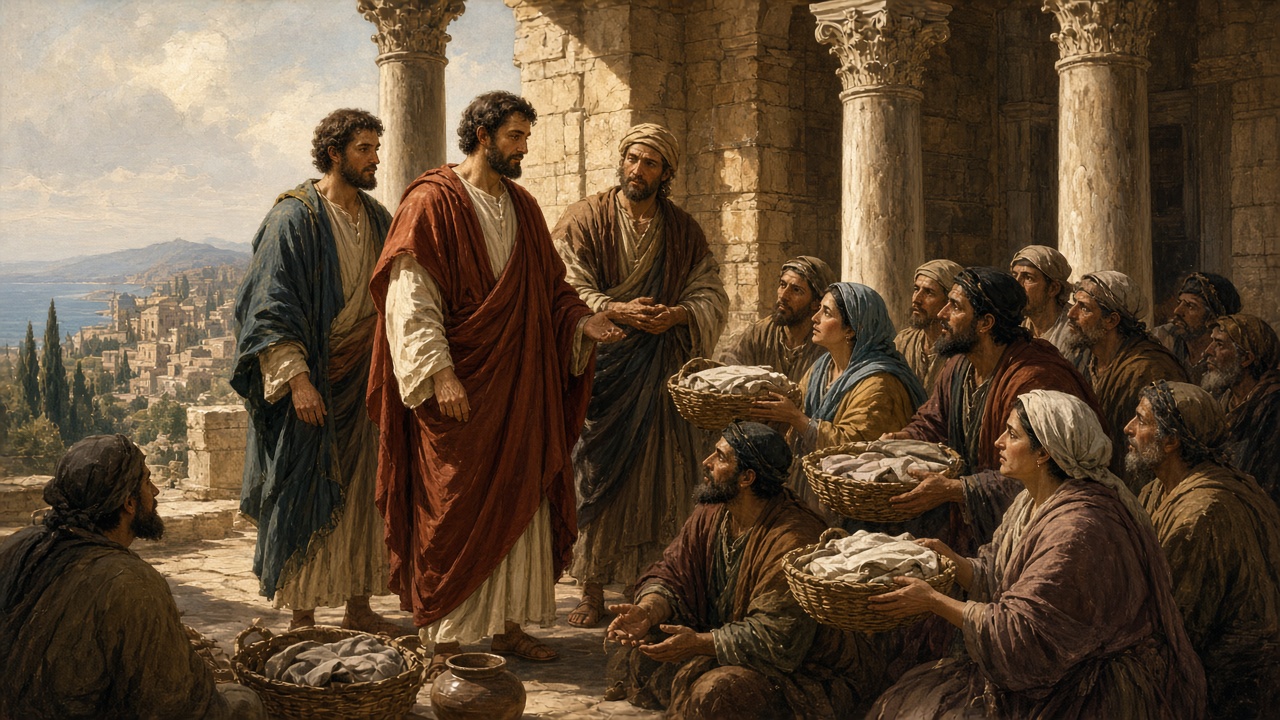
Did you know?
Generosity and the Jerusalem Collection
- In New Testament times Macedonia was a Roman province north of Greece. Paul was summoned by the vision of a man of Macedonia to preach the gospel there, and this chapter tells the Corinthians how those churches, in a terrible ordeal and deep poverty, gave joyfully and even beyond their ability.Sources: Macedonia · the Bible text itself
- Titus, whose name nowhere occurs in Acts, appears to have been a Gentile chiefly engaged in ministering to Gentiles. From Ephesus, Paul sent him to Corinth to forward the church's contributions for the poor saints at Jerusalem; in this chapter Paul urges him to complete that work, and Titus is coming eagerly of his own accord.Sources: Titus · the Bible text itself
- Along with Titus, Paul is sending a brother praised by all the churches for his work in the gospel and chosen by them to accompany the offering, and another brother whose earnestness has been proven many times and in many ways. He explains that this care is meant to avoid criticism of how the generous gift is administered, so that they do what is right not only in the eyes of the Lord but also in the eyes of other people.Sources: the Bible text itself
Notes written with AI assistance from open sources (Theographic Bible Metadata, CC BY-SA 4.0; Easton’s Bible Dictionary, public domain) and reviewed before publishing.
Places in this chapter
Only places identified with high confidence are shown (90% or more according to the scholarly sources compiled by OpenBible). Period map: DARE (Digital Atlas of the Roman Empire), CC BY 4.0; modern map: © OpenStreetMap contributors; places: OpenBible.info (CC BY 4.0).
Credits and license for this translation
Handr Taara
The New Testament in the Borna Language of Ethiopia (Handr Taara)
copyright © 2018 The Word for the World International
Language: Borni (Borna)
Contributor: The Word for the World Southern Africa
Handr Taara
The New Testament in Borna in Latin version
The Word for the World
This translation is made available to you under the terms of the
Creative Commons Attribution license 4.0.
You may share and redistribute this Bible translation or extracts from it in any format, provided that:
You include the above copyright and source information.
If you make any changes to the text, you must indicate that you did so in a way that makes it clear that the original licensor is not necessarily endorsing your changes.
Pictures included with Scriptures and other documents on this site are licensed just for use with those Scriptures and documents.
For other uses, please contact the respective copyright owners.
Note that in addition to the rules above, revising and adapting God's Word involves a great responsibility to be true to God's Word. See Revelation 22:18-19.
2023-04-08
Source: http://ebible.org/bwo/ · eBible.org