Mark 5
Boga New Testament Portion · Tap a verse to see its cross-references.
Kǝna Yǝso Nifaɗi, le Nak tǝ Hafat Ɓǝɓi Shemeɗa fa
(Matt 8:28-44; Luk 8:26-39)
1Kǝ chandǝndǝ suhwaɗa kǝ hachahai Garasinawecha. 2Kǝ tǝrtǝ Yǝso haya hur kommbawal, thlaakǝ nifa le nak tǝ ɓǝɓi shemeɗa, mbǝt shok tǝ'en mbǝt thlohmurcha ɓakna mbǝɗa Yǝso. 3Nifǝkǝn kwatmurcha naka mbǝt shoktǝ'en, nifǝsi la mbǝllakkǝ kǝnnanduwa chika tǝ chalalochiwa. 4Kǝthlǝm kurɓafichǝ kǝnnandǝ harchi'en tǝ sarǝchi'en tǝ chalalocha, nat tǝkichu ɗǝɗahaǝn chalalo tǝkkǝnnaɗa sarǝ'en. Nga nifǝsi tǝ alchitafa la mbǝlakkǝ kǝssandǝhiwa 5Nda fiɗikta tǝ fara la nakna kwat murchǝ tǝ ɗar shohlacha kǝnna nata tit ka'ǝn, paɗ kǝnna ɓursa ndǝ fat'enaɗi tǝ ngwicha. 6Kǝ natǝn Yǝso langnga, paakǝnsi tǝ rahta ɗǝkna hǝmta mbanitǝkǝn. 7Hwakǝn tǝ alchit tǝ kapat ɓurata ndakǝnwa: "Mǝ natu sǝtsa nji, Yǝso hweya Fara le nak mwanchin? A humuɗi tǝ Fara, mǝ fǝrinǝ pwanchiuwa. 8Mbukǝn kichu kǝthlǝm nda Yǝso wa: "Chukisshafata nifiya sokǝn ɓǝɓi shemeɗa." 9Ndǝkǝn sahandǝ Yǝso wa: "Thlǝmmuwa kǝni?" A ngǝmmanwa: "Thlǝmnǝwa terchin, kǝthlǝm nakani oi." 10A hwanaǝn Yǝso tǝ ndatwa: "Mǝ rǝkinǝ kanda mbǝnniyuwa." 11Kǝthlǝm mbǝnniyu kapat chaɓa katuchisi naka hǝrimtǝ nduk tǝ shohlata. 12Ɓǝɓi shemechiyu hwanangnduwa: "Kǝ malaǝn kanda kǝ yimnda hur katuchiyu." 13A ngǝmmang na kandǝsi. Thlaakǝ ɓǝɓi shemechiyu chekndakish, yimkǝnnda hur katuchiyu, katuchiyu shee ndǝ aru kumchit chap (2,000), a rah kǝnda ka hǝhhatta hur hawurta, tǝkkǝndǝhi nat ahur ama. 14Kǝ nat fa hǝrǝm katuchiyu kichu, rah kǝnda ka mbuta hǝmta, tǝ han hǝmchikǝn chek nofchakish ka nat i sǝkka. 15Kǝ ɓatnda thlǝmmat Yǝso, nak ndǝ nifi nak soh tǝ ɓǝɓi shemecha fǝyu, ɗas tǝ njelecha fa mǝlla hur iɗi'en thlaakǝnnda lechik nda. 16Fichile sǝt fichi ǝnnat kǝnna hwaniteng na ndǝyu, ndǝkǝn chekandǝndǝ ɗwaachik kǝnna kanda, i kǝs kǝ lǝ ɓǝɓi shemeɗiyu tǝ katuchiyu. 17Thlaakǝ nofchikǝn hwanang ndǝ Yǝso kǝ mallǝn thlet hǝmteng nandǝ hi. 18Kǝ nat Yǝso yimta kommbawal, nifi soh nak tǝ ɓǝɓi shemeɗi fiiyu hwanaǝn Yǝso wa nan ɗǝtkakǝn. 19Nat tǝ kichu Yǝso ngǝmmawusuwa, ndaǝnwa ɗu huri kǝ mbǝɗa fahchuwa, kǝ mbwa'angna kanda witǝ pǝktat ichi sutǝ Lǝmwanda tǝ haɗi haɗandufa. 20Thlaakǝ nifiyu pǝɗakǝn ɗǝk na nata mbu i sandǝ ficha Dikafolis sakkǝtkǝn hǝmchǝ kum witǝ pǝktat i chi sandǝ Yǝso. Uf nofcha pǝɗang ǝnnatkǝn kandǝ fa.
Kǝnna Yǝso Hweya Yayirussa ɗi // Tǝ Nuhnifa le Nak tǝ Hafat Thlǝrfwara fa
21Yim kǝ Yǝso hur kommbawal chaǝn kǝ mi chicheng le, ɓak nofchi oiya kǝtwurangndǝhi mǝllan paɗ mǝlla mi chicheng hawurkǝn. 22Yunǝsǝ ǝrta naka kapat nifa a mbǝt humta Yahudawechihi, thlǝmkǝn wa Yayirus. Kǝ natǝn Yǝso himkǝnhi mbanitǝkǝn, 23nakna hwanandǝ ka'ǝn tǝ ndatwa: "Hwe'engna le nak nguɗeh, kǝ nuhhweya mǝlla miya murta, nja hwanuta tama kǝ ɗǝnna tǝkaharfa kǝthlǝm kǝ kǝnkaɗi." 24Pǝɗak Yǝso tǝndi, kuwurkǝ nofchi kandǝ oi nangnda njekkathlǝndi. 25Nuhnifǝssa mbǝnniyu hurak kum ngǝrǝnsǝ chap tǝ hafat thlǝrfwara fa. 26A sheetǝ pwanchǝ oi a hara fafǝr hamɓǝɓecha, tuɓwaɗǝ i nak sǝ'en nat, chika tǝ kichu mbǝsutǝ sǝmmǝchitwa hafatkǝn nakǝn kǝmban kǝmban. 27Kǝ sǝktǝn kussheng Yǝso, ɗǝkǝn tǝ ɗifitǝkǝn tǝ hur terǝ nofchiyu tǝka'ǝn hara njela'enfa. 28Nak na yarǝwa: "Matǝkaɗi hara njela'enfa ni kǝndaɗi" 29Chatkichuyu thlarkǝ thlǝrfwarkǝn hi, sǝkkǝnsa fat'enwa kinaɗi. 30Chatkichuyu sǝkkǝ Yǝso cheɗ alchǝta kishsha fat'en, tǝɓɓǝrkǝn hi hur terǝ nofcha ndakǝnwa: "Wun tǝkang hara njele'engnǝ fa?" 31Ngǝmang kimshechi'en wa: "Sa nat nofchǝ njekthlǝnjekthla, kanna ndatwa, wun tǝkukǝ harfa?" 32Kǝlak Yǝso hi kǝthlǝm kǝ nan ndu wun tǝkang harfa. 33Nuhiyu kǝ sǝntǝn i sǝka fat'en lechikǝn, ɓakna mbǝsndi kopkǝnhi mbwaǝn nat kitchit i'sǝka. 34Ndaǝnwa: "Hwe'engna, fǝrkitchiɗeku kǝnuɗaɗi. Pǝɗu ngwalngwal, kinhafaɗekuɗi." 35Mǝlla ɗar shunda chat ɓak funa mbǝɗa Yayirus kapat nifa ndangnduwa: "Hwe'eku teppa miri! mǝ sǝk natu ɓahandǝ Malɗǝm paɗi?" 36Nattǝ kicchu Yǝso ɗufutǝ i'nda i nannda mbutuwa, ndangna kapat nifǝkǝnwa: "Mǝlechinuwa, so kǝn fǝru kit ndak." 37Malautǝ, chikka wun kǝ kurǝn ndǝwa tǝrkǝn Bitrus tǝ Yakubu tǝ Yohanna hwamman Yakubu. 38Kǝ saatǝnda hura'a Yayirus kapat nifa, nak Yǝso nofcha kanda tita funa hwata. 39Yimkǝnna hurikǝn, ndangnakandǝwa: "Kǝthlǝm mǝ natuni tita kǝ nuni nata hwata? Nuhhwaniya mǝruwa, tǝnakasaɓweni." 40Nangnda masanda masǝ njirfata. Chaǝn nofchi kisha hurikǝn nat, akǝn shin hwankǝn tǝ mankǝn, tǝ kimshechi'en fichile naka thlǝmmatkǝn, yimkǝnnda mbǝɗi nat nuhhwaniyu. 41Kǝskǝn har'en ndaǝnwa: "Talita kumi." (sakǝtkǝnwa: "Hannuhhweya, ndakiwa thla'u"). 42Chat kichuyu thlaakǝ nuhhwaniyu nakna witahi. (hurat'en kumngǝrǝnsǝ chap). Nofchi naka mbǝnniyu pǝɗang ǝnatkǝnkandǝfa. 43Kahang Yǝso thlǝmmachengnandǝ tǝ ndatwa mǝ sǝni nifǝ isǝkyawa, fǝramǝn ɗǝsǝmtǝ kǝ sǝmǝn.
Did you know?
Restored on both shores of the sea
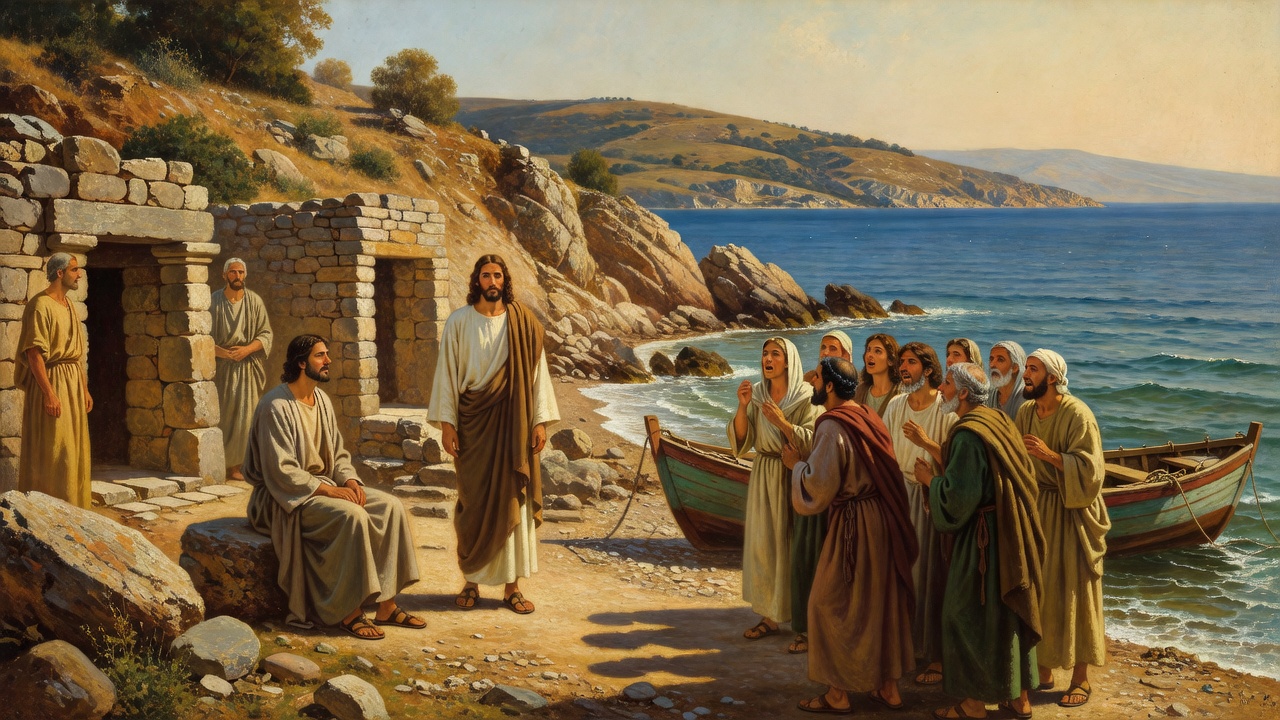
- Mark says they landed in the region of the Gerasenes, and the freed man then proclaimed throughout the Decapolis how much Jesus had done for him. The Decapolis was a district of ten cities east and south-east of the Sea of Galilee, chiefly inhabited by Greeks, and Gadara was one of them. A source heading also calls the episode the Gadarene demoniacs, a place-name different from Mark’s Gerasenes.Sources: the Bible text itself · Decapolis · Gadarene Demoniacs
- On the other shore, a synagogue leader named Jairus begged Jesus to come to his little daughter. Easton's Bible Dictionary (1897) identifies him as a ruler of the synagogue at Capernaum whose only daughter Jesus restored to life. Mark records “Talitha koum,” explained as “Little girl, I say to you, get up!”; the dictionary cites “Talitha cumi,” “Maid, arise,” and says Jesus ordered food to strengthen her and to show she was no ghost but had returned to ordinary life.Sources: the Bible text itself · Jairus
- Jesus allowed only Peter, James, and John to go in with the child’s father and mother. Easton's Bible Dictionary (1897) describes James as a fisherman, the son of Zebedee and an elder brother of John, in partnership with Peter, and notes that he was present at the raising of Jairus’s daughter.Sources: the Bible text itself · James (Son of Zebedee)
Notes written with AI assistance from open sources (Theographic Bible Metadata, CC BY-SA 4.0; Easton’s Bible Dictionary, public domain) and reviewed before publishing.
Places in this chapter
Only places identified with high confidence are shown (90% or more according to the scholarly sources compiled by OpenBible). Period map: DARE (Digital Atlas of the Roman Empire), CC BY 4.0; modern map: © OpenStreetMap contributors; places: OpenBible.info (CC BY 4.0).
Credits and license for this translation
Boga New Testament Portion
Portions of the New Testament in the Boga language of Nigeria
copyright © 2023 The Seed Company in collaboration with Language Developecs and Bible Translators Association
Language: (Boga)
Contributor: Language Developers and Bible Translators
This translation is made available to you under the terms of the
Creative Commons Attribution Share-Alike license 4.0.
You have permission to share and redistribute this Bible translation in any format and to make reasonable revisions and adaptations of this translation, provided that:
You include the above copyright and source information.
If you make any changes to the text, you must indicate that you did so in a way that makes it clear that the original licensor is not necessarily endorsing your changes.
If you redistribute this text, you must distribute your contributions under the same license as the original.
Pictures included with Scriptures and other documents on this site are licensed just for use with those Scriptures and documents.
For other uses, please contact the respective copyright owners.
Note that in addition to the rules above, revising and adapting God's Word involves a great responsibility to be true to God's Word. See Revelation 22:18-19.
2025-07-02
Source: http://ebible.org/bvw/ · eBible.org