Zechariah 8
Luda yã takada kↄ̃n Bokobaru yão · Tap a verse to see its cross-references.

About this book
About Zechariah
- Easton's Bible Dictionary (1897) presents Zechariah as a prophet of Judah, the eleventh of the twelve minor prophets, and, like Ezekiel, of priestly descent. He calls himself the son of Berechiah, while Ezra calls him the son of Iddo, whom Easton identifies as his grandfather. Easton dates the start of his prophetic work to the second year of Darius, 520 B.C., about sixteen years after the first company returned from exile, and notes that he was a contemporary of Haggai.Sources: Easton: Zechariah · Zechariah
- Zechariah addressed people who had returned from exile. Zerubbabel, also known by the Persian name Sheshbazzar, led the first returning company and, in the second year after the return, built an altar and laid the temple foundation on the ruins of the house destroyed by Nebuchadnezzar. Joshua, son of Jozadak, was high priest under Zerubbabel, and Easton says the night visions were meant to console these returned exiles and stir up hope.Sources: Easton: Zechariah · Zerubbabel · Joshua
- Easton divides the book into two parts, chapters 1-8 and chapters 9-14. The first opens with a preface recalling the nation's past as a solemn warning, then eight visions in a single night and the symbolic crowning of Joshua; chapters 7 and 8, given two years later, answer whether mourning for the city's destruction should continue and encourage the people with the assurance of God's presence and blessing. The second part bears no date. Easton thinks a considerable interval separates it from the first and describes its two burdens as God's dealings down to the Advent and as glory, final conflict, and triumph in what he calls the latter day.Sources: Easton: Zechariah
- Easton explains the name Zechariah as meaning that Jehovah is renowned or remembered. A notable scene is the symbolic crowning of Joshua; Easton reads it as showing how the kingdoms of the world become the kingdom of God's Christ. Helem, named in Zechariah 6:10, is identified as one who returned from Babylon.Sources: Easton: Zechariah · Helem · Joshua
Notes written with AI assistance from open sources (Theographic Bible Metadata, CC BY-SA 4.0; Easton’s Bible Dictionary, public domain) and reviewed before publishing.
Dii lɛ́gbɛ̃na Isarailinↄ yã musu
1Dii Zĩ̀kpɛde yã sùma à bè:
2Mamↄma Dii Zĩ̀kpɛde ma bè,
mɛ́ɛ nↄ̀sɛgↄ̃aanↄ kpaa Zayↄn yã musu maamaa,
èe ma nↄ̀sɛ kpataa pãsĩpãsĩ.
3Mamↄma Dii ma bè,
mɛ́ ɛara mà su Zayↄn,
mɛ́ vɛ̃ɛ Yerusalɛmu.
Weé be Yerusalɛmunɛ Wɛ́tɛ Yãpurade,
weé be mamↄma Dii Zĩ̀kpɛde kpiiinɛ Luda Kpiii.
4Mamↄma Dii Zĩ̀kpɛde ma bè,
gↄ̃ gbɛ̃nsinↄ kↄ̃n nↄ gbɛ̃nsinↄ
é ɛara wà káɛ Yerusalɛmu gãalɛnↄa,
baade kↄ̃n a gòo kũna
kɛ̀ aↄ̃ zi kũ̀ yãnzi.
5Gↄ̃kparɛnↄ kↄ̃n nↄkparɛnↄ
é wɛ́tɛ pì gãalɛnↄ pa dↄ,
aↄ̃égↄ̃ kↄ̃kↄ̃ oo à zɛ́daanↄ guu.
6Mamↄma Dii Zĩ̀kpɛde ma bè,
Yã pì é bↄ borii kɛ̀ gbɛ̃ kpaaa kɛ̀ aↄ̃ gↄ̃̀nↄ saɛ gurↄ beeea,
mↄde eé bↄ ma saɛro.
Mamↄma Dii Zĩ̀kpɛde mámbe má ò.
7Mamↄma Dii Zĩ̀kpɛde ma bè,
mɛ́ ma gbɛ̃nↄ bↄɛ ↄfãntɛ̃bↄɛ kpa bùsunↄn
kↄ̃n ↄfãntɛ̃gɛ̃kpɛn kpa bùsunↄo,
8mɛ́ suńyo aↄ̃gↄ̃ kú Yerusalɛmu,
aↄ̃é gↄ̃ ma gbɛ̃nↄ ũ,
mɛ́gↄ̃ dɛńnɛ Luda náanɛdee ũ a zɛ́a.
9Mamↄma Dii Zĩ̀kpɛde ma bè, amↄanↄ kɛ̀ ée yã kɛ̀kii maanↄ annabinↄ lɛ́zĩ zaa gurↄↄ kɛ̀ wà ma kpɛ́ ɛ̃ɛ dàɛ ai gbã̀a, à aĩa kɛ kpɛ́ pì bonazi. 10Ai gurↄↄ pì gàa à kào gbɛ̃nteenↄ kↄ̃n pↄ́kãdeenↄ è asaiapↄ e zĩ guuro. Gbɛ̃ kɛ̀ èe gaa kↄ̃n gbɛ̃ kɛ̀ èe suuo aafia vĩro ń ibɛɛnↄ yãnzi, zaakɛ má tò wà íbɛtɛ kpà kↄ̃o kↄ̃ tɛ̃ɛ. 11Mↄde mɛ́ yã kɛ borii kɛ̀ gbɛ̃ kpaaa kɛ̀ aↄ̃ gↄ̃̀nↄnɛ tia lán yãa bàro. Mamↄma Dii Zĩ̀kpɛde mámbe má ò. 12Ludambɛɛ é mↄdↄ kpá, blɛwɛɛ égↄ̃ aafia, geepi línↄ é nɛ́ i, tↄↄtɛ é pↄ́blee kɛ. Mɛ́ pↄ́ pìnↄ kpá borii kɛ̀ gbɛ̃ kpaaa kɛ̀ aↄ̃ gↄ̃̀nↄa gbaa ũ. 13A Yudanↄ kↄ̃n Isarailinↄ, lán a gↄ̃ gbɛ̃ kɛ̀ boriinↄ è ń ká kↄ̃n a tↄ́onↄ ũ nà, lɛn mɛ́ a mì sí mà tó wà aubarika dańgu kↄ̃n a tↄ́o lɛ dↄ. Àton tó vĩa a kũro. À aĩa kɛ.
14Mamↄma Dii Zĩ̀kpɛde ma bè, lán ma zɛo ma mↄ́nzi kpàazi gurↄↄ kɛ̀ a dezinↄ ma pↄↄ fɛ̃̀mɛ nà, ben mɛ́ɛ a wɛ̃nda gwaro, 15lɛn ma zɛo lɛ dↄ mà à maaa kɛ Yerusalɛmudeenↄnɛ kↄ̃n Yudanↄ ń píngi gurↄ kɛ̀nↄa. Mamↄma Dii Zĩ̀kpɛde mámbe má ò. Àton tó vĩa a kũro. 16Yã kɛ̀ égae kɛɛn yɛ̀. A baade gae yãpuraa o a gbɛ̃daaanɛ. Àgae yã gↄ̃gↄ̃ a zɛ́a nnanna a yãkpaɛkɛkiinↄn. 17A gbɛ̃ke tón a gbɛ̃daaa kpákpa a zaaaoro. Ɛgɛtona kↄ̃n ma tↄ́o tón kɛarero, zaakɛ ma za yã pìnↄn píngi. Mamↄma Dii Zĩ̀kpɛde mámbe má ò.
18Dii Zĩ̀kpɛde yã ɛ̀ara sùma à bè: 19Mamↄma Dii Zĩ̀kpɛde ma bè, lɛ́ kɛ̀ eègↄ̃ yii mↄ siigↄ̃dee guu kↄ̃n mↄ sↄↄrodeeo kↄ̃n mↄ swɛɛplaadeeo kↄ̃n mↄ kurideeo é gↄ̃ a Yudanↄnɛ zĩbaa maaa kɛ̀ é pↄnnaa kɛn kↄ̃n yáadↄnao ũ. Beee yãnzi à wɛtɛ àgↄ̃ kuu kↄ̃n yãpuraao kↄ̃n aafiao. 20Mamↄma Dii Zĩ̀kpɛde ma bè, boriinↄ kↄ̃n wɛ́tɛdeenↄ é mↄ́ pari ai tia. 21Weé gá okↄ̃nɛ wɛ́tɛ kↄ̃n wɛ́tɛo wà be: Wà gá Dii kii wɛtɛ wà Dii Zĩ̀kpɛde pì wɛ́ɛ wɛtɛ. Mapi mɛ́ gá se. 22Boriinↄ kↄ̃n bùsu gbãade gbɛ̃nↄ é mↄ́ ma kii wɛtɛ pari Yerusalɛmu lɛ wà ma wɛ́ɛ kɛ. 23Mamↄma Dii Zĩ̀kpɛde ma bè, zĩ pìn gↄ̃ↄn kuri kɛ̀ aↄ̃ bↄ̀ bori kↄ̃n boriio guunↄ e Yuda mɛ̀n do kũ a uta lɛ́a wà benɛ, wé gányomɛ, zaakɛ wá mà kɛ̀ Ludaa kúao.
Did you know?
The Restoration and Future Blessing of Jerusalem
- Zechariah prophesied around 519 BC to encourage the Jewish remnant that had returned to rebuild the temple in Jerusalem after years of hardship and conflict.Sources: Prophecies of Zechariah · the Bible text itself
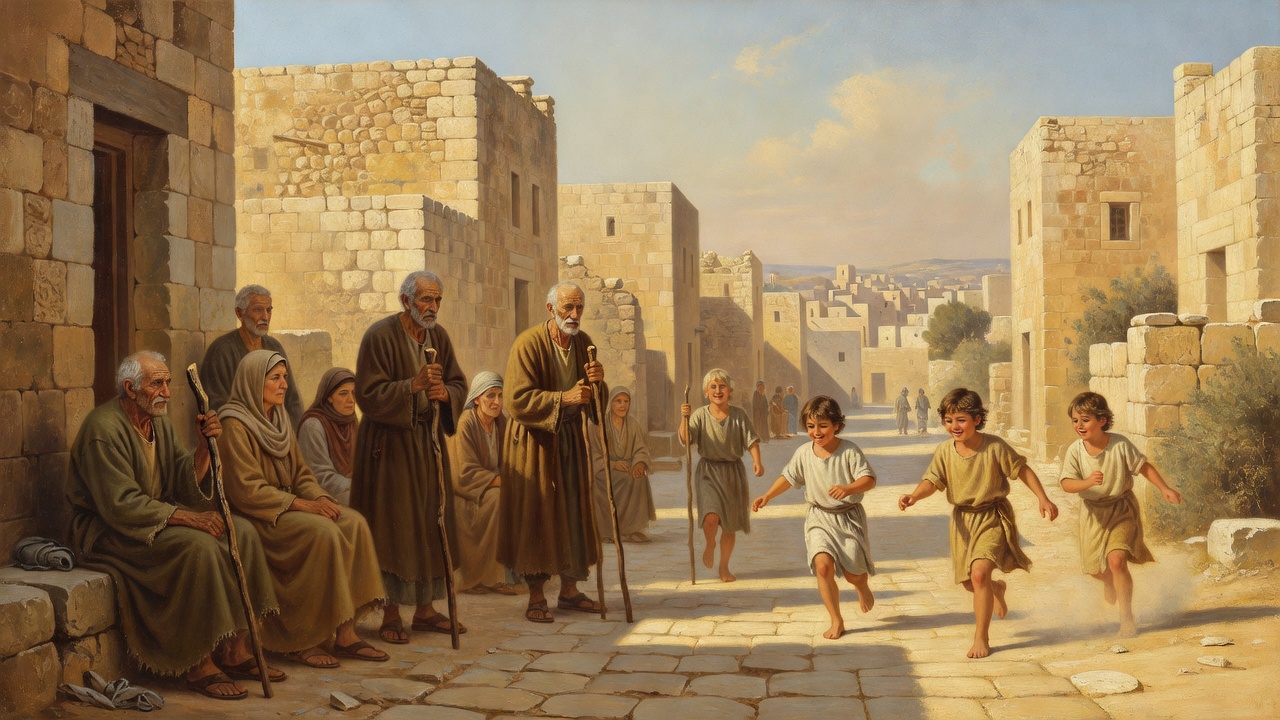
- The prophecy envisions Jerusalem—historically associated with Mount Zion—transformed from a vulnerable ruins into a thriving, secure city where both the elderly with walking staffs and playing children fill the streets.Sources: Jerusalem · Zion · the Bible text itself
- The traditional fasts observed in the fourth, fifth, seventh, and tenth months were declared to become joyful feasts, anticipating a time when people from many foreign nations would seek God in Jerusalem.Sources: the Bible text itself
Notes written with AI assistance from open sources (Theographic Bible Metadata, CC BY-SA 4.0; Easton’s Bible Dictionary, public domain) and reviewed before publishing.
Places in this chapter
- Jerusalem · 31.777, 35.234 · verses 2, 3, 4, 8, 15, 20, 21, 22
- Zion · Today: Jerusalem · 31.777, 35.234 · verses 2, 3
Only places identified with high confidence are shown (90% or more according to the scholarly sources compiled by OpenBible). Period map: DARE (Digital Atlas of the Roman Empire), CC BY 4.0; modern map: © OpenStreetMap contributors; places: OpenBible.info (CC BY 4.0).
Credits and license for this translation
Luda yã takada kↄ̃n Bokobaru yão
The New Testament and portions of the Old Testament in the Bokobaru language of Nigeria
copyright © 2005 SIM International
Language: Bokobaru
Translation by: SIM
This translation text is made available to you under the
terms of the Creative Commons License: Attribution-Noncommercial-No Derivative Works.
( http://creativecommons.org/licenses/by-nc-nd/3.0/ )
In addition, you have permission to port the text to different file formats, as long as you
do not change any of the text or punctuation of the Bible.
You may share, copy, distribute, transmit, and extract portions
or quotations from this work, provided that you include the above copyright
information:
You must give Attribution to the work.
You do not sell this work for a profit.
You do not make any derivative works that change any of the actual words or punctuation of the Scriptures.
Permissions beyond the scope of this license may be
available if you contact
us with your request.
This translation is made available to you under the terms of the
Creative Commons Attribution-Noncommercial-No Derivatives license 4.0.
You may share and redistribute this Bible translation or extracts from it in any format, provided that:
You include the above copyright and source information.
You do not sell this work for a profit.
You do not change any of the words or punctuation of the Scriptures.
Pictures included with Scriptures and other documents on this site are licensed just for use with those Scriptures and documents.
For other uses, please contact the respective copyright owners.
2014-09-22
Source: http://ebible.org/bus/ · eBible.org