Ruth 2
Luda yã takada kↄ̃n Bokobaru yão · Tap a verse to see its cross-references.
Rutu dakↄ̃rɛna kↄ̃n Bↄazao
1Naomi zã Ɛlimɛlɛki bɛ gↄ̃gbɛ̃ kee kuu, gbɛ̃nsi auzikideemɛ, à tↄ́n Bↄaza. 2Mↄabu nↄgbɛ̃ Rutu bè Naominɛ: Ǹ tó mà gá bura nagã kↄ̃ↄ wɛ màgↄ̃ tɛ́ gbɛ̃ kɛ̀ ma wɛ̃nda gwà kpɛɛ. Ben à bè a nɛ́ gyaanↄↄ pìnɛ: Ǹ gá! 3Ben à fɛ̀ɛ à gàa nagã kↄ̃ↄ wɛ bura, ègↄ̃ tɛ́ pↄ́kɛ̃rinↄ kpɛɛ. À mↄ̀ à lè buraa kɛ̀ à gàan pì nɛ́ Ɛlimɛlɛki danɛ Bↄaza buraamɛ. 4Ben Bↄaza bↄ̀ Bɛtɛlɛmu. Kɛ̀ à kà gwe, à ì kpà pↄ́kɛ̃rinↄa à bè: Dii gↄ̃ kúao! Ben aↄ̃ bènɛ: Dii aubarika dangu! 5Bↄaza bè a zĩkɛri kɛ̀ dɛ à pↄ́kɛ̃rinↄ gwàri ũunɛ: Dé bé à nↄkparɛ kɛ̀kãa vĩi? 6Ben à wèàla à bè: Nↄkparɛ pì nɛ́ Mↄabu nↄgbɛ̃ kɛ̀ Naomi bↄ̀o Mↄabunↄ bùsun à sùomɛ. 7À bè mà tó à nagãa kↄ̃ↄ wɛ pↄ́kɛ̃rinↄ kpɛɛ, ben èe zĩi kɛɛ zaa kↄngↄ. Tian à mↄ̀ kámma bo féte kutaa guu.
8Ben Bↄaza gàa à bè Rutunɛ: Ǹ ma yã ma. Ǹton gá nagã kↄ̃ↄ wɛ bú pãnde guuro. Ǹton gɛ̃walaro. Ǹ gↄ̃ kɛ̀ kↄ̃n ma nↄgbɛ̃ zĩkɛrinↄ. 9Ǹ wɛ́ɛ dↄ zĩi kɛ̀ aↄ̃ↄe kɛɛzi ǹgↄ̃ tɛ́ ń kpɛɛ. Má ò ma gↄ̃kparɛnↄnɛ aↄ̃ton ĩa dammaro. Tó ímii e n dɛɛ, ǹ gá ǹ í kɛ̀ aↄ̃ↄ kà orozãnↄn mi. 10À kùɛnɛ à mì pɛ̀ɛ à bè: À kɛ̀ dia mamↄma kɛ̀ bori pãnde nↄgbɛ̃n ma ũ, n làakari dↄ̀ma, ben n yã maaa kɛ̀mɛɛ? 11Ben Bↄaza wèàla à bè: Wà yã kɛ̀ ń kɛ̀ n zã danɛ n zã gaa gbɛraa òmɛ píngi, lán n n de kↄ̃n n dao tò nà kↄ̃n n bùsuo, ben n mↄ n vɛ̃ɛ gbɛ̃ kɛ̀ ń ń dↄ̃ yãroonↄ tɛ́. 12Dii fĩa bonnɛ yã kɛ̀ ń kɛ̀ musu. Lán n mↄ n sↄtↄ Dii Isarailinↄ Luda ↄru guu nà, à fĩa bonnɛ maamaa. 13Rutu bè: Baa, n yã maaa kɛ̀mɛ fá! N ma làakari kpàɛmɛ, n yã nnaa ò mamↄma n zĩkɛrinɛ, baa kɛ̀ n zĩkɛrinↄ doken ma ũro.
14Pↄ́blegurↄ Bↄaza bènɛ: Ǹ mↄ́ ǹ pↄ́ ble kɛ̀ ǹgↄ̃ burɛdi zↄ̃ↄ dòa. Ben à vɛ̃̀ɛ pↄ́kɛ̃rinↄ saɛ. Bↄaza pↄ́wɛɛ kpatana kpàa, ben à pↄ́ blè à kã̀ ai à kpaaa gↄ̃̀. 15Kɛ̀ à fɛ̀ɛ èe gaa pↄ́ kↄ̃ↄ wɛ, ben Bↄaza ò gↄ̃kparɛnↄnɛ à bè: Baa tó èe pↄ́ kↄ̃ↄ wɛɛ nagãa kɛ̀ kaɛna tɛ́, àton wí daaro. 16À à sà kenↄ bↄbↄnɛ nagãa guu à tó à kↄ̃ↄ wɛ. Àton pataaro.
17Ben à pↄ́ kↄ̃ↄ wɛ̀ ai uusiɛ. Kɛ̀ à zↄ̃̀ à à wɛ́ɛ bↄ̀, à kà koto lɛ́ do taka bà. 18Kɛ̀ à sɛ̀ à tào bɛ, ben à pↄ́ kɛ̀ à kↄ̃ↄ wɛ̀ pì ↄ̀dↄa a zã danɛ. À pↄ́ kɛ̀ à fùa à blee pì kpàa dↄ. 19Ben à zã da à là à bè: Mákpan n pↄ́ kↄ̃ↄ wɛ̀n gbã̀a? N zĩi kɛ̀ mámɛ? Luda aubarika da gbɛ̃ kɛ̀ làakari dↄ̀mmaan. Ben à gbɛ̃ kɛ̀ à zĩi kɛ̀ à bura yã ònɛ à bè: Gbɛ̃ kɛ̀ ma zĩi kɛ̀ à bura gbã̀a tↄ́n Bↄaza. 20Ben Naomi bè: Ma Dii sáabu kɛ̀! À kpɛ́ èe gbɛ̃kɛɛ kɛɛ wamↄwa kɛ̀ wá bɛ̃ɛnↄnɛ kↄ̃n wa gbɛ̃ kɛ̀ aↄ̃ gànↄ. Ben à ɛ̀ara à bè: Gbɛ̃ pì nɛ́ wa danɛ fɛ̃̀fɛ̃ bòrinↄ dokemɛ. 21Ben Mↄabu nↄgbɛ̃ Rutu bè: À bèmɛ mà na a zĩkɛrinↄa ai aↄ̃ gá pↄ́ kɛ̃ wà yãao. 22Ben Naomi bè a nɛ́ gyaanↄↄ pìnɛ: À maa ǹ gá kↄ̃n à nↄgbɛ̃ zĩkɛrinↄ lɛ wàton ĩa damma bura pãndearo yãnzi. 23Ben à nà Bↄaza nↄgbɛ̃ zĩkɛrinↄa. Ègↄ̃ pↄ́ kↄ̃ↄ wɛɛ ń kpɛɛ ai wà gàa wà nagã kↄ̃n gbadooo kɛ̃̀ wà yã̀a. À kú a zã da bɛmɛ.
Did you know?
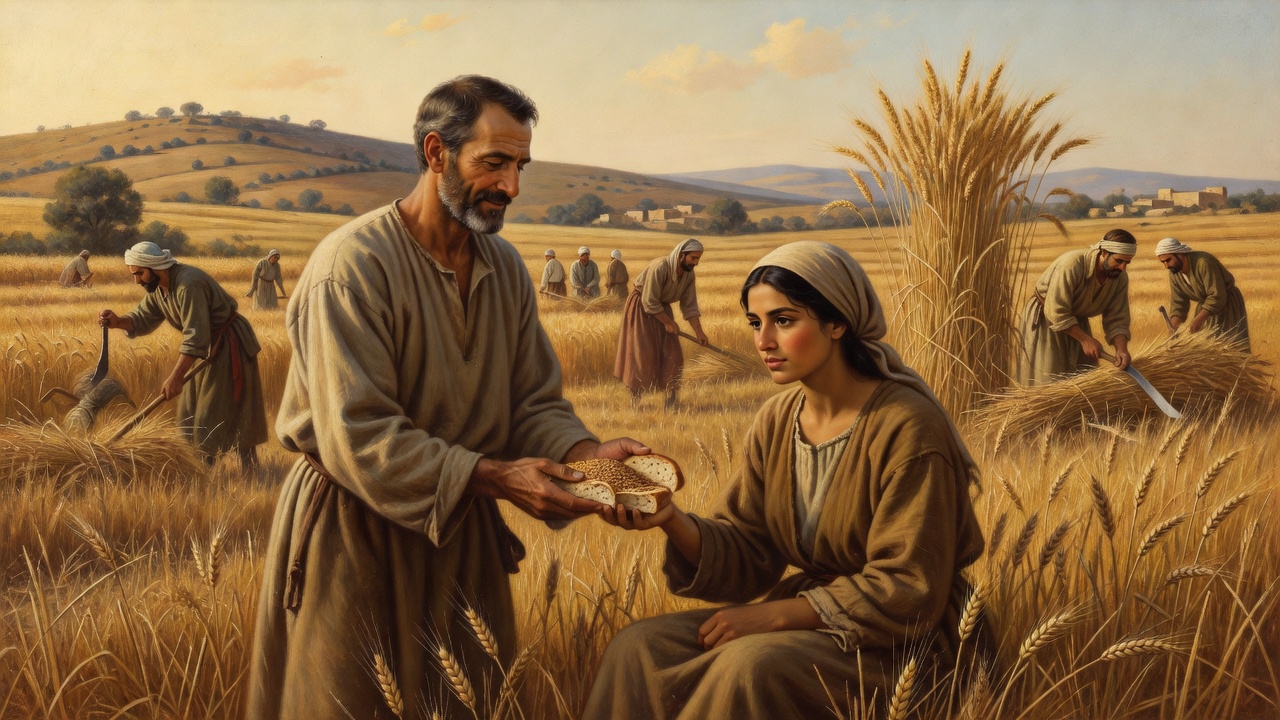
Ruth Gleaning in the Fields of Boaz
- Bethlehem was situated in the hill country of Judah, and the fertile valleys to its east served as the agricultural fields where Ruth gathered leftover barley behind the harvesters.Sources: Bethlehem · Ruth · the Bible text itself
- Boaz was a wealthy landowner in Bethlehem from the clan of Naomi's deceased husband, Elimelech, which made him a close relative and kinsman-redeemer.Sources: Boaz · Elimelech · the Bible text itself
- Although Ruth was a foreigner from Moab, Boaz offered her special hospitality and protection, sharing roasted grain and water while commanding his workers not to mistreat her because of her devotion to Naomi.Sources: Ruth · the Bible text itself
Notes written with AI assistance from open sources (Theographic Bible Metadata, CC BY-SA 4.0; Easton’s Bible Dictionary, public domain) and reviewed before publishing.
Places in this chapter
Only places identified with high confidence are shown (90% or more according to the scholarly sources compiled by OpenBible). Period map: DARE (Digital Atlas of the Roman Empire), CC BY 4.0; modern map: © OpenStreetMap contributors; places: OpenBible.info (CC BY 4.0).
Credits and license for this translation
Luda yã takada kↄ̃n Bokobaru yão
The New Testament and portions of the Old Testament in the Bokobaru language of Nigeria
copyright © 2005 SIM International
Language: Bokobaru
Translation by: SIM
This translation text is made available to you under the
terms of the Creative Commons License: Attribution-Noncommercial-No Derivative Works.
( http://creativecommons.org/licenses/by-nc-nd/3.0/ )
In addition, you have permission to port the text to different file formats, as long as you
do not change any of the text or punctuation of the Bible.
You may share, copy, distribute, transmit, and extract portions
or quotations from this work, provided that you include the above copyright
information:
You must give Attribution to the work.
You do not sell this work for a profit.
You do not make any derivative works that change any of the actual words or punctuation of the Scriptures.
Permissions beyond the scope of this license may be
available if you contact
us with your request.
This translation is made available to you under the terms of the
Creative Commons Attribution-Noncommercial-No Derivatives license 4.0.
You may share and redistribute this Bible translation or extracts from it in any format, provided that:
You include the above copyright and source information.
You do not sell this work for a profit.
You do not change any of the words or punctuation of the Scriptures.
Pictures included with Scriptures and other documents on this site are licensed just for use with those Scriptures and documents.
For other uses, please contact the respective copyright owners.
2014-09-22
Source: http://ebible.org/bus/ · eBible.org