Psalms 79
Luda yã takada kↄ̃n Bokobaru yão · Tap a verse to see its cross-references.
Wɛ̃nda ↄ́ↄdↄna Yerusalɛmu wina yã musu
Asafa lɛ̀.
1Luda, bori pãndenↄ sì n bùsun,
aↄ̃ n kpɛ́ kɛ̀ à kú adona yàka,
aↄ̃ Yerusalɛmu wìwi wà dàɛ.
2Aↄ̃ n zↄ̀blerinↄ gɛ̀ kpà bãanↄa,
aↄ̃ n yãmarinↄ mɛ̀ tò nↄ̀bↄ pãsĩnↄnɛ pↄ́blee ũ.
3Wà ń aru kwɛ̀ɛ lán í bà Yerusalɛmu bĩikpɛɛ,
gbɛ̃ke kuu à ń vĩiro.
4Wa gↄ̃ sↄ̃sↄ̃na pↄ́ ũ wa saɛdeenↄnɛ,
fabona pↄ́ ũ gbɛ̃ kɛ̀ aↄ̃ↄ ligawazinↄnɛ.
5Dii, nɛ́gↄ̃ pↄ fɛ̃ɛwazi ai bↄrɛmɛ?
N pɛ̃tɛ̃ tɛ́ égↄ̃ kũu gurↄ píngin yↄ́?
6Ǹ pↄfɛ̃ pita borii kɛ̀ aↄ̃ↄ n dↄ̃roonↄa,
gbɛ̃ kɛ̀ aↄ̃è n sísiroonↄ bùsunↄa.
7Zaakɛ aↄ̃ Yakubu boriinↄ blè,
aↄ̃ ń bùsu dɛ̀.
8Ǹton wa denↄ durunnↄ wí wa musuro.
Ǹ wɛ̃nda dↄ̃we kpakpaa,
zaakɛ wa busa wa gↄ̃ búgubugu.
9Ǹ dↄwalɛ, Luda wa mìsiri.
Ǹ wa mì sí lɛ n tↄ́ bↄ,
ǹ wa durunnↄ kɛ̃we n tↄ́ yãnzi.
10Bↄ́yãnzin nɛ́ tó bori pãndenↄ wa la wà be:
Wa Ludaa kú mámɛee?
Ǹ tó bori pãndenↄ gↄ̃ dↄ̃ wa wáa
kɛ̀ nɛɛ̀ n zↄ̀blerinↄ dɛdɛna gɛ̃ɛ boḿma.
11Ǹ tó zĩ̀zↄnↄ ↄ́ↄdↄna gɛ̃ n swãn,
ǹ gbɛ̃ kɛ̀ aↄ̃ↄ kú ga lɛ́zĩ pìnↄ bↄ
kↄ̃n n gã̀sã gbãaao.
12Ǹ lalandi kɛ̀ bori pãnde kɛ̀ ligawazinↄↄ kɛ̀nnɛɛ
fĩa boḿma gɛ̃̀n swɛɛplaa, Dii.
13Wamↄwa n gbɛ̃nↄ, n kpàsa sãanↄ,
wé gbasa wàgↄ̃ n sáabu kpaa gurↄ píngi,
wégↄ̃ n tↄ́ tↄ̃kɛ̃ɛńnɛ ai wa boriia.
Did you know?
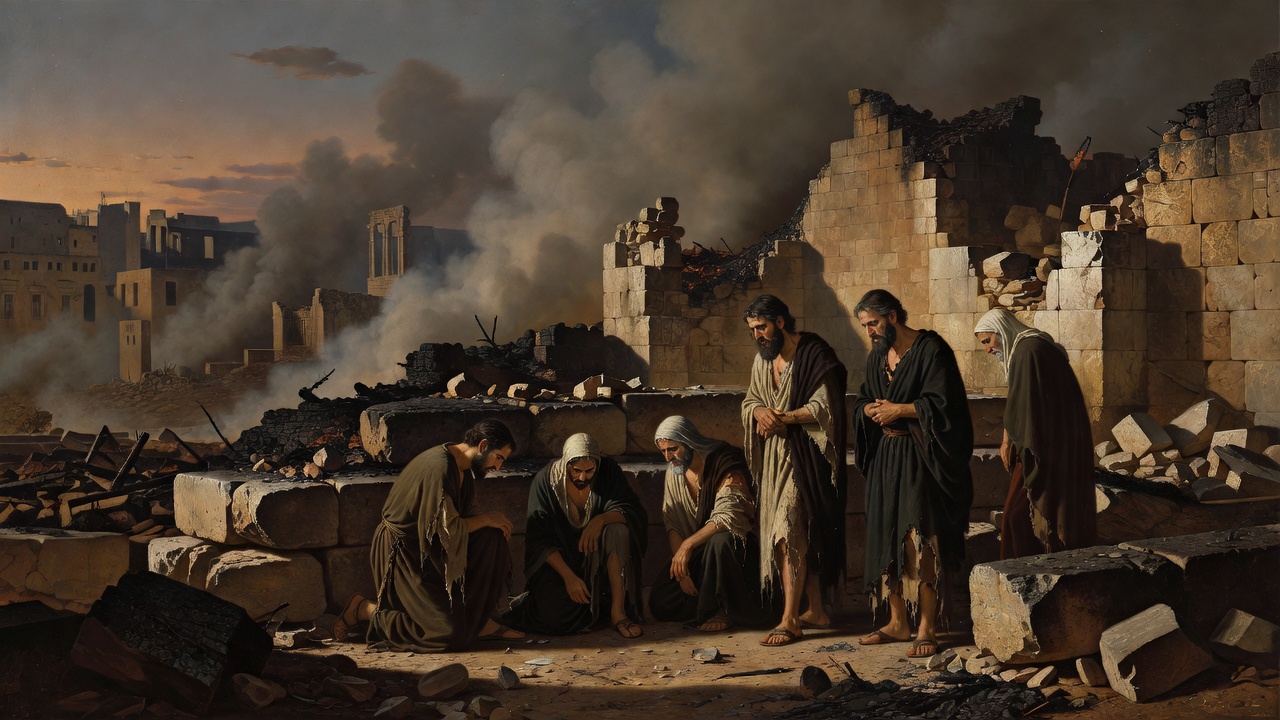
A Lament over the Destruction of Jerusalem
- Psalm 79 is titled a psalm of Asaph, placing it among a collection of psalms (Psalms 50 and 73–83) associated with the Levite musician and seer Asaph. In the biblical record, the title may also refer to the sons of Asaph, a recognized guild of temple singers and poets.Sources: Asaph (Levite) · the Bible text itself
- The psalm laments the defilement of the holy temple, the destruction of Jerusalem into rubble, and the unburied bodies left throughout the city. Jerusalem, known as the holy city and a mountain fastness, is portrayed here as having suffered devastating invasion by surrounding nations.Sources: Jerusalem · the Bible text itself
- The poem calls upon God for help because foreign nations have devoured Jacob and devastated his homeland. In biblical tradition, the name of the patriarch Jacob is frequently used as a poetic collective term for his descendants and their shared homeland.Sources: Jacob (Israel) · the Bible text itself
Notes written with AI assistance from open sources (Theographic Bible Metadata, CC BY-SA 4.0; Easton’s Bible Dictionary, public domain) and reviewed before publishing.
Places in this chapter
Only places identified with high confidence are shown (90% or more according to the scholarly sources compiled by OpenBible). Period map: DARE (Digital Atlas of the Roman Empire), CC BY 4.0; modern map: © OpenStreetMap contributors; places: OpenBible.info (CC BY 4.0).
Credits and license for this translation
Luda yã takada kↄ̃n Bokobaru yão
The New Testament and portions of the Old Testament in the Bokobaru language of Nigeria
copyright © 2005 SIM International
Language: Bokobaru
Translation by: SIM
This translation text is made available to you under the
terms of the Creative Commons License: Attribution-Noncommercial-No Derivative Works.
( http://creativecommons.org/licenses/by-nc-nd/3.0/ )
In addition, you have permission to port the text to different file formats, as long as you
do not change any of the text or punctuation of the Bible.
You may share, copy, distribute, transmit, and extract portions
or quotations from this work, provided that you include the above copyright
information:
You must give Attribution to the work.
You do not sell this work for a profit.
You do not make any derivative works that change any of the actual words or punctuation of the Scriptures.
Permissions beyond the scope of this license may be
available if you contact
us with your request.
This translation is made available to you under the terms of the
Creative Commons Attribution-Noncommercial-No Derivatives license 4.0.
You may share and redistribute this Bible translation or extracts from it in any format, provided that:
You include the above copyright and source information.
You do not sell this work for a profit.
You do not change any of the words or punctuation of the Scriptures.
Pictures included with Scriptures and other documents on this site are licensed just for use with those Scriptures and documents.
For other uses, please contact the respective copyright owners.
2014-09-22
Source: http://ebible.org/bus/ · eBible.org