Joshua 1
Luda yã takada kↄ̃n Bokobaru yão · Tap a verse to see its cross-references.
About this book
About Joshua
- Easton's Bible Dictionary (1897) explains Joshua's name as "Jehovah is his help" or "Jehovah the Saviour." He was the son of Nun, of the tribe of Ephraim, born in Egypt, and Moses' successor as leader of Israel; the wars of conquest he carried on are recorded in the book that bears his name. That entry does not name the book's author or give a date for its writing.Sources: Easton: Joshua · Joshua
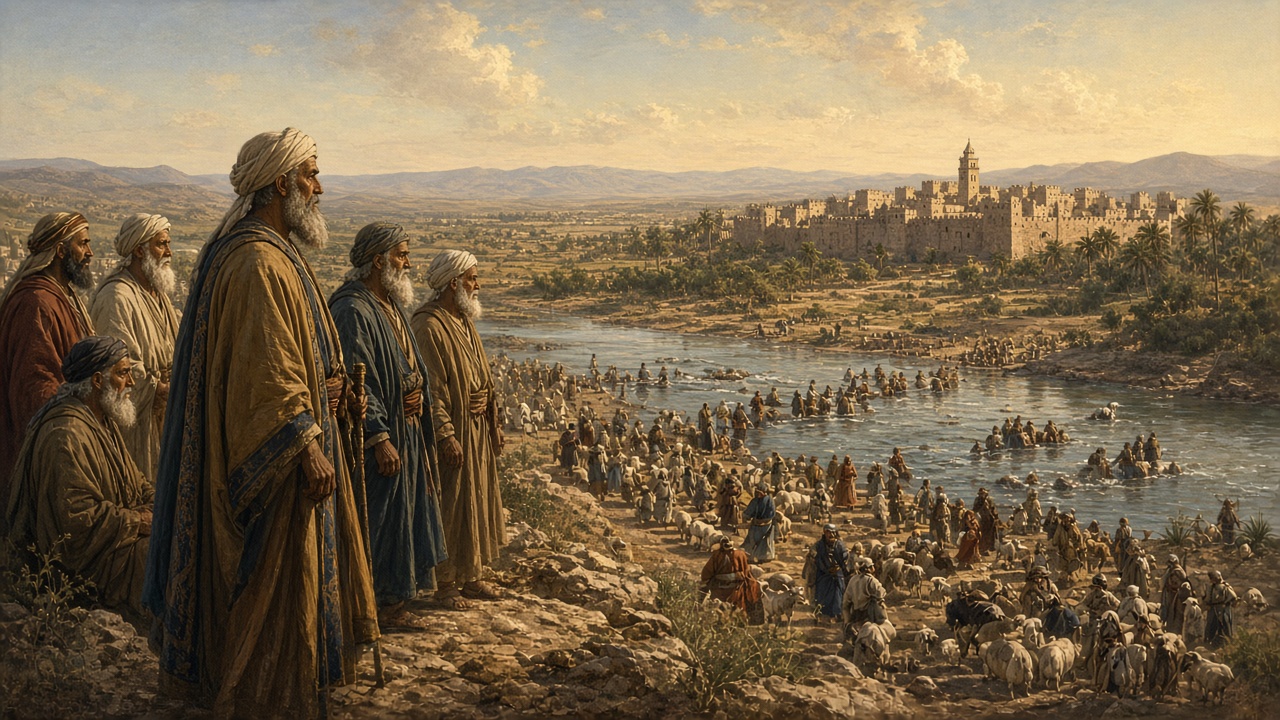
- When Joshua took command, the people were encamped at Shittim. They crossed the Jordan and camped at Gilgal, where, Easton says, he circumcised the people and kept the Passover. Jericho, a fortified city among palm trees about five miles west of the Jordan, is described as Canaan's strongest fortress and the key to western Palestine; Ai, east of Bethel, was the second Canaanite city taken, after an initial defeat.Sources: Easton: Joshua · Jericho · Ai
- Easton's Bible Dictionary (1897) says Joshua conquered six nations and thirty-one kings, then divided the land among the tribes, with Timnath-serah in Mount Ephraim assigned to himself. East of the Jordan, Gilead is described as a mountainous region held by the tribes of Gad and Reuben and the southern part of Manasseh.Sources: Easton: Joshua · Gilead
- Quoting Edersheim, the dictionary says Joshua's name was changed from Oshea, "help," to Jehoshua, "Jehovah is help," and notes that he is called Jesus in Acts 7:45 and Hebrews 4:8. It states that he died at the age of one hundred and ten, twenty-five years after crossing the Jordan, and was buried in his own city of Timnath-serah; of his father Nun, nothing more is recorded than that he was Joshua's father.Sources: Easton: Joshua · Joshua · Nun
- Before leading the conquest, Joshua commanded Israel's host against the Amalekites at Rephidim, served as Moses' minister, and was one of twelve sent to explore Canaan; only he and Caleb brought back an encouraging report. As Easton sketches the book, it runs from the crossing of the Jordan and the taking of Jericho through years of war to the division of the land and Joshua's last address.Sources: Easton: Joshua
Notes written with AI assistance from open sources (Theographic Bible Metadata, CC BY-SA 4.0; Easton’s Bible Dictionary, public domain) and reviewed before publishing.
Dii yãdiɛna Yↄsuanɛ
1Dii zↄ̀bleri Musa gaa gbɛra Dii yã ò Musa kpàasi Yↄsua, Nuni nɛ́nɛ à bè: 2Ma zↄ̀bleri Musa gà. Ǹ fɛɛ ǹ bikũ Yodaa kɛ̀ sa, mpi kↄ̃n Isarailinↄ ń píngi, à gɛ̃ bùsu kɛ̀ má kpàawaan. 3Guu kɛ̀ a gbá pɛ̀ɛn píngi, má kpàawa lán má ò Musanɛ nàmɛ. 4Sɛna zaa gbáan ai gana Lɛbanↄ bùsun, sɛna zaa swa bíta kɛ̀ wè be Yuflati ai gana ísiaa kɛ̀ kú ↄfãntɛ̃gɛ̃kpɛn kpa, Itinↄ bùsu pì é gↄ̃ a bùsu ũ píngimɛ. 5Ai ǹ gá gao gbɛ̃ke é e à n gã̀sã fĩro. Lán má kú kↄ̃n Musao nà, lɛn mɛ́gↄ̃ kúnyo lɛ. Mɛ́ n tónlo, mɛ́ pã kpánzi zikiro.
6Ǹ zɛ gbãa ǹgↄ̃ wↄ́rↄngↄ vĩ, zaakɛ ḿbe nɛ́ bùsu kɛ̀ ma à lɛ́ gbɛ̃̀ a dezi káakunↄnɛ ma bè mɛ́ kpáḿma sí ǹ kpá gbɛ̃ kɛ̀nↄa. 7Ǹ zɛ gbãa ǹgↄ̃ wↄ́rↄngↄ vĩ dé! Ǹ làakari dↄ doka kɛ̀ ma zↄ̀bleri Musa dànnɛɛa ǹgↄ̃ kũna píngi. Ǹton kɛ̃a ǹ na ↄplazi ke ↄzɛziro, n tá égae kɛ nna. 8Ǹ tó Musa doka takada pì yã gↄ̃ da n lɛ́n, ǹgↄ̃ laasuu lɛɛa fãantɛ̃ kↄ̃n gwãavĩo. Ǹ làakari dↄ yã kɛ̀ kú à guunↄa píngi ǹ zĩi kɛa, n tá égↄ̃ nna n yã égae bↄ maa. 9Mámbe ma yã dìɛnnɛroo? Ǹ zɛ gbãa ǹgↄ̃ wↄ́rↄngↄ vĩ. Ǹton tó vĩa n kũro. Ǹton bídi kɛro, zaakɛ mamↄma Dii n Luda, mɛ́gↄ̃ kúnyo guu kɛ̀ nɛ́ɛ gaan píngi.
10Ben Yↄsua bè Isaraili dↄn'aɛdeenↄnɛ: 11À gɛ̃tɛ bùran à o gbɛ̃nↄnɛ aↄ̃ kũsãɛ soru kɛ, zaakɛ gurↄ aagↄ̃ↄ gbɛra aↄ̃é bikũ Yodaa kɛ̀, aↄ̃é gá bùsu kɛ̀ Dii ń Ludaa kpàḿma wàgↄ̃ vĩ sí. 12Yↄsua bè Rubɛninↄnɛ kↄ̃n Gadanↄ kↄ̃n Manasenↄ kpadooo: 13À dↄ yã kɛ̀ Dii zↄ̀bleri Musa dìɛaree kɛ̀kiin, à bè Dii a Luda é tó à kámmabokii e à bùsu kɛ̀kii kpàawa. 14Beee yãnzi a nↄgbɛ̃nↄ kↄ̃n a nɛ́ fétenↄ kↄ̃n a pↄ́kãdeenↄ gↄ̃ bùsu kɛ̀ Musa kpàawaan Yoda baa kɛ̀ kpa, a zĩ̀kpɛɛnↄ dↄ ń gbɛ̃nↄnɛ aɛ wà bikũ ń píngi, aↄ̃gↄ̃ ń gↄ̃kɛbↄnↄ kũna aↄ̃ dↄńlɛ 15ai Dii gↄ̃ tó a gbɛ̃nↄ kámmabokii e lán à kɛ̀are nà, aↄ̃pinↄ sↄ̃ égↄ̃ bùsu kɛ̀ Dii a Ludaa e kpaaḿma vĩ. Beee gbɛra é su bùsu kɛ̀ gↄ̃̀ a pↄ́ ũu kɛ̀ guu, é vɛ̃ɛ bùsu kɛ̀ Dii zↄ̀bleri Musa kpàawa Yoda baa kɛ̀ ↄfãntɛ̃bↄɛ kpaa pìn. 16Ben aↄ̃ wèàla wà bè: Yã kɛ̀ ń dìɛwe píngi wé kɛ. Guu kɛ̀ n wa zĩin píngi wé gámɛ. 17Lán wa zĩi kɛ̀ Musa yãa nà píngi, lɛn wé zĩi kɛ n yãa lɛ se. Dii n Luda gↄ̃ kúnyo, lán à kú kↄ̃n Musao nà. 18Gbɛ̃ kɛ̀ bↄ̀ n yã kpɛɛ à gì yã kɛ̀ ń dìɛnɛ kɛzi, adee gàmɛ. Ǹ zɛ gbãa ǹgↄ̃ wↄ́rↄngↄ vĩ dé!
Did you know?
Joshua Assumes Leadership
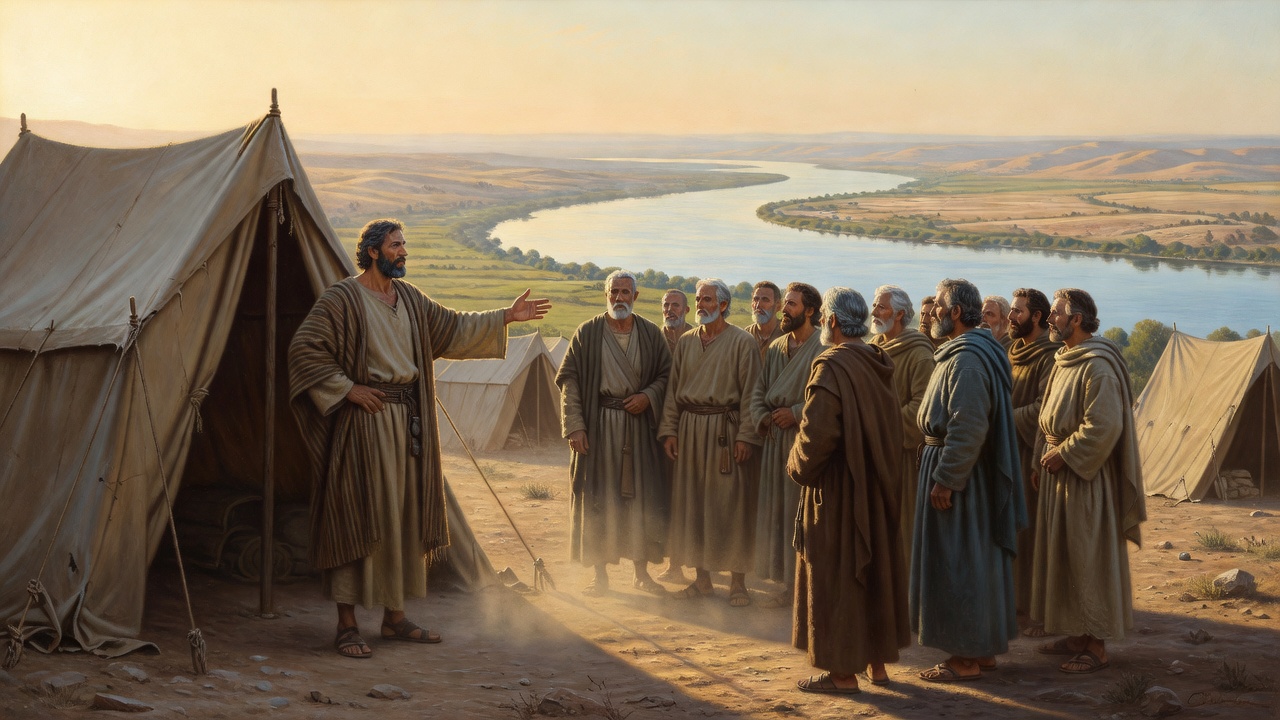
- Joshua, the son of Nun from the tribe of Ephraim, served as Moses' assistant and military commander before being commissioned to succeed him as leader of Israel. His name means "Jehovah is his help" or "Jehovah the Saviour."Sources: Joshua · the Bible text itself
- The territory outlined in God's commission to Joshua stretches from the southern wilderness and the Lebanon mountain range in the north to the Euphrates (called "the great river") in the east and the Mediterranean ("the Great Sea") to the west.Sources: the Bible text itself · Lebanon · Euphrates · Great Sea
- The tribes of Reuben, Gad, and the half-tribe of Manasseh had already received territory east of the Jordan River under Moses. However, their armed warriors were required to cross over ahead of the other tribes to assist them until the entire land was secured.Sources: the Bible text itself · Manasseh (son of Joseph)
Notes written with AI assistance from open sources (Theographic Bible Metadata, CC BY-SA 4.0; Easton’s Bible Dictionary, public domain) and reviewed before publishing.
Places in this chapter
- Jordan · Today: Jordan River · 31.761, 35.558 · verses 2, 11, 14, 15
- Euphrates · Today: Euphrates River · 31.004, 47.442 · verse 4
- Great Sea · Today: Mediterranean Sea · 31.805, 34.170 · verse 4
- Lebanon · 33.540, 35.584 · verse 4
- Negeb · 31.245, 34.841 · verse 4
- Syria · Today: Aram · 33.511, 36.306 · verse 4
Only places identified with high confidence are shown (90% or more according to the scholarly sources compiled by OpenBible). Period map: DARE (Digital Atlas of the Roman Empire), CC BY 4.0; modern map: © OpenStreetMap contributors; places: OpenBible.info (CC BY 4.0).
Credits and license for this translation
Luda yã takada kↄ̃n Bokobaru yão
The New Testament and portions of the Old Testament in the Bokobaru language of Nigeria
copyright © 2005 SIM International
Language: Bokobaru
Translation by: SIM
This translation text is made available to you under the
terms of the Creative Commons License: Attribution-Noncommercial-No Derivative Works.
( http://creativecommons.org/licenses/by-nc-nd/3.0/ )
In addition, you have permission to port the text to different file formats, as long as you
do not change any of the text or punctuation of the Bible.
You may share, copy, distribute, transmit, and extract portions
or quotations from this work, provided that you include the above copyright
information:
You must give Attribution to the work.
You do not sell this work for a profit.
You do not make any derivative works that change any of the actual words or punctuation of the Scriptures.
Permissions beyond the scope of this license may be
available if you contact
us with your request.
This translation is made available to you under the terms of the
Creative Commons Attribution-Noncommercial-No Derivatives license 4.0.
You may share and redistribute this Bible translation or extracts from it in any format, provided that:
You include the above copyright and source information.
You do not sell this work for a profit.
You do not change any of the words or punctuation of the Scriptures.
Pictures included with Scriptures and other documents on this site are licensed just for use with those Scriptures and documents.
For other uses, please contact the respective copyright owners.
2014-09-22
Source: http://ebible.org/bus/ · eBible.org