Job 5
Luda yã takada kↄ̃n Bokobaru yão · Tap a verse to see its cross-references.
1Ǹ lɛ́ zú sa ǹ ma, tó gbɛ̃ke é wenla.
Malaika kpareen nɛ́ aɛ dↄa?
2Íbɛtɛkpana è yↄ̃nkↄↄ dɛ,
nↄ̀sɛgↄ̃aanↄ è mìsaidee kaatɛ.
3Má è yↄ̃nkↄↄ kãsãa pɛ̀ɛ,
ben kãsãa pì yↄ̀ kãndo.
4À nɛ́nↄↄ zã̀ kↄ̃n aafia'ekiio,
wè ń yã máɛmaɛńnɛ yãkpaɛkɛkiia,
gbɛ̃ke è zɛ ń kpɛɛro.
5Nↄadɛrinↄ è à bura pↄ́nↄ ble,
baa pↄ́ kɛ̀ à lɛ̀ lìgazinↄ,
ímidɛrinↄ è luga à auzikizi.
6Kisia è fɛɛ bùsunlo,
nawɛ̃a è bↄɛ tↄↄtɛro.
7Lán tɛ́pũtãna gana musu seka vĩro nà,
lɛn gbɛ̃ kɛ̀ wà ì píngi è nawɛ̃a e lɛ.
8Tó mámbee sↄ̃, Ludan mɛ́ gbeka,
mɛ́ ma yã kpáɛ à aɛzĩ.
9È yã bíta kɛ kɛ̀ weé fↄ̃ wà à gbá dↄ̃ro,
weé fↄ̃ wà à yãbↄnsaɛkɛnanↄ lɛ́ dↄ̃ro.
10È tó lou ma tↄↄtɛa,
è tó à í dagula sɛ̃̀tɛ.
11È gbɛ̃ busananↄ sɛ́ lezĩ,
è sósobikɛrinↄ gba pↄnnaa.
12È yã kɛ̀ mↄnafikideenↄↄ e pɛɛa gboro,
lɛ ń ↄzĩi tóngↄ̃ aubarika vĩro yãnzi.
13È ↄ̃ndↄ̃rinↄ kũ ń wɛ́ɛzɛ̃ɛ guu,
è tó yãlɛkpɛɛ'orinↄ yãgↄ̃gↄ̃na kɛ pã.
14Guu è sia kũḿma fãantɛ̃,
aↄ̃è ↄ máɛmaɛ fãantɛ̃ lán gwãavĩ bà.
15È takaasideenↄ bↄ gaa lɛ́zĩ,
è pↄ́saideenↄ bↄ gbãamↄnnɛrinↄ ↄzĩ.
16Beee yãnzi gbãasaideenↄↄ tãmaa vĩ,
yãzɛdesaideenↄ è yĩtɛ kyↄ̃.
17Aubarikadeen gbɛ̃ kɛ̀ Luda è à tòto kɛɛ ũ.
Tó Gbãapingidee e n swã gagaa, ǹton yãbuu tãro.
18Zaakɛ è gbɛ̃ kɛ̃nna ben è à bↄ̀ gwa,
è gbɛ̃ wíwi ben è à kɛ̃kↄ̃a.
19Eé n bↄ yãn gɛ̃̀n swɛɛdo,
baa tó à kà gɛ̃̀n swɛɛplaa, kisia é n lero.
20Eé n sí gaaa dekaagurↄ,
eé n bↄ fɛ̃ɛdaa lɛ́zĩ zĩ̀lan.
21Dii é n bↄ gbɛ̃yakarinↄ ↄzĩ,
tó mↄ́nzi mↄ̀, vĩa é n kũro.
22Nɛ́ mↄ́nzi kↄ̃n nↄaao yáa dↄ,
nɛ́ vĩa kɛ nↄ̀bↄ pãsĩnↄnɛro.
23Zaakɛ nɛ́gↄ̃ kuu aafia kↄ̃n gbɛ̀nↄ,
nɛ́gↄ̃ nna kↄ̃n nↄ̀bↄsɛ̃tɛnↄ,
24nɛ́gↄ̃ dↄ̃ kɛ̀ n ua égↄ̃ nna,
tó n gaa n kpàsan, pↄ́ke é kɛ̃sãro.
25Nɛ́gↄ̃ dↄ̃ kɛ̀ n nɛ́nↄ é kɛ pari,
n boriinↄ é dagula lán sɛ̃̀ bà.
26Nɛ́ zi kũ kótokoto ǹ gbasa ǹ ga
lán ése kɛ̀ mà wà kɛ̃̀ à gurↄↄa bà.
27Kɛ̀ wa yã pì asii gbèka, lɛn à dɛ lɛ.
Ǹ yã pì sí nɛ́gↄ̃ dↄ̃ kɛ̀ n zĩnda yãmɛ.
Did you know?
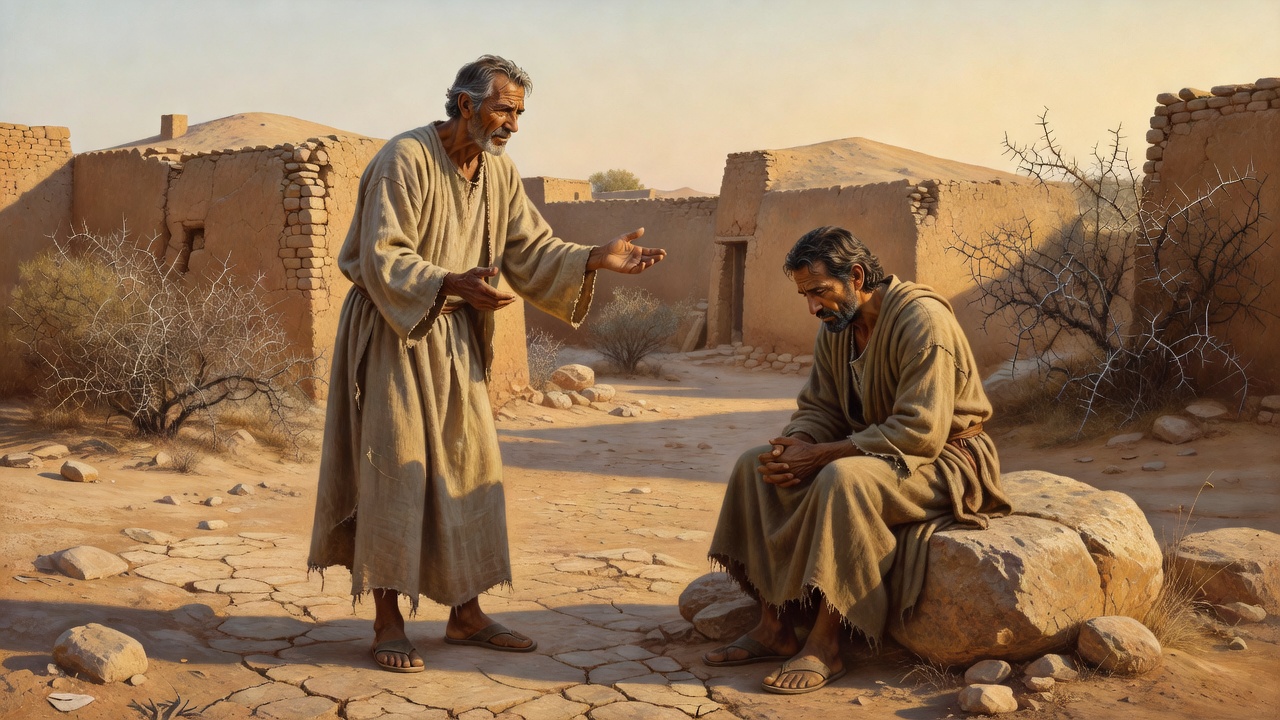
Eliphaz's Counsel on Suffering and Divine Correction
- Eliphaz portrays suffering as purposeful divine discipline rather than arbitrary misfortune, asserting that trouble does not arise without cause from the soil. He urges Job not to despise the correction of the Almighty, who wounds only to heal and restore.Sources: the Bible text itself
- In promising deliverance from six calamities and even seven, Eliphaz employs a traditional poetic formula known as graded numerical parallelism. This rhetorical pattern, common in ancient Near Eastern wisdom poetry, builds emphasis to express comprehensive and complete protection.Sources: the Bible text itself
- Eliphaz describes ultimate restoration in vivid agricultural and pastoral terms, depicting a life where wild beasts and stony soil cease to be hostile. He envisions a peaceful death occurring in full vigor, likened to a sheaf of grain harvested at the proper season.Sources: the Bible text itself
Notes written with AI assistance from open sources (Theographic Bible Metadata, CC BY-SA 4.0; Easton’s Bible Dictionary, public domain) and reviewed before publishing.
Credits and license for this translation
Luda yã takada kↄ̃n Bokobaru yão
The New Testament and portions of the Old Testament in the Bokobaru language of Nigeria
copyright © 2005 SIM International
Language: Bokobaru
Translation by: SIM
This translation text is made available to you under the
terms of the Creative Commons License: Attribution-Noncommercial-No Derivative Works.
( http://creativecommons.org/licenses/by-nc-nd/3.0/ )
In addition, you have permission to port the text to different file formats, as long as you
do not change any of the text or punctuation of the Bible.
You may share, copy, distribute, transmit, and extract portions
or quotations from this work, provided that you include the above copyright
information:
You must give Attribution to the work.
You do not sell this work for a profit.
You do not make any derivative works that change any of the actual words or punctuation of the Scriptures.
Permissions beyond the scope of this license may be
available if you contact
us with your request.
This translation is made available to you under the terms of the
Creative Commons Attribution-Noncommercial-No Derivatives license 4.0.
You may share and redistribute this Bible translation or extracts from it in any format, provided that:
You include the above copyright and source information.
You do not sell this work for a profit.
You do not change any of the words or punctuation of the Scriptures.
Pictures included with Scriptures and other documents on this site are licensed just for use with those Scriptures and documents.
For other uses, please contact the respective copyright owners.
2014-09-22
Source: http://ebible.org/bus/ · eBible.org