Job 2
Luda yã takada kↄ̃n Bokobaru yão · Tap a verse to see its cross-references.
Setãn Ayuba yↄ̃na gɛ̃̀n plaadee
1Zĩkea malaikanↄ ɛ̀ara wà mↄ̀ wà zɛ̀ Dii aɛ, Setãn sↄ̃ↄ kú ń tɛ́. À zɛ̀ Dii aɛ, 2ben Dii à là à bè: N bↄ mámɛ? À wèàla à bè: Mɛ́ɛ gaa mɛ́ɛ suu mɛ́ɛ likↄ̃aa zↄ̃ↄ anduna guumɛ. 3Ben Dii bènɛ: N ma zↄ̀bleri Ayuba èↄ́? À sáa kú anduna guuro. Gbɛ̃ maaamɛ, à taari vĩro. À ma vĩa vĩ bensↄ̃ à gì yãzaakɛnazi. Baa kɛ̀ n ma swã vùmɛ, ma mↄ́nzi kpàzi pã, à kpɛ́ kuu taari sai ai tia. 4Ben Setãn bènɛ: Ǹ kɛmɛ mà kɛnnɛ. Pↄ́ kɛ̀ gbɛ̃ vĩ píngi eé kpá a mìsina yãnzi. 5Ǹ n ↄↄ bↄ ǹ pá à mɛ̀a ǹ gwa. Eé yã zaaa onnɛ. 6Ben Dii bènɛ: Tↄ̀! Ma à nànnɛ n ↄzĩ, mↄde ǹ à wɛ̃̀ndi tó.
7Setãn gù Dii aɛ, ben à bↄ̀gĩi zĩ̀ Ayubaa sɛna zaa à kɛ̀sɛa ai à gàa pɛ́ à mìdangura. 8Ben Ayuba takaso sɛ̀ à gàa à vɛ̃̀ɛ tubura, èe a zĩnda waao. 9À naↄ̃ bènɛ: Nɛ́gↄ̃ kpɛɛ kuu taari sai ai tian yↄ́? Ǹ yã zaaa o Ludanɛ ǹ ga. 10Ben à bènɛ: Nɛ́ɛ yã oo lán nↄgbɛ̃ yↄ̃nkↄↄ bà. Wégↄ̃ à maaa ee Luda ↄzĩ wà gí à zaaa eziↄ́? Yã pìnↄ guu píngi Ayuba e durun kɛ a yã'ona guuro.
Ayuba gbɛ̃nnanↄ mↄna à kiia
11Kɛ̀ Ayuba gbɛ̃nna gↄ̃ↄn aagↄ̃ↄnↄ kisia kɛ̀ à à lènↄ baaru mà, aↄ̃ baade bↄ̀ a bɛ aↄ̃ kↄ̃ kàkↄ̃a, ben aↄ̃ gàa wà sósobi kɛo aↄ̃ à làakari kpáɛnɛ. Aↄ̃ tↄ́nↄn yɛ̀: Temana gbɛ̃ Ɛlifaza, Sua gbɛ̃ Bilidada kↄ̃n Naamati gbɛ̃ Zofao. 12Kɛ̀ aↄ̃ à wɛ̃ndɛ̃ kɛ̀ zã̀azã, aↄ̃ↄe à dↄ̃ro, ben aↄ̃ ↄ́ↄ dↄ̀, baade a uta gà à kɛ̃̀, ben aↄ̃ bùsu kↄ̀ wà fã̀ musu à kú ń mìa. 13Ben aↄ̃ vɛ̃̀ɛo tↄↄtɛ gurↄ swɛɛplaa fãantɛ̃ kↄ̃n gwãavĩo. Aↄ̃ gbɛ̃kee e yãke ooro, zaakɛ aↄ̃ↄ è lán à nawɛ̃a kɛ̀ bíta nà.
Did you know?
Job’s Affliction and the Arrival of His Friends
- In the Hebrew text of Job, the term translated as Satan appears with the definite article as the adversary or accuser. In this second heavenly council, the adversary argues that while Job endured the loss of his wealth and family, striking his physical flesh and bones would cause him to abandon his integrity.Sources: Satan · the Bible text itself
- Job’s companions—Eliphaz the Temanite, Bildad the Shuhite, and Zophar the Naamathite—came from distant regions associated with Arabia. Bildad's background is linked to Shuah, a son of Abraham by Keturah, while the ancient Greek Septuagint translation connects Zophar to the Mineans of southern Arabia.Sources: Bildad · Zophar · the Bible text itself
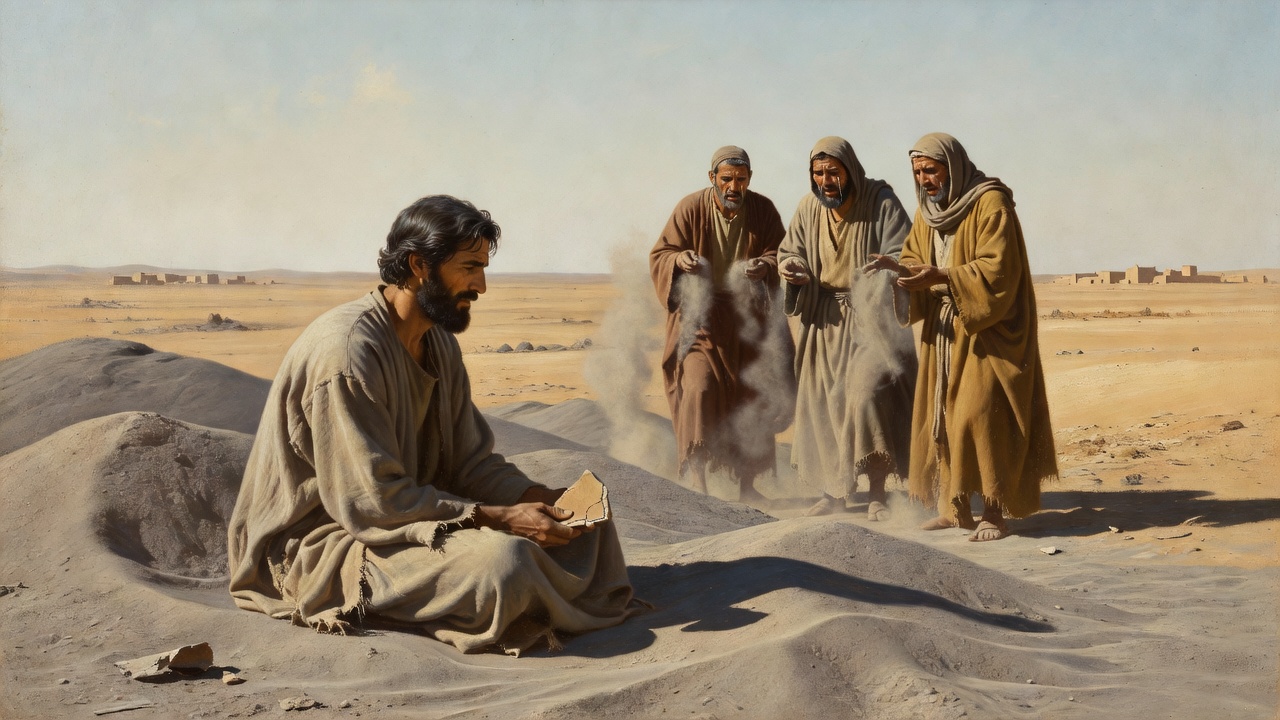
- Upon seeing Job's severe suffering, his three friends tore their garments, threw dust into the air over their heads, and sat with him on the ground in complete silence for seven days and seven nights. This shared vigil reflected ancient customs of deep mourning when sorrow was too profound for words.Sources: the Bible text itself
Notes written with AI assistance from open sources (Theographic Bible Metadata, CC BY-SA 4.0; Easton’s Bible Dictionary, public domain) and reviewed before publishing.
Credits and license for this translation
Luda yã takada kↄ̃n Bokobaru yão
The New Testament and portions of the Old Testament in the Bokobaru language of Nigeria
copyright © 2005 SIM International
Language: Bokobaru
Translation by: SIM
This translation text is made available to you under the
terms of the Creative Commons License: Attribution-Noncommercial-No Derivative Works.
( http://creativecommons.org/licenses/by-nc-nd/3.0/ )
In addition, you have permission to port the text to different file formats, as long as you
do not change any of the text or punctuation of the Bible.
You may share, copy, distribute, transmit, and extract portions
or quotations from this work, provided that you include the above copyright
information:
You must give Attribution to the work.
You do not sell this work for a profit.
You do not make any derivative works that change any of the actual words or punctuation of the Scriptures.
Permissions beyond the scope of this license may be
available if you contact
us with your request.
This translation is made available to you under the terms of the
Creative Commons Attribution-Noncommercial-No Derivatives license 4.0.
You may share and redistribute this Bible translation or extracts from it in any format, provided that:
You include the above copyright and source information.
You do not sell this work for a profit.
You do not change any of the words or punctuation of the Scriptures.
Pictures included with Scriptures and other documents on this site are licensed just for use with those Scriptures and documents.
For other uses, please contact the respective copyright owners.
2014-09-22
Source: http://ebible.org/bus/ · eBible.org