2 Samuel 8
Luda yã takada kↄ̃n Bokobaru yão · Tap a verse to see its cross-references.
Dauda zĩ̀blena bori pãndenↄa
1Beee gbɛra Dauda zĩ̀ blè Filisitininↄa à ń búsa à ń mɛɛwi Gata sìḿma. 2À zĩ̀ blè Mↄabunↄa, ben à tò aↄ̃ dàɛ kↄ̃ saɛ tↄↄtɛ. À bà yↄ̃̀ḿma. Tó à gbɛ̃ kɛ̀ aↄ̃ↄ kú bà plaa dagura dɛ̀dɛ, è gbɛ̃ kɛ̀ aↄ̃ↄ kú bà do dagura tó bɛ̃ɛ. Ben Mↄabunↄ gↄ̃̀ Dauda zↄ̀blerinↄ ũ, ben aↄ̃ègↄ̃ tángba kpaanɛ. 3Dauda zĩ̀ blè Reobo nɛ́ Adadɛza, Zoba kínaa, gurↄↄ kɛ̀ kí pì ɛ̀ara èe gaa ↄ tↄ̃ Yuflati swasaɛdeenↄa. 4Ben à à sↄ̃goronↄ kũ̀kũ mɛ̀n wàa sↄↄro kↄ̃n sↄ̃gorodeenↄ gↄ̃ↄn bↄrↄ swɛɛplaa kↄ̃n gbɛ̃ kɛ̀ aↄ̃ↄ tɛ́ kɛ̀sɛnↄ gↄ̃ↄn bↄrↄ baro. Ben à ń sↄ̃nↄ gbátĩkyanↄ zↄ̃̀zↄ̃ píngi, mɛ̀n basↄↄro bé aↄ̃ bↄ̀. 5Siria kɛ̀ aↄ̃ↄ kú Damasakunↄ mↄ̀ ↄ da Adadɛzaa, ben Dauda ń gbɛ̃nↄ dɛ̀dɛ gↄ̃ↄn bↄrↄ baro awɛɛplaa. 6À gudãkparinↄ dìɛdiɛ Siria bùsun, ben aↄ̃ gↄ̃̀ à zↄ̀blerinↄ ũ, aↄ̃ègↄ̃ tángba kpaanɛ. Dii tò Dauda zĩ̀ blè guu kɛ̀ à gàan píngi. 7Dauda Adadɛza ìbanↄ vura sɛngbangonↄ sɛ̀ɛ à tào Yerusalɛmu. 8À mↄ̀gotɛ̃ sɛ̀ɛ bítabita Adadɛza wɛ́tɛ kɛ̀ wè sísi Teba kↄ̃n Berotaio guu.
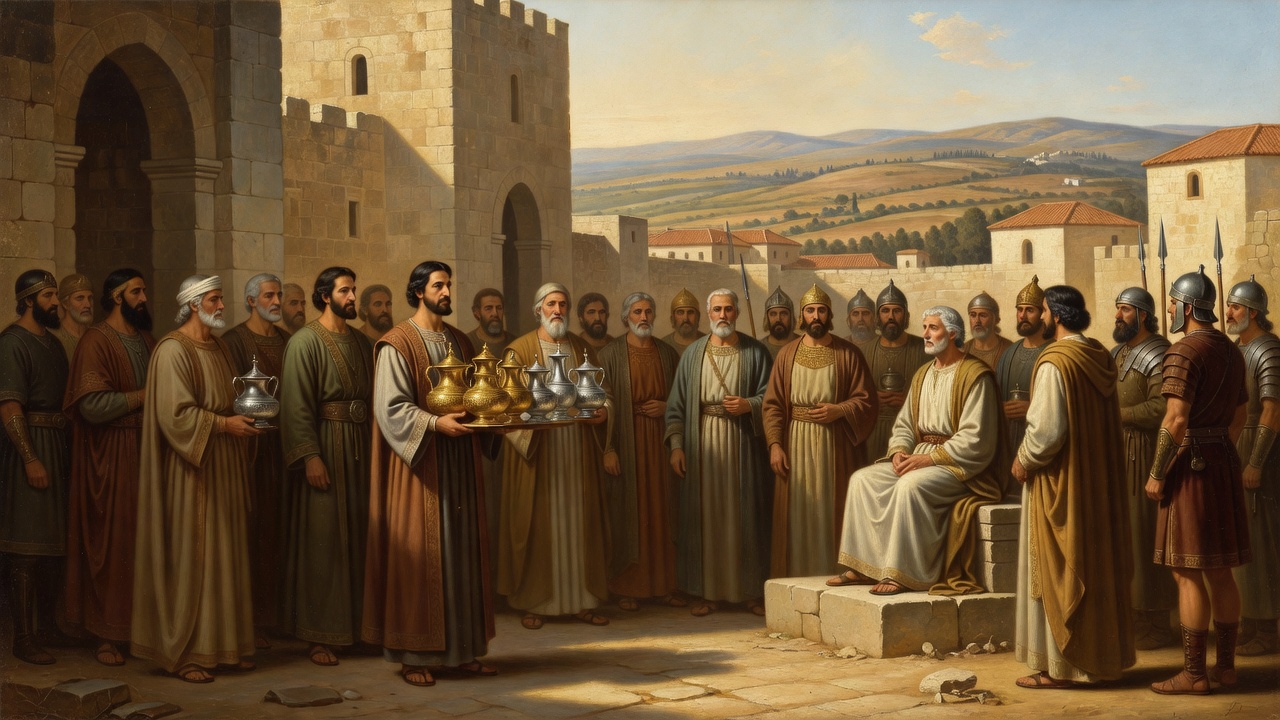
9Kɛ̀ Amata kí Tou mà Dauda zĩ̀ blè Adadɛza zĩ̀kpɛɛnↄa ń píngi, 10ben à a nɛ́ Adoramu zĩ̀ ì kpáa. À à sáabu kpà zĩ̀ kɛ̀ à blè Adadɛzaa yãnzi, zaakɛ Tou zĩ̀ kào yã. Adoramu mↄ̀ kↄ̃n vura pↄ́nↄ kↄ̃n kondogi pↄ́nↄ kↄ̃n mↄ̀gotɛ̃ pↄ́nↄ, 11ben kí Dauda kàɛ Dii pↄ́ ũ lán à kɛ̀ kↄ̃n borii kɛ̀ à gbãaa blèḿmanↄ kondogi pↄ́nↄ kↄ̃n vura pↄ́nↄo nà píngi, 12Ɛdↄmunↄ kↄ̃n Mↄabunↄ kↄ̃n Amↄninↄ kↄ̃n Filisitininↄ kↄ̃n Amalɛkinↄ. Lɛn à kɛ̀ lɛ kↄ̃n pↄ́ kɛ̀ à sì Zoba kí Adadɛza, Reobo nɛ́ao. 13Lɛn Dauda tↄ́ bↄ̀ lɛ. Kɛ̀ à zĩ̀ blè Sirianↄa à sù, à Ɛdↄmunↄ dɛ̀dɛ Guzurɛ Wisideen gↄ̃ↄn bↄrↄ baro plaasai. 14Ben à gudãkparinↄ dìɛdiɛ Ɛdↄmu bùsun dↄ, ben Ɛdↄmu pìnↄ gↄ̃̀ à zↄ̀blerinↄ ũ. Guu kɛ̀ Dauda gàan píngi Dii è tó à zĩ̀ blemɛ.
15Daudan Isaraili bori píngi kína ũ, à yã maaa kɛ̀ a gbɛ̃nↄnɛ a zɛ́a. 16Zeruya nɛ́ Yoabun zĩ̀kpɛɛnↄ gbɛ̃nsi ũ. Ailudi nɛ́ Yosafatan baarukpari ũ. 17Aitubu nɛ́ Zadↄki kↄ̃n Abiata nɛ́ Aimɛlɛkion sa'orikinↄ ũ. Serayan takadakɛ̃ri ũ. 18Yoyada nɛ́ Bɛnayan dogarinↄ gbɛ̃nsi ũ. Dauda zĩnda nɛ́gↄ̃gbɛ̃nↄn a kpàasinↄ ũ.
Did you know?
David's Conquests and Administration
- The phrase Metheg-ammah in 2 Samuel 8:1 literally means "the bridle of the mother city," a figurative expression for conquering a regional capital, which the parallel passage in 1 Chronicles 18:1 identifies as Gath.Sources: Metheg-ammah · the Bible text itself
- Hadadezer of Zobah ruled an Aramean kingdom that reached toward the Euphrates River. David's victory over him secured northern territories around Damascus and prompted King Toi of Hamath, a rival of Hadadezer, to send his son Joram with gifts of gold, silver, and bronze.Sources: Zobah · Toi · Joram · the Bible text itself
- The chapter outlines David's organized central government, naming Joab as army commander, Jehoshaphat as recorder, Zadok and Ahimelech as priests, Seraiah as scribe, and Benaiah over the Cherethites and Pelethites.Sources: Joab · the Bible text itself
Notes written with AI assistance from open sources (Theographic Bible Metadata, CC BY-SA 4.0; Easton’s Bible Dictionary, public domain) and reviewed before publishing.
Places in this chapter
- Moab · Today: Moab 1 · 31.181, 35.701 · verses 2, 12
- Euphrates · Today: Euphrates River · 31.004, 47.442 · verse 3
- Zobah · 33.935, 36.151 · verses 3, 5, 12
- Damascus · 33.511, 36.306 · verses 5, 6
- Syria · Today: Aram · 33.511, 36.306 · verse 5
- Aram · 33.511, 36.306 · verse 6
- Jerusalem · 31.777, 35.234 · verse 7
- Hamath · Today: Hama · 35.136, 36.750 · verse 9
- Amalek · 30.648, 34.422 · verse 12
- Ammon · 31.955, 35.934 · verse 12
- Edom · 30.746, 35.604 · verses 12, 13, 14
- Philistia · 31.664, 34.546 · verse 12
Only places identified with high confidence are shown (90% or more according to the scholarly sources compiled by OpenBible). Period map: DARE (Digital Atlas of the Roman Empire), CC BY 4.0; modern map: © OpenStreetMap contributors; places: OpenBible.info (CC BY 4.0).
Credits and license for this translation
Luda yã takada kↄ̃n Bokobaru yão
The New Testament and portions of the Old Testament in the Bokobaru language of Nigeria
copyright © 2005 SIM International
Language: Bokobaru
Translation by: SIM
This translation text is made available to you under the
terms of the Creative Commons License: Attribution-Noncommercial-No Derivative Works.
( http://creativecommons.org/licenses/by-nc-nd/3.0/ )
In addition, you have permission to port the text to different file formats, as long as you
do not change any of the text or punctuation of the Bible.
You may share, copy, distribute, transmit, and extract portions
or quotations from this work, provided that you include the above copyright
information:
You must give Attribution to the work.
You do not sell this work for a profit.
You do not make any derivative works that change any of the actual words or punctuation of the Scriptures.
Permissions beyond the scope of this license may be
available if you contact
us with your request.
This translation is made available to you under the terms of the
Creative Commons Attribution-Noncommercial-No Derivatives license 4.0.
You may share and redistribute this Bible translation or extracts from it in any format, provided that:
You include the above copyright and source information.
You do not sell this work for a profit.
You do not change any of the words or punctuation of the Scriptures.
Pictures included with Scriptures and other documents on this site are licensed just for use with those Scriptures and documents.
For other uses, please contact the respective copyright owners.
2014-09-22
Source: http://ebible.org/bus/ · eBible.org