1 Samuel 20
Luda yã takada kↄ̃n Bokobaru yão · Tap a verse to see its cross-references.
Dauda kↄ̃n Yonatão
1Dauda bↄ̀ Nayo zaa Rama, à bàa lɛ̀ à gàa à Yonatã lè, ben à à là à bè: Bↄ́n má kɛ̀? Dà kpareen má kɛ̀? Yã zaa kpareen má kɛ̀ n denɛ kɛ̀ èe wɛtɛɛ à ma dɛɛ? 2À wèàla à bè: Gyam! Nɛ́ garo. Ǹ gwa, ma de è yãke kɛ à gí damɛ ma swãlaziro, yã bíta ke à nɛ́ngon yoo. Ma de égↄ̃ yã beee taka kɛɛ à gí omɛziↄ́? Mɛ́ɛ síro! 3Ben Dauda bè dↄ: N dee dↄ̃ sãnsãn kɛ̀ ma n pↄnnaa è. Beee yãnzin èe tó n yã pì màro, lɛ n pↄↄ tón yakaro yãnzi. Kↄ̃n Dii kuunao kↄ̃n n kuunao má kú gaa lɛ́zĩmɛ. 4Ben Yonatã bènɛ: Pↄ́ kɛ̀ ń yezi píngi mɛ́ kɛnnɛ. 5Ben Dauda bènɛ: Ǹ gwa, mↄ dufu zĩbaamɛ zia. À kũ̀ mà vɛ̃ɛ mà pↄ́ ble kↄ̃n kínaomɛ. Ǹ tó mà gá mà utɛ sɛ̃̀tɛ ai ziando uusiɛ. 6Tó n de ma gbeka, ǹ benɛ ma zɛ́ gbèkamma mà gá ma bɛ wɛ́tɛ Bɛtɛlɛmu kpakpaa, kɛ̀ ma bɛdeenↄ píngi e saa kɛ̀ wè o wɛ̃̀ kↄ̃n wɛ̃̀o oo gwe yãnzi. 7Tó à bè à maa, mɛ́gↄ̃ aafia, mↄde tó à pↄ fɛ̃̀ maamaa, ǹgↄ̃ dↄ̃ kɛ̀ yã zaaan à zɛ̀o à kɛmɛ gwe. 8Ǹ gbɛ̃kɛɛ kɛ mamↄma n zↄ̀blerinɛ, zaakɛ n yã yìmao kↄ̃n Dii dↄ̃naomɛ. Tó má taari vĩ, ǹ ma dɛ n zĩnda. Ǹton ma kpá n dearo. 9Ben Yonatã bè: Gyam! Tó má dↄ̃ kɛ̀ ma de zɛ̀o à zaaa kɛnnɛ, lɛ mɛ́ onnɛroo? 10Ben Dauda à là à bè: Tó n de gà à yã pãsĩ ònnɛ, dé bé eé omɛɛ? 11Ben Yonatã bènɛ: Ǹ mↄ́ wà gá sɛ̃̀tɛ. Ben aↄ̃ bↄ̀ɛ wà gàa sɛ̃̀tɛ ń plaa.
12Ben Yonatã bè: Má sì kↄ̃n Dii Isarailinↄ Ludao, ai ziando mↄndaa'i mɛ́ ma de yↄ̃ mà gwa. Tó n yã kànɛ, mɛ́ lɛ́kpãsã kɛnnɛ. 13Tó ma dee yezi à à zaaa kɛnnɛmɛ sↄ̃, ben mɛ́ɛ lɛ́kpãsã kɛnnɛ ma n gbarɛ n ta aafiaro, Dii yã kɛmɛ pãsĩpãsĩ. Dii gↄ̃ kúnyo lán à kú kↄ̃n ma deo yã nà. 14Lán má kpɛ́ kú wɛ̃̀ndio nà ǹ gbɛ̃kɛɛ kɛmɛ lán Dii è kɛńnɛ nà, kɛ̀ wàton ma dɛro yãnzi. 15N gbɛ̃kɛɛ tón yãa kↄ̃n ma bɛdeenↄ zikiro, baa tó Dii tò n ibɛɛnↄ yã̀a anduna guu. 16Lɛn Yonatã yã yì kↄ̃n Daudao lɛ, ben à bè: Dii gɛ̃ɛ bonnɛ n ibɛɛnↄa. 17Ben Yonatã tò Dauda ɛ̀ara à lù sɛ̀are dↄ a yenzi yãnzi, zaakɛ à yezi lán a zĩnda wɛ̃̀ndi bàmɛ.
18Ben Yonatã bènɛ: Mↄ dufu zĩbaa kuu zia. Tó wèe gbɛ̃ke e n vɛ̃ɛkiinlo, weé n gbeka. 19Ziando ǹ gá ǹ utɛ guu kɛ̀ n utɛn yãa pì naanagurↄ, nɛ́gↄ̃ kú gbɛ̀ kɛ̀ dɛ tↄↄtɛ lɛ́ sèeda ũu saɛ gwe. 20Mɛ́ kà zu gbɛ̀ pì saɛ wɛ́n aagↄ̃ lándↄ̃ mɛ́ɛ pↄ́ gbãa bà, 21mɛ́ nɛ́gↄ̃gbɛ̃ ke zĩ à gá kà pìnↄ wɛtɛ. Tó ma bènɛ, kànↄↄ kú à kpɛɛ, à sɛ́ɛ à mↄ́o, ǹ mↄ́, má sì kↄ̃n Diio nɛ́gↄ̃ aafiamɛ, kari kuuro. 22Tó ma bènɛ kànↄↄ kú à aɛ sↄ̃, ǹ gá, zaakɛ Dii bé à n gbarɛ. 23Yã kɛ̀ wá yì kↄ̃o sↄ̃, Dii bé eégↄ̃ dɛ yã pì sèedadee ũ gurↄ píngi.
24Ben Dauda gàa à ùtɛ sɛ̃̀n. Kɛ̀ mↄ dufu bↄ̀, kína vɛ̃̀ɛ lɛ à pↄ́ ble. 25À vɛ̃̀ɛ a vɛ̃ɛkiia gũ̀ saɛ. Yonatã vɛ̃̀ɛ à aɛ, Abana kú à saɛ. Dauda vɛ̃ɛkii sↄ̃, gbɛ̃kee kú gwero. 26Solu e yãke o zĩ beeearo, zaakɛ èe daa yãke bé à à lè, à kú gbãsĩomɛ, beee bé à kpànɛ. 27Kɛ̀ guu dↄ̀ mↄ gurↄ plaadee zĩ, Dauda vɛ̃ɛkii gↄ̃ da kori, ben Solu a nɛ́ là à bè: Bↄ́yãnzi Yɛsɛ nɛ́ e mↄ́ pↄ́ ble gĩa kↄ̃n gbã̀aoroo? 28Ben à bènɛ: À zɛ́ gbèkama, à bè é gá Bɛtɛlɛmu. 29À bè mà tó à gá, zaakɛ a bɛdeenↄↄ e saa oo wɛ́tɛ pì guumɛ, ben a vĩ̀i bèare à mↄ́. À bè tó à kɛ̀mɛ, mà a gbarɛ à gá a vĩ̀inↄ gwa. Beee yãnzin èe mↄ́ pↄ́ blenyorozi. 30Ben Solu pↄ fɛ̃̀ Yonatãzi à bè: Nɛ́ faasai swãgbãade! Má dↄ̃ kɛ̀ n zɛ Yɛsɛ nɛ́ kpɛɛmɛ. N wí dà n zĩndaa kↄ̃n n dao. 31Tó Yɛsɛ nɛ́ pì gↄ̃ kú kũ wɛ̃̀ndio, nɛ́ e ǹ kpata blero. Ǹ gbɛ̃nↄ zĩ aↄ̃ à kũ wà suomɛ tia. Séto à ga. 32Ben Yonatã à là à bè: Bↄ́yãnzin eé gazi? Bↄ́n à kɛ̀? 33Ben Solu Yonatã gbã̀ kↄ̃n sário lɛ à e à à dɛ, ben Yonatã dↄ̃̀ sa kɛ̀ a de zɛ̀ kↄ̃n Dauda dɛnaomɛ.
34Yonatã fɛ̀ɛ à gò pↄ́bleela kↄ̃n pↄfɛ̃o, èe gà à pↄ́ blè mↄ gurↄ plaadee pì zĩ dↄro, zaakɛ à nↄ̀sɛ yàka Dauda yã musu, kɛ̀ à de à dìɛ gbɛ̃ futaa ũ yãnzi.
35Kɛ̀ guu dↄ̀, Yonatã bↄ̀ à gàa Dauda le guu pìn. Nɛ́gↄ̃gbɛ̃ kee tɛ́zi. 36Ben à bè nɛ́ pìnɛ. Ǹ bàa lɛ́ ǹ gá kãa. Tó ma kà zù, nɛ́ wɛtɛ. Kɛ̀ nɛ́ pì bàa lɛ̀ èe gaa, ben Yonatã kà zù à mìla. 37Kɛ̀ nɛ́ pì kà guu kɛ̀ Yonatã kà pɛ̀ɛn, ben à lɛ́ zù nɛ́ pìzi à bè: Kà pìnↄↄ kú n aɛ kãa. 38Ben Yonatã ɛ̀ara à lɛ́ zùzi dↄ à bè: Ǹ gá kpakpaa, ǹton zɛro. Ben nɛ́ pì kà pìnↄ sɛ̀ɛ à sùo a diinɛ. 39Nɛ́ pì e yã pì dↄ̃ro, séde Yonatã kↄ̃n Daudao. 40Ben Yonatã a gↄ̃kɛbↄnↄ kpà nɛ́ pìa à bè: Ǹ sí ǹ táo bɛ.
41Kɛ̀ nɛ́ pì tà, Dauda fɛ̀ɛ gbɛ̀ kpɛɛ à mↄ̀ à kùɛ Yonatãnɛ gɛ̃̀n aagↄ̃ à dàɛ a puua. Ben aↄ̃ lɛ́ pɛ̀kↄ̃a aↄ̃ ↄ́ↄ dↄ̀ ń plaa ń píngi, Dauda pↄ́ bé à bíta. 42Ben Yonatã bènɛ: Ǹ tá aafia, zaakɛ wa lù sɛ̀ kↄ̃n Dii tↄ́o wa bè, Diin wa sèedadee ũ ma boriinↄ kↄ̃n n boriinↄ dagura ai gurↄ píngi. Dauda bↄ̀ gwe, ben Yonatã ɛ̀ara à tà a bɛ.
Did you know?
Jonathan Warns David
- The royal banquet for the New Moon festival gathered Saul's inner circle, including his commander-in-chief, Abner. When David failed to appear on the first day, Saul initially assumed David was missing because of ceremonial uncleanness, which would temporarily prevent participation in the meal.Sources: the Bible text itself · Abner
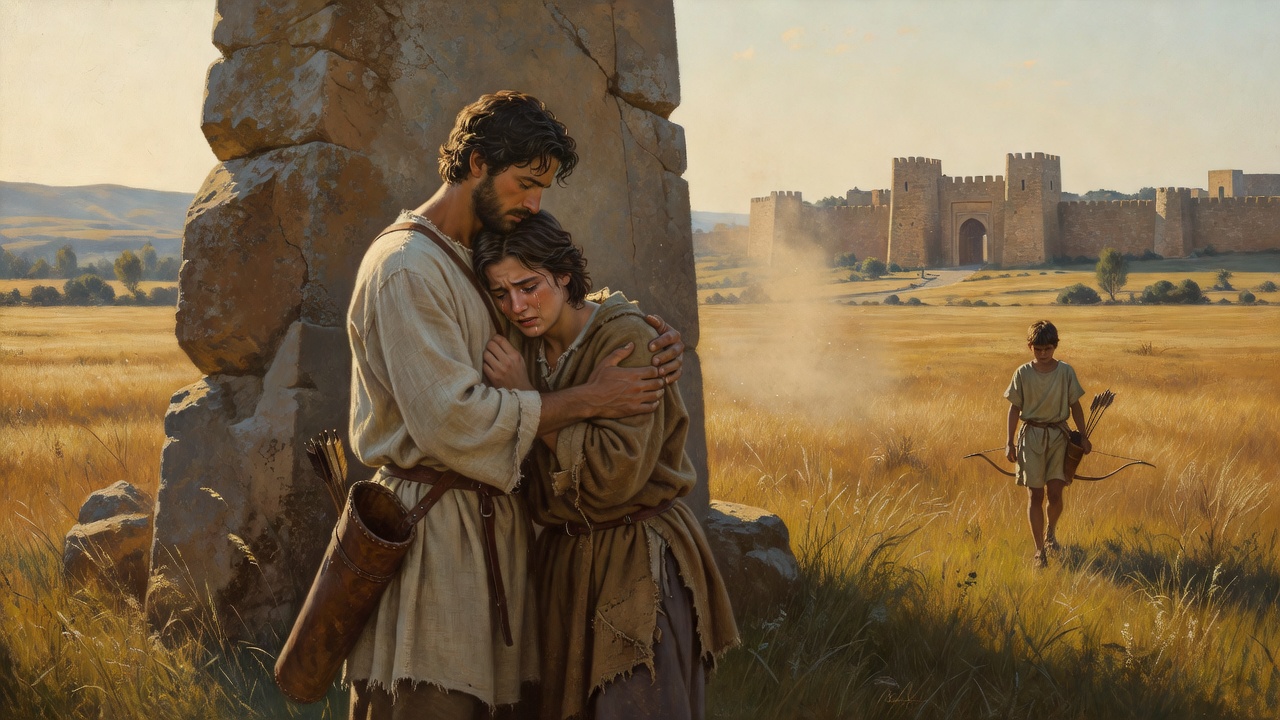
- Jonathan, who was renowned for his skill in archery, devised a secret signal using three arrows and a young attendant. Because the boy was unaware of the arrangement, Jonathan could safely warn David, who was hiding near the stone Ezel, of Saul's deadly intentions.Sources: the Bible text itself · Jonathan
- As Saul's eldest son, Jonathan was the natural heir to the throne. Saul was enraged because he saw David as a threat to his family's royal dynasty, whereas Jonathan chose instead to uphold a lasting covenant of friendship and loyalty with David.Sources: the Bible text itself · Jonathan
Notes written with AI assistance from open sources (Theographic Bible Metadata, CC BY-SA 4.0; Easton’s Bible Dictionary, public domain) and reviewed before publishing.
Places in this chapter
Only places identified with high confidence are shown (90% or more according to the scholarly sources compiled by OpenBible). Period map: DARE (Digital Atlas of the Roman Empire), CC BY 4.0; modern map: © OpenStreetMap contributors; places: OpenBible.info (CC BY 4.0).
Credits and license for this translation
Luda yã takada kↄ̃n Bokobaru yão
The New Testament and portions of the Old Testament in the Bokobaru language of Nigeria
copyright © 2005 SIM International
Language: Bokobaru
Translation by: SIM
This translation text is made available to you under the
terms of the Creative Commons License: Attribution-Noncommercial-No Derivative Works.
( http://creativecommons.org/licenses/by-nc-nd/3.0/ )
In addition, you have permission to port the text to different file formats, as long as you
do not change any of the text or punctuation of the Bible.
You may share, copy, distribute, transmit, and extract portions
or quotations from this work, provided that you include the above copyright
information:
You must give Attribution to the work.
You do not sell this work for a profit.
You do not make any derivative works that change any of the actual words or punctuation of the Scriptures.
Permissions beyond the scope of this license may be
available if you contact
us with your request.
This translation is made available to you under the terms of the
Creative Commons Attribution-Noncommercial-No Derivatives license 4.0.
You may share and redistribute this Bible translation or extracts from it in any format, provided that:
You include the above copyright and source information.
You do not sell this work for a profit.
You do not change any of the words or punctuation of the Scriptures.
Pictures included with Scriptures and other documents on this site are licensed just for use with those Scriptures and documents.
For other uses, please contact the respective copyright owners.
2014-09-22
Source: http://ebible.org/bus/ · eBible.org