1 Samuel 17
Luda yã takada kↄ̃n Bokobaru yão · Tap a verse to see its cross-references.
Dauda kↄ̃n Gↄlayao
1Filisitininↄ ń zĩ̀kpɛɛnↄ kàkↄ̃a, aↄ̃ↄe zĩ̀ soru kɛɛ Soko zaa Yudanↄ bùsun, ben aↄ̃ bùra kàɛ Ɛfɛsi Damimu, Soko kↄ̃n Azekao dagura. 2Solu kↄ̃n Isarailinↄ sↄ̃ kↄ̃ kàkↄ̃a aↄ̃ bùra kàɛ Ela gusararaan, aↄ̃ↄe soru kɛɛ aↄ̃ gá Filisitininↄzi zĩ̀o. 3Filisitininↄↄ kú sĩ̀sĩa kãa kpa, Isarailinↄ sↄ̃ↄ kú sĩ̀sĩa kɛ̀ kpa, guzurɛ kú ń dagura. 4Ben Gata gↄ̃sagbãaa kɛ̀ wè sísi Gↄlaya bↄ̀ Filisitininↄ bùran. À gbã̀a kà gã̀sãsuu swɛɛdo. 5À mↄ̀gotɛ̃ fùra kuna, à mↄ̀gotɛ̃ uta kɛ̀ dɛ lán kpↄ̀tɛɛ bà dana kɛ̀ à tìisi kà kiloo baaagↄ̃. 6À mↄ̀gotɛ̃ sòkoto yina dↄ, bensↄ̃ à mↄ̀gotɛ̃ sári lɛ̀ɛtɛgɛɛ logona a kpɛɛ kpa. 7À sári sↄ̃ntɛ kũna, à pá dɛ lán bisatãri àsa lí bà. À wɛ́ɛ tìisi kà kiloo swɛɛplaa. À sɛngbangosɛri tɛna à aɛ.
8Gↄlaya zɛ̀ à lɛ́ zù Isaraili zĩ̀kpɛɛnↄzi à bè: Bↄ́yãnzin a bↄɛ kↄ̃n zĩ̀ozi? Á dↄ̃ kɛ̀ Filisitinin ma ũroo? Amↄa sↄ̃, Solu zↄ̀nↄn a ũ. À gbɛ̃ke bↄ a tɛ́ à pita à mↄ́ ma kiia. 9Tó eé fↄ̃ à zĩ̀ kámao à ma dɛ, ma gbɛ̃nↄ é gↄ̃ a zↄ̀nↄ ũ. Tó mámbe ma à dɛ̀ sↄ̃, é gↄ̃ wa zↄ̀nↄ ũ, égↄ̃ zↄ̀ bleewe. 10Ben Filisitini pì ɛ̀ara à bè: Mɛ́ɛ kùsɛ biii Isaraili zĩ̀kpɛɛnↄa gbã̀a. À gbɛ̃ wɛtɛmɛ lɛ wà zĩ̀ ká lɛdo. 11Kɛ̀ Solu kↄ̃n Isarailinↄ à yã pì mà ń píngi, aↄ̃ bídi kɛ̀, swɛ̃̀ kɛ̃̀ńgu.
12Dauda nɛ́ Ɛflata gbɛ̃ Yɛsɛ nɛ́mɛ. Yɛsɛ nɛ́ Bɛtɛlɛmu kɛ̀ kú Yudanↄ bùsun gbɛ̃mɛ. À nɛ́gↄ̃gbɛ̃nↄ ì gↄ̃ↄn sↄraagↄ̃. Solu gurↄ gbɛ̃ zikũnamɛ. 13À nɛ́ gbãa gↄ̃ↄn aagↄ̃ↄnↄↄ kú zĩ̀lan kↄ̃n Soluo. À nɛ́gↄ̃gbɛ̃ káaku tↄ́n Ɛliabu, à plaade tↄ́n Abinadabu, à aagↄ̃de tↄ́n Sama. 14Daudan Yɛsɛ nɛ́ zãadee ũ. À vĩ̀i pìnↄↄ tɛ́ Soluzi, 15mↄde Dauda è gá Solu kiia à ɛara à su Bɛtɛlɛmu à a de sãanↄ dã. 16Filisitini pì è bↄ à a zĩnda ↄdↄańnɛ kↄngↄ kↄ̃n uusiɛo ai gurↄ baplaa.
17Zĩkea Yɛsɛ bè a nɛ́ Daudanɛ: Ǹ ése kpatana kpɛ̃ɛ doo kɛ̀ kↄ̃n burɛdi mɛ̀n kuri kɛ̀nↄ sɛ́ ǹ gáo n vĩ̀inↄnɛ kpakpaa ń bùran. 18Ǹ gàsi mɛ̀n kuri kɛ̀nↄ sɛ́ ǹ kpá ń gãli gbɛ̃nsia. Ǹ gá ǹ ń gwa, tó aↄ̃ↄ aafia, ǹ su sèedao kɛ̀ aↄ̃ↄ kuu aafia. 19Aↄ̃ↄ kú kↄ̃n Soluo kↄ̃n Isarailinↄ píngi Ela guzurɛn, aↄ̃ↄe zĩ̀ kaa kↄ̃n Filisitininↄ.
20Dauda fɛ̀ɛ kↄngↄ idɛ'idɛ, à a sãanↄ tò kↄ̃n sãdãri pãndeo. À a asoo sɛ̀, ben à dà zɛ́n lán Yɛsɛ ònɛ nà. Kɛ̀ à kà zĩ̀kpɛɛnↄ bùran, à mↄ̀ à lè aↄ̃ↄe gaa zĩ̀lan, aↄ̃ↄe wii gbãaa lɛɛ. 21Isarailinↄ kↄ̃n Filisitininↄↄ e soru kɛɛ aↄ̃ aɛ dↄkↄ̃a. 22Ben Dauda a asoo nà pↄ́dãkparinɛ a ↄzĩ, ben à bàa lɛ̀ à gàa zĩ̀lan. À a vĩ̀inↄ lè gwe, ben à ì kpàḿma. 23Kɛ̀ èe yã oońyo, Filisitininↄ gↄ̃sagbãa Gↄlaya, Gata gbɛ̃ bↄ̀ Filisitini zĩ̀kpɛɛnↄ tɛ́, à ɛ̀ara à fɛ̀ɛ kↄ̃n a yã pìo. Dauda yã pì mà. 24Kɛ̀ Isarailinↄ à è, swɛ̃̀ kɛ̃̀ńgu, aↄ̃ lɛ̀kↄ̃a ń píngi. 25Aↄ̃ↄe ookↄ̃nɛ wèe bee: Ée gↄ̃gbɛ̃ pì e à bↄ̀roo? Tó à bↄ̀, è kùsɛ biiwamɛ. Gbɛ̃ kɛ̀ à à dɛ̀, kína é adee gba auziki bíta, eé a nɛ́nↄgbɛ̃ kpáa dↄ nↄↄ ũ, bensↄ̃ à bɛdeenↄ é bɛ'ↄↄ kpá dↄro.
26Ben Dauda gbɛ̃ kɛ̀ aↄ̃ↄ zɛna a saɛnↄ là à bè: Bↄ́n weé kɛ gbɛ̃ kɛ̀ à Filisitini pì dɛ̀ à Isarailinↄ bↄ̀ wí guunɛ? Dén Filisitini gɛfↄↄdee pì ũ, gbasa àgↄ̃ Luda Wɛ̃̀ndide zĩ̀kpɛɛnↄ lɛ́ gwa yãzii? 27Ben wà bènɛ lán gbɛ̃nↄↄ e oo nà: Lɛn weé kɛ gbɛ̃ kɛ̀ à à dɛ̀nɛ lɛ. 28Kɛ̀ à vĩ̀i gbɛ̃nside Ɛliabu mà Dauda e yã oo kↄ̃n gbɛ̃nↄ, à pↄ fɛ̃̀zi à bè: À kɛ̀ dia n mↄ kɛ̀? Dén n sã féte kɛ̀gweenↄ tònɛ gbáan? Má n wada kↄ̃n n nↄ̀sɛ zaaao dↄ̃. N mↄ zĩ̀ gwamɛ. 29Dauda bè: Bↄ́n má kɛ̀? Yãn má gbèkaroo? 30Ben à kpɛɛ lìnɛ à gàa à yã dↄ̃nkↄ̃ pì là gbɛ̃ pãndea. Lán gbɛ̃ káaku ònɛ nà, lɛn wà ònɛ lɛ dↄ. 31Wà yã kɛ̀ Dauda ò pì tↄ̃kɛ̃̀ Solunɛ, ben à gbɛ̃ zĩ̀ wà à sìsi.
32Kɛ̀ Dauda mↄ̀, à bè Solunɛ: Gbɛ̃ke tón tó swɛ̃̀ kɛ̃agu Filisitini pì yã musuro. Mamↄma n zↄ̀bleri, mɛ́ gá zĩ̀ káo. 33Ben Solu bènɛ: Nɛ́ fↄ̃ ǹ gá zĩ̀ ká kↄ̃n Filisitini pìoro. Nɛ́ féten n ũ. Gↄ̃gbɛ̃ pì sↄ̃ nɛ́ zĩ̀karimɛ zaa a gↄ̃kparɛkɛgurↄ. 34Ben Dauda bènɛ: Mamↄma n zↄ̀bleri, mámbe mɛɛ̀gↄ̃ ma de sãanↄ dãa. Tó músu ke kpera mↄ̀ à sãa kũ̀ kpàsan, 35mɛɛ̀ à gbɛsɛ mà lɛ́ mà sãa pì bↄ à lɛ́zĩ. Tó à ɛ̀aramazi, ben mɛɛ̀ à kũ a lɛ́tãnkaa mà lɛ́ mà dɛ. 36Mapi n zↄ̀bleri, ma músu dɛ̀, ma kpera dɛ̀. Filisitini gɛfↄↄdee pì é gↄ̃ lán ń bà, zaakɛ èe Luda Wɛ̃̀ndide zĩ̀kpɛɛnↄ lɛ́ gwaa yãzi. 37Dauda ɛ̀ara à bè: Lán Dii ma bↄ músu kↄ̃n kperao lɛ́zĩ nà, lɛn eé ma bↄ Filisitini pì ↄzĩ lɛ. Ben Solu bènɛ: Ǹ gá! Dii gↄ̃ kúnyo.
38Solu a zĩ̀ka'uta dànɛ à a mↄ̀gotɛ̃ fùra kùnɛ, ben à a mↄ̀ uta dànɛ. 39Dauda Solu fɛ̃ɛdaa lògo zĩ̀ka'uta pìa. Kɛ̀ à yↄ̃̀ táa, ben à fùa, zaakɛ èe kↄ̃ dↄ̃oro. Ben à bè Solunɛ: Mɛ́ fↄ̃ mà gá kↄ̃n pↄ́ pìnↄro, zaakɛ mɛ́ɛ kↄ̃ dↄ̃oro. Ben à pↄ́ pìnↄ bↄ̀ɛ píngi à kàɛ. 40À a gò sɛ̀, ben à gàa à gbɛ̀ pↄ́rↄpↄrↄ sɛ̀ɛ swawɛɛn mɛ̀n sↄↄro à kà a sãdãbↄkↄn. Ben èe sↄ̃ↄ Filisitini pìzi, à a gbɛ̀mba kũna.
41Ben Filisitini pì e sↄ̃ↄ Daudazi, à sɛngbangosɛri tɛ́ à aɛ. 42Kɛ̀ à Dauda gwà, à è nɛ́ féte tɛ̃a maaamɛ, ben à dↄkɛ̀o 43à bènɛ: Gbɛ̃ɛn ma ũ, ben n gbasa nɛ́ɛ mↄↄmazi kↄ̃n gòoↄ́? Ben à à kà kↄ̃n a tãa tↄ́o. 44Ben à ɛ̀ara à bè: Ǹ sↄ̃mazi ǹ gwa, bãanↄ é n ble, nↄ̀bↄ pãsĩnↄ é n só. 45Dauda bènɛ: Fɛ̃ɛda kↄ̃n sári lɛ̀ɛtɛgɛɛo kↄ̃n sári sↄ̃ntɛon nɛ́ɛ mↄↄo mazi. Mapi sↄ̃, Dii Zĩ̀kpɛde Isarailinↄ Luda kɛ̀ n à lɛ́ gwà yãzi tↄ́n mɛ́ɛ mↄↄonzi. 46Dii é n namɛ ma ↄzĩ gbã̀a. Mɛ́ n dɛ mà n mì zↄ̃, mɛ́ Filisitini zĩ̀kpɛɛnↄ gɛ̀nↄ kpá bãanↄa kↄ̃n nↄ̀bↄ pãsĩnↄ gbã̀a aↄ̃ só, anduna é dↄ̃ kɛ̀ Ludaa kú kↄ̃n Isarailinↄ. 47Gbɛ̃ kɛ̀ aↄ̃ kàkↄ̃a gura kɛ̀nↄ é dↄ̃ kɛ̀ Dii è zĩ̀ ble kↄ̃n fɛ̃ɛdaao ke kↄ̃n sárioro. Dii bé à zĩ̀ vĩ, eé a nawe wa ↄzĩ.
48Gurↄↄ kɛ̀ Filisitini pì e sↄ̃ↄ Daudazi, à mↄ́ dakↄ̃rɛo, ben Dauda bàa lɛ̀ èe gaazi guu kɛ̀ weé zĩ̀ kán. 49Ben à ↄ gɛ̃̀ a bↄ̀kↄn à gbɛ̀ bↄ̀ à dà a gbɛ̀mban. Kɛ̀ à Filisitini pì gbã̀o, ben à à pà a aɛa. Gbɛ̀ pì gɛ̃̀ à aɛwan, ben à lɛ̀ɛ a puua. 50Gbɛ̀mban Dauda zĩ̀ blèo Filisitini pìa. À à pào a nɛ̀, baa fɛ̃ɛdaa à kũnaro. 51Ben à bàa lɛ̀ à gàa à zɛ̀àla, à à fɛ̃ɛdaa wòto à kpɛ́n à à dɛ̀ à à mì zↄ̃̀o. Kɛ̀ Filisitininↄↄ è ń gↄ̃sagbãaa pì gà, ben aↄ̃ lɛ̀kↄ̃a. 52Ben Isarailinↄ kↄ̃n Yudanↄ pɛ̀ɛńzi kↄ̃n wiiio, aↄ̃ pɛ̀ḿma ai Gata bĩilɛa kↄ̃n Ɛkɛrↄnu bĩilɛo. Gbɛ̃ kɛ̀ aↄ̃ ń dɛdɛnↄ gɛ̀nↄ gↄ̃̀ kaɛna sɛna zaa Saraimu zɛ́n ai Gata kↄ̃n Ɛkɛrↄnuo. 53Kɛ̀ aↄ̃ sù kↄ̃n pɛna Filisitininↄao, ben aↄ̃ ń bùra pↄ́nↄ nàkↄ̃a wà gɛ̃̀tɛo. 54Dauda Filisitini pì mì sɛ̀ à gàao Yerusalɛmu, à à gↄ̃kɛbↄnↄ kàɛ a kpɛ́n.
55Gurↄↄ kɛ̀ Dauda e sↄ̃ↄ Filisitini pìzi, Solu e à gwaa, ben à a zĩ̀kpɛɛnↄ gbɛ̃nsi Abana là à bè: Dé nɛ́n nɛ́gↄ̃gbɛ̃ pì ũu? À wèàla à bè: Kí, kↄ̃n n kuunao, má dↄ̃ro. 56Ben kína bè: Ǹ gbeka ǹ ma tó dé nɛ́n gↄ̃kparɛ pì ũ. 57Kɛ̀ Dauda sù kↄ̃n Filisitini pì dɛnao, Abana à sɛ̀ à gàao Solu kiia, à Filisitini pì mì kũna. 58Ben Solu à là à bè: Gↄ̃kparɛ, dé nɛ́n n ũu? À wèàla à bè: N zↄ̀bleri Yɛsɛ, Bɛtɛlɛmu gbɛ̃ nɛ́n ma ũ.
Did you know?
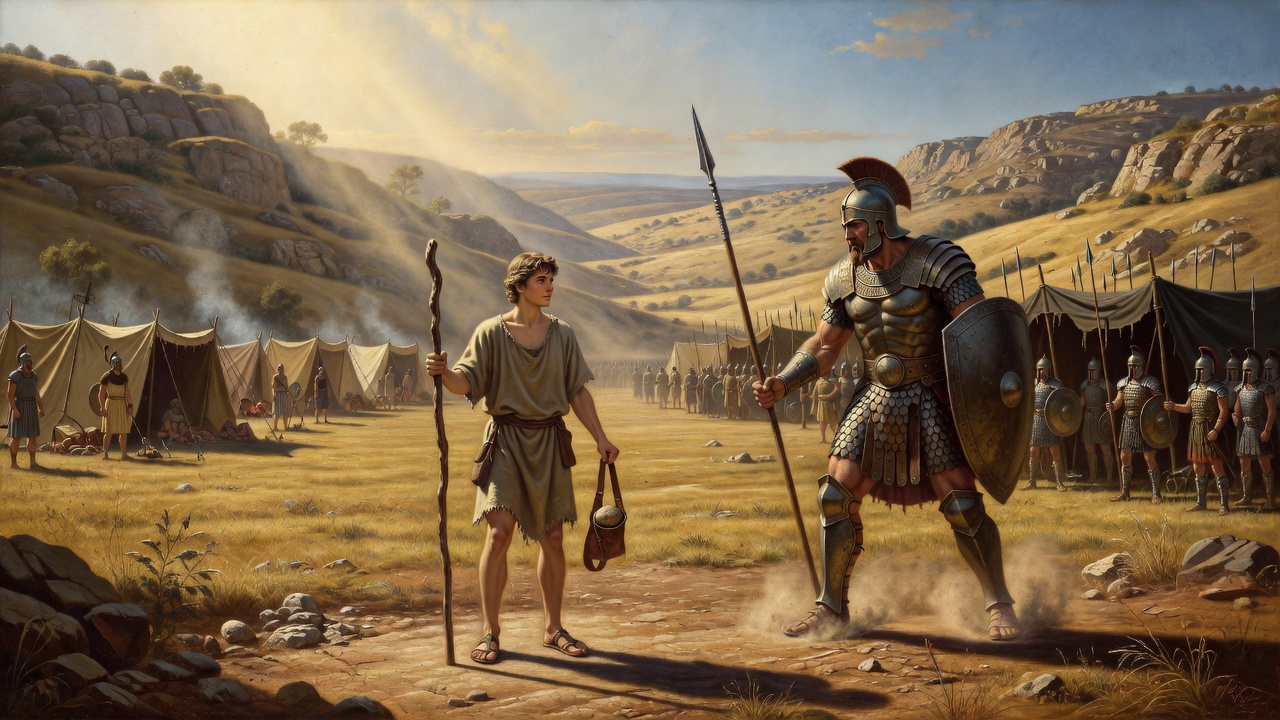
David and Goliath
- The confrontation took place in the Valley of Elah, located in the foothills of Judah between Socoh and Azekah, with the Philistines encamped at Ephes-dammim. The two armies occupied opposing ridges across the valley, setting the stage for single combat.Sources: Valley of Elah · Ephes-dammim · the Bible text itself
- Goliath came from Gath, one of the five major Philistine cities, and is described as standing six cubits and a span tall. For forty days, he stepped between the battle lines in heavy bronze armor, challenging Israel to settle the war through a duel between champions.Sources: Goliath · Gath · the Bible text itself
- David, the youngest of Jesse's eight sons from Bethlehem, originally came to the front only to deliver provisions to his three oldest brothers serving in Saul's army. Rejecting Saul's heavy bronze armor and helmet because he was not accustomed to them, David confronted Goliath with his staff, sling, and five smooth stones from the brook.Sources: David · Jesse · the Bible text itself
Notes written with AI assistance from open sources (Theographic Bible Metadata, CC BY-SA 4.0; Easton’s Bible Dictionary, public domain) and reviewed before publishing.
Places in this chapter
- Socoh · Today: Tel Socho · 31.682, 34.975 · verse 1
- Valley of Elah · 31.675, 34.998 · verses 2, 19
- Bethlehem · 31.704, 35.208 · verses 12, 15, 58
- Ekron · Today: Tel Miqne · 31.777, 34.852 · verse 52
- Jerusalem · 31.777, 35.234 · verse 54
Only places identified with high confidence are shown (90% or more according to the scholarly sources compiled by OpenBible). Period map: DARE (Digital Atlas of the Roman Empire), CC BY 4.0; modern map: © OpenStreetMap contributors; places: OpenBible.info (CC BY 4.0).
Credits and license for this translation
Luda yã takada kↄ̃n Bokobaru yão
The New Testament and portions of the Old Testament in the Bokobaru language of Nigeria
copyright © 2005 SIM International
Language: Bokobaru
Translation by: SIM
This translation text is made available to you under the
terms of the Creative Commons License: Attribution-Noncommercial-No Derivative Works.
( http://creativecommons.org/licenses/by-nc-nd/3.0/ )
In addition, you have permission to port the text to different file formats, as long as you
do not change any of the text or punctuation of the Bible.
You may share, copy, distribute, transmit, and extract portions
or quotations from this work, provided that you include the above copyright
information:
You must give Attribution to the work.
You do not sell this work for a profit.
You do not make any derivative works that change any of the actual words or punctuation of the Scriptures.
Permissions beyond the scope of this license may be
available if you contact
us with your request.
This translation is made available to you under the terms of the
Creative Commons Attribution-Noncommercial-No Derivatives license 4.0.
You may share and redistribute this Bible translation or extracts from it in any format, provided that:
You include the above copyright and source information.
You do not sell this work for a profit.
You do not change any of the words or punctuation of the Scriptures.
Pictures included with Scriptures and other documents on this site are licensed just for use with those Scriptures and documents.
For other uses, please contact the respective copyright owners.
2014-09-22
Source: http://ebible.org/bus/ · eBible.org