1 Kings 10
Luda yã takada kↄ̃n Bokobaru yão · Tap a verse to see its cross-references.
Seba bùsu kína kɛ̀ dɛ nↄgbɛ̃ ũ mↄna Sulemanu kiia
1Kɛ̀ Seba bùsu kína kɛ̀ dɛ nↄgbɛ̃ ũu mà lán Sulemanu tↄ́ bↄ̀ nà Dii yã musu, ben à mↄ̀ à yↄ̃ à gwa kↄ̃n yãgbekana zĩ'ũuo. 2À kà Yerusalɛmu kↄ̃n a ìbanↄ paripari kↄ̃n pↄ́ gũ nnannaanↄ kↄ̃n vura sà bítao kↄ̃n gbɛ̀ bɛ̀ɛdee kɛ̀ lakuminↄ sɛnanↄ, ben à gàa Sulemanu kiia à yã kɛ̀ kú a nↄ̀sɛ guu fàadi bòo píngi. 3Ben Sulemanu yã kɛ̀ à làlaanↄ bↄ̀kↄ̃tɛnɛ píngi. À ke bↄkↄ̃tɛna e à furo. 4Kɛ̀ nↄgbɛ̃ pì Sulemanu ↄ̃ndↄ̃yãnↄ mà píngi, bensↄ̃ à à bɛɛ kɛ̀ à bò è 5kↄ̃n pↄ́blee kɛ̀ è bleenↄ kↄ̃n à ìbanↄ gwenao kↄ̃n à bɛ zĩkɛrinↄ kuunao kↄ̃n ń pↄ́kãsãanↄ kↄ̃n à wɛ̃kpaatɛrinↄ kↄ̃n sa'opↄ kɛ̀ wè ká tɛ́n à tɛ́ kũ kɛ̀ à ò Dii uanↄ, yã pì à kũ̀ gbãa, ben à lɛ́ àɛ. 6Ben à bè kínanɛ: N yãkɛnanↄ kↄ̃n n ↄ̃ndↄ̃ baaru kɛ̀ má mà zaa ma bùsun-o nɛ́ yãpuramɛ. 7Mɛ́ɛ yã pìnↄ síro ai ma gaa ma kao kɛ̀, ben ma wɛ́ɛ sìàlɛ sa. Wèe omɛ píngi sero fá! N ↄ̃ndↄ̃ kↄ̃n n auzikinↄↄ dɛ lán ma à baaru mà nàla zã̀. 8Mìnnadeenↄn n gbɛ̃nↄ ũ kↄ̃n n ìba kɛ̀ aↄ̃ègↄ̃ kúnyo gurↄ píngi, aↄ̃gↄ̃ n ↄ̃ndↄ̃yã maanↄ! 9Wà Dii n Luda sáabu kpá, zaakɛ n yã kànɛ, ben à n ka Isarailinↄ kín. Yenzi kɛ̀ Dii vĩ kↄ̃n Isarailinↄ gurↄ píngi bé à tò à n ka kí ũzi, lɛ ǹgↄ̃ yã gↄ̃gↄ̃ↄńnɛ a zɛ́a. 10Ben nↄgbɛ̃ pì kína gbà vura tↄn siigↄ̃ kↄ̃n pↄ́ gũ nnannaanↄ paripari maamaa kↄ̃n gbɛ̀ bɛ̀ɛdeenↄ. Pↄ́ gũ nnannaa kɛ̀ à kí Sulemanu gbà pìnↄ bíta, gbɛ̃kee e mↄ́onɛ à kà lɛ ziki dↄro.
11Hiramu góro'itɛ kɛ̀ aↄ̃ sù kↄ̃n Ofio kↄ̃n vuraonↄ sù kↄ̃n lí bɛ̀ɛdeenↄ maamaa kↄ̃n gbɛ̀ bɛ̀ɛdeenↄ dↄ. 12Ben kína Dii ua pↄ́nↄ kɛ̀o kↄ̃n a zĩnda bɛ pↄ́nↄ, à mↄrↄnↄ kↄ̃n kúunↄ kɛ̀o lɛ̀sirinↄnɛ dↄ. Wèe mↄ́ kↄ̃n lí pì boriio à kà lɛ ziki dↄro, wèe wɛ́ɛ si à takalɛ dↄro ai kↄ̃n a gbã̀ao.
13Pↄ́ kɛ̀ Seba bùsu kína pì yezi píngi à gbèka kí Sulemanua, ben à à gbà, gbaa kɛ̀ à kɛ̀nɛ yↄ̃nkↄyↄ̃nkↄnↄ baasi. Ben à ɛ̀ara à tà a bùsun kↄ̃n a ìbanↄ.
Sulemanu gakuikɛɛ
14Vura kɛ̀ è gɛ̃ Sulemanuzi wɛ̃̀ kↄ̃n wɛ̃̀o è ká tↄn baro awɛɛ'aagↄ̃, 15tángba kɛ̀ táa'orinↄ kↄ̃n latarinↄ kↄ̃n Larubu kínanↄ kↄ̃n a bùsu gbɛ̃nsinↄ è mↄ́onɛ baasi. 16À sɛngbango bítanↄ kɛ̀ kↄ̃n vura kɛ̀ wà gbɛ̃̀gbɛ̃o mɛ̀n wàa do, aↄ̃ baade tìisi kà kiloo aagↄ̃gↄ̃ kↄ̃n a kusuo. 17À sɛngbango nɛ́ngonↄ kɛ̀o dↄ, aↄ̃ baade tìisi yezi à ká kiloo plaplaa. À sɛngbango pìnↄ kàɛ kpɛ́ kɛ̀ wè be Lɛbanↄ Líkpɛn. 18Kína kíblekita bíta kɛ̀ kↄ̃n wesa swaao, ben à vura atɛ̃ɛ kùɛa. 19Kìta pì didikii vĩ, à gbápɛɛkii mɛ̀n swɛɛdo. À kpɛɛnaki musu dɛ mↄ̀ↄↄ gooda sai. À gã̀sãdikiinↄ vĩ, músu taka kɛ̀ wà kɛ̀nↄↄ zɛzɛna gã̀sãdikii pìnↄ saɛ. 20Músu pìnↄↄ zɛzɛna gbápɛɛkii pìnↄa kpa plaplaa, à píngi kà kuri awɛɛplaa. Wèe kìta pì taka kɛ bùsu ken zikiro. 21Kí Sulemanu togoonↄ nɛ́ vuramɛ píngi. Kpɛ́ kɛ̀ wè be Lɛbanↄ Líkpɛ pↄ́nↄ píngi nɛ́ vuramɛ atɛ̃ɛ. Kondogi pↄ́kee kú gwero, zaakɛ wè kondogi diɛ pↄ́ke ũ Sulemanu gurↄↄaro.
22Kína góro'itɛnↄ ègↄ̃ dana ísiaala kↄ̃n Hiramu góronↄ. Wɛ̃̀ aagↄ̃ píngi aↄ̃ègↄ̃ suu kↄ̃n vurao kↄ̃n kondogio kↄ̃n wesa swaao kↄ̃n gbakũnↄ kↄ̃n zã̀nↄ. 23Kí Sulemanu auziki kↄ̃n à ↄ̃ndↄ̃ↄo bíta dɛ anduna kínanↄ pↄ́la ń píngi. 24Baade píngi e zɛ́ wɛtɛɛ à wɛ́ɛ si Sulemanulɛ à à ↄ̃ndↄ̃yã kɛ̀ Ludaa dànɛ à swɛ̃̀n ma. 25Wɛ̃̀ píngi baade ègↄ̃ mↄↄnɛ kↄ̃n a gbaao: Kondogi pↄ́nↄ, vura pↄ́nↄ, utanↄ, gↄ̃kɛbↄnↄ, pↄ́ gũ nnannaanↄ, sↄ̃nↄ kↄ̃n bãagãsↄ̃nↄ. 26Sulemanu sↄ̃goronↄ kↄ̃n sↄ̃nↄ kàkↄ̃a. À sↄ̃goro pìnↄ kà wàa swɛɛplaa, à sↄ̃nↄ sↄ̃ bↄrↄ kuri awɛɛplaa. Wè à sↄ̃ pìnↄ gwa à sↄ̃goro wɛ́tɛnↄ guu kↄ̃n à bɛ Yerusalɛmuo. 27Kína tò kondogi gↄ̃ di Yerusalɛmu lán gbɛ̀ bà, bensↄ̃ sida lí kɛ̀ wè kpɛ́ dↄo pari lán bɛ̀tɛ lí bà sɛ̃̀n. 28Wè bↄ kↄ̃n Sulemanu sↄ̃ pìnↄ zaa Igipiti kↄ̃n Silisia bùsuomɛ. Kína latarinↄ bé wè gá lúlu gwe. 29Aↄ̃è sↄ̃goronↄ lúlu Igipiti kondogi ↄↄ mɛ̀n wàa aagↄ̃mɛ, sↄ̃nↄ sↄ̃ mɛ̀n baswɛɛplaa akuri, ben è ɛara à sↄ̃ pìnↄ yá Iti kínanↄa kↄ̃n Sirianↄ kínanↄ.
Did you know?
Solomon's Splendor and the Queen of Sheba
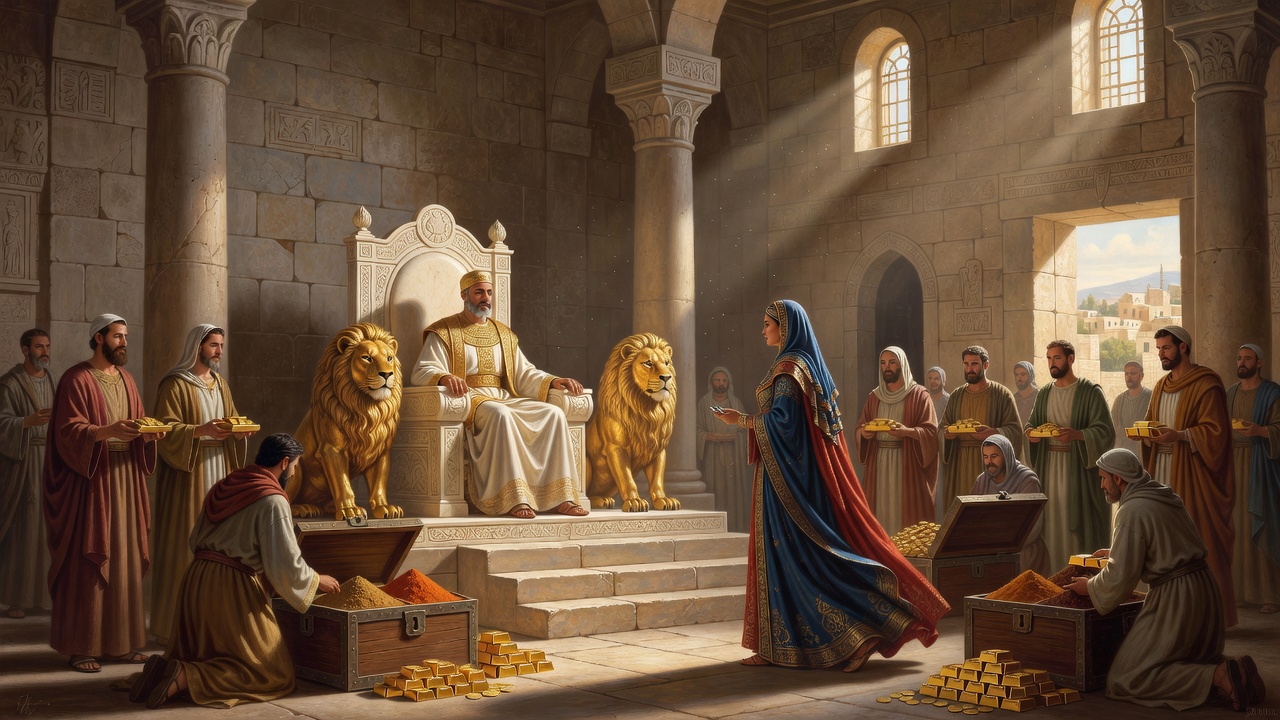
- Sheba is identified with Saba in Southern Arabia, a kingdom renowned in the ancient world for its lucrative trade in aromatics and spices. The queen's visit with a vast camel train carrying spices, gold, and precious stones reflected both diplomatic interests and the region's commercial wealth.Sources: Sheba · the Bible text itself
- Solomon allied with King Hiram of Tyre to conduct maritime expeditions to distant locations like Ophir and Tarshish. These fleets returned with rare goods, including almug wood, ivory, precious stones, and gold, further enriching the royal court in Jerusalem.Sources: Hiram · Ophir · Tarshish · the Bible text itself
- The biblical text describes Solomon's elaborate ivory throne overlaid with fine gold, which stood on six steps flanked by twelve sculpted lions. Such extravagant furnishings and gold drinking vessels highlighted the unprecedented prosperity of his reign.Sources: the Bible text itself
Notes written with AI assistance from open sources (Theographic Bible Metadata, CC BY-SA 4.0; Easton’s Bible Dictionary, public domain) and reviewed before publishing.
Places in this chapter
- Sheba · 15.348, 44.206 · verses 1, 4, 10, 13
- Jerusalem · 31.777, 35.234 · verses 2, 26, 27
- Arabia · Today: Arabian Peninsula · 23.000, 46.000 · verse 15
- House of the Forest of Lebanon · Today: in Jerusalem · 31.777, 35.234 · verses 17, 21
- Shephelah · 31.692, 34.875 · verse 27
- Egypt · 30.129, 31.308 · verses 28, 29
- Syria · Today: Aram · 33.511, 36.306 · verse 29
Only places identified with high confidence are shown (90% or more according to the scholarly sources compiled by OpenBible). Period map: DARE (Digital Atlas of the Roman Empire), CC BY 4.0; modern map: © OpenStreetMap contributors; places: OpenBible.info (CC BY 4.0).
Credits and license for this translation
Luda yã takada kↄ̃n Bokobaru yão
The New Testament and portions of the Old Testament in the Bokobaru language of Nigeria
copyright © 2005 SIM International
Language: Bokobaru
Translation by: SIM
This translation text is made available to you under the
terms of the Creative Commons License: Attribution-Noncommercial-No Derivative Works.
( http://creativecommons.org/licenses/by-nc-nd/3.0/ )
In addition, you have permission to port the text to different file formats, as long as you
do not change any of the text or punctuation of the Bible.
You may share, copy, distribute, transmit, and extract portions
or quotations from this work, provided that you include the above copyright
information:
You must give Attribution to the work.
You do not sell this work for a profit.
You do not make any derivative works that change any of the actual words or punctuation of the Scriptures.
Permissions beyond the scope of this license may be
available if you contact
us with your request.
This translation is made available to you under the terms of the
Creative Commons Attribution-Noncommercial-No Derivatives license 4.0.
You may share and redistribute this Bible translation or extracts from it in any format, provided that:
You include the above copyright and source information.
You do not sell this work for a profit.
You do not change any of the words or punctuation of the Scriptures.
Pictures included with Scriptures and other documents on this site are licensed just for use with those Scriptures and documents.
For other uses, please contact the respective copyright owners.
2014-09-22
Source: http://ebible.org/bus/ · eBible.org