1 Kings 1
Luda yã takada kↄ̃n Bokobaru yão · Tap a verse to see its cross-references.

About this book
About 1 Kings
- Easton's Bible Dictionary (1897) treats the authorship of the books of Kings as uncertain. A tradition that Jeremiah wrote them is, in Easton's view, supported by passages almost identical with parts of Jeremiah and by events Jeremiah knew personally, yet Easton thinks it more probable that Ezra, after the Captivity, compiled the books from earlier documents, perhaps written by David, Solomon, Nathan, Gad, and Iddo. Easton dates the composition between 561 B.C., when Jehoiachin was released from captivity by Evil-merodach, and 538 B.C., the decree of Cyrus.Sources: Easton: Kings, The Books of
- Easton says these books contain the annals of the kingdom from Solomon's accession until Nebuchadnezzar and the Babylonians subdued it, a period he estimates at about 453 years. 1 Kings opens while David is dying: Adonijah, his fourth son, who had become heir-apparent to the throne after the deaths of Amnon and Absalom, has himself proclaimed king, but Nathan and Bathsheba persuade David to enthrone Solomon at once. Solomon, David's son by Bathsheba, whose history is recorded in 1 Kings 1-11, came to the throne, Easton suggests, at about sixteen or eighteen.Sources: Easton: Kings, The Books of · Adonijah · Solomon
- In the Hebrew Scriptures the two books of Kings originally formed one book; the Septuagint first divided them and, with the Vulgate, numbers them as the third and fourth books of Kings, the books of Samuel being the first and second. Easton notes that Chronicles gives greater prominence to the priestly or Levitical office, while Kings gives greater prominence to the royal office, and that in the threefold division of the Scriptures by the Jews these books are ranked among the Prophets. The narrative points to earlier sources: the book of the acts of Solomon and the chronicles of the kings of Judah and of Israel.Sources: Easton: Kings, The Books of
- After Solomon's death the ten tribes revolted and invited Jeroboam, son of Nebat, to be their king; Easton calls him the first king of those tribes and dates his reign from 976 to 945 B.C. He had fled to Egypt under the protection of Shishak I, and later moved his residence from Shechem, his first capital, to Tirzah, which remained the chief residence of Israel's kings until Omri bought the hill of Shomeron from Shemer for two talents of silver and built Samaria. The later narrative includes Ahab, Omri's son and the seventh king of Israel, whose wife was Jezebel: to the calf worship introduced by Jeroboam he added the worship of Baal, and he was severely admonished by the prophet Elijah.Sources: Jeroboam · Tirzah · Samaria · Ahab
Notes written with AI assistance from open sources (Theographic Bible Metadata, CC BY-SA 4.0; Easton’s Bible Dictionary, public domain) and reviewed before publishing.
Adonia a zĩnda kana kí ũu
1Gurↄↄ kɛ̀ kí Dauda zi kũ̀ kótokoto, baa tó wà bisanↄ kùàla, ĩa ègↄ̃ kpɛɛ à dɛɛmɛ. 2Ben à ìbanↄ bènɛ: Wa dii kí, ǹ tó wà nↄkparɛ wɛtɛnnɛ, àgↄ̃ zĩi kɛɛnnɛ àgↄ̃ n gwaa, àgↄ̃ daɛɛ n saɛ lɛ ĩa tón n dɛ dↄro. 3Ben wà gàa wà kpáɛ kɛ̀ nↄkparɛ maaazi Isarailinↄ bùsun píngi, ben wà bↄ̀ Sunɛmu nↄgbɛ̃ Abisagaa, wà à sɛ̀ wà sùo kínanɛ. 4Nↄkparɛ pì nɛ́ nↄ maaamɛ. Ègↄ̃ kína gwaa àgↄ̃ zĩi kɛɛnɛ, mↄde kí à dↄ̃ nↄgbɛ̃ ũro.
5Dauda naↄ̃ Agi nɛ́ Adonia a zĩnda dìɛ kɛ̀ a ka, ben à bè ámbe é kí ble. Ben à sↄ̃goronↄ sɛ̀ kↄ̃n sↄ̃deenↄ kↄ̃n gↄ̃gbɛ̃ gↄ̃ↄn baplaa akuri kɛ̀ aↄ̃égↄ̃ bàa lɛɛ wàgↄ̃ tɛ́arɛ aɛnↄ. 6À dee e kpãkɛ̃zi ziki à be, à kɛ̀ dia nɛ́ɛ kɛɛ lɛɛro. Àpi sↄ̃ nɛ́ gↄ̃ maaamɛ. Abusalomu bé à yↄ̃ mì à kpàa. 7Ben à lɛdolɛ kɛ̀ kↄ̃n Zeruya nɛ́ Yoabuo kↄ̃n sa'ori Abiatao, ben aↄ̃ zɛ̀o. 8Mↄde sa'ori Zadↄki kↄ̃n Yoyada nɛ́ Bɛnayao kↄ̃n annabi Natão kↄ̃n Simɛio kↄ̃n Dauda gbɛ̃nnanↄ kↄ̃n à dogarinↄↄ e zɛoro. 9Adonia saa ò kↄ̃n sãanↄ kↄ̃n zùnↄ kↄ̃n zùnɛ mɛ̀kpananↄ Mlɛ̃̀gbɛ kɛ̀ kú Ɛnlogɛli saɛa. À a dãaro kínɛnↄ sìsi ń píngi kↄ̃n Yuda kɛ̀ aↄ̃ↄ dɛ kína ìba ũunↄ ń píngi. 10Èe annabi Natã sísiro ke Bɛnaya ke Dauda dogarinↄ ke a zĩnda dãaro Sulemanu.
11Ben Natã gàa à Sulemanu da Basɛba là à bè: Nɛ́ɛ ma kɛ̀ Agi nɛ́ Adonia kí blè wa dii kí Dauda dↄ̃na sairoo? 12Tↄ̀, ǹ tó mà lɛ́ damma sa lán nɛ́ kɛ nà, ǹ n zĩnda mì sí kↄ̃n n nɛ́ Sulemanu pↄ́o. 13Ǹ fɛɛ ǹ gá kí Dauda le ǹ benɛ, kɛ̀ à la dànnɛ yã à bè n nɛ́ Sulemanu bé eé kí ble a gɛ̃ɛ ũ à vɛ̃ɛ a kpatan sↄ̃ nɛ́? À kɛ̀ dia Adonia gↄ̃̀ kí ũu? 14Gurↄↄ kɛ̀ ń kpɛ́ nɛ́ɛ yã oonɛ, mɛ́ gɛ̃ mà yã'i kaara se. 15Ben Basɛba gàa à kína lè à kpɛ́n, guu kɛ̀ Sunɛmu nↄgbɛ̃ Abisaga e à gwaan. Kí sↄ̃ zi kũ̀. 16Basɛba kùɛ à mì pɛ̀ɛnɛ, ben kí à là à bè: Bↄ́n ń yezi? 17À wèàla à bè: Ma dii, ḿbe ń sì mamↄma n zↄ̀blerinɛ kↄ̃n Dii n Luda tↄ́o, n bè ma nɛ́ Sulemanu bé eé kí ble n gɛ̃ɛ ũ à vɛ̃ɛ n kpatan. 18Tia sↄ̃ ma dii kí, Adonia bé à kɛ̀ kí ũ, bensↄ̃ ń à yã dↄ̃ro. 19À saa ò kↄ̃n zùnↄ kↄ̃n zùnɛ mɛ̀kpananↄ kↄ̃n sãanↄ paripari, à n nɛ́nↄ sìsi ń píngi kↄ̃n sa'ori Abiatao kↄ̃n zĩ̀kpɛ dↄn'aɛde Yoabuo, mↄde èe n zↄ̀bleri Sulemanu sísiro. 20Ma dii kí, ḿbe Isarailinↄ píngi sↄ̃kpanzi, wà ma tó dé bé eé kɛ kí ũ n gbɛ̀n. 21Ma dii kí, tó n gaa n dezinↄ kúkiia, mapi kↄ̃n ma nɛ́ Sulemanuo, weégↄ̃ wa gwaa taarideenↄ ũmɛ.
22Kɛ̀ à kpɛ́ èe yã oo kↄ̃n kínao, ben annabi Natã mↄ̀. 23Wà ò kínɛ kɛ̀ annabi Natã kú kɛ̀. Ben Natã gɛ̃̀ à kùɛ kínanɛ à dàɛ a puua 24à bè: Ma dii kí, ḿbe n bè Adonia kɛ kí ũ à vɛ̃ɛ kpatan n gɛ̃ɛ ũↄ́? 25Zaakɛ à gàa à saa ò gbã̀a kↄ̃n zùnↄ kↄ̃n zùnɛ mɛ̀kpananↄ kↄ̃n sãanↄ paripari. À n nɛ́nↄ sìsi ń píngi kↄ̃n n zĩ̀kpɛ dↄn'aɛdeeo kↄ̃n sa'ori Abiatao. Aↄ̃ↄe pↄ́ bleeo, wèe í mii tia, aↄ̃ↄe bee: Luda kí Adonia dↄ̃ kↄ̃n aafiao! 26Mↄde èe mamↄma n zↄ̀bleri sísiro ke sa'ori Zadↄki ke Yoyada nɛ́ Bɛnaya ke n zↄ̀bleri Sulemanu. 27Ma dii kí, ase lɛ n kɛ̀ lɛɛ, ben n gi gbɛ̃ kɛ̀ eé vɛ̃ɛ kpatan n gɛ̃ɛ ũu o wamↄwa n zↄ̀blerinↄnɛziↄ́?
Sulemanu kana kí ũ
28Ben kí Dauda bè: À Basɛba sísimɛ. Kɛ̀ Basɛba mↄ̀ à gɛ̃̀, à mↄ̀ à zɛ̀ kí aɛ. 29Ben kína la dànɛ à bè: Kↄ̃n Dii kuunao! Àmↄ kɛ̀ à ma bↄ nawɛ̃a píngi guu. 30Ladana kɛ̀ má kɛ̀nnɛ kↄ̃n Dii Isarailinↄ Luda tↄ́o, ma bè n nɛ́ Sulemanu bé eé kí ble ma gbɛ̀n à vɛ̃ɛ kpatan ma gɛ̃ɛ ũ, mɛ́ papa gbã̀a kãnkãmmɛ. 31Ben Basɛba kùɛ à mì pɛ̀ɛ tↄↄtɛ kínanɛ à bè: Ma dii kí Dauda, Luda n dↄ̃ kↄ̃n aafiao gurↄ píngi!
32Ben kí Dauda bè: À sa'ori Zadↄki sísimɛ kↄ̃n annabi Natão kↄ̃n Yoyada nɛ́ Bɛnayao. Kɛ̀ aↄ̃ mↄ̀ kína kiia, 33à bèńnɛ: À ma ìbanↄ kakↄ̃a é ma nɛ́ Sulemanu sɛ́ à à di ma bãagãsↄ̃a, é gáo Giↄ̃. 34Gwen sa'ori Zadↄki kↄ̃n annabi Natão é nↄ́si kúa aↄ̃ à ká Isarailinↄ kí ũ, é kuru pɛ́ à wii lɛ́ à be: Luda kí Sulemanu dↄ̃ kↄ̃n aafiao! 35Beee gbɛra é suo, eé vɛ̃ɛ kpatan àgↄ̃ kí blee ma gbɛ̀n. Àmbe má dìɛ Isarailinↄ kↄ̃n Yudanↄ dↄn'aɛdee ũ. 36Ben Yoyada nɛ́ Bɛnaya bè kínanɛ: À kɛ lɛ! Dii n Luda n lɛ́gbɛ sí ma dii kí! 37Lán Dii kúnyo nà ma dii kí, àgↄ̃ kú kↄ̃n Sulemanuo lɛ, à à kíkɛ sɛ́ lezĩ dɛ n pↄ́la se.
38Ben sa'ori Zadↄki kↄ̃n annabi Natão kↄ̃n Yoyada nɛ́ Bɛnayao kↄ̃n dogarinↄ gàa wà Sulemanu dì kí Dauda bãagãsↄ̃a, aↄ̃ gàa zɛnɛ Giↄ̃. 39Ben sa'ori Zadↄki nↄ́si tùu sɛ̀ Dii kpɛ́n, à nↄ́si pì kù Sulemanua. Ben wà kuu pɛ̀, baade píngi wii lɛ̀ wà bè: Luda kí Sulemanu dↄ̃ kↄ̃n aafiao! 40Ben baade píngi bↄ̀ wà tɛ̀zi, aↄ̃ↄe suu aↄ̃ↄe gaasia pɛɛ, aↄ̃ↄe pↄnnaa kɛɛ maamaa ai tↄↄtɛ nìgã kĩi kɛ̀ aↄ̃ↄe kɛɛ pì yãnzi.
41Kɛ̀ Adonia kↄ̃n gbɛ̃ kɛ̀ à ń sisinↄ pↄ́ blè wà yã̀a, aↄ̃ↄe mↄↄ fɛɛ, ben aↄ̃ kĩi pì mà. Kɛ̀ Yoabu kuru'ↄ pì mà, ben à bè: Bↄ́ zↄka bé à dↄ wɛ́tɛ guu lɛɛ? 42Èe yã pì o à yã̀aro, ben sa'ori Abiata nɛ́ Yonatã gàa káo gↄ̃ↄ. Ben Adonia bè: Ǹ gɛ̃. Gbɛ̃ bɛ̀ɛdeen n ũ, mɛ́ɛ sii baaru nnaan n suo. 43Ben Yonatã bè Adonianɛ: Lɛnlo! Wa dii kí Dauda Sulemanu kpà kpatan. 44À sa'ori Zadↄki kↄ̃n annabi Natão kↄ̃n Yoyada nɛ́ Bɛnayao kↄ̃n a dogarinↄ gbàrɛ aↄ̃ gáo, ben aↄ̃ gàa wà à dì kína bãagãsↄ̃a. 45Ben sa'ori Zadↄki kↄ̃n annabi Natão nↄ́si kùa aↄ̃ à kà kí ũ zaa Giↄ̃. Kɛ̀ aↄ̃ bↄ̀ gwe, aↄ̃ sù kↄ̃n pↄnnakɛnao, ben wɛ́tɛ lògo. Kĩi kɛ̀ á màn gwe. 46Baa diamɛ Sulemanu vɛ̃̀ɛ kpatan kↄ̀. 47Ben wa dii kí Dauda ìbanↄ mↄ̀ wà ì kpàa se, aↄ̃ bè Luda Sulemanu tↄ́ bↄ dɛ à pↄ́la! Luda à kíkɛɛ gba gbãaa dɛ à pↄ́la! Ben Dauda mì nàɛ à dↄnzi kɛ̀ Diinɛ a daɛbↄa 48à bè: Wà Dii Isarailinↄ Luda sáabu kpá, kɛ̀ à tò ma wɛ́ɛ sì ma gɛ̃ɛ kana kí ũlɛ gbã̀a.
49Kɛ̀ gbɛ̃ kɛ̀ Adonia ń sisinↄↄ mà lɛ, ben aↄ̃ làakari fɛ̀ɛ, baade a zɛ́ kũ̀. 50Kɛ̀ Adonia e vĩa kɛɛ Sulemanunɛ yãnzi, ben à fɛ̀ɛ à gàa à nà Dii gbãgbãkiizi, à a koba kũ̀. 51Ben wà bè Sulemanunɛ: Adonia e vĩa kɛɛnnɛ, à gàa à nà Dii gbãgbãkiizi à à koba kũna, èe bee ǹ la da amↄa n zↄ̀blerinɛ gbã̀a, kɛ̀ nɛ́ a dɛro. 52Ben Sulemanu bè: Tó à a zĩnda kũna dↄ̃ gbɛ̃ maaa ũ, baa à mìkã wɛ́n do eé lɛ́ɛ tↄↄtɛro. Tó wà gà wà à zaa ke èa sↄ̃, à gàmɛ. 53Ben kí Sulemanu gbɛ̃nↄ zĩ̀, aↄ̃ Adonia gò Dii gbãgbãkiia. Kɛ̀ Adonia pì mↄ̀ à kùɛnɛ, ben Sulemanu bènɛ: Ǹ tá n bɛ.
Did you know?
The Succession to David's Throne
- As David's oldest surviving son after the deaths of Amnon and Absalom, Adonijah claimed the royal succession, backed by the military commander Joab and the high priest Abiathar. However, David chose his younger son Solomon, who was supported by the prophet Nathan, the priest Zadok, and the royal bodyguard under Benaiah.Sources: Adonijah · Solomon · the Bible text itself
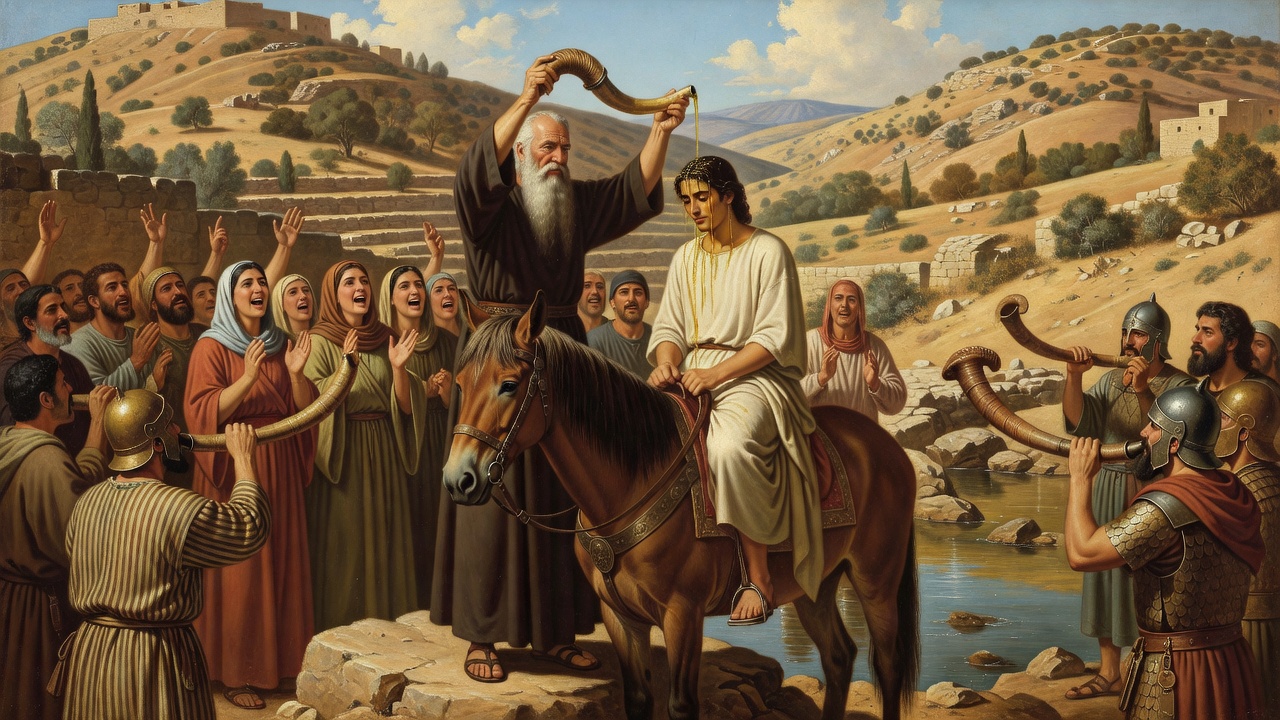
- Riding the king's own mule was a decisive public declaration of royal authority. By David's explicit instruction, Solomon was escorted down to the spring of Gihon, where Zadok anointed him king with oil taken from the tabernacle to the sound of ram's horns and popular celebration.Sources: Gihon · Zadok · the Bible text itself
- Upon hearing of Solomon's public coronation, Adonijah fled in terror and sought asylum by taking hold of the horns of the sacrificial altar. Solomon granted him conditional clemency, sparing his life so long as he proved himself a worthy man.Sources: Adonijah · the Bible text itself
Notes written with AI assistance from open sources (Theographic Bible Metadata, CC BY-SA 4.0; Easton’s Bible Dictionary, public domain) and reviewed before publishing.
Places in this chapter
- Shunem · Today: Sulam · 32.606, 35.334 · verse 3
- Serpent’s Stone · Today: within 100 m of Bir Ayub · 31.767, 35.236 · verse 9
- Gihon · Today: Gihon Spring · 31.773, 35.236 · verses 33, 38, 44, 45
- Jerusalem · 31.777, 35.234 · verse 40
Only places identified with high confidence are shown (90% or more according to the scholarly sources compiled by OpenBible). Period map: DARE (Digital Atlas of the Roman Empire), CC BY 4.0; modern map: © OpenStreetMap contributors; places: OpenBible.info (CC BY 4.0).
Credits and license for this translation
Luda yã takada kↄ̃n Bokobaru yão
The New Testament and portions of the Old Testament in the Bokobaru language of Nigeria
copyright © 2005 SIM International
Language: Bokobaru
Translation by: SIM
This translation text is made available to you under the
terms of the Creative Commons License: Attribution-Noncommercial-No Derivative Works.
( http://creativecommons.org/licenses/by-nc-nd/3.0/ )
In addition, you have permission to port the text to different file formats, as long as you
do not change any of the text or punctuation of the Bible.
You may share, copy, distribute, transmit, and extract portions
or quotations from this work, provided that you include the above copyright
information:
You must give Attribution to the work.
You do not sell this work for a profit.
You do not make any derivative works that change any of the actual words or punctuation of the Scriptures.
Permissions beyond the scope of this license may be
available if you contact
us with your request.
This translation is made available to you under the terms of the
Creative Commons Attribution-Noncommercial-No Derivatives license 4.0.
You may share and redistribute this Bible translation or extracts from it in any format, provided that:
You include the above copyright and source information.
You do not sell this work for a profit.
You do not change any of the words or punctuation of the Scriptures.
Pictures included with Scriptures and other documents on this site are licensed just for use with those Scriptures and documents.
For other uses, please contact the respective copyright owners.
2014-09-22
Source: http://ebible.org/bus/ · eBible.org