Luke 6
Melɛ̌ Mékɔ̄ɔ̄lē · Tap a verse to see its cross-references.
Nsɛdtéd tə̂ŋgɛne abɛl dé nsɔ́n // á mbwɛ-mé-nkɔ́me-áte
1Mbwɛ nhɔ́g Yesuɛ ne ábē bembapɛɛ bétóméʼáá á nzag e ngun-tê. Nɛ́n démbɛ̄ á mbwɛ-mé-nkɔ́me-áte. Ábē bembapɛɛ bêmbootéd eʼsɔ́g éʼ ngun apád, bépə̄gkeʼ, bédyâg. 2Nguse é Befarisia bényíné-ʼaá nɛ̂, boŋ bésɛdté bɔ́ bánken, “Cheé ékə́ə́ boŋ nyébɛlé akan áde mbéndé éebagɛɛ́ kunze âbɛl á mbwɛ-mé-nkɔ́me-áte?” 3Hɛ́ɛ Yesuɛ mɔ́-ʼɛ ásɛdtɛɛ́ bɔ́ aáken, “Nɛ́dē nyéēlááʼɛ́ á kálag e Dyǒb dyam áde kə̂ŋ Dabidɛ âmbɛnlé áde nzaa ékóbé mɔ́ ne ábē bad-ɛ? 4Ansɔ́l á Ndáb-e-Dyǒb mɔ́ ne bad ábe bénwoón mɔ́, atéd eʼwɛle ábe éʼbédé ndɛ e Dyǒb, adyɛ́. Boŋ echɛd mbéndé eébagɛɛ́ mod ké nhɔ́g kunze ádyɛ̄ ábê eʼwɛle étōmɛɛ́ prisɛ. Mwěn andyɛ́, ábɛ̄-ʼɛ kə́ə́ŋne bad ábe bénwoón mɔ́ doŋge.” 5Yesuɛ ambádé bɔ́ áte aá, “Mwǎn-a-Moonyoŋ awóó nkamlɛn kə́ə́ŋne ámīn e mbwɛ-mé-nkɔ́me-áte.”
Yesuɛ achǒŋté mod awě ekáá éwédé
6Epun émpēe Yesuɛ ankɛ̌ á ndáb e mekáne. Ambootéd bad ayə́ged. Nɛ́n ámpē démbɛ̄ á mbwɛ-mé-nkɔ́me-áte. Mod nhɔ́g-kɛ ambɛ́ áhed awě ekáá émbáá éwédé. 7Bemeléede bé mbéndé ne Befarisia bénɔ́néʼáá mɔ́ chodchod, ânyín nzé ǎdǐd ane mod bwâm á mbwɛ-mé-nkɔ́me-áte, âbɛl nɛ́n békóbɛn mɔ́ awusé. 8Yesuɛ mɔ́-ʼɛ anchěm bɔ́ mewêmtɛn áte. Hɛ́ɛ Yesuɛ álâŋgɛɛ́ ane mod aá, “Hyɛ̌ étyéem átîntê hɛ́n.” Ane mod anwógɛ́n mɔ́. 9Dɔ́ɔ Yesuɛ ásɛdtɛɛ́ bad aá, “Nyéláa mɛ ké édé mbéndé âbɛl mboŋ á mbwɛ-mé-nkɔ́me-áte, káa âbɛl mbéb. Édé mbéndé âsoŋ aloŋgé á mod, káa âwúu mɔ́?” 10Ahɔ́be nɛ̂, anɔne-ʼɛ bad á mesó. Dɔ́ɔ álâŋgɛɛ́ ane mod aá, “Sálé ekáá áte.” Asále áde ane mod ásánlé ekáá áte, ekáá éndyɛɛ́ mɔ́ bwâm ámpē. 11Nɛ́n dénkōbēd Befarisia ne bemeléede bé mbéndé ekaŋ áte, béhəgké mɔ́ âpid mɔ́ mekáá.
Yesuɛ apwɛdé bembapɛɛ bé // nlómag dyôm ne bébɛ
12Ámbīd e póndé Yesuɛ ankɛ̌ á ekone mîn âkáne. Ankáné nkuu ńsyə̄ə̄l kə́ə́ŋ ne mbwɛmbwɛ. 13Boŋ áde bǐn éʼkɛ́nlé, anchɛ́lé ábē bembapɛɛ, ápwɛdé dyôm ne bébɛ áwab tîntê, áchəgé bɔ́ aá, bembapɛɛ bé nlómag. Ábê bembapɛɛ bé nlómag bébédɛ́ɛ, 14Simɔnɛ awe âmbagké dǐn aá, Petro, bɔ́ mwǎnyaŋ Andreya, Simɔnɛ, Jakɔbɛ, Jɔnɛ, Filibɛ, Batolomyo, 15Matyo, Tɔmasɛ, Jemsɛ mwǎn awě Alfɔsɛ, Simɔnɛ mod a kə́n, 16Judasɛ, mwǎn awě Jemsɛ ne Judas Iskariɔdɛ awě antǐm Yesuɛ asóm.
Yesuɛ ayə́gté, achǒŋté-ʼɛ ndun e mod
17Dɔ́ɔ bɔ́ɔbɛ bembapɛɛ bésyɔ́gké á ekone sé, bépag á hǒm áde átánlé. Béntān bembapɛɛ bémpēe híin ne ndun e mod áhed. Ene ndun e mod embíd á mbwɔ́g e Judeya-tê esyəə́l, á Jerusalɛm, kə́ŋne á myad mé Tirɛ ne Sidɔn á nkin mé edíb é nkwɛ̌. 18Bêmpɛ̌ nɛ̂ âwóg Yesuɛ eche pɔ́le, ne âbɛl nɛ́n ádid bad ábe békonle bwâm. Adidéʼáá bad ábe edəə́dəŋ bé mbéb éʼtágtéʼáá bɔ́mpē bwâm. 19Mod tɛ́ɛ́ ahɛdáá aá mɔ́ nsidtɛ́n mɔ́ ngáne émbɛ̄ɛ̄ bán, ngíne ebídéʼáá mɔ́ á yə̌l echě edidéʼáá bad bwâm.
Mekan mé nnam ne mé medim
20Hɛ́ɛ ábóótédé ábē bembapɛɛ akalɛn aá,
“Nnam ḿbɛ̂ ne nyé betóótōkɛ̄ bé bad áyə̄le nyêdé ásē e nkamlɛn ń Dyǒb.
21Nnam ḿbɛ̂ ne nyé ábe nyêdé nzaa bɔɔb, áyə̄le Dyǒb dɛ́kōdēd nyé.
Nnam ḿbɛ̂ ne nyé ábe nyélebe bɔɔb áyə̄le nyɛ́ɛ̄wɔɔ́.
22Nnam ḿbɛ̂ ne nyé nzé édé bán ngáne nyéhídɛɛ́ Mwǎn-a-Moonyoŋ, bad békɔ́ɔ́ nyé, bébáa nyé á yə̌l, bésyə́ə nyé, béchəge-ʼɛ nyé mǐn mé mbéb. 23Nyéwóge bwâm, nyébwɛɛn ámīn ḿmê mbwɛ, áyə̄le nsábe ḿme nyɛ́kudté ádyōb ńchábé ámīn. Melemlem nɛ̂ dɔ́ɔ besáá bêʼ bɔɔ́d bɔ́mpē bésyə́ə́ʼáá bekal béʼdəə́dəŋ.
24Boŋ édé ngɔl ne nyé ábe nyêdé nhɔn, áyə̄le nyêmaá echɛ̂n ndɛ akud.
25Édé ngɔl ne nyé ábe nyêkódé bɔɔb, áyə̄le póndé ěpɛ̌ echě nyɛ́také nzaa.
Édé ngɔl ne nyé ábe nyêwɔɔ bɔɔb, áyə̄le nyɛ́ɛ̄lěb, nyéchīī-ʼɛ.
26Édé ngɔl ne nyé nzé moosyəə́l ákêmte nyé. Nɛ̂ dɔ́ɔ ábāb besáá békémtáá bekal béʼdəə́dəŋ bé metóm.
Nyédəŋ bad ábe békɔ́ɔ́ nyé
27“Boŋ nlâŋge nyé ábe nyêwóglan mɛ hɛ́n bɔɔb mɛɛ́, nyédəŋ bad ábe béhɛde nyé kɔkɔɔ, nyébɛnle-ʼɛ bad ábe békɔ́ɔ́ nyé mboŋ. 28Nyénamed bad ábe bésyə̂ŋtad nyé, nyékânnad-tɛ bad ábe bébɛle nyé nhel mé mekan. 29Nzé mod abɔmé wɛ abɛ́n á akəg, ékunnéd mɔ́ ádíníí ámpē. Nzé mod akǒbné wɛ ḿmôŋ nkobe, weebáŋné mɔ́ ké echoŋ sɔ́te. 30Kénzɛ́ɛ́ awě achɔ́mé wɛ chǒm, bɛɛ́ mɔ́. Mod ké ahéé-ʼɛ awě adumné wɛ bwěm, weéhɛdné mɔ́ bɔ́ ámbīd. 31Kéchéé éche édə́ə́ wɛɛ́ bad bébɛl áwôŋ, ébɛl chɔ́ áwāb.
32“Nzé nyêdəə́ bad ábe bédə́ə́ nyé běnpɛn, né mekɛnag méhéé nyɛ́kudté ne nɛ̂? Kə́ə́ŋne bebɛl bé mbéb bɔ́mpē bédəə bad ábe bédə́ə́ bɔ́. 33Nzé nyêbɛle mboŋ dásɔ̄ wɛ́ɛ bad ábe bébɛnle nyé mboŋ běnpɛn, né nsyə́ŋ ńhéé nyɛ́kudté ne nɛ̂? Kə́ə́ŋne bebɛl bé mbéb bɔ́mpē bébɛle nɛ̂. 34Nzé édé nɛ́n bán bad ábe nyélyə́gé nlém bán bɔ́mpē bɛ́bāl nyé bwěm běnpɛn bɔ́ɔ nyébálɛɛ́ bwěm, né nsyə́ə́ŋ ńhéé nyɛ́kudté ne nɛ̂. Ké bebɛl bé mbéb bébále baáb ngáne bébíí bán bɔ́mpē bɛ́bāl bɔ́ melemlem. 35Boŋ nyédəŋ bad ábe béhɛde nyé kɔkɔɔ, nyébɛnle-ʼɛ bɔ́ mboŋ. Nyébále-ʼɛ bad bwěm ésebán nyésine dyamdyam ámbīd e nɛ̂. Nɛ̂ dɛ́bɛ̌l Dyǒb ábɛ nyé nsábe ḿme ńchábé á mîn, nyéchəgnéd-tɛ bán, bǎn bé Dyǒb á Ngum. Nyébíi-ʼɛ bán, Dyǒb ádé ngɔl ne bad ábe béēsāgnān Dyǒb, ne ábe bébébé nlém. 36Nyéwôŋ nlém ń ngɔl melemlem ngáne awɛ̂n Titɛ́ɛ áwóó nlém ń ngɔl.
Nyaa echě bad bébídtɛɛ́ mbakú
37“Nyéekáádté bad, boŋ Dyǒb dɔ́mpē déēkāādtē nyé. Nyéehɔ́bé bad, boŋ Dyǒb dɔ́mpē déēhɔ̄bē nyé. Nyélagsan bad boŋ Dyǒb dɔ́mpē álagsan nyé. 38Nyébage bad, boŋ Dyǒb dɔ́mpē ábage nyé. Akab áde nyɛ́kudté, bɛ́kīn dɔ́, bépuméd-tɛ dɔ́ ámīn, kə́ə́ŋ ásyɔgke, boŋ bépémtéd nyé. Melemlem mé nhəgtéd ḿme ébɛ́nlédé mɔ́ɔ Dyǒb dɔ́mpē dɛ́bɛnlédté.” 39Yesuɛ ankalé bɔ́ ngan aáken, “Mod awě akwedé ndím ahɛle alyə́géd waáb mod a ndím-ɛ? Bɔ́ bad bébɛ béehúnné ebíí-yɛ? 40Mwǎn-a-ayə́ge eetómɛ́ɛ́ mod awě ayə́gte mɔ́, boŋ kénzɛ́ɛ́ awě amadé ayə́ge áte, abɛlé abɛ́ ndə́gke eche awe meléede.
41“Cheé ékə́ə́ boŋ éwāmsān mwǎ púuted anyín á dǐd á wɛ̌n, ésebán ehɛle nkɔg ḿme ńdé emǒŋ á dǐd anyín? 42Chán éhɛle-sɛ eláá mwǎnyoŋ wɛɛ́, ‘Amúɛ̄, mwɛ̌, ńhûd wɛ mwǎ púuted á dǐd’, áde wéēnyīnɛ̄ɛ̄ nkɔg ḿme ńdé mmǒn á dǐd? Á-bedog-bad! Sébé éhûd nkɔg ḿme ńdé mmǒn á dǐd, dɔ́ɔ wɛ́tōŋʼɛ́ púuted echě edé mwǎnyoŋ á dǐd anyín, boŋ ehúd-tɛ chɔ́.
Á epum dɔ́ɔ béchemɛɛ́ bwɛl
43“Alín á bwɛl á bwâm déebɛlɛ́ɛ́-sɛ áchyáá eʼpum bé mbéb. Alín á bwɛl dé mbéb-pɛ déēchyāāʼɛ́ eʼpum éʼ bwâm. 44Á epum é bwɛl dɔ́ɔ béchemɛɛ́ alín á bwɛl. Ébyɛ́ɛ́né bwâm bán, béēpādɛ̄ɛ̄ ngun á yə̌l e mbísaŋ káa besabé á yə̌l e mewáŋ. 45Mod a bwâm abɛle bwâm áyə̄le éʼbíde mɔ́ á nlém-tê wɛ́ɛ bwâm ékóŋnédé. Mod a mbéb-pɛ abɛle mbéb áyə̄le ḿbídé mɔ́ á nlém-tê wɛ́ɛ mbéb nkóŋnédé. Édé nɛ̂ áyə̄le, mam ḿme ńlóné mod á nlém-tê, mɔ́-ʼaá mébíde mɔ́ á nsəl.
Belóŋ bé ndáb bébɛ
46“Chán nyɛ́chəgɛ́ɛ́ mɛ póndé tɛ́ɛ́ bán, ‘A-Sáŋ, A-Sáŋ,’ boŋ nyéēbɛ̄lē dyam áde ńlâŋgɛɛ́ nyé? 47Mod tɛ́ɛ́ awě apedé áwem, awě awógé ábêm eʼyale, boŋ ábɛlé-ʼɛ ngáne ńhɔ́bɛɛ́, mɛ̌həgtɛ́n nyé nyaa e mod echě ákóó abɛ́. 48Adé nɛ́ɛ nlóŋ-a-ndáb, awě anlímé mekon mé ndáb se ásē, ásūmē ene ndáb eláá mîn. Edíb énlōnē, éból mɔ́ á ndáb-te ne ngíne, boŋ énkênhɛnlé chɔ́ apáŋ, áyə̄le ambíí chɔ́ alóŋ. 49Boŋ kénzɛ́ɛ́ awě awóge ábêm eʼyale boŋ eébɛle ngáne éʼhɔ́bɛɛ́ adíi nɛ̂ŋgáne mod awě anlóŋ ndáb ésebán asumme chɔ́. Áde edíb ébólé mɔ́ á ndáb-te, ene ndáb enkwɛ̌ melemlem mé póndé, epáá-ʼɛ nyaa eche ekamé ahəgtɛn.”
Did you know?
The Sabbath, the Twelve, and the Plain
- On a Sabbath, as Jesus passed through the grainfields, his disciples picked heads of grain, rubbed them in their hands, and ate them, and some Pharisees called this unlawful. Jesus recalled that David and his hungry companions ate consecrated bread from the house of God, bread lawful only for the priests, and said that the Son of Man is Lord of the Sabbath. On another Sabbath he restored a man’s withered right hand in the synagogue while scribes and Pharisees watched for a reason to accuse him; a chronology dates both episodes to AD 28.Sources: the Bible text itself · Corn on the Sabbath · Healing a Withered Hand
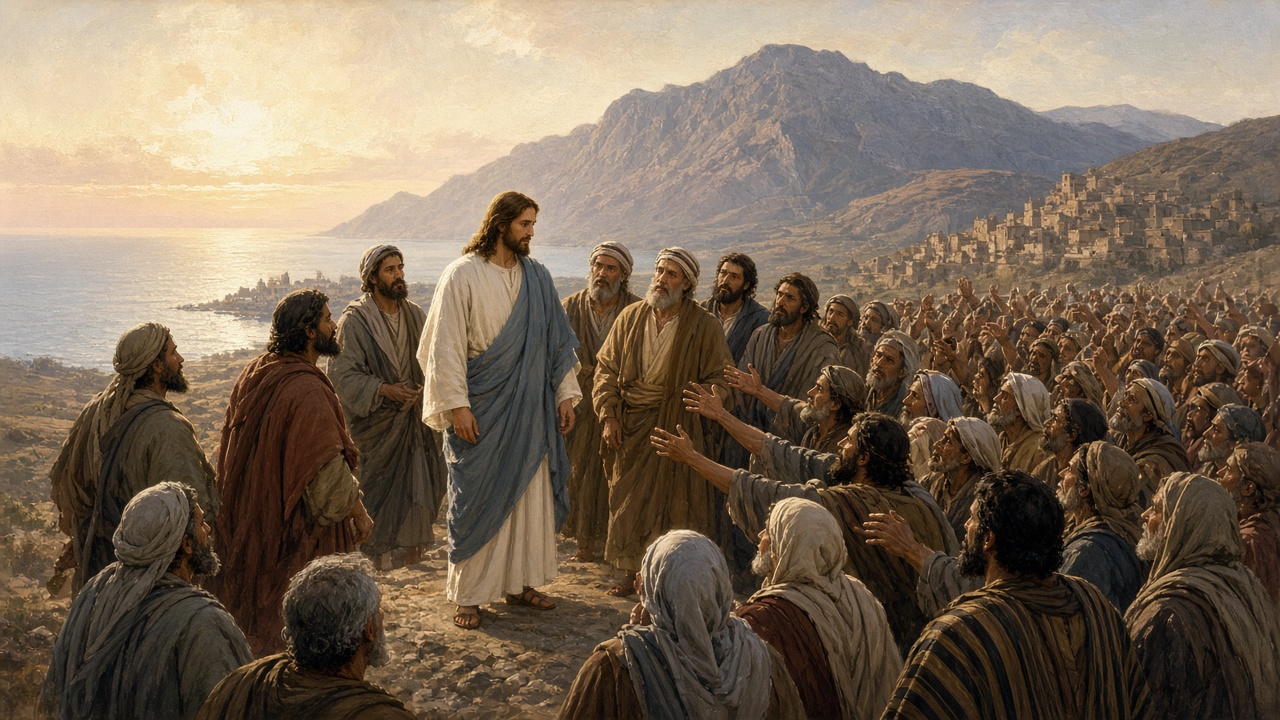
- After spending the night in prayer on the mountain, Jesus called his disciples and chose twelve, whom he designated apostles. Among them were Simon, whom he named Peter, and Peter’s brother Andrew, fishermen from Bethsaida on the western coast of the Sea of Galilee, and Matthew, a tax collector at Capernaum who had formerly been known as Levi.Sources: the Bible text itself · Simon Peter · Andrew · Matthew
- Jesus came down with them and stood on a level place, where people from Judea, Jerusalem, and the sea coast of Tyre and Sidon had gathered to hear him and to be healed. Tyre and Sidon were ancient Phoenician cities on the Mediterranean; Sidon, the older city, lay about twenty-five miles north of Tyre. A chronology dates this teaching to AD 28 and titles it the Sermon on the Mount, though the narrative places Jesus on level ground after he came down from the mountain.Sources: the Bible text itself · Tyre · Sidon · Sermon on the Mount
Notes written with AI assistance from open sources (Theographic Bible Metadata, CC BY-SA 4.0; Easton’s Bible Dictionary, public domain) and reviewed before publishing.
Places in this chapter
- Jerusalem · 31.777, 35.234 · verse 17
- Judea · Today: Judea 1 · 31.777, 35.234 · verse 17
- Sidon · Today: Sandikli archaeological site in Sidon · 33.561, 35.372 · verse 17
- Tyre · 33.271, 35.196 · verse 17
Only places identified with high confidence are shown (90% or more according to the scholarly sources compiled by OpenBible). Period map: DARE (Digital Atlas of the Roman Empire), CC BY 4.0; modern map: © OpenStreetMap contributors; places: OpenBible.info (CC BY 4.0).
Credits and license for this translation
Melɛ̌ Mékɔ̄ɔ̄lē
New Testament in Akoose (CM:bss:Akoose)
copyright © 2011 Wycliffe Bible Translators, Inc.
Language: Akoose
Translation by: Wycliffe Bible Translators, Inc.
Akoose
bss
Cameroon
Copyright Information
© 2011, Wycliffe Bible Translators, Inc. All rights reserved.
This translation text is made available to you under the
terms of the Creative Commons License: Attribution-Noncommercial-No Derivative Works.
( http://creativecommons.org/licenses/by-nc-nd/3.0/ )
In addition, you have permission to port the text to different file formats, as long as you
do not change any of the text or punctuation of the Bible.
You may share, copy, distribute, transmit, and extract portions
or quotations from this work, provided that you include the above copyright
information:
You must give Attribution to the work.
You do not sell this work for a profit.
You do not make any derivative works that change any of the actual words or punctuation of the Scriptures.
Permissions beyond the scope of this license may be
available if you contact
us with your request.
The New Testament
in Akoose
© 2011, Wycliffe Bible Translators, Inc. All rights reserved.
This translation is made available to you under the terms of the
Creative Commons Attribution-Noncommercial-No Derivatives license 4.0.
You may share and redistribute this Bible translation or extracts from it in any format, provided that:
You include the above copyright and source information.
You do not sell this work for a profit.
You do not change any of the words or punctuation of the Scriptures.
Pictures included with Scriptures and other documents on this site are licensed just for use with those Scriptures and documents.
For other uses, please contact the respective copyright owners.
2014-04-21
Source: http://ebible.org/bssNT/ · eBible.org