Numbers 21
Kitabu ka Kanu · Tap a verse to see its cross-references.
Aka Yisrayel kətam kəŋan aKanaŋ
1Wəbɛ wəka dare da Arad, wəKanaŋ, nwɛ ɛnandɛ nde Nɛkɛf mɔ, ene a aka Yisrayel ŋayi kəder dɔpɔ da Atarim. K'osut aka Yisrayel k'osumpər-sumpər acar. 2Ti disrɛ kɔ aka Yisrayel ŋandɛrmɛ MARIKI, ŋacloku: «Kɔ məmbɛr afum akaŋɛ su dəwaca-ɛ, səŋləsər sədare səŋan fəp». 3Kɔ MARIKI ɛncəŋkəl ŋa, k'ɛmbɛr aKanaŋ aYisrayel dəwaca. Kɔ aka Yisrayel ŋasut ŋa, kɔ ŋaləsər sədare səŋan. K'awe kəfo kaŋkɔ tewe ta Horma, tɔyɔnɛ kusu kəŋan «Kələsər».
Bok ya mɔkɔn
4Kɔ aka Yisrayel ŋayɛfɛ tɔrɔ ta Hor ŋalɛk dɔpɔ da kəba ka Cəŋkɔlma, ntɛ tɔŋsɔŋɛ ŋanɔŋkər Edɔm mɔ. Ŋayi dɔpɔ kɔ bəkəc yɛlɛcɛ-lɛcɛ ŋa. 5Kɔ aka Yisrayel ŋalokər-lokər Kanu kɔ Musa: «T'ake tɔ nəwurɛ su Misira a nədedif su nnɔ dətɛgbərɛ? Nnɔ kəcom kɔ domun yɔntɔyi mɔ, mɛnɛ yeri yɔtɔbɔt yayɛ.» 6Ti disrɛ kɔ MARIKI ɛŋkɛrɛ afum akakɔ bok ya mɔkɔn. Kɔ yɛŋaŋəs afum kɔ alarəm ŋafis-fis aYisrayel dacɔ. 7Kɔ afum ŋander ŋanəŋk Musa kɔ ŋaloku: «Sənciya, səlokər-lokər MARIKI kɔ məna. Məlɛtsɛnɛ MARIKI, a pəbɔlɛnɛ su bok yayɛ!» Kɔ Musa eyi kəlɛtsɛnɛ MARIKI teta aka Yisrayel. 8Kɔ MARIKI oloku Musa: «Məlompəs abok ŋa mɔkɔn mədɛt ŋi togbu darenc. Nwɛ o nwɛ abok ŋɛŋŋaŋ mɔ k'ɛŋgbətnɛ abok ŋaŋɔkɔ-ɛ, ɔfɔfi.» 9Kɔ Musa olompəs abok ŋa kɔpər, k'ɛndɛt ŋi dətogbu darenc. Aŋɛ bok yɛnaŋaŋ tɛm tatɔkɔ, kɔ ŋaŋgbətnɛ ŋi mɔ, ŋanafi fɛ.
Tɔkɔt ta aka Yisrayel haŋ ŋakɔ ŋabɛrɛ Piska
10Kɔ aka Yisrayel ŋaŋkɔ ŋandɛ Obot. 11Kɔ ŋayɛfɛ Obot kɔ ŋancəmbər saŋka nde Iye Abarim, dəndo tɛgbərɛ mpɛ pətɛfərɛnɛ Mohab nde dec dɛmpɛ mɔ. 12Kɔ ŋayɛfɛ di kɔ ŋaŋkɔ ŋacəmbər cəbal nde dəŋgbəl da Sered kəsək. 13Kɔ ŋayɛfɛ kəfo kaŋkɔ, kɔ ŋampɛrnɛ kəca ka kəŋgbɔkɔ ka Arnɔŋ nkɛ kəŋgbələr nde dətɛgbərɛ kɔ kəndewur atɔf ŋa aka Amɔr mɔ. Kəŋgbɔkɔ ka Arnɔŋ kəyɔnɛ kələncər aka Mohab kɔ aka Amɔr dacɔ. 14It'alokɛnɛ dəbuk ba Cəwan ca MARIKI:
«Dare da Waheb nde Sufa
kɔ waca wa səŋgbəl sa Arnɔŋ fəp,
15kɔ səŋgbəl nsɛ səyi kəca ka dare da Ar
səlɔtərnɛ ntende kələncər ka Mohab.»
16Kɔ ŋayɛfɛ dəndo kɔ ŋaŋkɔ Ber, it'ɔyɔnɛ kusu kəŋan: «Kələmp». Difɔ MARIKI ɛnaloku Musa: «Məloŋka aka Yisrayel, isɔŋ ŋa domun.»
17Teta kələmp kaŋkɔ tɛnasɔŋɛ aka Yisrayel kəleŋəs teleŋ ntɛ:
Məpɛnɛ dəkələmp, Domun! Pakul-kulɛnɛ pəbotu!
18Kələmp nkɛ abɛ ŋaŋkay mɔ,
nkɛ afum apɔŋ asu ŋaŋkayɛ
cəŋgbasar ca dɛbɛ mɔ
kɔ cəgbo cəŋan cəkɔtsɛ mɔ!
Kɔ ŋayɛfɛ dətɛgbərɛ kɔ ŋaŋkɔ Matana. 19Ntɛ aka Yisrayel ŋanayɛfɛ Matana mɔ, kɔ ŋaŋkɔ Naliyel, kɔ ŋayɛfɛ Naliyel kɔ ŋaŋkɔ Bamot. 20Kɔ ŋayɛfɛ Bamot kɔ ŋaŋkɔ mɔrɔ dacɔ mmɛ meyi atɔf ŋa Mohab mɔ, kəca ka takəroŋ ta tɔrɔ ta Piska, tɔrɔ mpɛ pentilsərnɛ tekiriŋ ta tɛgbərɛ mɔ.
Kəsut ka abɛ Sihɔŋ kɔ Ɔk
21Kɔ aka Yisrayel ŋasom ndena Sihɔŋ, wəbɛ wəAmɔr ŋacloku kɔ: 22«Səfaŋ kəcali nnɔ atɔf ŋam. Səfɔgbaymɛ ntende dalɛ dam, səfɔgbaymɛ ntende ŋgbɔŋkəlɔ ya wɛn wam, səfɔmun domun da cələmp cam. Dɔpɔ din gboŋ dɔ səndesolnɛ, səfɔgbaymɛ haŋ səcali atɔf ŋam.»
23Sihɔŋ ɛnawosɛ fɛ aka Yisrayel kəcepər nde kələncər kɔn. Kɔ Sihɔŋ oloŋka afum ɔn fəp, kɔ ŋawur kəkɔsutɛnɛ kɔ aka Yisrayel nde dətɛgbərɛ. Kɔ ŋander ŋagbintərnɛ ŋa Yahas kɔ ŋawɛkərnɛ ŋa kəsutɛnɛ. 24Kɔ aka Yisrayel ŋandiftɛ ŋa sakma, kɔ ŋabaŋ atɔf ŋa Sihɔŋ kəyɛfɛ kəŋgbɔkɔ ka Arnɔŋ haŋ ka Yabɔk, haŋ kəbəp kələncər ka atɔf ŋa Amɔŋ. Belbel b'anabum kələncər ka Amɔŋ. 25Aka Yisrayel ŋasumpər sədare sasɔkɔ fəp, kɔ ŋandɛ sədare sa Amɔr nde, dare da Hesbon, kɔ madare mmɛ mɔnɔŋkər ŋa mɔ. 26Hesbon dare da Sihɔŋ dɛnayi, kɔ wəbɛ wəka Amɔr osutɛnɛ kɔ wəbɛ wəka Mohab wəcɔkɔ-cɔkɔ, kɔ wəbɛ wəka Amɔr ɛmbaŋər kɔ atɔf ŋɔn fəp haŋ nde kəŋgbɔkɔ ka Arnɔŋ. 27It'ɔŋsɔŋɛ aka taruku ŋaloku:
«Nəder Hesbon, dare da Sihɔŋ! Nəcəmbər di, dɔsɔtɔ sɔ fənɔntər!
28Bawo nɛnc dowur Hesbon,
kɔ dɛləsər dare da Sihɔŋ,
kɔ dɔncɔf dare da Ar nde atɔf ŋa Mohab,
kɔ canu ca yem ca mofo mɛsali nde mɔrɔ ma Arnɔŋ.
29Ah! Pəcuy ponu pɛmbɛk, nəna aka Mohab!
Nəsɔlɛ, afum aka Kemos!
Sihɔŋ wəbɛ wəka Amɔr ɔsɔŋɛ awut anu arkun kəyɛksɛ,
k'ɔsɔŋɛ awut anu aran kəyɔnɛ acar ɔn.
30Sələmər ’Amɔr cəbəlma: Aləsər Hesbon haŋ Dibɔŋ. Kɔ sələsər Hesbon haŋ Nofa, haŋ kəbəp ka atɔf ŋa Medeba.»
31Tantɛ tɔ aka Yisrayel ŋanandɛ atɔf ŋa aka Amɔr. 32Kɔ Musa osom atɛn mes kəkɔcərɛ dare da Yaser. Ti disrɛ kɔ aka Yisrayel ŋasumpər madare mɛkəsək, kɔ ŋambɛləs aka Amɔr akɔ ŋanayi di mɔ. 33Kɔ aka Yisrayel ŋampɛrnɛ ntende dɔpɔ da Basan. Ɔk, wəbɛ wəka Basan kɔ asɔdar ɔn fəp ŋawur kəkɔsutɛnɛ kɔ aka Yisrayel, kɔ ŋayektər ŋa kəwan nde Edreyi. 34Kɔ MARIKI oloku Musa: Ta mənesɛ kɔ, imbɛr əm kɔ dəwaca, nkɔn, afum ɔn fəp kɔ atɔf ŋɔn. Məyɔ kɔ tɛfaŋ tam pəmɔ tɔkɔ mənayɔ Sihɔŋ wəbɛ wəka Amɔr, nwɛ ɛnandɛ Hesbon mɔ. 35Kɔ aka Yisrayel ŋasut Ɔk, afum ɔn kɔ awut ɔn, ali ŋanasak fɛ ayi wəyeŋ, kɔ ŋalɛk atɔf ŋaŋɔkɔ kɛ.
Did you know?
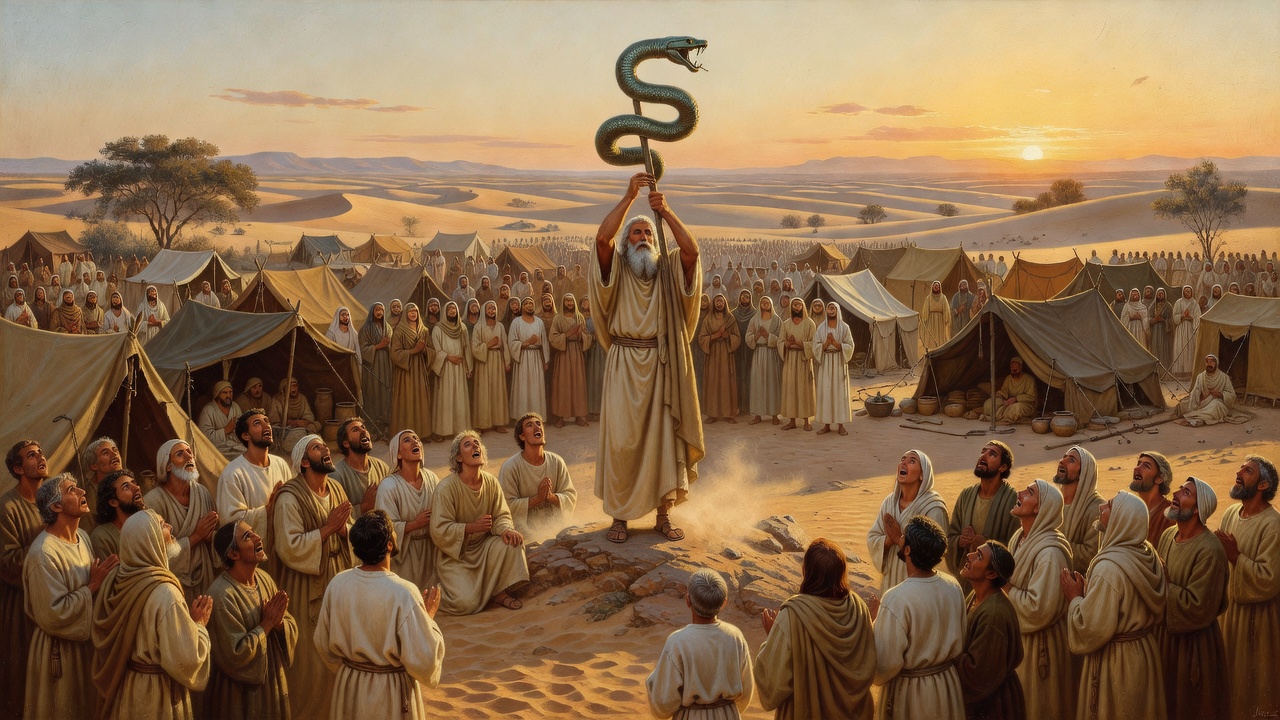
The Bronze Serpent and the March Beyond the Arnon
- When the Israelites grew impatient during their journey around Edom and complained about the lack of food and water, venomous snakes appeared in the camp. Moses was instructed to craft a bronze serpent and mount it on a pole so that anyone bitten could look at it and live.Sources: the Bible text itself
- This chapter cites an otherwise unknown ancient Hebrew text called the Book of the Wars of the LORD to delineate the boundary along the Arnon river, which separated the Moabites from the Amorites.Sources: the Bible text itself · Arnon
- The passage includes an ancient poem mentioning Chemosh, the deity worshipped by the Moabites. The poem recounts how Sihon king of the Amorites had previously conquered Moabite lands from Heshbon down to the Arnon before Israel defeated him in battle.Sources: the Bible text itself · Chemosh · Sihon · Heshbon
Notes written with AI assistance from open sources (Theographic Bible Metadata, CC BY-SA 4.0; Easton’s Bible Dictionary, public domain) and reviewed before publishing.
Places in this chapter
- Negeb · 31.245, 34.841 · verse 1
- Edom · 30.746, 35.604 · verse 4
- Way of the Red Sea · Today: road between the Dead Sea and the Gulf of Aqaba · 29.727, 34.998 · verse 4
- Egypt · 30.129, 31.308 · verse 5
- Moab · Today: Moab 1 · 31.181, 35.701 · verses 11, 13, 15, 20, 26, 28, 29
- Valley of Zered · Today: Wadi al Hasa · 31.027, 35.485 · verse 12
- Arnon · Today: Wadi Mujib · 31.466, 35.573 · verses 13, 14, 24, 26, 28
- Waheb · Today: within 50 km of Sufeh · 31.666, 35.817 · verse 14
- Jeshimon · 31.470, 35.223 · verse 20
- King’s Highway · 31.955, 35.934 · verse 22
- Ammon · 31.955, 35.934 · verse 24
- Jabbok · Today: Zarqa River · 32.115, 35.543 · verse 24
- Dibon · Today: Tall Dhiban · 31.502, 35.777 · verse 30
- Medeba · Today: Madaba · 31.716, 35.795 · verse 30
- Bashan · 32.781, 35.935 · verse 33
Only places identified with high confidence are shown (90% or more according to the scholarly sources compiled by OpenBible). Period map: DARE (Digital Atlas of the Roman Empire), CC BY 4.0; modern map: © OpenStreetMap contributors; places: OpenBible.info (CC BY 4.0).
Credits and license for this translation
Kitabu ka Kanu
Portions of the Holy Bible in the Baga Sitemu language of Guinea
Des portions de la Sainte Bible dans la langue Baga Sitemu de Guinée
copyright © 2015 Pioneer Bible Translators
Language: Baga Sitemu
Translation by: Traducteurs Pionniers de la Bible
Contributor: Pioneer Bible Translators
This translation is made available to you under the terms of the
Creative Commons Attribution Share-Alike license 4.0.
You have permission to share and redistribute this Bible translation in any format and to make reasonable revisions and adaptations of this translation, provided that:
You include the above copyright and source information.
If you make any changes to the text, you must indicate that you did so in a way that makes it clear that the original licensor is not necessarily endorsing your changes.
If you redistribute this text, you must distribute your contributions under the same license as the original.
Pictures included with Scriptures and other documents on this site are licensed just for use with those Scriptures and documents.
For other uses, please contact the respective copyright owners.
Note that in addition to the rules above, revising and adapting God's Word involves a great responsibility to be true to God's Word. See Revelation 22:18-19.
2025-04-29
Source: http://ebible.org/bsp/ · eBible.org