Genesis 49
Kitabu ka Kanu · Tap a verse to see its cross-references.
Kətolanɛ ka Yakuba awut ɔn wəco kɔ mɛrəŋ
1Kɔ Yakuba ewe awut ɔn, k'oloku:
«Nəloŋkanɛ iloku nu tɔkɔ tendeder nu kiriŋ mɔ.
2Nəloŋkanɛ, nəcəŋkəl im awut a Yakuba!
Nəcəŋkəl Yisrayel papa konu!
3Ruben, məna coco cem,
məna nwɛ inakom
tɛm ntɛ inayɔ fənɔntər mɔ:
Məncepər awɛnc əm aŋa
tokom, kɔ fənɔntər.
4Məyeŋk pəmɔ domun ndɛ dɛŋyɛksɛ dəkəŋgbɔkɔ mɔ,
mba məfɔdesɔyɔnɛ wəkiriŋ,
Bawo mənapɛsɛ dəkəfəntərɛ da papa kam,
Mənayik-yikəs kəfənc kem kəpɛsɛ ka ki, kɔ wəran kem wəkin.
5Simeyɔŋ kɔ Lewy dɛwɛnca dɔ ŋayɔ:
Ŋa ŋantəŋnɛ, ŋasek kəkɔyɔ pəlɛc.
6Ala, ifaŋ fɛ kənɔŋkəl tɛŋkəndəm taŋan!
Ta mɛcɛm-cɛmnɛ mem mɛtəŋnɛ nde ŋantəŋnɛ kəbəpɛnɛ mɔ!
Bawo mɛtɛlɛ maŋan disrɛ, ŋandif fum.
Kəwosɛ kəŋan disrɛ, kɔ ŋancopu-copu mura bənta.
7Intolanɛ mɛtɛlɛ maŋan pəlɛc, bawo mɛmbɛk pɛləsər.
Intolanɛ pəlɛc deyeŋki bəkəc daŋan, bawo dɔfɔyɔnɛ nɔnɔfɔr.
Indeyerəs ŋa atɔf ŋa Yakuba,
Indesamsər ŋa atɔf ŋa Yisrayel.
8Yuda, məna, awɛnc əm aŋa ŋandeyek-yekəs əm.
Məndesumpər aterɛnɛ am cərɔbɔ.
Kɔ awɛnc əm aŋa ŋandecəp am səbomp fɔr yam kiriŋ.
9Yuda, kusunuŋku kəwut kɔ məyɔnɛ.
Dəkəwatəri-watəri wɛsɛm wam məyɛfɛ, wan kem!
Nkɔn oŋnut wɛcək, pəfəntərɛ pəmɔ kusunuŋku.
Pəmɔ kusunuŋku kəran: An'ɛntam ki kəyekti ta kəfaŋ-ɛ?
10Kəgbo ka dɛbɛ kəfɔde kəcbɔlɛ Yuda,
kəgbo ka dɛbɛ kəndeyi yuruya yɔn dəwaca,
haŋ tɛm ntɛ wəka kəgbo kaŋkɔ yati endeder mɔ,
wəkɔ afum fəp ŋandeyi dəntɔf mɔ.
11Nkɔn (Yuda) ende pəckot sɔfale sɔn dəŋgbɔŋkəlɔ ya wɛn,
pəkot wan ka si nde kətɔk ka wɛn,
Ende pəcyak yamos yɔn dəwɛn,
kɔ burumus bɔn, dəməncɔncɔ ma yokom ya wɛn.
12Member mendesɔŋɛ kɔ fɔr kəyimbərɛ,
Mɛsɛ ma wana mendefertər əm sek.
13Kɔ məna Sabulon, kəba kəsək məndendɛ,
nde cibil cəndeyɔ kətənta mɔ.
Cələncər ca atɔf ŋaŋɔkɔ cəndewɔkəl haŋ Sidoŋ.
14Isakar, məna sɔfale səpɔŋ sɔ məyɔnɛ,
nsɛ səŋfəntərɛ gbɔrɛ mɛrəŋ dacɔ mɔ.
15Pənəŋk a kəfo kaŋkɔ eyi kəŋesəm mɔ kəntesɛ,
k'atɔf ŋɔmbɔt.
Pətirmi kumunt padəndəsər kɔ pɛsarɛ,
Yɛbəc ya dacar y'endeyi.
16Dan, endeyɔnɛ afum ɔn wəbɛ.
Pəmɔ kusuŋka kəlɔma cusuŋka cəlpəs ca Yisrayel cəkɔ.
17Dan, endeyi pəmɔ abok nŋɛ ŋeyi dɔpɔ mɔ,
aŋkisin nŋɛ ŋeyi dɔpɔ kəsək mɔ.
Abok nŋɛ ŋɛŋaŋ bənta ya afəlɛs,
a tɔsɔŋɛ wəyɛksɛnɛ ka ŋi kətɛmpɛnɛ mɔ.
18Iŋgbɛkər əm amera MARIKI, a məndeyac im!
19Kadu, kənay kəndepaŋnɛ kɔ
pəyɛfɛ pəcəmɛ ŋa darəŋ kəbɛləs.
20Ndena Asɛr, yeri yoboŋu yendela di.
Antɔf ŋam ŋende ŋɔcsɔŋ yeri nyɛ pəmar yɔyɔnɛ yeri y'abɛ mɔ.
21Naftali, were w'ɔyɔnɛ nwɛ weyi kiyi ka wi, ta tes o tes toŋkotərnɛ wi mɔ.
Ende pəckoməs awut atɔt.
22Isifu, popoŋ pa kətɔk kəkom pɔyɔnɛ,
Popoŋ pa kətɔk kəkom nkɛ kəcəmɛ kəŋgbɔkɔ kəsək mɔ,
wara wa ki wetilsərnɛ damba.
23Ŋandəktər kɔ, kɔ ŋampɛn.
Apɛnɛ mbəncəran ŋanayɔnɛ ayɛfərɛnɛ am.
24Mba ambəncəran ŋɔn ŋende ŋɛtəŋnɛnɛ kɔ nkɔn sərka.
Anacaŋəs waca wɔn
kətam ka Kanu kɔ fənɔntər fa Yakuba dəntɔf.
Ɔyɔnɛ wəkɛkəs kɔ togbu pa aka Yisrayel.
25Tewe ta Kanu ka papa kam, nkɛ kəyɔnɛ wəmar kam mɔ,
tewe ta Kanu nkɛ kəntam mes fəp ma doru mɔ, nkɛ kəndepoc'am mɔ:
Kəpocɛ pətɔt nkɛ kəndeyɛfɛ darenc mɔ,
kəpocɛ pətɔt nkɛ kəŋyɛfɛ dəntɔf mɔ,
kəpocɛ pətɔt ka awut alarəm kɔ yɔcɔl yɛlarəm.
26Kətolanɛ nkɛ papa kam ontolan'am mɔ,
kəncepər kətolanɛ pətɔt ka aŋɛ ŋaŋkom im mɔ,
haŋ dəkələpsər da mɔrɔ ma doru o doru.
Kətolanɛ pətɔt kaŋkɔ kəyi Isifu dəromp,
dəndo domp dacɔ da Isifu
nwɛ ɔyɔnɛ wəbɛ ka awɛnc aŋa mɔ!
27Beŋyamin, kalma k'ɔyɔnɛ nkɛ kəŋwatəri-watəri mɔ.
Bətbət kəwatəri-watəri wɛsəm wa ki,
dɔfɔy, pəyerəs yɔsɔtɔ ya ki.»
28Awut akaŋɛ ŋayɔnɛ cusuŋka wəco kɔ mɛrəŋ ca Yisrayel. Moloku mamɛ mɔ kas kəŋan ɛnaloku ŋa, ntɛ onctolanɛ ŋa mɔ. Yakuba ɛnatolanɛ ŋa nwɛ o nwɛ kɔ kətolanɛ kɔn taciŋa.
Defi da Yakuba
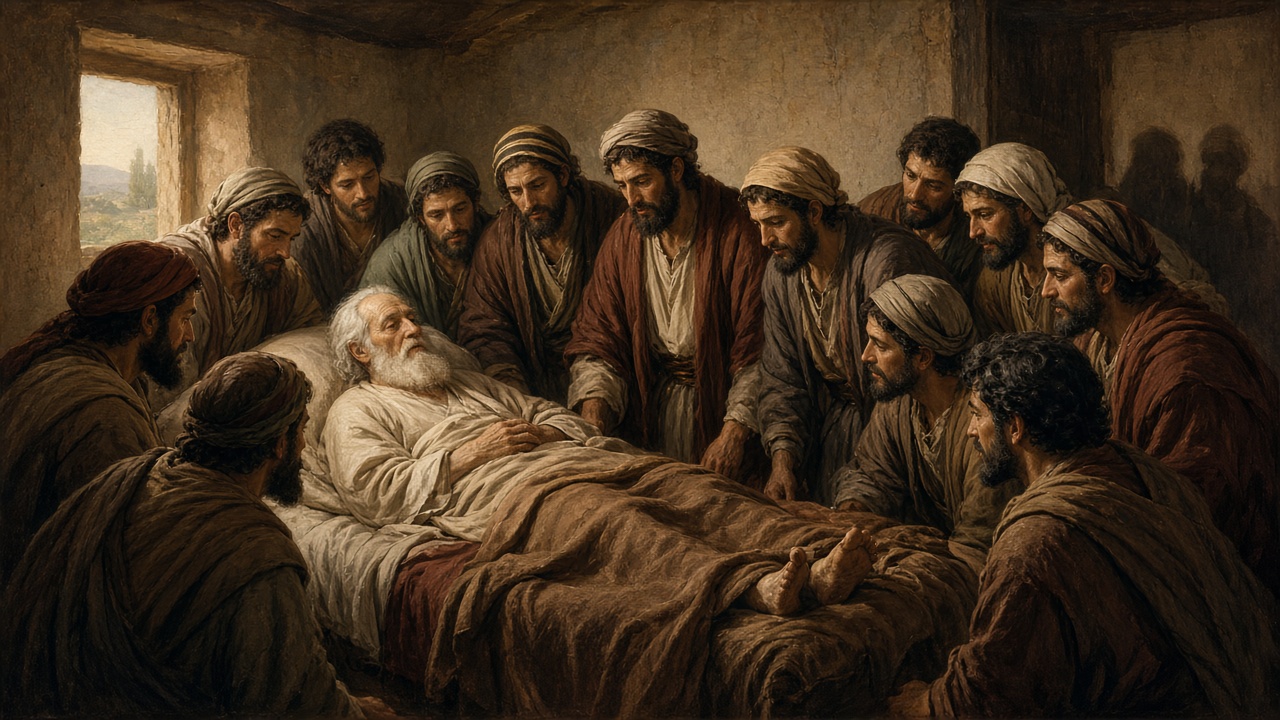
29Ntɛ Yakuba elip kətolanɛ awut ɔn mɔ, k'osom ŋa: «Intas kəbəp atem em aŋɛ ŋafi mɔ. Nəwup im kɔ papa kem aŋa, nde kufu kəŋkɔ kəyi nde dalɛ da Hɛfəroŋ wəHewy mɔ, 30nde kufu nkɛ kəyi dalɛ da Makpela, Mamre kəsək, nde atɔf ŋa Kanaŋ. Dalɛ dadɔkɔ dɔ Abraham ɛnaway nnɔ Hɛfəroŋ eyi mɔ, pəyɔnɛ di dəkəwupɛnɛ da afum ɔn. 31Difɔ anawup Abraham kɔ wəran kɔn Sara, difɔ anawup Siyaka kɔ wəran kɔn Rebeka, difɔ inawup sɔ Leya wəran kem. 32Dalɛ kɔ kufu nkɛ kəyi di mɔ, Abraham ɛnaway di aHewy dəwaca.» 33Ntɛ Yakuba elip kəsom awut ɔn mɔ, k'ɛfəntərɛ dəkəfənc. K'eŋgbiŋ kifir k'ɔnɔŋkəlɛnɛ atem ɔn aŋɛ ŋanafi mɔ.
Did you know?
Last Blessings for Israel's Twelve Tribes
- Jacob's sayings play on the meanings of his sons' names. Judah (Hebrew Yehudah) comes from Leah's words, "Now will I praise" (odeh), and Jacob says that Judah's brothers will praise him. Dan's name echoes his mother Bilhah's "God hath judged me" (dananni); Jacob says Dan will judge, or provide justice for, his people, and Easton's Bible Dictionary (1897) suggests this probably alludes to Samson, a later judge from the tribe of Dan.Sources: Judah (patriarch) · Dan · the Bible text itself
- The chapter calls each speech a blessing, yet some are stern. Reuben, firstborn of Jacob and Leah, whose name means "Behold a son!", is told he will no longer excel because he defiled his father's bed. Simeon and Levi, who took violent revenge on Hamor and the Shechemites, hear their anger cursed and are told they will be dispersed in Jacob and scattered in Israel; the Authorized Version's "they digged down a wall" is rendered in the Revised Version "they houghed an ox," as this chapter says they hamstring oxen.Sources: Reuben · Simeon · Levi (patriarch) · the Bible text itself
- Jacob then asks to be buried with his fathers in the cave in the field of Ephron the Hittite, which Abraham bought as a family grave. Machpelah, a name understood to mean "portion" or "double cave," stood on a hillside east of Hebron, facing Mamre in the land of Canaan. Abraham and Sarah, Isaac and Rebekah, and Leah were already buried there.Sources: Machpelah · Ephron · Mamre · the Bible text itself
Notes written with AI assistance from open sources (Theographic Bible Metadata, CC BY-SA 4.0; Easton’s Bible Dictionary, public domain) and reviewed before publishing.
Places in this chapter
- Shiloh · Today: Khirbet Seilun · 32.056, 35.290 · verse 10
- Sidon · Today: Sandikli archaeological site in Sidon · 33.561, 35.372 · verse 13
- Canaan · 32.767, 35.333 · verse 30
- Machpelah · Today: Cave of the Patriarchs · 31.525, 35.111 · verse 30
Only places identified with high confidence are shown (90% or more according to the scholarly sources compiled by OpenBible). Period map: DARE (Digital Atlas of the Roman Empire), CC BY 4.0; modern map: © OpenStreetMap contributors; places: OpenBible.info (CC BY 4.0).
Credits and license for this translation
Kitabu ka Kanu
Portions of the Holy Bible in the Baga Sitemu language of Guinea
Des portions de la Sainte Bible dans la langue Baga Sitemu de Guinée
copyright © 2015 Pioneer Bible Translators
Language: Baga Sitemu
Translation by: Traducteurs Pionniers de la Bible
Contributor: Pioneer Bible Translators
This translation is made available to you under the terms of the
Creative Commons Attribution Share-Alike license 4.0.
You have permission to share and redistribute this Bible translation in any format and to make reasonable revisions and adaptations of this translation, provided that:
You include the above copyright and source information.
If you make any changes to the text, you must indicate that you did so in a way that makes it clear that the original licensor is not necessarily endorsing your changes.
If you redistribute this text, you must distribute your contributions under the same license as the original.
Pictures included with Scriptures and other documents on this site are licensed just for use with those Scriptures and documents.
For other uses, please contact the respective copyright owners.
Note that in addition to the rules above, revising and adapting God's Word involves a great responsibility to be true to God's Word. See Revelation 22:18-19.
2025-04-29
Source: http://ebible.org/bsp/ · eBible.org