Genesis 46
Kitabu ka Kanu · Tap a verse to see its cross-references.
Yakuba kəkɔ kɔn Misira
1Kɔ Yakuba ɔŋkɔ kɔ ca yɔkɔ ɛnayɔ mɔ. Ntɛ ɛmbɛrɛ Bersaba mɔ, k'oloŋnɛ di Kanu ka papa kɔn Siyaka. 2Kɔ Kanu kəlok-lokər Yakuba kənəŋk ka pibi disrɛ. Kɔ Kanu kəwe kɔ: «Yakuba! Yakuba!» K'owosɛ: «In'ɛwɛ!» 3Kɔ Kanu kəloku kɔ: «In'ɔfɔ ina Kanu, Kanu ka papa kam. Ta mənesɛ kətor ka Misira. Bawo difɔ iŋkɔsɔŋ'am kəyɔnɛ ka kas ka afum alarəm. 4Sən'endesol kətor ka Misira. In'endesɔŋ'am sɔ kəpɛ. Isifu yati endemɛp'əm fɔr waca wɔn.» 5Kɔ Yakuba ɛyɛfɛ Bersaba. Kɔ awut a Yakuba ŋaŋkekərɛ kas kəŋan, aran aŋan, kɔ awut aŋan cibil ca dəntɔf disrɛ ncɛ Firawona ɛnasɔŋ pakɔ kɛrɛ ŋa mɔ. 6Kɔ ŋalɛk sɔ yɔcɔl yaŋan kɔ ca yɔkɔ ŋanasɔtɔ atɔf ŋa Kanaŋ mɔ. Kɔ Yakuba ɔŋkɔ Misira kɔ afum ɔn fəp. 7K'eŋkenɛnɛ atɔf ŋa Misira yuruya yɔn fəp, awut ɔn arkun kɔ awut-sɔ ɔn arkun, awut ɔn aran kɔ awut-sɔ ɔn aran.
Dɛlay da afum a Yakuba
8Mewe ma awut a Yakuba mɔ mmɛ, aŋɛ ŋanakɔ Misira mɔ. Yakuba kɔ awut ɔn:
Coco ca Yakuba, Ruben. 9Awut a Ruben: Henok, Palu, Hecərɔŋ, kɔ Karmi.
10Awut a Simeyɔŋ: Yemuyɛl, Yamin, Ohad, Yakin, kɔ Cohar, kɔ Sawul wan wərkun wəka wəKanaŋara.
11Awut a Lewy: Kerson, Kehat, kɔ Merari.
12Awut a Yuda: Hɛr, Onan, Sɛlah, Perɛc, kɔ Serah, mba Hɛr kɔ Onan ŋanafi nde atɔf ŋa Kanaŋ. Awut a Perɛc ŋanayɔnɛ Hecərɔŋ kɔ Hamul.
13Awut a Isakar: Tola, Puwa, Yɔb, kɔ Simrɔŋ.
14Awut a Sebulɔŋ: Sered, Ɛlɔŋ, kɔ Yahalɛl.
15Awut akaŋɛ ŋɔ Leya ɛnakomɛ Yakuba nde Padaŋ-Aram, mba wan kɔn wəran Dina eyi fɛ ti. Kəlɛk awut ɔn aran haŋ arkun, ŋanakɔ afum wəco maas (33).
16Awut a Kadu: Cifyɔn, Haki, Suni, Ecəbɔŋ, Eri, Arodi, kɔ Areli.
17Awut a Asɛr: Yima, Yisuwa, Yisuwi, kɔ Beriya, kɔ Sera wəkirɛ kəŋan. Wan ka Beriya: Hebɛr kɔ Malkiyɛl.
18Awut a Silpa wəmarəs nwɛ Labaŋ ɛnasɔŋ wan kɔn wəran Leya mɔ, ŋɔ akakɔ aŋɛ ɛnakomɛ Yakuba mɔ. Ŋanayi afum wəco kɔ camət-tin (16).
19Awut a Rasɛl, wəran ka Yakuba: Isifu kɔ Beŋyamin. 20Kɔ Isifu nkɔn oŋkom Misira awut mɛrəŋ: Manase kɔ Ɛfrayim, aŋɛ Asnat wan wəran ka Potifera wəloŋnɛ ka dare da Hon, ɛnakomɛ Isifu mɔ.
21Awut a Beŋyamin: Bela, Bekɛr, Asubɛl, Kera, Naman, Ehi, Rɔs, Mupim, Hupim, kɔ Ardu.
22Yuruya yayɛ yɔ Rasɛl ɛnasɔtɔnɛ nkɔn Yakuba, ŋanayi afum wəco kɔ maŋkəlɛ (14).
23Wan ka Dan: Husim.
24Mewe ma awut a Naftali mɛmɛ: Yacel, Kumi, Yecer, kɔ Silem.
25Awut a Bilha ŋɔ akakɔ, Bilha nwɛ Labaŋ ɛnasɔŋ wan kɔn wəran Rasɛl mɔ pəyɔ kɔ wəcar, k'oŋkomɛ ŋa Yakuba. Ŋanayi afum camət-mɛrəŋ.
26Afum aŋɛ ŋanacɛpsɛ Yakuba kəkɔ ka Misira mɔ, ŋanayi afum wəco camət tin kɔ camət tin (66) aŋɛ ŋanayɔnɛ akom ɔn mɔ, alɔm fɛ aran a awut ɔn arkun de. 27Awut a Isifu aŋɛ ɛnakom Misira mɔ: Ŋanayi awut mɛrəŋ. Afum a Yakuba aŋɛ ŋanacəpsɛ kɔ darəŋ kəkɔ ka Misira mɔ, ŋanayi fəp faŋan afum wəco camət mɛrəŋ (70).
Yakuba kəndɛ kɔn nde Misira
28Kɔ Yakuba osom Yuda pəyi kɔ kiriŋ kəkɔ ka Kosɛŋ ndena Isifu. Kɔ Yuda ɛmbɛrɛ atɔf ŋa Kosɛŋ. 29Kɔ Isifu ɛlɛk abil ŋɔn k'ɛmpɛ Kosɛŋ kəkɔbəpɛnɛ kɔ papa kɔn Yakuba. Isifu ŋaŋkɔwurərɛnɛ kɔ papa kɔn, k'ɛnapsərnɛ kɔ dəkilim k'ɛyɛfɛ kəbok. K'ombok haŋ. 30Kɔ Yakuba oloku Isifu: «Intam oŋ kəfi bawo inəŋk əm kəro, k'incərɛ oŋ a məyi doru!» 31Kɔ Isifu oloku awɛnc aŋa kɔ afum a papa kɔn: «Ilukus ikɔ iluksɛ Firawona kəbɛrɛ konu. Ikɔ iloku kɔ a: ‹Awɛnc im aŋa kɔ afum a papa kem aŋɛ ŋanayi atɔf ŋa Kanaŋ mɔ, ŋander nnɔ iyi mɔ. 32Afum akɛk a ŋkesiya, cir, kɔ cəna ŋɔ ŋayɔnɛ, bawo akɛk a acɔl ŋɔ. Ŋaŋkɛrɛ yɔcɔl yaŋan fəp kɔ ca yaŋan.› 33Kɔ tɛm tendebəp ntɛ Firawona endewe nu pəcyif nu: ‹Ake'yɔnɛ yɛbəc yonu-ɛ?› 34Nəcloku kɔ: ‹Sən'acar am, akɛk ŋɔ səyɔnɛ, kəyɛfɛ dɛtɛmp dosu haŋ mɔkɔ, yɛbəc yayɔkɔ yɔ səmbəpɛ akombəra asu.› Ti disrɛ, nəyi Kosɛŋ, bawo pəcyik-yik aMisira kəndɛ kɔ akɛk a ŋkesiya kɔ cir.»
Did you know?
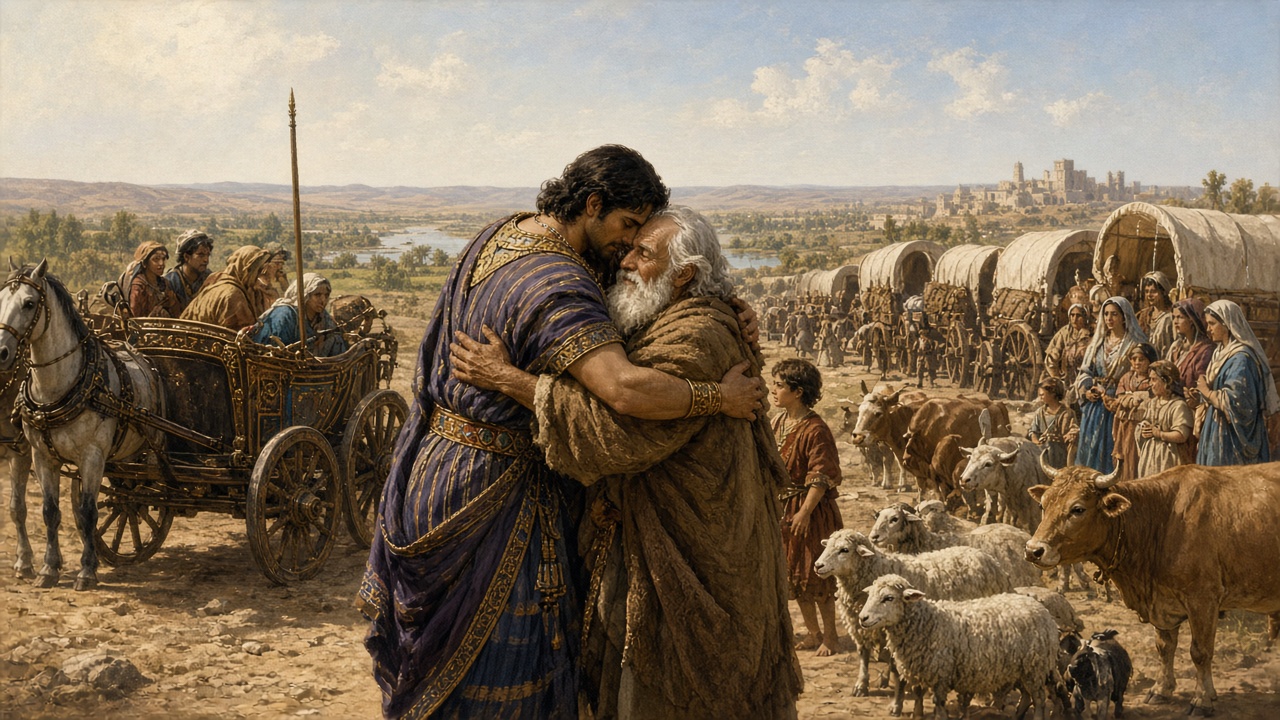
Israel Goes Down to Egypt
- As Israel set out for Egypt with all that he had, he stopped at Beersheba and offered sacrifices to the God of his father Isaac. Beersheba, meaning well of the oath or well of seven, was a well Abraham dug and named after a compact with Abimelech; when Isaac reopened it, he gave it the same name. It was a favorite dwelling of both patriarchs, and there that night God spoke to Jacob in a vision, telling him not to fear going down to Egypt, for he would make him a great nation there.Sources: the Bible text itself · Beersheba
- Jacob sent Judah ahead to Joseph for directions to Goshen, an Egyptian district east of the Nile, apparently near the royal residence, where the family remained until the Exodus. Easton's Bible Dictionary (1897) calls it the best of the land, now a desert, and also the land of Rameses. Joseph told his brothers to say they had raised livestock from youth, so they might settle there, because shepherds were detestable to the Egyptians; that dictionary suggests Pharaoh was probably Apopi, last of the Hyksos, who welcomed these Asiatic shepherds, while native Egyptians abhorred them, though some argue Joseph arrived later, under Thothmes III, after the Hyksos were expelled.Sources: the Bible text itself · Goshen · Pharaoh (of Joseph)
- The chapter counts sixty-six of Jacob's direct descendants who came to Egypt, not counting the wives of his sons, and seventy when Joseph's two sons already born in Egypt are included. Leah's sons and her daughter Dinah are named in that tally, although Easton's Bible Dictionary (1897) says Leah herself had died in Canaan before the journey and was buried in the cave of Machpelah; Rachel had died earlier giving birth to Benjamin and was buried on the way to Ephrath, that is, Bethlehem. Manasseh and Ephraim were born to Joseph in Egypt by Asenath, daughter of Potiphera, priest of On, a center of sun-worship that the Septuagint and Vulgate call Heliopolis.Sources: the Bible text itself · Leah · Rachel · On
Notes written with AI assistance from open sources (Theographic Bible Metadata, CC BY-SA 4.0; Easton’s Bible Dictionary, public domain) and reviewed before publishing.
Places in this chapter
- Egypt · 30.129, 31.308 · verses 1, 3, 4, 5, 6, 7, 8, 20, 26, 27
- Canaan · 32.767, 35.333 · verses 6, 12, 31
- Heliopolis · Today: Ain Shams · 30.129, 31.308 · verse 20
- Goshen · Today: Goshen 1 · 30.799, 31.834 · verses 28, 29, 34
Only places identified with high confidence are shown (90% or more according to the scholarly sources compiled by OpenBible). Period map: DARE (Digital Atlas of the Roman Empire), CC BY 4.0; modern map: © OpenStreetMap contributors; places: OpenBible.info (CC BY 4.0).
Credits and license for this translation
Kitabu ka Kanu
Portions of the Holy Bible in the Baga Sitemu language of Guinea
Des portions de la Sainte Bible dans la langue Baga Sitemu de Guinée
copyright © 2015 Pioneer Bible Translators
Language: Baga Sitemu
Translation by: Traducteurs Pionniers de la Bible
Contributor: Pioneer Bible Translators
This translation is made available to you under the terms of the
Creative Commons Attribution Share-Alike license 4.0.
You have permission to share and redistribute this Bible translation in any format and to make reasonable revisions and adaptations of this translation, provided that:
You include the above copyright and source information.
If you make any changes to the text, you must indicate that you did so in a way that makes it clear that the original licensor is not necessarily endorsing your changes.
If you redistribute this text, you must distribute your contributions under the same license as the original.
Pictures included with Scriptures and other documents on this site are licensed just for use with those Scriptures and documents.
For other uses, please contact the respective copyright owners.
Note that in addition to the rules above, revising and adapting God's Word involves a great responsibility to be true to God's Word. See Revelation 22:18-19.
2025-04-29
Source: http://ebible.org/bsp/ · eBible.org