Genesis 37
Kitabu ka Kanu · Tap a verse to see its cross-references.
Tecepərɛnɛ ta Isifu
Taruku ta Yakuba k'afum ɔn
Mɛwɛrəp ma Isifu
1Kɔ Yakuba ɛndɛ atɔf ŋa Kanaŋ nde kas ɛnandɛ mɔ. 2Dokombəra da Yakuba dɛndɛ: Kəsɔtɔ ka Isifu meren wəco kɔ camət-mɛrəŋ, kɔ Isifu ɛyɛfɛ pəccɛpsɛ awɛnc aŋa darəŋ ŋackɛk ŋkesiya kɔ cir. Pəyɔnɛ wan wəfɛt, pəccəmɛ awut arkun a Bilha kɔ Silpa darəŋ, aran a kas. Mba Isifu encder pəcsɔŋɛ papa kəŋan kəcərɛ mɛcɛmcɛmnɛ mɛlɛc mɔkɔ menccepər di mɔ fəp. 3Yakuba ɛnabɔtər Isifu pətas awut ɔn alpəs aŋɛ fəp, bawo detem disrɛ d'ɛnasɔtɔ kɔ. Kɔ Yakuba ɔsɔt burumus bɔnɔŋkəsəl lom k'ɔsɔŋ bi Isifu. 4Kɔ awɛnc a Isifu ŋande ŋanəŋk, a kas kəŋan ɔmbɔtər Isifu pətas ŋa fəp. Kɔ ŋamɛŋkɛ Isifu mɛtɛlɛ mamɔkɔ. Kɔ ŋayi ta ŋaŋlok-lokər Isifu belbel-ɛ. 5Kɔ Isifu ɛwɛrəp, k'ɔŋkɔ pəloku mere mamɔkɔ awɛnc aŋa, kɔ akakɔ ŋanaŋkanɛ sɔ kəter kɔ. 6Kɔ Isifu oloku ŋa: «Awɛnc im aŋa, nəcəŋkəl mere mmɛ iwɛrəpna mɔ! 7Dəkulum ayina pacsek mɛmpəlɛ. Pəwon fɛ kɔ kilim kem ka mɛmpəlɛ kəyɛfɛ kɔ kəncəmɛ sot! Kɔ cilim ca mɛmpəlɛ ma nəna cənder cənɔŋkər kem, kɔ cəntontnɛnɛ ki.» 8Kɔ awɛnc aŋa ŋaloku kɔ: «Mba məna məncɛm-cɛmnɛ kəyɔnɛ ka wəbɛ ka səna ba? Məyi su kəroŋ?» Kɔ ŋambɛrɛnɛ sɔ kəter kɔ teta moloku mɔn mamɔkɔ. 9Kɔ Isifu endesɔ pəwɛrəp, k'oloku sɔ ti awɛnc aŋa. K'oloku: «Iwɛrəpna sɔ: Dec, ŋof kɔ cɔs wəco kɔ pin yontontnɛn'em.» 10Kɔ Isifu oloku mere mamɔkɔ papa kɔn kɔ awɛnc aŋa. Kɔ papa kɔn oŋkul-kulər kɔ, k'eyif kɔ: «Cəke cɔ mere mamɛ məwɛrəp mɔ moloku-ɛ? Məncɛm-cɛmnɛ a səndeder, iya kam, awɛnc əm aŋa, kɔ ina sədetontnɛn'am dəntɔf?» 11Kɔ awɛnc a Isifu ŋayɔnɛ kɔ kəraca. Mba kɔ kas kəŋan ɛmɛŋkərnɛ kəwɛrəp kaŋkɔ.
Awɛnc a Isifu ŋancaməs kɔ
12Kɔ awɛnc a Isifu ŋande ŋawur, kəkɔkɛk ŋkesiya kɔ cir ya kas kəŋan nde Səkɛm. 13Kɔ Yakuba oloku Isifu: «Awɛnc əm aŋa ŋayi Səkɛm ŋawurɛnɛ yɔcɔl kəkɔsɔmət. Məder, ifaŋ kəsom əm nde ŋayi mɔ.» Kɔ Isifu owosɛ: «In'ɛwɛ!» 14Kɔ Yakuba oloku kɔ: «Məkɔ məmɔmən em kɔ pəyɔnɛ a daka o daka dɔyɔ fɛ awɛnc əm aŋa kɔ yɔcɔl yɛfɛt yɛfɛt-ɛ. Məder məlok'im ti.» K'osom kɔ kəyɛfɛ ka aranta ŋa Hebərɔŋ, kɔ Isifu ɔŋkɔ Səkɛm. 15Kɔ wərkun wəlɔma ɔŋkɔ pəbəp kɔ pəckafəlɛ-kafəlɛ dəkulum. Kɔ wərkun nwɛ eyif kɔ: «Ake məntɛn-ɛ?» 16Kɔ Isifu oloku kɔ: «Awɛnc im aŋa ŋ'intɛn, ilɛtsɛn'am məmentər im nde ŋayi kəkɛk yɔcɔl mɔ.» 17Kɔ wərkun nwɛ oloku kɔ: «Ŋayɛfɛ dɛ, inenɛna ŋa ŋacloku: ‹Paŋkɔn kəca ka Dotaŋ.›» Kɔ Isifu ɛncəmɛ ni yaŋan darəŋ kɔ yɔcɔl haŋ k'ɔŋkɔ pəbəp ŋa Dotaŋ.
18K'awɛnc aŋa ŋanəŋk kɔ pəbɔlɛ, ta ɛntabəp ŋa-ɛ, kɔ ŋasekɛ kɔ kədif. 19Kɔ ŋalokɛnɛ: «Wəbɛ ka kəwɛrəp ender wəkɔ. 20Nəder oŋ padif kɔ, pagbal kɔ nde dəkələmp. Pakɔ paloku a wɛsɛm wɔsɔm kɔ. Pamɔmən oŋ daka ndɛ kəwɛrəp kɔn kəndeyɔnɛ mɔ.» 21Kɔ Ruben ene ti, k'ɛmbaŋ kɔ akakɔ dəwaca. K'oloku: «Ta pasɔŋɛ kɔ kəfi.» 22Kɔ Ruben oloku sɔ: «Ta nəwurɛ mecir! Nəgbal kɔ kələmp kaŋkɛ kəyi nnɔ dətɛgbərɛ mɔ. Ta nədeŋər kɔ kəca!» Ɛnaloku ŋa moloku mamɛ, ntɛ tɔŋsɔŋɛ pətam kəyac Isifu defi, pəkenɛ kɔ kas mɔ. 23Ntɛ Isifu ɛmbəp awɛnc aŋa mɔ, kɔ akakɔ ŋawurɛ kɔ burumus bɔnɔŋkəsəl lom bɔkɔ ɛnabɛrnɛ mɔ. 24Kɔ ŋasumpər kɔ, kɔ ŋantorɛ kɔ dəkələmp. Kələmp kaŋkɔ kənawosər, ali domun kənayɔ fɛ. 25Kɔ ŋandɛ ŋacdi yeri, ŋandeyekti fɔr, kɔ ŋanəŋk afum a Səmayila ŋayɛfɛ atɔf ŋa Kaladu. Yɔkɔmɛ yaŋan yɛsarɛ suray, cɔl kɔ labundɛ nyɛ ŋanckekərɛ Misira mɔ. 26Kɔ Yuda eyif awɛnc aŋa: «Ta ake tɔ andedifɛ wɛnc kosu pamɛŋk mecir mɔn-ɛ? 27Nəder pacamsər kɔ afum a Səmayila. Ta padeŋər kɔ kəca. Bawo wɛnc kosu ɔfɔ, mecir min mayi mɔ ampaŋnɛ.» K'awɛnc aŋa ŋanenɛ kɔ moloku mamɔkɔ. 28Kɔ acaməs aMadiyaŋ aŋɛ ŋanccepər mɔ, ŋampɛnɛ Isifu dəkələmp. Kɔ awɛnc a Isifu ŋancamsər kɔ aMadiyaŋ gbeti ncəmbəl wəco mɛrəŋ, k'aMadiyaŋ ŋaŋkekərɛ Isifu Misira. 29Ntɛ Ruben oluksərnɛ kədemɔmən kələmp disrɛ mɔ, ɛmbəp fɛ sɔ Isifu kələmp disrɛ. K'ɛwal-wali yɛbɛrnɛ yɔn. 30K'ɛŋkafəlɛ nnɔ awɛnc aŋa ŋayi mɔ, k'oloku: «Wan nwɛ eyi fɛ sɔ nnɔ dəkələmp! Cəke indeyɔ oŋ-ɛ?» 31Kɔ ŋalɛk burumus ba Isifu, kɔ ŋafay ambiyofo amera, kɔ ŋasopət burumus babɔkɔ mecir. 32Kɔ ŋaŋkenɛ kas kəŋan burumus bɔnɔŋkəsəl lom ba Isifu babɔkɔ, kɔ ŋaŋkɔ ŋacloku kas kəŋan: «Yamos yayɛ yɔ səŋkɔ sənəŋk. Məna sɔ məmɔmən ma kɔ pəyɔnɛ a burumus ba wan kam bɔ-ɛ.» 33Kɔ Yakuba ɛnɛpəl bi, k'oloku: «Burumus ba wan kem bɔ! Wɛsɛm wɛlɛc wɔlɔma wɔsɔm kɔ! Wɛsɛm wɛwatəri-watəri kɔ!» 34Kɔ Yakuba ɛwal-wali yamos yɔn, k'esekənɛ kəloto k'abɛk defi. K'ombok wan kɔn Isifu mataka mɛlarəm. 35Kɔ awut ɔn arkun kɔ aran fəp ŋayɛfɛ kətorɛ-torɛ kɔ abəkəc. Mba k'ombupərɛ kəlɛtsɛnɛ fəp. K'oloku: «Indebok wan kem haŋ dɔsɔk ndɛ indekɔbəp kɔ dabiya mɔ!» K'ɛncəmɛ kəbok ka wan kɔn darəŋ.
36Kɔ aMadiyaŋ ŋancaməs Isifu Misira. Kɔ Potifar wətupɛ ka Firawona yeri nwɛ ɛnayɔnɛ wəbɛ ka abum a dəsaŋka sa Firawona mɔ, ɛway kɔ.
Did you know?
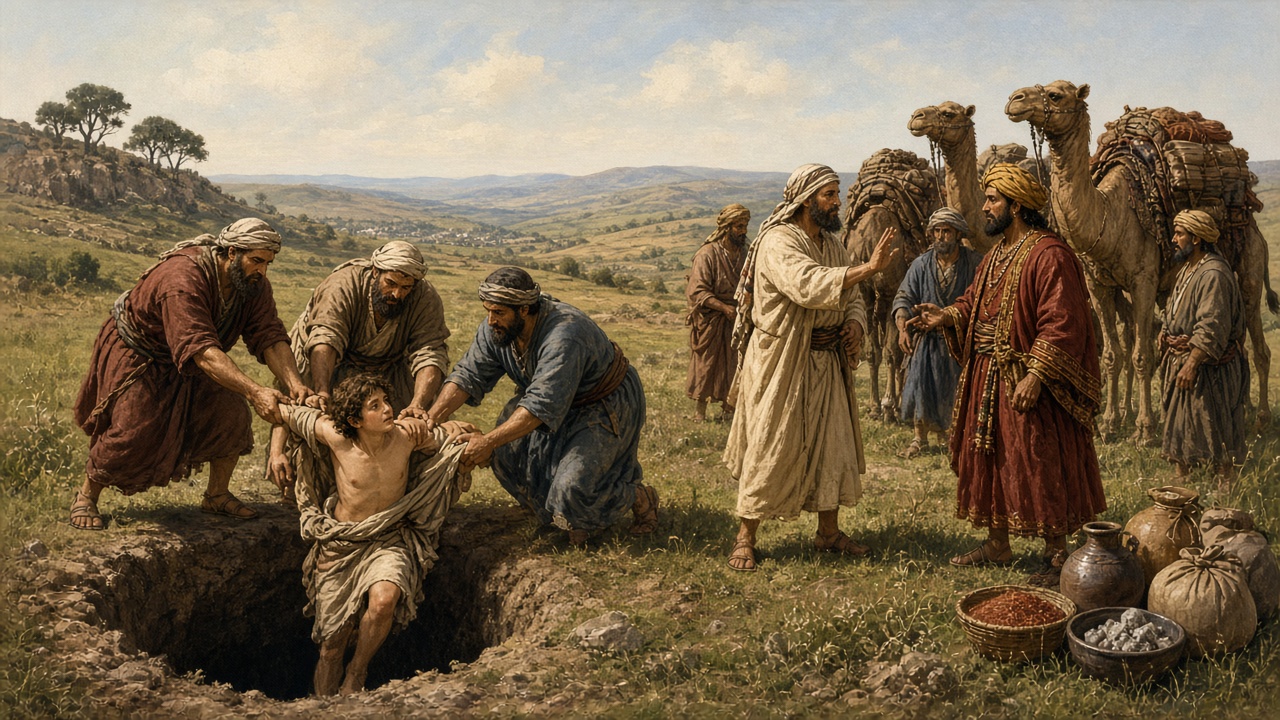
Joseph Sold by His Brothers
- Israel loved Joseph more than his other sons because he was the child of his old age, and he made him a robe of many colors. Easton's Bible Dictionary (1897) reads the Hebrew of Genesis 37:3 as a long, full garment with sleeves, the kind worn by the children of nobles. When the brothers saw that favor, they hated him and could not speak a kind word to him.Sources: Joseph (son of Jacob) · the Bible text itself
- Jacob sent seventeen-year-old Joseph from the Valley of Hebron to see how his brothers and the flocks were faring; they had pastured near Shechem and then gone on to Dothan. Easton's Bible Dictionary (1897) calls Dothan a famous pasture ground with two wells, identified with modern Tell-Dothan about twelve miles north of Samaria among the hills of Gilboa, and says it is mentioned on monuments in 1600 BC. There the brothers saw a caravan of Ishmaelites coming from Gilead, their camels carrying spices, balm, and myrrh on the way down to Egypt.Sources: Dothan · Gilead · the Bible text itself
- Reuben, Jacob's eldest son by Leah, tried to save Joseph from death and planned to return him to their father. Judah then persuaded the brothers to sell Joseph to the Ishmaelites rather than shed his blood. In Egypt the Midianites sold him to Potiphar, an officer of Pharaoh and captain of the guard; Easton's Bible Dictionary (1897) explains that name as 'dedicated to Ra,' the sun-god, and takes the title to mean, probably, chief of the state police, with a margin reading 'chief of the executioners.'Sources: Reuben · Judah (patriarch) · Potiphar · the Bible text itself
Notes written with AI assistance from open sources (Theographic Bible Metadata, CC BY-SA 4.0; Easton’s Bible Dictionary, public domain) and reviewed before publishing.
Places in this chapter
- Canaan · 32.767, 35.333 · verse 1
- Shechem · Today: Tell Balatah · 32.214, 35.282 · verses 12, 13, 14
- Valley of Hebron · 31.525, 35.102 · verse 14
- Egypt · 30.129, 31.308 · verses 25, 28, 36
- Gilead · Today: Gilead 1 · 32.187, 35.692 · verse 25
Only places identified with high confidence are shown (90% or more according to the scholarly sources compiled by OpenBible). Period map: DARE (Digital Atlas of the Roman Empire), CC BY 4.0; modern map: © OpenStreetMap contributors; places: OpenBible.info (CC BY 4.0).
Credits and license for this translation
Kitabu ka Kanu
Portions of the Holy Bible in the Baga Sitemu language of Guinea
Des portions de la Sainte Bible dans la langue Baga Sitemu de Guinée
copyright © 2015 Pioneer Bible Translators
Language: Baga Sitemu
Translation by: Traducteurs Pionniers de la Bible
Contributor: Pioneer Bible Translators
This translation is made available to you under the terms of the
Creative Commons Attribution Share-Alike license 4.0.
You have permission to share and redistribute this Bible translation in any format and to make reasonable revisions and adaptations of this translation, provided that:
You include the above copyright and source information.
If you make any changes to the text, you must indicate that you did so in a way that makes it clear that the original licensor is not necessarily endorsing your changes.
If you redistribute this text, you must distribute your contributions under the same license as the original.
Pictures included with Scriptures and other documents on this site are licensed just for use with those Scriptures and documents.
For other uses, please contact the respective copyright owners.
Note that in addition to the rules above, revising and adapting God's Word involves a great responsibility to be true to God's Word. See Revelation 22:18-19.
2025-04-29
Source: http://ebible.org/bsp/ · eBible.org