Genesis 3
Kitabu ka Kanu · Tap a verse to see its cross-references.
Wərkun kɔ wəran: Kəbɛləs kəŋan nde dalɛ da Edeŋ
1Abok ŋɛnacərɛ mes ŋɛtas sɛm ya dalɛ fəp nyɛ MARIKI Kanu ɛnawurɛ mɔ. K'abok ŋeyif wəran: «Kanu kəloku nu ti yati a ta nədi yokom ya tɔk ya dalɛ dandɛ ba?» 2Kɔ wəran oloku abok: «Səndi yokom ya tɔk ya dalɛ dandɛ yati. 3Mba kətɔk nkɛ kəyi dalɛ dacɔ mɔ, Kanu kəloku: ‹Ta nədi yokom ya ki, ta nəgbuŋɛnɛ ŋaŋ ki! Kɔ nəyɔ ti-ɛ, nəŋfi.›» 4K'abok ŋoloku wəran: «Nəfɔfi! 5Bawo Kanu kəncərɛ, a dɔsɔk ndɛ nəndi yi mɔ, fɔr yonu yeŋmepɛ, nəyi pəmɔ Kanu nkɛ kəncərɛ pətɔt kɔ pəlɛc mɔ.»
6Kɔ wəran ɛnəŋk a pokom pa kətɔk pɔmbɔt kədi, pɔmbɔt kəmɔmən, pɛntam kəsɔŋ kəcərɛ pətɔt kɔ pəlɛc. Kɔ wəran oŋgbotu pokom k'endi. K'ɔsɔŋ wos wəkɔ ŋanasol mɔ, kɔ wəkakɔ sɔ endi. 7Kɔ ŋamepɛ fɔr, kɔ ŋancərɛnɛ a kəsɔkər kɔ ŋawur. Kɔ ŋaŋgbotu bɔpər, kɔ ŋasɔt maŋkara kɔ ŋambɛrnɛ mi.
8Dec dɔrɔfɔy, ntɛ tefef towur mɔ, wərkun kɔ wəran ŋane dim da MARIKI Kanu, nwɛ ɔnckɔtəs mɔ. Wərkun kɔ wəran kɔ ŋaŋkɔ ŋagbɔpnɛ ŋabɔlɛ MARIKI Kanu fɔr kiriŋ, tɔk ya dalɛ dadɔkɔ dacɔ. 9Kɔ MARIKI Kanu ewe wərkun eyif kɔ: «Deke məyi-ɛ?» 10Kɔ wərkun oloku Kanu: «Dim d'in'am dalɛ disrɛ, k'inesɛ, bawo iwur kəsɔkər, ti t'iŋgbɔpnɛnɛ.» 11Kɔ MARIKI eyif kɔ sɔ: «Anɔ'mentər əm a kəsɔkər kɔ məwur-ɛ? Cepɔ məndi pokom pa kətɔk kəŋkɔ inamɔn'am mɔ ba?» 12Kɔ wərkun oloku: «Wəran nwɛ məsɔŋ im mɔ, nkɔn ɔsɔŋ im pi k'ina sɔ indi.»
13Kɔ MARIKI Kanu eyif wəran: «Ta ake tɔ məyɔnɛ tantɛ-ɛ?»
Kɔ wəran oloku Kanu: «Abok ŋetiŋkər im, k'indi pokom pampɛ.»
14Kɔ MARIKI Kanu oloku abok:
«Bawo məsɔŋɛ wəran kəciya,
kəsɔŋ əm kənder pəlɛc sɛm yɔcɔl,
kɔ sɛm ya dop fəp dacɔ.
Kor kɔ mənde məcliŋɛnɛ,
məcdi kəbof mataka ma kiyi kam doru fəp.
15Kəbɛrəs əm k'inder dacɔ kɔ wəran,
kəyɛfɛ nəna haŋ awut a wəran
kəbəp awut a məna, abok!
Wəran ende pəcputək əm domp,
məna abok, məcŋaŋ kɔ dəmnɛ atek.»
16Kɔ Kanu kəloku wəran:
«Indeyɔ kəbɛkəs kam kəccu'm.
Pəcuca pɔ mənde məckom.
Mɛfaŋ mam məndekɔ nda wos əm.
Mba endetasərn'am.»
17Kɔ Kanu kəloku wərkun:
«Bawo məncəŋkəl dim da wəran kam,
kɔ məndi pokom pa kətɔk nkɛ inamɔn'am kədi mɔ,
indesɔŋ antɔf pəlɛc tetam:
Pəcuca pɔ mənde məcsɔtər ŋi yeri yam
dɔsɔk o dɔsɔk kiyi kam doru fəp.
18Yika ya dəkulum yɔ mənde məcdi.
Mba antɔf ŋende ŋockom am
bɛŋk kɔ ŋgbɔŋkəlɔ.
19Kawonɛ ka tobu tam
kəndesɔŋ'am kəcsɔm kəcom
haŋ tɛm ntɛ məndelukus dəntɔf
nde məyɛfɛ mɔ.
Bawo kəbof kɔ məyɔnɛ,
dəkəbof məndesɔlukus.»
20Kɔ wərkun ɔsɔŋ wəran kɔn tewe ta «Hawa», bawo nkɔn Hawa ɔyɔnɛ iya wəka afum a doru fəp.
21Kɔ MARIKI Kanu olompsɛ Adama kɔ wəran kɔn, Hawa, yamos ya akata, k'ɛmbɛr ŋa yi.
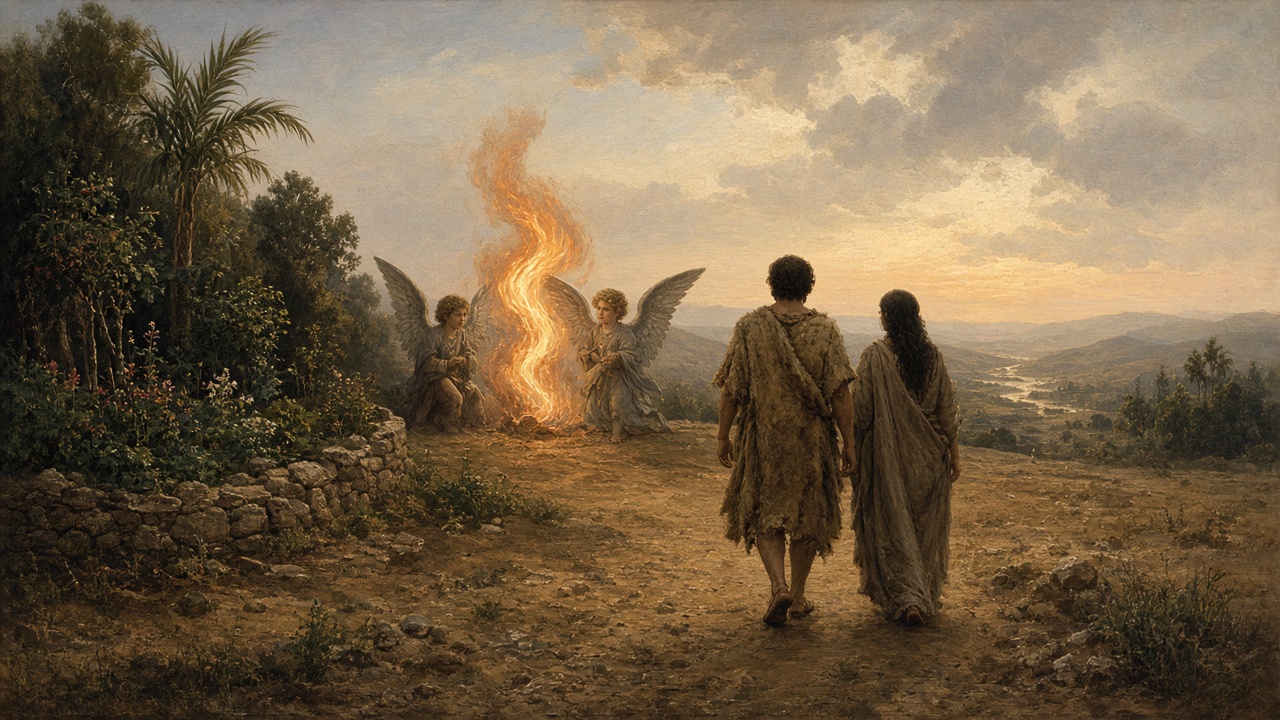
22Kɔ MARIKI Kanu oloku: «Ah! Ntɛ fum ende pəyi oŋ pəmɔ səna mɔ, pəcərɛ pəlɛc kɔ pətɔt, səkɛmbərnɛ ta pətɛnc kəca pəlɛk sɔ pokom pa kətɔk kəyinɛ wəyeŋ, pədeyi oŋ doru katina.» 23Kɔ MARIKI Kanu owurɛnɛ Adama dalɛ da Edeŋ disrɛ, pəkɔbəc antɔf nyɛ ɛnasɛlɛ kɔ mɔ. 24Ntɛ MARIKI Kanu owurɛnɛ fum dalɛ da Edeŋ mɔ, k'ɛncəmbər mɛlɛkɛ kerub ntende dec dɛmpɛ dalɛ da Edeŋ, kɔ dakma ndɛ dencfikəlɛ dɛccɛsəŋɛ nɛnc, ntɛ tɔŋsɔŋɛ ta alɔtərnɛ kətɔk ka kəyinɛ wəyeŋ mɔ.
Did you know?
The Fall and Exile from Eden
- A traditional reference explains Adam as “red,” a Babylonian word used as the generic name for man, with the same meaning in Hebrew and Assyrian, and links the name to his being formed from the dust of the earth. In this chapter that origin returns in the judgment: he will toil for his food until he returns to the ground, for he is dust and to dust he will return, and he is sent to work the soil from which he was taken.Sources: Adam · the Bible text itself
- In this chapter Adam gives his wife the name Eve, meaning “life” or “living,” because she would be the mother of all the living.Sources: Eve · the Bible text itself
- The site of the garden of Eden, from which the man is driven in this chapter, has been much discussed and placed in Armenia, west of the Caspian Sea, in Media, near Damascus, in Palestine, in southern Arabia, and in Babylonia. A traditional geographical note looks for it along the Tigris and the Euphrates, in the land of Shinar, or Babylonia.Sources: Eden · the Bible text itself
Notes written with AI assistance from open sources (Theographic Bible Metadata, CC BY-SA 4.0; Easton’s Bible Dictionary, public domain) and reviewed before publishing.
Credits and license for this translation
Kitabu ka Kanu
Portions of the Holy Bible in the Baga Sitemu language of Guinea
Des portions de la Sainte Bible dans la langue Baga Sitemu de Guinée
copyright © 2015 Pioneer Bible Translators
Language: Baga Sitemu
Translation by: Traducteurs Pionniers de la Bible
Contributor: Pioneer Bible Translators
This translation is made available to you under the terms of the
Creative Commons Attribution Share-Alike license 4.0.
You have permission to share and redistribute this Bible translation in any format and to make reasonable revisions and adaptations of this translation, provided that:
You include the above copyright and source information.
If you make any changes to the text, you must indicate that you did so in a way that makes it clear that the original licensor is not necessarily endorsing your changes.
If you redistribute this text, you must distribute your contributions under the same license as the original.
Pictures included with Scriptures and other documents on this site are licensed just for use with those Scriptures and documents.
For other uses, please contact the respective copyright owners.
Note that in addition to the rules above, revising and adapting God's Word involves a great responsibility to be true to God's Word. See Revelation 22:18-19.
2025-04-29
Source: http://ebible.org/bsp/ · eBible.org