Genesis 14
Kitabu ka Kanu · Tap a verse to see its cross-references.
Abram, abɛ kɔ Melkisedek
1Tɛm tatɔkɔ tɔ abɛ a tɔf maŋkəlɛ ŋancyɛfərɛnɛ kɔ abɛ a sədare kəcamət: Amrafɛl wəbɛ wəka Siŋhar, Aryok wəbɛ wəka Elasar, Kədɔr-Lahomɛr wəbɛ wəka Helam, kɔ Tidəhal wəbɛ wəka Koyim, 2tɛnatəŋnɛ abɛ akakɔ ŋacyɛfərɛnɛ kɔ abɛ a sədare kəcamət: Bera wəbɛ wəka Sodom, Birəsa wəbɛ wəka Komora, Sinab wəbɛ wəka Adma, Semeber wəbɛ wəka Ceboyim kɔ wəbɛ wəka Bela mbɛ bɔyɔnɛ Cohar mɔ. 3Abɛ akaŋɛ kəcamət fəp aranta ŋa Sidim dacɔ ŋanandɛ, nde pəyɔnɛ mɔkɔ Kəba Kədokət mɔ. 4Meren wəco kɔ mɛrəŋ ŋayi kətam ka Kədɔr-Lahomɛr dəntɔf, mba teren ta wəco kɔ maas kɔ ŋayeŋkər kɔ səbomp. 5Teren ta wəco kɔ maŋkəlɛ, Kədɔr-Lahomɛr k'abɛ akɔ ŋanabɛrɛnɛ mɔ, ŋasut aRefay nde dare da Asterot-Karnayim, kɔ ŋasut aSus nde Ham, kɔ ŋasut afum a Em nde Aranta ŋa Kiriyatayim. 6K'abɛ maŋkəlɛ ŋasut aHor ndaraŋan, nde mɔrɔ ma Sehir. Kɔ ŋambɛləs aHor haŋ nde tofo ntɛ Aŋkiri ŋa Paran ŋɛncəmɛ mɔ, nde tɛgbərɛ kəsək. 7K'abɛ akaŋɛ maŋkəlɛ ŋaluksərnɛ Eyən-Mispe (nŋɛ ŋɔyɔnɛ Kadɛs mɔ), kɔ ŋasut aka Amalek atɔf ŋaŋan fəp kɔ Amɔr aŋɛ ŋanandɛ Hacacon-Tamar mɔ. 8Kɔ abɛ a sədare kəcamət (Sodom, Komora, Adma, Ceboyim kɔ Bela, ti tɔ tatɔkɔ Cohar) ŋambɛrɛnɛ kəsutɛnɛ nde aranta ŋa Sidim. 9Akɔ sɔ ŋayi: Kədɔr-Lahomɛr wəbɛ wəka Helam, Tidəhal wəbɛ wəka Koyim, Amrafɛl wəbɛ wəka Siŋhar, kɔ Aryok wəbɛ wəka Elasar. Abɛ maŋkəlɛ ŋayɛfərɛnɛ kɔ abɛ kəcamət. 10Ntɛ Aranta ŋa Sidim ŋɛnala cələmp ca kɔrtal mɔ, k'abɛ aŋɛ kəcamət dacɔ, wəbɛ wəka Sodom kɔ wəka Komora ŋayɛksɛ kɔ ŋantɛmpɛnɛ ci disrɛ. K'alpəs aŋɛ maas k'asɔdar aŋan ŋayɛksɛ kɔ ŋantɛfərnɛ kəca ka dətɔrɔ. 11K'atam a asɔdar a abɛ kəcamət ŋawɛtəs ca ya aka Sodom kɔ Komora kɔ yeri yaŋan fəp, kɔ ŋaŋkɔ. 12Kɔ ŋasumpər sɔ Lɔt kɔ daka dɔn, nkɔn Lɔt wan ka wəbeki ka Abram ɛnayi, (kəyɛfərɛnɛ kaŋkɛ kənabəp Lɔt nwɛ pəyi Sodom).
13Kɔ wəmulpɛ dəkəwan wəkin ende pəloku ti Abram wəHebəre, nwɛ ɛnandɛ nde kəfo nkɛ Aŋkiri ŋa Mamre wəAmɔr ŋɛnacəmɛ mɔ. Mamre nwɛ pəyɔnɛ wɛnc ka Ɛskɔl kɔ Haner, aŋɛ ŋanacaŋəs kətəŋnɛ kɔ Abram mɔ. 14Ntɛ Abram ene kəsumpər ka wan ka wəbek'ɔn mɔ, k'oloŋka asol ɔn afum 318 aŋɛ ŋanabaŋsɛ, akomɛnɛ ɔn dacɔ mɔ. K'ɛncɛpsɛ abɛ aŋɛ ŋanasumpər wan ka wəbek'ɔn darəŋ haŋ dare da Dan. 15K'Abram eyerəs kənay (kəgba) kɔn, kɔ ŋawɛkərnɛ ŋa kəyɛfərɛnɛ ka pibi, nkɔn Abram k'amar ɔn, kɔ ŋasut asumpər a wan ka wəbek'ɔn, kɔ ŋambɛləs ŋa haŋ Hoba, nŋɛ ŋeyi Damas kəca kəmeriya mɔ. 16K'oluksɛ ca fəp, k'oluksɛ sɔ Lɔt wan ka wəbek'ɔn, aran, k'afum alpəs aŋɛ.
17Ntɛ Abram osut Kədɔr-Lahomɛr k'amarɛnɛ ɔn mɔ, kɔ wəbɛ wəka Sodom owur kədefaynɛ kɔ nde aranta ŋa Sawe, nde pəyɔnɛ «Aranta ŋa Wəbɛ» mɔ.
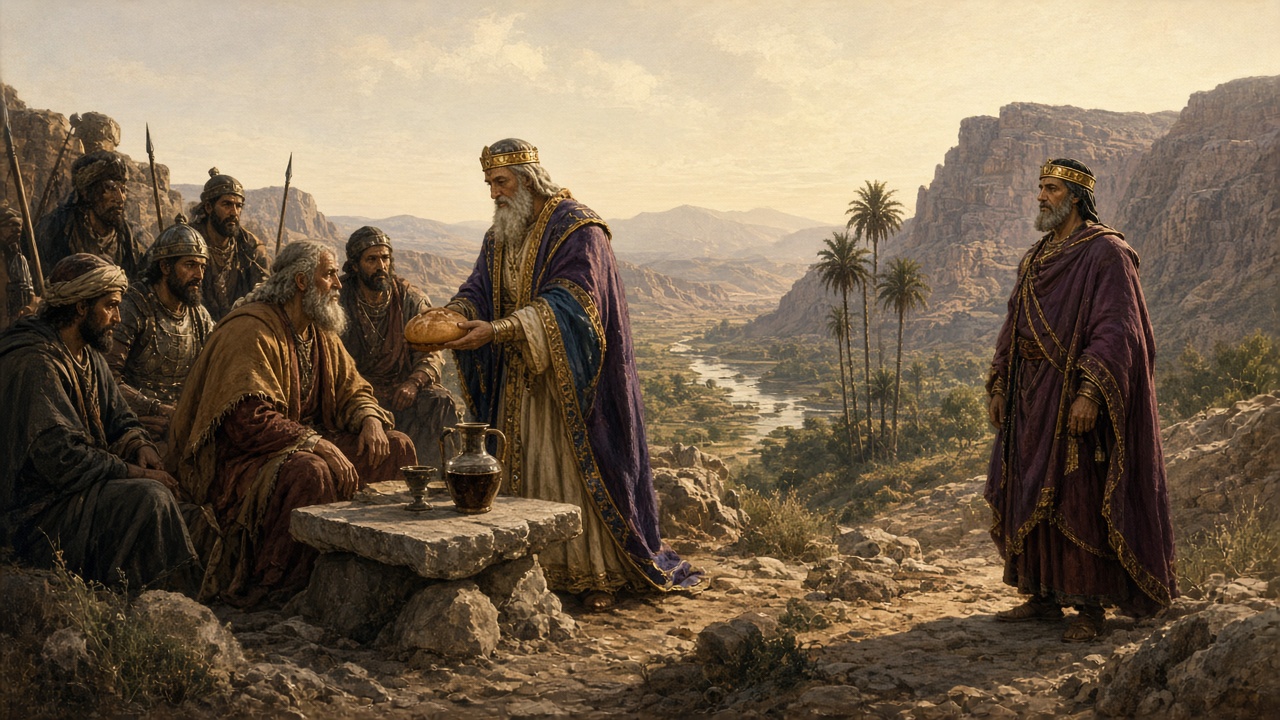
18Melkisedek, wəbɛ wəka Salɛm, ɛŋkɛrɛ kəcom kɔ member: Melkisedek, wəloŋnɛ wəka Kanu nkɛ kəyi canu cəlɔma fəp kəroŋ mɔ, ɛnayi. 19Kɔ Melkisedek ontolanɛ Abram, k'oloku: «Məna Abram, Kanu nkɛ kəyi canu cəlɔma fəp kəroŋ mɔ, Wəbɛ wəka dəntɔf kɔ darenc, kəpoc'am pətɔt. 20Ileləs Kanu nkɛ kəyi canu cəlɔma fəp kəroŋ mɔ, nkɛ kəlɛk ayɛfərɛnɛ am kɔ kəmbɛr əm dəwaca mɔ!» Kɔ Abram ɔsɔŋ kɔ farilɛ fa ca yɔkɔ ŋanasɔtɔ dəkəwan mɔ fəp.
21Kɔ wəbɛ wəka Sodom oloku Abram: «Məsɔŋ im afum, məlɛk ca yayɛ fəp yam.» 22Kɔ Abram oluksɛ wəbɛ wəka Sodom mɔcɔp: «Indot kəca nnɔ MARIKI nwɛ eyi canu cəlɔma fəp kəroŋ mɔ, nwɛ ɔyɔnɛ wəbɛ wəka darenc kɔ dəntɔf mɔ. 23Ifɔlɛk ali paka pin ca yam dacɔ. Ali debeŋa kɔ pəyi fɛ ti-ɛ pɛpətərɛ pa kɔfta kam. Ti tɔ məntɔtam kəloku: ‹In'ɔsɔŋɛ Abram kəyɔ daka.› 24Ifɔlɛk daka o daka, mɛnɛ yeri nyɛ afum em ŋandi mɔ, kɔ kəyer nkɛ atɛmp em Ɛskɔl, Haner, kɔ Mamre ŋasɔtɔ mɔ, bawo pəmar ŋasɔtɔ kəyer.»
Did you know?
The Campaign of the Four Kings
- Easton's Bible Dictionary (1897) identifies the four invading kings with names on ancient inscriptions: Chedorlaomer with Khudur-Lagamar of Elam, Amraphel with Khammu-rabi of Shinar (southern Chaldea), Arioch, king of Ellasar, with Eri-Aku of Larsa, and Tidal with Tudkhula. It explains Eri-Aku as an Elamite name meaning “servant of the moon-god,” later changed to Rimsin, and takes Goiim—“nations”—as Gutium, east of the Tigris and north of Elam.Sources: Chedorlaomer · Amraphel · Arioch (king of Ellasar) · Tidal
- The five local kings drew up for battle in the Valley of Siddim, which this chapter equates with the Salt Sea, and the valley was full of tar pits into which some of the fleeing men fell. Easton's Bible Dictionary places that valley at the south end of the Dead Sea, between Engedi and the cities of the plain, and calls the pits bitumen pits.Sources: the Bible text itself · Vale of Siddim
- Abram lived near the oaks of Mamre the Amorite, a brother of Eshcol and Aner, and the three were bound by treaty to him. Easton's Bible Dictionary calls Mamre and Eshcol Amorite chiefs and Aner a Canaanite chief, and notes that they joined Abram in pursuing Chedorlaomer and recovering Lot.Sources: the Bible text itself · Mamre · Eshcol · Aner
Notes written with AI assistance from open sources (Theographic Bible Metadata, CC BY-SA 4.0; Easton’s Bible Dictionary, public domain) and reviewed before publishing.
Places in this chapter
- Elam · 32.189, 48.258 · verses 1, 9
- Shinar · Today: Babylonia · 32.543, 44.422 · verses 1, 9
- Salt Sea · Today: Dead Sea · 31.500, 35.500 · verse 3
- Shaveh-kiriathaim · Today: within 1 km of Al Qurayyat · 31.541, 35.686 · verse 5
- Dan · Today: Tel Dan · 33.249, 35.652 · verse 14
- Damascus · 33.511, 36.306 · verse 15
- Valley of Shaveh · Today: intersection of Kidron Valley and Valley of Hinnom · 31.767, 35.236 · verse 17
- Salem · Today: Jerusalem · 31.777, 35.234 · verse 18
Only places identified with high confidence are shown (90% or more according to the scholarly sources compiled by OpenBible). Period map: DARE (Digital Atlas of the Roman Empire), CC BY 4.0; modern map: © OpenStreetMap contributors; places: OpenBible.info (CC BY 4.0).
Credits and license for this translation
Kitabu ka Kanu
Portions of the Holy Bible in the Baga Sitemu language of Guinea
Des portions de la Sainte Bible dans la langue Baga Sitemu de Guinée
copyright © 2015 Pioneer Bible Translators
Language: Baga Sitemu
Translation by: Traducteurs Pionniers de la Bible
Contributor: Pioneer Bible Translators
This translation is made available to you under the terms of the
Creative Commons Attribution Share-Alike license 4.0.
You have permission to share and redistribute this Bible translation in any format and to make reasonable revisions and adaptations of this translation, provided that:
You include the above copyright and source information.
If you make any changes to the text, you must indicate that you did so in a way that makes it clear that the original licensor is not necessarily endorsing your changes.
If you redistribute this text, you must distribute your contributions under the same license as the original.
Pictures included with Scriptures and other documents on this site are licensed just for use with those Scriptures and documents.
For other uses, please contact the respective copyright owners.
Note that in addition to the rules above, revising and adapting God's Word involves a great responsibility to be true to God's Word. See Revelation 22:18-19.
2025-04-29
Source: http://ebible.org/bsp/ · eBible.org