Exodus 7
Kitabu ka Kanu · Tap a verse to see its cross-references.
1Kɔ MARIKI oloku Musa: «Məcəŋkəl im, indesɔŋ'am kəyɔnɛ kanu nnɔ firawona eyi mɔ. Wɛnc əm Aruna nkɔn endedəŋk mi, nkɔn pəyɔnɛ sayibɛ sam. 2Mən'endekɔ məcloku tɔkɔ indekɔ icsom əm fəp, wɛnc əm pəcgbɔkərɛnɛ mi firawona, ntɛ tɔsɔŋɛ pəsak aka Yisrayel ŋawur atɔf ŋɔn mɔ. 3Kɔ ina, in'ɔŋkɔ icyeŋkəs firawona domp, icyɔ Misira mɛgbɛkərɛ mɛwɛy-wɛy kɔ mɔyɔ mɔpɔŋ mɛlarəm. 4Firawona ɔfɔcəŋkəl nu. Tɛm tatɔkɔ t'iŋkɔsutɛ Misira kəca kem, iwurɛnɛ aka Yisrayel afum em dəcor dəcor, citi cəpɔŋ c'indewurɛnɛ ŋa atɔf ŋa Misira. 5Aka Misira ŋandecərɛ a in'ɔyɔnɛ MARIKI ntɛ indesutɛ ŋa kəca kem, iwurɛnɛ aka Yisrayel di mɔ.» 6Musa kɔ Aruna ŋayɔ belbel tɔkɔ MARIKI ɛnasom ŋa mɔ. 7Tɛnatəŋnɛ Musa pəsɔtɔ meren wəco camət-maas (80), kɔ wɛnc Aruna meren wəco camət-maas kɔ maas (83), tɛm ntɛ ŋanclok-lokər firawona mɔ.
Firawona ɛfati kəcəŋkəl Musa kɔ Aruna
8Kɔ MARIKI oloku Musa kɔ Aruna: 9«Tɛm ntɛ firawona endeloku: ‹Nəyɔ tɛgbɛkərɛ tɛwɛy-wɛy mɔ,› məna məloku Aruna: ‹Məlɛk kəgbo kam mələm ki firawona dəntɔf.› Kəgbo kaŋkɔ kəndetəŋkəlɛ kəyɔnɛ abok.» 10Kɔ Musa ŋaŋkɔ kɔ Aruna nde firawona eyi mɔ, kɔ ŋayɔ pəmɔ tɔkɔ MARIKI ɛnasom ŋa mɔ. Kɔ Aruna ɛləm kəgbo kɔn dəntɔf fɔr ya firawona kɔ amarəs ɔn kiriŋ, kɔ kəgbo kaŋkɔ kəntəŋkəlɛ abok. 11Mba kɔ firawona ewe asɛr kɔ acərɛ mes a Misira. Dure fəp faŋan kɔ ŋa sɔ ŋayɔ tin tayi. 12Akakɔ fəp, kɔ ŋaləməs cəgbo cəŋan dəntɔf, kɔ cəntəŋkəlɛ bok. Mba kɔ kəgbo ka Aruna kəmerəs cəgbo cəŋan. 13Kɔ firawona eyeŋk sɔ domp, k'ɛfati kəcəŋkəl Musa kɔ Aruna pəmɔ tɔkɔ MARIKI ɛnaloku ti mɔ.
Pəlɛc pɔcɔkɔ-cɔkɔ: Domun da Nil dɛntəŋkəlɛ mecir
14Kɔ MARIKI oloku Musa: «Firawona ɛntaŋ aləŋəs, ɛfati kəsak aka Yisrayel ŋakɔ. 15Bətbətana, mədena məkɔ məbəp firawona tɛm ntɛ endena pəcder nde dəkəŋgbɔkɔ mɔ. Mədena məcəmɛ məkar kɔ nde agbɛp ŋa kəŋgbɔkɔ ka Nil, mətɔmpər kəgbo kaŋkɔ kənatəŋkəlɛ abok mɔ. 16Mədena sɔ məloku firawona: ‹MARIKI Kanu k'aHebəre kəsom im nnɔ məyi mɔ, idelok'əm: Məsak afum em ŋakɔ, ntɛ tɔŋsɔŋɛ ŋakɔ ŋasalɛn'em nde dətɛgbərɛ mɔ.› Mba məna, haŋ ndɛkəl məyi fɛ kəcəŋkəl ti. 17Ntɛ tɔ MARIKI oloku: ‹Tantɛ tendesɔŋ'am kəcərɛ a in'ɔyɔnɛ MARIKI: Kəsutɛ k'inder domun da kəŋgbɔkɔ ka Nil kəgbo kaŋkɛ, dɛtəŋkəlɛ dɔyɔnɛ mecir. 18Lop nyɛ yeyi dəkəŋgbɔkɔ mɔ, yendefi. Domun da dəkəŋgbɔkɔ dendesɛn pəlɛc, aka Misira ŋafɔdewosɛ sɔ kəmun ka domun da kəŋgbɔkɔ kaŋkɔ.›» 19Kɔ MARIKI oloku Musa: «Məloku Aruna: Məlɛk kəgbo kam məcenc kəca kam domun da Misira kəroŋ kəyɛfɛ ka domun da dəsəbo kəbəp ka da dəsəŋgbəl, haŋ da dəcumbul kəkɔ ka da yɛmɛŋkɛ domun yaŋan fəp.» Domun dendetəŋkəlɛ mecir, mecir mendeyi Misira fəp, haŋ dəyɛmɛŋkɛ domun ya masar kɔ ya tɔk.
20Musa kɔ Aruna ŋanayɔ pəmɔ tɔkɔ MARIKI ɛnasom ŋa mɔ. Kɔ Musa eyekti kəgbo kəsutɛ ki domun da Nil fɔr ya firawona kɔ amarəs ɔn kiriŋ, kɔ domun da dəkəŋgbɔkɔ fəp dɛntəŋkəlɛ mecir. 21Kɔ lop nyɛ yɛnayi kəŋgbɔkɔ ka Nil mɔ fəp yefi, kɔ domun da Nil dɛsɛn pəlɛc, aka Misira ŋanctam fɛ sɔ kəmun domun da Nil, kɔ mecir meyi Misira fəp. 22Kɔ dure aka Misira ŋayɔ deser daŋan fəp. Kɔ firawona eyeŋk sɔ domp, ɛncəŋkəl fɛ Musa kɔ Aruna, pəmɔ tɔkɔ MARIKI ɛnaloku ti mɔ. 23Kɔ firawona olukus nde ndɔrɔn, ɛnabɛr fɛ mɔyɔ mamɔkɔ dɛbəkəc.
24Kɔ aka Misira fəp ŋaŋkayəs cələmp nde kəŋgbɔkɔ ka Nil kəsək ntɛ tɔŋsɔŋɛ ŋasɔtɔ domun domun mɔ, bawo ŋanctam fɛ sɔ kəmun domun da Nil. 25Kɔ mata camət-mɛrəŋ mencepər kəyɛfɛ ntɛ MARIKI osut domun da Nil mɔ.
Pucuy pa mɛrəŋ: Fəntəl
26Kɔ MARIKI oloku Musa: «Məde məkɔ nde firawona eyi mɔ, məloku kɔ: ‹Ntɛ tɔ MARIKI oloku: Məsak afum em ŋakɔ ntɛ tɔŋsɔŋɛ ŋakɔ ŋasalɛn'em mɔ. 27Kɔ məfati kəsak ŋa ŋakɔ-ɛ, ina MARIKI, iŋsutɛ atɔf ŋam fəntəl. 28Kəŋgbɔkɔ ka Nil kəndesɛp fəntəl, nyɛ yendepɛ yɛbɛrɛ kəlɔ kam disrɛ, yɛbɛrɛ nde dəkəfəntərɛ dam, yɛpɛsɛ nde kəfənc kam, yɛbɛrɛ sɔ nde wɔlɔ wa amarəs am kɔ afum am fəp, yendebɛrɛ sɔ nde ancɔf'am cəcom, haŋ ampɔcək'am cəcom mɔ. 29Fəntəl yendefərəŋk əm, yɛfərəŋk afum am kɔ amarəs am fəp.›»
Did you know?
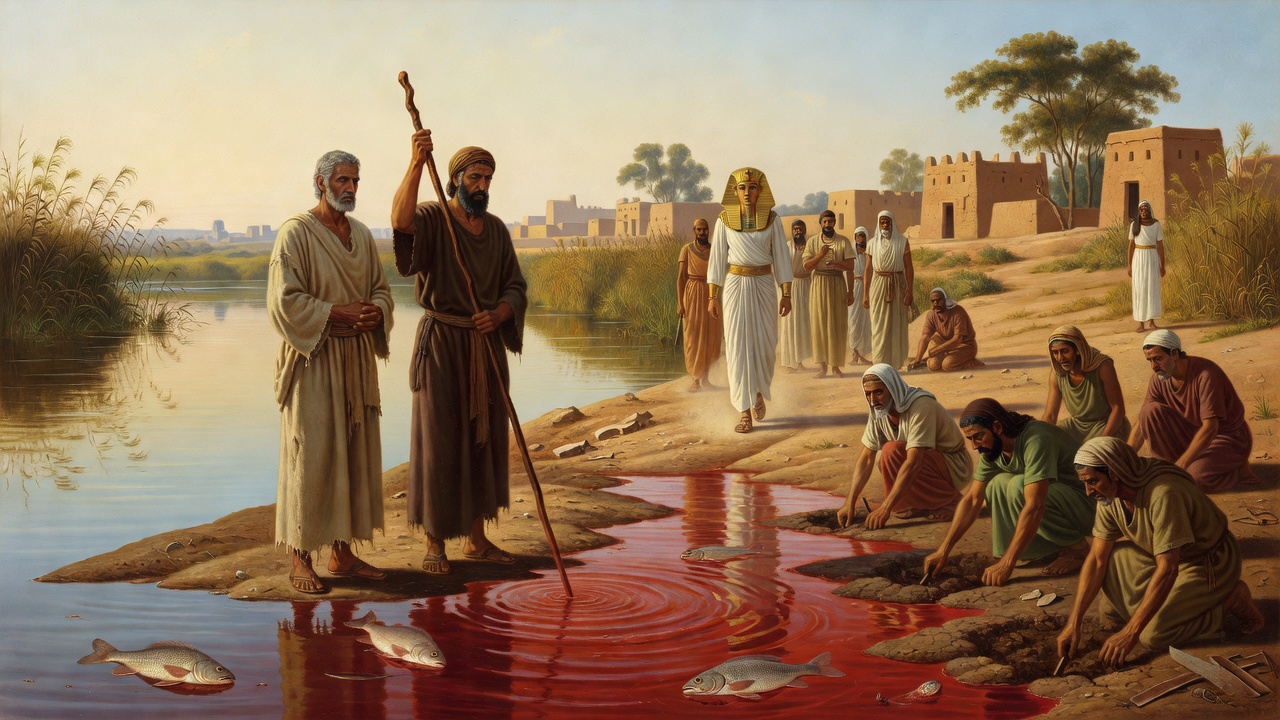
Moses and Aaron before Pharaoh
- Moses was eighty years old and Aaron eighty-three when they spoke to Pharaoh. Easton's Bible Dictionary (1897) notes that Aaron, the eldest son of Amram and Jochebed, was born in Egypt three years before his brother Moses. In this chapter the LORD says he has made Moses "like God to Pharaoh," with Aaron as his prophet: Moses is to speak all that he is commanded, and Aaron is to tell Pharaoh to let the Israelites leave his land.Sources: the Bible text itself · Aaron
- Easton's Bible Dictionary (1897) notes that the name Nile is not found in Scripture; the Old Testament calls that river Sihor, "the black stream," or simply "the river," and also "the flood of Egypt." The Nile is formed by the White Nile and the Blue Nile, which meet at Khartoum, and it is the water Aaron strikes in this chapter. The fish died, the river stank, the Egyptians could not drink it and dug around the Nile for water, and seven full days passed.Sources: Nile · the Bible text itself
- Easton's Bible Dictionary (1897) says the Pharaoh of the Exodus was probably Menephtah I, the fourteenth and eldest surviving son of Rameses II, and that he resided at Zoan, where he had the interviews with Moses and Aaron recorded in Exodus. The same entry leaves the identification open: it is still a question whether Seti II or his father Menephtah was that Pharaoh, and some think the evidence favors Seti II.Sources: Pharaoh (of the Exodus) · the Bible text itself
Notes written with AI assistance from open sources (Theographic Bible Metadata, CC BY-SA 4.0; Easton’s Bible Dictionary, public domain) and reviewed before publishing.
Places in this chapter
- Egypt · 30.129, 31.308 · verses 3, 4, 5, 11, 19, 21, 22
- Nile · Today: Nile River · 31.465, 30.367 · verses 15, 17, 18, 20, 21, 24, 25
Only places identified with high confidence are shown (90% or more according to the scholarly sources compiled by OpenBible). Period map: DARE (Digital Atlas of the Roman Empire), CC BY 4.0; modern map: © OpenStreetMap contributors; places: OpenBible.info (CC BY 4.0).
Credits and license for this translation
Kitabu ka Kanu
Portions of the Holy Bible in the Baga Sitemu language of Guinea
Des portions de la Sainte Bible dans la langue Baga Sitemu de Guinée
copyright © 2015 Pioneer Bible Translators
Language: Baga Sitemu
Translation by: Traducteurs Pionniers de la Bible
Contributor: Pioneer Bible Translators
This translation is made available to you under the terms of the
Creative Commons Attribution Share-Alike license 4.0.
You have permission to share and redistribute this Bible translation in any format and to make reasonable revisions and adaptations of this translation, provided that:
You include the above copyright and source information.
If you make any changes to the text, you must indicate that you did so in a way that makes it clear that the original licensor is not necessarily endorsing your changes.
If you redistribute this text, you must distribute your contributions under the same license as the original.
Pictures included with Scriptures and other documents on this site are licensed just for use with those Scriptures and documents.
For other uses, please contact the respective copyright owners.
Note that in addition to the rules above, revising and adapting God's Word involves a great responsibility to be true to God's Word. See Revelation 22:18-19.
2025-04-29
Source: http://ebible.org/bsp/ · eBible.org