Exodus 26
Kitabu ka Kanu · Tap a verse to see its cross-references.
Aŋgbip ŋosoku
1«Musa məlompsɛ dəkiyi dosoku cəpol wəco ca kəloto ka səbeŋa sa kentəler, ka alom ŋa məntambɛnc, alom ŋa bulu k'alom ŋeyim. Səbeŋa sasɔkɔ sɔ məŋkɔdunɛ ci kəroŋ lulu ya mɛlɛkɛ kerub. Yɛbəc ya wəcɛrəŋ yendeyi yayɔkɔ. 2Dobolu da cəpol cacɔkɔ fəp dɔkɔ dɔyɔ nkɛ o nkɛ cururu wəco mɛrəŋ kɔ camət-maas (28), kɔ dowokulu da kəpol nkɛ o nkɛ dɔkɔ dɔyɔ cururu maŋkəlɛ, cəpol fəp cəde cətəŋnɛnɛ potubuc. 3Mədekɔ məgbɛtlɛnɛ-gbɛtlɛnɛ cəpol kəcamət dɛwɛnca, məyɔ sɔ tin tayi cəkɔ kəcamət. 4Məwes-wesɛ dobol da kəloto kəcɔkɔ-cɔkɔ kəkəsək səbeŋa s'alom ŋa məntambɛnc, məde mənut yi, məyɔ sɔ tin tayi kəpol ka kəloto ka mɛrəŋ. 5Dobol da cəloto cacɔkɔ mɛrəŋ məwes-wesɛ di səbeŋa wəco kəcamət (50), mənut yi, məsɔŋɛ yewes-wesi ya cəloto cacɔkɔ mɛrəŋ fəp yosurɛnɛ dɛwɛnca. 6Məde məlompəs ŋkora wəco kəcamət (50) ya kɛma nyɛ məndekɔcɛpərɛnɛ cəloto cacɔkɔ mɛrəŋ mɔ, ntɛ tendesɔŋɛ cəloto ca dəkiyi dosoku kədeyɔnɛ kin mɔ.
7Mədunɛ cəpol ca kəloto ka mɛrəŋ kətelər nkɛ wəco kɔ pin cəfon ca wir, ncɛ andekɔperi dəkiyi dosoku kəroŋ mɔ. 8Dobolu da kəpol nkɛ o nkɛ dede dɔyɔ cururu wəco maas (30), kɔ dowokulu dede dɔyɔ cururu maŋkəlɛ. Cəpol ncɛ wəco kɔ pin (11) fəp cəde cəyɔ potubuc pin payi. 9Məgbɛtlɛnɛ taciŋa cəpol kəcamət, kɔ cəpol cəkɔ camət-tin sɔ taciŋa. Kəpol ka camət-tin, pəmar ki kəyɛlɛ tekiriŋ ta aŋgbancan. 10Məde məlompəs yewes-wesi wəco kəcamət (50) kəpol kəkəsək ka yɛgbɛtlɛnɛ yɔcɔkɔ-cɔkɔ, mənut yi. Kəpol kəkəsək ka yɛgbɛtlɛnɛ ya mɛrəŋ sɔ, məlompəs kəsək kayi yewes-wesi wəco kəcamət (50), mənut sɔ yayɔkɔ. 11Məlompəs ŋkora wəco kəcamət (50) ya kɔpər nyɛ məndegbɛkər deyewes-wesi mɔ, ntɛ tɔŋsɔŋɛ aŋgbancan ŋɔyɔnɛ ŋin mɔ. 12Dacɔ da cəpol ca cəloto dendecernɛ, paŋɛrɛ di dəkiyi dosoku tadarəŋ. 13Dobolu da cəpol ca cəloto decernɛ, pəmar payer di dacɔ kəsək o kəsək ntɛ tɔŋsɔŋɛ paŋɛr dəkiyi dosoku belbel mɔ. 14Məlompsɛ pokumpɛ pa aŋgbancan kata ya ŋkesiya yɔkɔ aŋgbət karɛ kəyim mɔ, məgbɔkərɛ sɔ kəlompsɛ kata ya ntempeli pokumpɛ pa mɛrəŋ.
15Məlompsɛ fərɛm fa dəkiyi dosoku tɔk ya kasiya, nfɛ andekɔcəmbər mɔ. 16Pəmar fərɛm o fərɛm fəbɔl cururu wəco kɔ dowokulu da fi dɔyɔ kururu katin kɔ dacɔ. 17Fərɛm o fərɛm pəmar fəyɔ sek mɛrəŋ nyɛ yosol dɛwɛnca mɔ, tatɔkɔ tɔ pəmar payɔ fərɛm fa dəkiyi dosoku fəp. 18Məlompsɛ ntende kəca kətɔt ka di nde dec dɛmpɛ mɔ fərɛm wəco mɛrəŋ (20). 19Məlompsɛ yɛcəmɛnɛ wəco maŋkəlɛ (40) ya gbeti nyɛ məndekɔcəmbər tantɔf ta fərɛm wəco mɛrəŋ (20) mɔ. Nfɛ o nfɛ fəyɔ yɛcəmɛnɛ mɛrəŋ, kəsurɛnɛ ka bi yɔkɔ pəmar pasɛt sek mɛrəŋ yɔkɔ fərɛm fəyɔ mɔ. 20Kəca kəmeriya ka dəkiyi dosoku nde dec dɛmpɛ mɔ, məlompsɛ sɔ dəndo fərɛm wəco mɛrəŋ (20). 21Yɛcəmɛnɛ wəco maŋkəlɛ (40) ya gbeti, ti tɔ tatɔkɔ yɛcəmɛnɛ mɛrəŋ yede yeyi fərɛm fin tantɔf. 22Məde məlompəs fərɛm camət-tin fa tɔgbɔkɛnɛ ta dəkiyi dosoku kəca ka ntende dec dɛŋkalɛ mɔ. 23Məlompəs fərɛm mɛrəŋ taciŋa nfɛ fəŋkɔyi dəmoŋkubut nde tɔgbɔkɛnɛ pa dəkiyi dosoku mɔ. 24Məde məyɔ fərɛm fafɔkɔ mɛrəŋ fəgbɛpɛnɛ kəyɛfɛ tantɔf, məkotərɛnɛ fi takəroŋ kəsora kin. Tin tayi t'andeyɔ fərɛm, mɛrəŋ fəkɔ feyi moŋkubut mamɔkɔ mɛrəŋ mɔ. 25Itɔ tatɔkɔ fərɛm camət-maas kɔ yɛcəmɛnɛ wəco kɔ camət-tin (16) ya gbeti, fərɛm o fərɛm fəyɔ yɛcəmɛnɛ mɛrəŋ tantɔf.
26Məpat cəgbo ca kətɔk ka kasiya kəcamət ncɛ andesumpərɛ fərɛm fəp fa kəsək kin ka dəkiyi dosoku mɔ. 27Cəgbo kəcamət sɔ ca fərɛm fa kəsək ka mɛrəŋ ka dəkiyi dosoku, kɔ cəgbo kəcamət sɔ ca fərɛm fa tɔgbɔkɛnɛ ta dəkiyi dosoku ntende dec dɛŋkalɛ mɔ. 28Kəgbo kəracɔ kəmar kəcepər fərɛm fa kəsək kin fəp dacɔ kəyɛfɛ fərɛm fəcɔkɔ-cɔkɔ haŋ kəbəp fəlpəs. 29Məde məsop fərɛm fəp kɛma, məlompsɛ cəsora kɛma ncɛ andecɛpərɛnɛ cəgbo cacɔkɔ mɔ, məsop sɔ ci kɛma. 30Kɔ mamɔkɔ melip-ɛ, məna Musa məyekti dəkiyi dosoku, məcəmbər di dowurɛnɛ kɔ dandɛ imentər əm nnɔ tɔrɔ kəroŋ mɔ.
31Məlompsɛ kəloto kəkəŋkɛ ka səbeŋa sa kentəler, sa alom ŋa məntambɛnc, sa alom ŋa bulu, kɔ sa alom ŋeyim. Pawurɛ kəloto kaŋkɔ kəroŋ lulu ya mɛlɛkɛ kerub mɛrəŋ. Yɛbəc ya wəcɛrəŋ kədu yendeyi yayɔkɔ. 32Məde mədɛt ki dəmogbu maŋkəlɛ ma kətɔk ka kasiya mmɛ asop kɛma kɔ mɔyɔ ŋkora ya kɛma mɔ, məcəmbər mi dəyɛcəmɛnɛ maŋkəlɛ kəroŋ ya gbeti. 33Nədɛtər kəloto kəkəŋkɛ ŋkora tantɔf. Kəloto kəkəŋkɛ kaŋkɔ tadarəŋ k'aŋkɔcəmbər kaŋkəra nkɛ kəyɔ walakɛ nwɛ wementər danapa dem kɔ aka Yisrayel mɔ. Nədɛt kəloto kəkəŋkɛ kaŋkɔ ntɛ tɔŋsɔŋɛ kəyer aŋgbip ŋosoku kɔ tɔksɔ tosoku mɔ. 34Kɔ məlip-ɛ, məgbəpər oŋ afɛŋk ŋɔsɔksɛ kiciya kaŋkəra nkɛ kəmentər danapa dem k'aka Yisrayel nde dətɔksɔ tosoku. 35Məcəmbər amɛsa kəloto kəkəŋkɛ todoru, aŋgbip disrɛ ntende kəca kətɔt ka nde dec dɛmpɛ mɔ, kɔ pɛdɛtɛ səlamp pi pɛtɛfərɛnɛ kɔ amɛsa ntende kəca kəmeriya ka nde dec dɛmpɛ mɔ.
36Məde mədunɛ kusuŋka k'aŋgbancan cəloto cəŋɛrɛ ca səbeŋa sa kentəler, panɔŋkəsəl səbeŋa sa alom ŋa məntambɛnc, sa alom ŋa bulu kɔ sa alom ŋeyim. 37Məde məpatɛ kəloto kəŋɛrɛ mogbu kəcamət ma kətɔk ka kasiya, məsop mi kɛma, məgbɛkər ŋkora ya kɛma mogbu mamɔkɔ. Məsɛlɛ yɛcəmɛnɛ ya mogbu kəcamət yayɔkɔ kɔpər.»
Did you know?
The Tabernacle: Coverings, Frame, and Veil
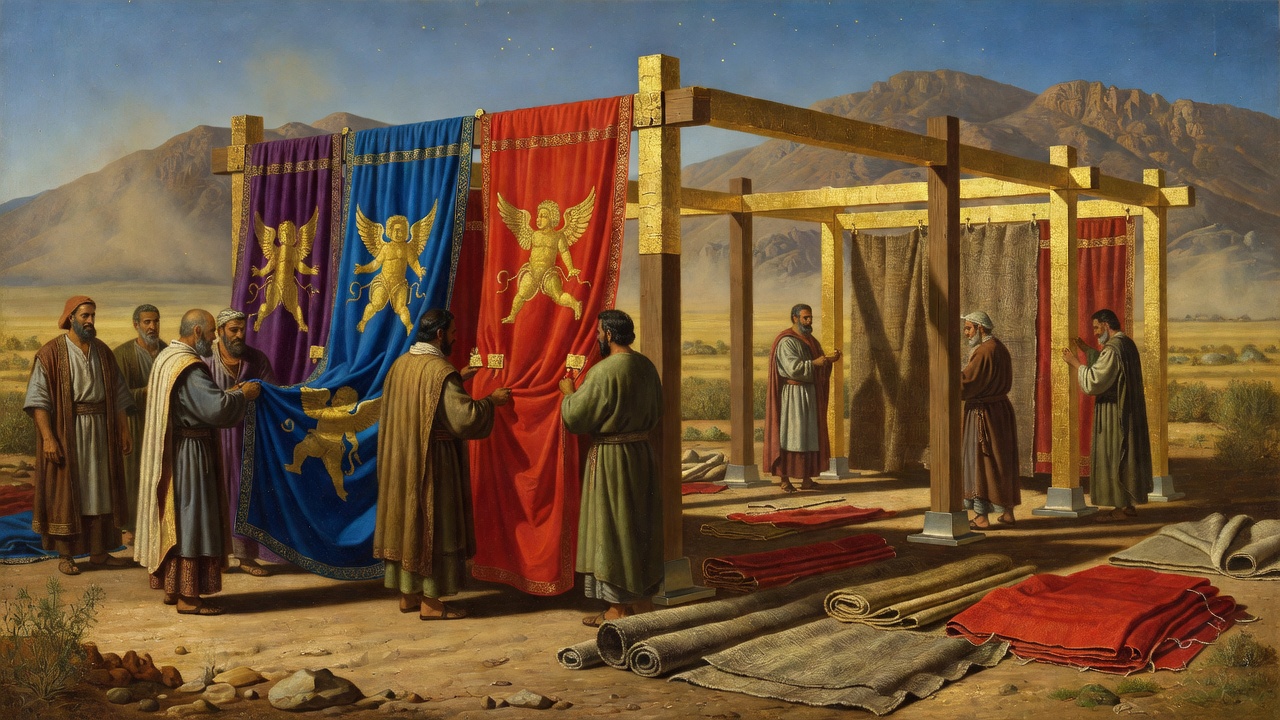
- Exodus 26 prescribes a layered covering for the tabernacle: ten curtains of finely spun linen, with blue, purple, and scarlet yarn and cherubim worked into them, joined by fifty gold clasps. Eleven goat-hair curtains, joined by bronze clasps, were to form the tent over it. A covering of ram skins dyed red was to go over the tent, and over that a covering of fine leather.Sources: the Bible text itself
- The upright frames were to be made of acacia wood, each ten cubits long and a cubit and a half wide, set on silver bases and overlaid with gold, with acacia crossbars likewise overlaid with gold. The tabernacle was to be set up according to the pattern shown on the mountain.Sources: the Bible text itself
- A veil of blue, purple, and scarlet yarn and finely spun linen, with cherubim worked into it, was to separate the Holy Place from the Most Holy Place. The Holy Place, one of the tabernacle's two sections, was twenty cubits long and ten in height and breadth; with no opening to admit light, it was illuminated by the golden candlestick and contained the table of showbread and the golden altar of incense. The temple was arranged in the same way, with a veil dividing its two sections.Sources: the Bible text itself · Holy Place
Notes written with AI assistance from open sources (Theographic Bible Metadata, CC BY-SA 4.0; Easton’s Bible Dictionary, public domain) and reviewed before publishing.
Credits and license for this translation
Kitabu ka Kanu
Portions of the Holy Bible in the Baga Sitemu language of Guinea
Des portions de la Sainte Bible dans la langue Baga Sitemu de Guinée
copyright © 2015 Pioneer Bible Translators
Language: Baga Sitemu
Translation by: Traducteurs Pionniers de la Bible
Contributor: Pioneer Bible Translators
This translation is made available to you under the terms of the
Creative Commons Attribution Share-Alike license 4.0.
You have permission to share and redistribute this Bible translation in any format and to make reasonable revisions and adaptations of this translation, provided that:
You include the above copyright and source information.
If you make any changes to the text, you must indicate that you did so in a way that makes it clear that the original licensor is not necessarily endorsing your changes.
If you redistribute this text, you must distribute your contributions under the same license as the original.
Pictures included with Scriptures and other documents on this site are licensed just for use with those Scriptures and documents.
For other uses, please contact the respective copyright owners.
Note that in addition to the rules above, revising and adapting God's Word involves a great responsibility to be true to God's Word. See Revelation 22:18-19.
2025-04-29
Source: http://ebible.org/bsp/ · eBible.org