Deuteronomy 24
Kitabu ka Kanu · Tap a verse to see its cross-references.
Wəran nwɛ ance mɔ
1Kɔ Musa oloku: «Kɔ wərkun ɛnɛncɛ wəran, tɛlpəs, ta endesɔ pəfaŋ wəran nwɛ-ɛ, bawo ɛnəŋkɛ wəran pɔkɔt mpɛ pɔntɔbɔt kɔ mɔ, pəmar pəcicsɛ wəran wəkakɔ areka ŋecenɛ kɔ, pəsɔŋ kɔ ŋi dəkəca, a pədewurɛnɛ kɔ nde kəlɔ kɔn. 2Wəran pəwur kəlɔ ka wərkun wəkakɔ, pəkɔ, ɛntam sɔ kəyɔnɛ wəran ka wərkun wəlɔma. 3Kɔ pəyɔnɛ wərkun wəkakɔ ɛlɛk kɔ sɔ k'ɛnɛncɛ mɔ, ɛfaŋ fɛ kɔ sɔ-ɛ, pəcicəs areka ŋecenɛ kɔ sɔ, pəsɔŋ ŋi wəran nwɛ dəkəca, pəbɛləs kɔ nde kəlɔ kɔn. Kɔ tɔyɔnɛ wərkun nwɛ ɛnɛncɛ kɔ tɛlpəs mɔ pəfi-ɛ, 4wos wəcɔkɔ-cɔkɔ ɔfɔsɔtam kəlɛk kɔ pənɛncɛ, bawo wəran wəkakɔ ɔsɔk fɛ sɔ nnɔ nkɔn wərkun nwɛ eyi mɔ, bawo pəyikyik mpɛ MARIKI enter mɔ pɔ tɔyɔnɛ. Pəmar fɛ məsarsər kiciya atɔf nŋɛ MARIKI Kanu kam kəsɔŋ əm kɛ mɔ.»
Wərkun wətɛp kənɛncɛ
5«Kɔ wərkun ɛntɛp kəcnɛncɛ-ɛ, pəmar fɛ palɛk kɔ kəkɔ ka dəkəwan, ali tes ta pacəmɛnɛ kɔ darəŋ. Pasak kɔ yɛŋən teren tin teta aka kəlɔ kɔn disrɛ ŋawoləs-woləs kɔ wəran wəkɔ ɛlɛk mɔ.»
Sɛkɛ
6«Afɔlɛkər fum sɛkɛ sa yosumpər-sumpər ya dɔsɔk o dɔsɔk, bawo kəlɛkər ka wəkayi teyinɛ doru tɔ.»
Wəkiyɛ fum
7«K'asumpər fum nwɛ eŋkiyɛ wɛnc wəlɔma aYisrayel dacɔ, pəcəmbər kɔ dacar kɔ pəyɔnɛ fɛ ti pəcaməs kɔ-ɛ, pəmar wəkiyɛ fum wəkakɔ pəfi. Məŋnim tɛm tatɔkɔ pəlɛc aka Yisrayel dacɔ.»
Docu d’akata dɛcalərnɛ
8«Nəkɛmbərnɛ docu d’akata dɛcalərnɛ pəmɔ docu da sen, ntɛ tɔŋsɔŋɛ nəmɛŋkərnɛ, nəsurɛnɛ sɔ kəyɔ tɔkɔ aloŋnɛ aLewy ŋandekɔ ŋactəksɛ nu mɔ. Nəmɛŋkərnɛ kəcəmɛ ka tɔkɔ isom ŋa mɔ darəŋ. 9Nəcɛm-cɛmnɛ tɔkɔ MARIKI Kanu konu ɛnayɔ Miriyam dɔpɔ, ntɛ nənayɛfɛ atɔf ŋa Misira mɔ.»
Sariyɛ sa sɛkɛ
10«Kɔ məmbɔr wəkos əm daka ndɛ o ndɛ-ɛ, ta məbɛrɛ kəlɔ kɔn disrɛ kəbaŋər kɔ paka pa sɛkɛ. 11Məcəmɛ dabaŋka, fum nwɛ ɛnalɛkər əm debe mɔ, pəkɛr'am paka pa sɛkɛ dəndo dabaŋka. 12Kɔ pəyɔnɛ a wətɔyɔ daka ɔfɔ-ɛ, ta məcepərɛnɛ pibi kɔ kəloto kɔn kəkumpɛnɛ nkɛ ɛncəmbər'am sɛkɛ mɔ. 13Məluksɛ kɔ kəloto kɔn kəkumpɛnɛ a dec dɛckalɛ, ntɛ tɔŋsɔŋɛ pəfəntərɛ ki mɔ, pətolan'am pətɔt. Tɔŋyɔn'am dolompu nnɔ MARIKI Kanu kam kəyi mɔ.»
Paleləs atɔyɔ daka
14«Ta mətɔrəs wəbəc kam wətɔyɔ daka kɔ pəyɔnɛ fɛ ti wəyi dəpəcuca, pəyɔnɛ wɛnc əm wəkin wəlɔma kɔ pəyɔnɛ fɛ ti wəcikəra wəkin wəlɔma nwɛ ender dare din da sədare sam dəkəbəc mɔ. 15Məsɔŋ wəbəc kam kəway kɔn a dec dɛckalɛ. Bawo ɔyɔ fɛ daka, pəŋwon kɔ kəsɔtɔ ka kəway kɔn. Kɔ pəyɔnɛ fɛ ti-ɛ, ombokɛnɛ nnɔ MARIKI eyi mɔ tetam, tɔyɔn'am kiciya.»
Nwɛ enciya mɔ, ɛŋsarɛ kətɔrəs
16«Ta nədif cas teta kiciya ka awut aŋan, ta nədif sɔ awut teta kiciya ka akas aŋa. Nwɛ o nwɛ kiciya kɔnsərka k'andifɛ kɔ.»
Sariyɛ nnɔ atɔyɔ daka ŋayi mɔ
17«Ta məlɛcər wan wəcikəra nwɛ akombəra ɔn ŋafi mɔ kiti yem disrɛ, ta məbaŋər sɔ wəcəbokəra kəloto kɔn kəkumpɛnɛ sɛkɛ. 18Məde məccɛm-cɛmnɛ a mənayɔnɛ wəcar atɔf ŋa Misira, kɔ MARIKI Kanu kam kəwurus əm di, it'isom'am kəcəmɛnɛ sariyɛ sasɔkɔ darəŋ.
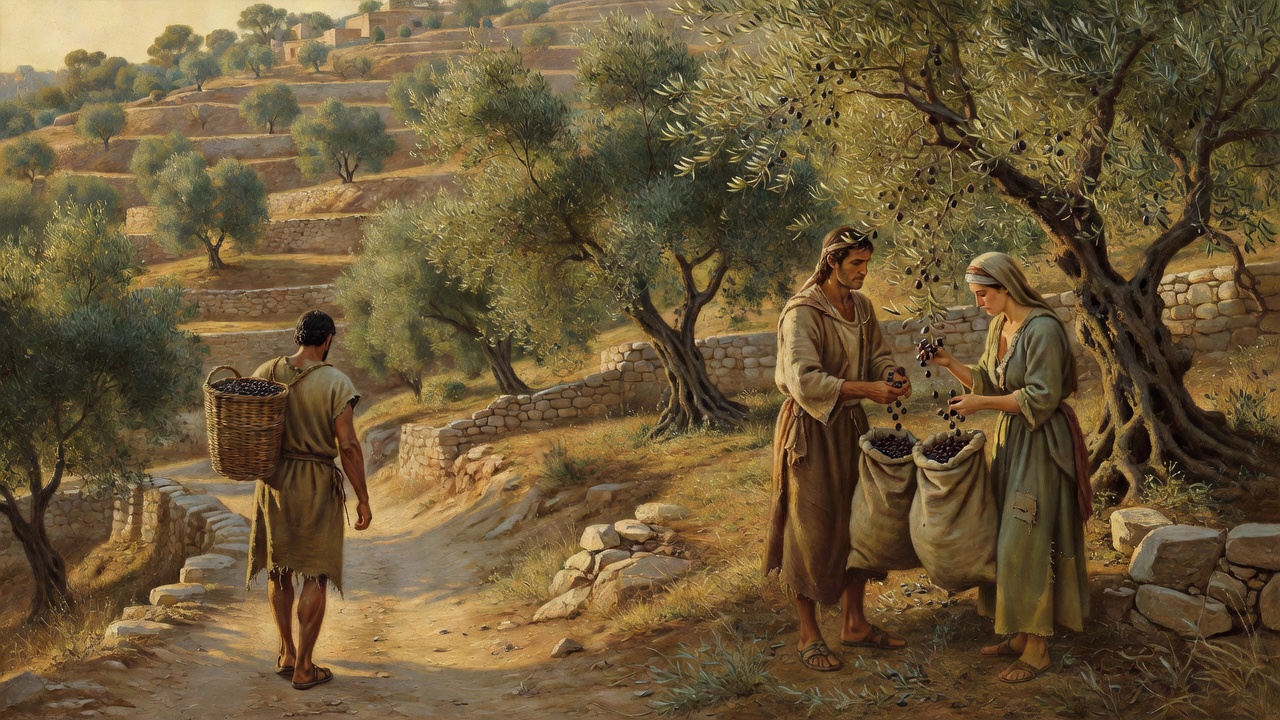
19Kɔ məntɛl abɔf ŋam məpəl acəkər ŋin dɔbɔf-ɛ, ta məluksərnɛ kəkɔlɛk ŋi. Acəkər ŋaŋɔkɔ ŋɔyɔnɛ ŋa wəcikəra, ŋa wan nwɛ akombəra ɔn ŋafi mɔ kɔ ŋa wəcəbokəra, ntɛ tɔŋsɔŋɛ MARIKI Kanu kam kəpoc'am pətɔt dəyɛbəc ya waca wam fəp mɔ. 20Kɔ məyikəc kəra ka olif-ɛ, ta məcɛpsɛ kəkɔpim yokom nyɛ yɔntɔtɛmpɛnɛ mɔ, məsak yi yɔyɔnɛ ya wəcikəra, ya wan nwɛ akombəra ɔn ŋafi mɔ kɔ ya wəcəbokəra. 21Kɔ məmpim yokom ya ŋgbɔŋkəlɔ yam-ɛ, ta məluksərnɛ kəkɔpim yin yin yɔkɔ məmpələs mɔ, yayɔkɔ yɔyɔnɛ ya wəcikəra, ya wan nwɛ akombəra ɔn ŋafi mɔ kɔ ya wəcəbokəra. 22Məde məcɛm-cɛmnɛ a mənayɔnɛ wəcar atɔf ŋa Misira, it'isom am kəcəmɛnɛ sariyɛ saŋsɛ darəŋ.»
Did you know?
Laws of Compassion, Justice, and Social Protection
- Israelite harvesting laws required landowners to leave behind forgotten sheaves of grain, leftover olives, and grape gleanings for vulnerable groups: the resident foreigner, the orphan, and the widow. This social welfare system was grounded in the collective memory that the Israelites had once been oppressed slaves in Egypt.Sources: the Bible text itself · Egypt
- Debtors and hired workers were protected by explicit legal limits. Creditors were forbidden from entering a debtor's house to seize a pledge, taking essential millstones that provided a household's daily bread, or keeping an impoverished person's sleeping cloak past sunset, and day laborers had to be paid before nightfall.Sources: the Bible text itself
- When giving instructions concerning infectious skin diseases and the guidance of Levitical priests, the text points back to the affliction of Miriam, the sister of Moses and Aaron, during the wilderness journey following the Exodus from Egypt.Sources: the Bible text itself · Miriam · Egypt
Notes written with AI assistance from open sources (Theographic Bible Metadata, CC BY-SA 4.0; Easton’s Bible Dictionary, public domain) and reviewed before publishing.
Places in this chapter
Only places identified with high confidence are shown (90% or more according to the scholarly sources compiled by OpenBible). Period map: DARE (Digital Atlas of the Roman Empire), CC BY 4.0; modern map: © OpenStreetMap contributors; places: OpenBible.info (CC BY 4.0).
Credits and license for this translation
Kitabu ka Kanu
Portions of the Holy Bible in the Baga Sitemu language of Guinea
Des portions de la Sainte Bible dans la langue Baga Sitemu de Guinée
copyright © 2015 Pioneer Bible Translators
Language: Baga Sitemu
Translation by: Traducteurs Pionniers de la Bible
Contributor: Pioneer Bible Translators
This translation is made available to you under the terms of the
Creative Commons Attribution Share-Alike license 4.0.
You have permission to share and redistribute this Bible translation in any format and to make reasonable revisions and adaptations of this translation, provided that:
You include the above copyright and source information.
If you make any changes to the text, you must indicate that you did so in a way that makes it clear that the original licensor is not necessarily endorsing your changes.
If you redistribute this text, you must distribute your contributions under the same license as the original.
Pictures included with Scriptures and other documents on this site are licensed just for use with those Scriptures and documents.
For other uses, please contact the respective copyright owners.
Note that in addition to the rules above, revising and adapting God's Word involves a great responsibility to be true to God's Word. See Revelation 22:18-19.
2025-04-29
Source: http://ebible.org/bsp/ · eBible.org