Acts 4
Kitabu ka Kanu · Tap a verse to see its cross-references.
Piyɛr kɔ Isaŋ fɔr ya aboc kiti aSuyif kiriŋ
1Piyɛr kɔ Isaŋ ŋanayi kəlok-lokər afum tɛm ntɛ aloŋnɛ a kəlɔ kəpɔŋ ka Kanu ŋanabɛrɛ kɔ wəbɛ ka asɔdar aŋɛ ŋancbum ki mɔ, kɔ aSadisi. 2Pənatɛlɛ ŋa ntɛ ŋanane Piyɛr kɔ Isaŋ ŋactəksɛ afum a fəp fəndefɔtɛ afi dacɔ pəmɔ ntɛ Yesu ɔfɔtɛ afi dacɔ mɔ. 3Kɔ ŋasumpər Piyɛr kɔ Isaŋ, kɔ ŋandəs ŋa pacbum ŋa dəbili haŋ dɔckɔsɔk, bawo pənabiyɛ. 4Afum alarəm alɔma aŋɛ ŋanane moloku maŋan mɔ, ŋanalaŋ, dɛlay daŋan dɛnabəp arkun wul kəcamət (5.000).
5Dɔckɔsɔk abɛ aŋan, abeki apɔŋ a dɔtɔf, kɔ atəksɛ a yecicəs ya Aŋnabi Musa ŋambəpsɛnɛ Yerusalɛm 6kɔ wəloŋnɛ wəpɔŋ Anas, kɔ Kayifa, Isaŋ, Alɛksandər, kɔ akɔ ŋanayɔnɛ aka kəbənda ka dokom da aloŋnɛ apɔŋ mɔ. 7Kɔ ŋancəmbər Piyɛr kɔ Isaŋ fɔr yaŋan kiriŋ kəyifət: «Fənɔntər fəre, kɔ tewe ta ana tɔ nəyɔnɛ tantɛ-ɛ?»
8Awa kɔ Amera Ŋecempi ŋa Kanu ŋɛlarɛ Piyɛr, kɔ ŋɔsɔŋɛ kɔ kəloku ŋa: «Abɛ a afum kɔ abeki a dɔtɔf: 9Ayifət su mɔkɔ teta pətɔt mpɛ ayɔnɛ wəlanyuru mɔ, kɔ ntɛ antaməs kɔ mɔ. 10Nəcərɛ ti belbel, fəp fonu kəbəp ka aYisrayel: Tewe ta Yesu Krist wəka Nasarɛt, wəkɔ nənacaŋ dətɔk yɛpəmpəl, akɔ Kanu kənasɔŋɛ kɔ kəfɔtɛ afi dacɔ mɔ, tewe tɔn tɔsɔŋɛ ntɛ fum wəkawɛ ɛncəmɛ nu dacɔ pətamnɛ mɔ. 11Nkɔn Yesu ‹ɔyɔnɛ togbu mpɛ nəna acəmbər kəlɔ nənafani mɔ, mba ɛnayɔnɛ togbu pɔtɔt pa dacɔ.› 12Nkɔn gbəcərəm ɛntam kəsɔŋ su kəfis. Kanu kənasɔŋ fɛ tewe tɔlɔma ta fum nnɔ doru dandɛ ntɛ pəmar payacnɛnɛ mɔ.»
13Ntɛ abeki aŋɛ ŋanəŋk Piyɛr kɔ Isaŋ ŋabəknɛ mɔ, kɔ pənciyanɛ ŋa, bawo ŋanacərɛ a afum gbəcərəm ŋanayi aŋɛ ŋanatɔtəkəs mɔ. Kɔ ŋanɛpəl ŋa dacɔ akɔ ŋanayi kɔ Yesu mɔ. 14Mba ntɛ abeki apɔŋ ŋancnəŋk fum nwɛ anataməs pəcəmɛ ŋa fɔr kiriŋ mɔ, ŋanayɔ fɛ toloku. 15Kɔ aboc kiti aSuyif ŋaloku Piyɛr kɔ Isaŋ kəwur ka dəkəlɔ ndɛ ancyifət ŋa mɔ, kɔ ŋamɛŋksɛnɛ taŋan, 16kɔ ŋayifɛnɛ: «Cəke c'andeyɔ afum akaŋɛ-ɛ? Bawo tɔsɔkər aka Yerusalɛm fəp a ŋa ŋasɔŋɛ kɔ tɛgbɛkərɛ ta Kanu tantɛ teyi. Afɔtam kəgbɛkəl ti. 17Mba, ntɛ aŋyɔ a ta tɛsam nnɔ afum ŋayi mɔ, pabeŋnɛ ŋa, pamɔnɛ ŋa kəclok-lokər nwɛ o nwɛ tewe tatɔkɔ.
18Kɔ ŋawe ŋa, kɔ ŋambeŋnɛ ŋa kətɔloku kɔ kətɔtəksɛ afum tewe ta Yesu. 19Piyɛr kɔ Isaŋ ŋayif ŋa: «Pəmar fɔr ya Kanu kiriŋ paleləs nəna patas Kanu Nkɔn ba? Nəna nəmɔmən ti belbel, 20bawo səna səfɔtam kəyi ta səloku tɔkɔ sənəŋk kɔ tɔkɔ səne mɔ-ɛ.»
21Kɔ aboc kiti ŋaŋgbɔkərɛ sɔ kəbeŋəsnɛ ŋa, kɔ ŋasak ŋa. Ŋanasɔtɔ fɛ tes ntɛ andeŋɛ ŋa a patɔrərsɛ ŋa ti mɔ bawo afum fəp ŋanckor-koru Kanu teta tɔkɔ tɛnacepər fɔr yaŋan kiriŋ mɔ. 22Fum nwɛ ɛnasɔtɔ tɛgbɛkərɛ ta kətaməs tatɔkɔ mɔ, ɛnatam kəsɔtɔ meren wəco maŋkəlɛ pəcepər.
Kətola ka alaŋ
23Ntɛ asak Piyɛr kɔ Isaŋ mɔ, kɔ ŋaŋkɔ ŋalɔmər afum aŋan tɔkɔ aloŋnɛ apɔŋ kɔ abeki a dɔtɔf ŋanaloku ŋa mɔ. 24Ntɛ ŋane moloku mamɛ mɔ, kətəŋnɛ disrɛ kɔ ŋampɛnɛ sim nnɔ Kanu kəyi mɔ, ŋacloku: «Wəbɛ, məna nwɛ məlompəs kɔm, antɔf, kəba kɔ ca yɔkɔ yeyi ki mɔ fəp, 25dəAmera Ŋecempi ŋɔ mənalokɛ kusu ka kas kosu Dawuda wəmarəs kam:
‹Akesɔŋɛ ntɛ mɛtɛlɛ mɔpɔŋ mencepərər afum a tɔf mɔ?
Akesɔŋɛ ntɛ afum ŋantəŋnɛ mes mmɛ mɔntɔdeləpsər mɔ?
26Abɛ a doru kɔrkɔr ŋalompəsnɛ teta kəyɛfərɛnɛ,
kɔ akiriŋ ŋaloŋkanɛ kɔ ŋantəŋnɛ pəlɛc
nnɔ Wəbɛ Kanu kɔ wəyɛk-yɛk kɔn ŋayi mɔ.›
27Bawo kance, Herodu kɔ Pɔŋse Pilat ŋantəŋnɛ pəlɛc dare dandɛ disrɛ atɔyɔnɛ aSuyif kɔ aYisrayel nnɔ wəmarəs kam wəcempi Yesu eyi mɔ, nwɛ mənayɛk-yɛk mɔ. 28Ŋanayɔ mes fəp mmɛ mənanuŋkɛnɛ kəwosɛ kəyɔ mɔ. 29Ndɛkəl oŋ, Wəbɛ, məgbɛkərɛ kəbeŋəsnɛ kəŋan, məsɔŋɛ acar am kəbəknɛ kəloku toloku tam kance disrɛ. 30Mətenci kəca ntɛ tɔsɔŋɛ kətaməs, mɛgbɛkərɛ, kɔ mes mɛwɛy-wɛy meyi tewe ta wəcar kam wəsoku Yesu.
31Ntɛ ŋalip kətola Kanu mɔ, kɔ kəfo kəŋkɔ ŋanaloŋkanɛ mɔ kəyikcɛ, kɔ Amera Ŋecempi ŋɔsɔŋɛ fəp faŋan kəloku toloku ta Kanu kəbəknɛ disrɛ.
Alaŋ Yesu ŋawosɛ kəyerɛnɛ daka daŋan
32Kənay nkɛ kənalaŋ mɔ, ŋasɔtɔ bəkəc yin yayi, kɔ ŋayɔnɛ sɔ akin ayi. Nwɛ o nwɛ oncloku fɛ a nkɔn sona ɔyɔ daka dɔn, mba a fəp faŋan fɔ ŋanapaŋnɛ di. 33Asom a Yesu ŋancloku tɔkɔ ŋananəŋk kəfɔtɛ ka Mariki Yesu afi dacɔ mɔ. Kɔ kəmar ka Kanu kəyi alaŋ fəp kəroŋ. 34Afum akaŋɛ dacɔ, nwɛ o nwɛ abəkəc ŋɛnalɛcɛ fɛ sɔ teta kətɔyɔ kɔn daka, bawo aŋɛ ŋanayɔ dalɛ, kɔ pəyɔnɛ fɛ ti wɔlɔ mɔ, ŋanacaməs yi. Kɔ ŋaŋkɛrɛ kəway ka ca yayɔkɔ, 35kɔ ŋambocər ki asom a Yesu dəntɔf. Kəway kaŋkɔ k'ancyer nwɛ o nwɛ kɔ tɔkɔ pəcuca peyi kɔ mɔ.
36Isifu wəka kor ka Lewy ɛnayi, nwɛ asom a Yesu ŋancwe Barnabas mɔ, itɔ tatɔkɔ kusu kəŋan «Wəcəpəs bəkəc.» Nde dare da Sipər anakom kɔ. 37Nkɔn ɛnacaməs antɔf nŋɛ ɛnayɔ mɔ, k'ɛŋkɛrɛ kəway kaŋkɔ fəp k'ender pəbocər ki asom a Yesu dəntɔf.
Did you know?
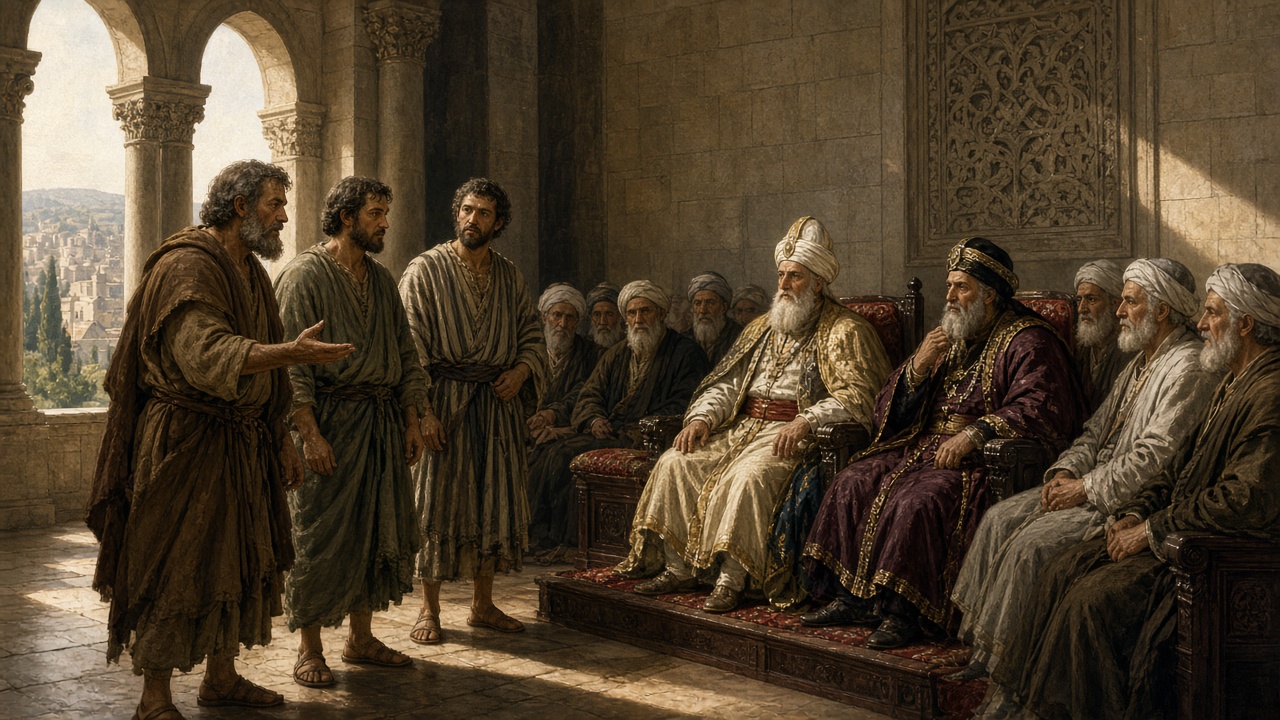
Peter and John before the Sanhedrin
- The priests, the captain of the temple guard, and the Sadducees seized Peter and John because they were teaching the people and proclaiming in Jesus the resurrection of the dead. Caiaphas, who sat with the assembly the next day, belonged to the Sadducees.Sources: the Bible text itself · Caiaphas
- Annas, called high priest here, had held that office from A.D. 7 to 14 until a Roman procurator deposed him. Caiaphas, who had married Annas's daughter, was raised to the office in A.D. 25; even so, some Jews may still have regarded Annas as the legal high priest, since Mosaic law treated the office as lifelong, and Annas was probably president or deputy of the Sanhedrin. John and Alexander, relatives of the high priest and otherwise unknown, sat with them.Sources: the Bible text itself · Annas · John (Relative of the High Priest) · Alexander (Son of Simon)
- Peter, a fisherman from Bethsaida, and John, also a fisherman and a son of Zebedee, were brought before the rulers, elders, and scribes. The council marveled at their boldness when it realized that they were unschooled, ordinary men, and took note that they had been with Jesus.Sources: the Bible text itself · Simon Peter · John the Apostle
Notes written with AI assistance from open sources (Theographic Bible Metadata, CC BY-SA 4.0; Easton’s Bible Dictionary, public domain) and reviewed before publishing.
Places in this chapter
- Jerusalem · 31.777, 35.234 · verses 5, 16
- Nazareth · 32.702, 35.298 · verse 10
- Cyprus · 35.000, 33.000 · verse 36
Only places identified with high confidence are shown (90% or more according to the scholarly sources compiled by OpenBible). Period map: DARE (Digital Atlas of the Roman Empire), CC BY 4.0; modern map: © OpenStreetMap contributors; places: OpenBible.info (CC BY 4.0).
Credits and license for this translation
Kitabu ka Kanu
Portions of the Holy Bible in the Baga Sitemu language of Guinea
Des portions de la Sainte Bible dans la langue Baga Sitemu de Guinée
copyright © 2015 Pioneer Bible Translators
Language: Baga Sitemu
Translation by: Traducteurs Pionniers de la Bible
Contributor: Pioneer Bible Translators
This translation is made available to you under the terms of the
Creative Commons Attribution Share-Alike license 4.0.
You have permission to share and redistribute this Bible translation in any format and to make reasonable revisions and adaptations of this translation, provided that:
You include the above copyright and source information.
If you make any changes to the text, you must indicate that you did so in a way that makes it clear that the original licensor is not necessarily endorsing your changes.
If you redistribute this text, you must distribute your contributions under the same license as the original.
Pictures included with Scriptures and other documents on this site are licensed just for use with those Scriptures and documents.
For other uses, please contact the respective copyright owners.
Note that in addition to the rules above, revising and adapting God's Word involves a great responsibility to be true to God's Word. See Revelation 22:18-19.
2025-04-29
Source: http://ebible.org/bsp/ · eBible.org