John 6
Bangwinji · Tap a verse to see its cross-references.
1bwiko dikeburoko, yeecu cu yabken dinge caji galili, wo coti caji tibariya 2nubo kila-kila bwang cinententi, wori cinto yirome wo ca mati dor nubowonuwa lumau. 3yeecu kwi ken bang la wi co yii kange, bibei tomange ceu. 4na weu yabkako, duklume yafudawa dadom. 5la kambo yeecu kungnuwe to nubo ducce bouti cineneri, la con yii filibu, ba ya fe na bo ten nubo buro nin cari na ci cam. 6la yeecu tok wo na co cuwa filibu, woricoki bwici con nyomom dike can matiyeu. 7filibu yii co carito naiyo kwini kob yobeu mani a lati bwen bidob, bidobri. 8win mor bibei tomangeceu, andarawu yii cimo bitru yii yeecu. 9bwe kange wi fo ki kuntulun cari to nung, na bikatece kange jinge yob. i an ye wo, nubo wo kila nyeu. 10yeecu toki, ki yi nubo a yii ken, la yerako ducce fiye co nin. la bayilobo yii ken, nubo bi kate nung, kila ciko. 11la yeecu tukuntulen cari ye do la kambo co nem buka kangeri, con ne nubo yirongume. con ma ti nyo ki jingeu, kambo ci cuitiyeu. 12kambo fuer nobero bwabangumeu, loco yi bi bei tomangeceu, ko mwerum buro wularangi kumeu na kange na lere. 13laci mwerum gwam la dim bulendo kwob cilom bo yob, ki wo wularange, mor kutulun cari ye to nungeu, wo kum nubo ca. 14la kambo nubo to dker nyuman karo wo la maneri la cin toki, bilenker wo co ni dukume a bou ti mor dorbitinereu. 15kambo yeecu nyumom cin dadom bouka na ci ta co kibi kwan na ci neken co liyau, la con cerum tak, kwi ken bang ki bici. 16la kambo meu domeri, bi bei tomange ceu yira rang ken caji. 17cin doken mor nabire mwengek, ci yabken kafarnam la kume fun fiya co yeecu boubo cinen. 18la yuwa kwam kwam ti cuici, la caji ti mwenlangi. 19kambo ci ya yambo na kang keneko kwini yob cilombo nung, kaka kwini ta'are di la cin to Yeecu yau dor mwenger caji bouti bi dom kange nabire mwengeu, la cin cuam tai. 20la con yi ci, “niri mo” kom cuare tai. 21la cin ciya ci yo co mor nabire mwengekro nin, ko co nabire mwengeu lam konge. 22celfini, nubo buro tirangum dinge caji wineu, tori kange nabire mwenge mani, wi, la kan co win, la Yeecu do bo mor kange bi beitomangeceu cu ki kwa ci 23la kangem nabire mwengem bo wi buro nyu tibeya, bi dom kange fiye nubo cam canyeu, bwiko teluwe nem bukakange keu. 24la kanbo nubo nyumom Yeecu kange bibei tomangeceu mani fiye ceu, ci ki bwici cin doranken nabiren mwengero buro cin cu kafanam doka Yeecu. 25kambo ci fiya co wi dinge cajiu, la cin yi co, “ni merangka” mwa bou fiyang fo? 26la Yeecu kar ci nen, bicom kom ki do mo, kebo yirome ka to, wori kon cam carito wo fuer kumero bwam. 27ko dob maka dotangek dor cani to wo kaya ti kaya, la ko ma dotange dor tiyero diiri yeu, la co wo bi bwe nii a ne kom tiye, wori tee kwaama kwa cinen ti kange dor cer. 28la cin yi co, yee, nya mati na nyo ma nangen kwaamare? 29la Yeecu kar ci nen, wuro co nangen kwamaro kom ciya ki wo co tomuweu. 30la cin yi co diker yirome ye mwa mati na nyo to na nyo ne bilenker ki mwe? 31ye mwa ma tiye? ten kuwa nib nyebo ca manna ki na wo ci kiyeu ne ci cari to yirau diiyeu cin cam. 32co la Yeecu yi ci, “bicom,” bicom” ma yi komti kebo muca ne kom carito co diiyeu, lan tee ne kom cori to wo bilenkero ce lo kwama. 33cari kwamaro co wo yirauti dii lo kwama, wuro ne dor bitinero dume tiyeu. 34la cin yi co nii merangka,” mwa ne nyo mwan cari to woti kir-kir. 35Yeecu yi ci, mo cari dumero, wuro bou mineneri mani a nuwa wurati, la wuro ne bilenker mineneri mani a nuwa dilomweti. 36la man yi kom, bi com kom tom ye, la ko ne bo bilenker, 37nii wo tee ne yereri an bou minen nii wo bou mineneri mani ma yuwa coti ki duwar. 38wo ma yirau bo dii nan ma cuika dor mirek, la dike nii wo tuomu yere, 39won co cuika nii tuomu yereu, kange a lemde wi win mor nubo ca neyere, la can kung ci diye kwenka liyar kwamak 40la won co cui ka tee miko, na wi wo to bwe tiyeu la ne bilenker kange ceu an fiya dume diiri yeu, la kun co ki dii ka kumenik. 41la yafudawa, to kanti ka fitike, dorcer, wori Yeecu toki co tiyo yirauti lo kwama. 42la ci ti toki wo kebo Yeecu bibwe yakubu we wo teece kange neece nyo nyumom ci ya? la ma nyi com ca tok ki ma yirau lo kwama? 43Yeecu karci nen, “ko dubom fiti keti to bwiti kom 44nii mani a bou ti minero, no tee wo tuomu yere cou cori, miu la na kunco kakuk kwen ka liyar kwamak. 45mulangum mulange mor bifumer nob dukumeb, toki, gwam ciye kwama an merang cinen. nii wo nuwa la merangeri, an bou fiye mi wiyeu, 46la kebo nubo gwam tom tee, lakan co wo wi tee nineu. co ca to tee. 47bicom, bicom no nii wo ne bilenkereri, wi ki dume diiriyeu. 48mou cari dumeu. 49tebkumebo cin ca manma mor kiye cin buyarangum 50la cari to wo wo yirau lo kwama, la nii wo ca more ceri la man ki bwiyaka. 51mo cari to ki dume wo yirau lo kwama, la nii ca cari to weri an fiya dume kwatti diiriyeu. cari to womane tiyeu bwimi wo cerka kaleko wo ce. 52la yafudawa mam funer bwitici, la cin yoten citi kwobkangi cin toki, la nii wo a nebo nangece nyi na bo wo. 53la Yeecu yi ci, bicom, bicom na mo wo nange bibwe nii fireri, namo nom bwiyale ceri, mani mwa fiya dumeti bwimwi. 54nii wom nangemiula nom bwiyale mi yeu wi ki dume diiri yeu, la man kung co, kakuk kwenka liyar kwama. 55wori nange miu co cari to ki bicomeu, la bwiyalemiu diker no karo bi comeu. 56nii wo wom nangemiu la nom bwiyalemiyeri a yii more mi mo mi more ce. 57kanbo tee ki dume tuom yereu, la kambo ma yimeu ma yii co teeu. la nii wo cam yereri, la can yii ker mir. 58wuro co cari to wo yirau lo kwama, kebo na tebbo ca la bwiyarangumeu, nii wo ca cari to weri an da diiri. 59la Yeecu tok dike buro kambo co merangti bi kurwabereu kafarnam. 60la bibei tomange ceu ducce wo nuwari, ki wo tokkako bwaibwaye, we a nuwa tiye? 61Yeecu lan nyimom ki bwici, kambo bi bei tomange ceu, ti funan bwiti ci yeri, la yi ci, wo yilam kayaka kekka? 62la ye no kanto bi bwe nii fire kwikenti fiye kwatti co wiyeu? 63la co yuwa tangbe ko ne dume tiye, bwiyo mani ma kange kero ma yirang komeu yuwa tangbe kwamak, kange dume, 64la kangem kumem bo wi wone bo bilenkereu, wori ki kaba Yeecu nyimom nubo ne bo bilenkerereu, kange wo a miye co tiyeu. 65con toki, co dike bwi ma yi kome, kange nii bou nin fiye ma wi, la tee nin 66bwiko nyeu, ducce mor bi bei tomange ceu yilam ki bwi, ci yatenbo yam kange co tak. 67la Yeecu yi wo kwob cilombo yobeu, kameu mani ka cu kume ti kenka, kebo nya? 68Bitru kar ci nen, “mo teluwe” nyo ki yang we nin? mo moki ker dumero diiriye. 69nyeu nyon ne bilenker, la nyon nyumom, mo nii wucak ke wo kwamaceu. 70Yeecu yi ci, kebo mo ma cok kome kwobcilombo yoba? win more kume bwekelkele? 71la co ki tok kerowo dor yafuda bi bwe cima ne kkaryoti, la co, win mor kwob cilombo yoben, nii wo a miye co tiye.
Did you know?
The Bread of Life
- In this chapter John calls the lake both the Sea of Galilee and the Sea of Tiberias. Easton's Bible Dictionary describes it as twelve and a half miles long and from four to seven and a half miles wide, with its surface 682 feet below the Mediterranean. Tiberias, on the western shore, is said to have been founded by Herod Antipas in A.D. 16 and named for the emperor Tiberius; some boats from that city landed near the place where the people had eaten the bread.Sources: the Bible text itself · Sea of Galilee · Tiberias
- That evening the disciples set out by boat for Capernaum, and the next day the crowd crossed and found Jesus there. He delivered the teaching about the bread of life in the synagogue at Capernaum. Easton's Bible Dictionary notes that the city, not mentioned in the Old Testament, became Jesus' own city after his expulsion from Nazareth and was the scene of many episodes in his ministry.Sources: the Bible text itself · Capernaum
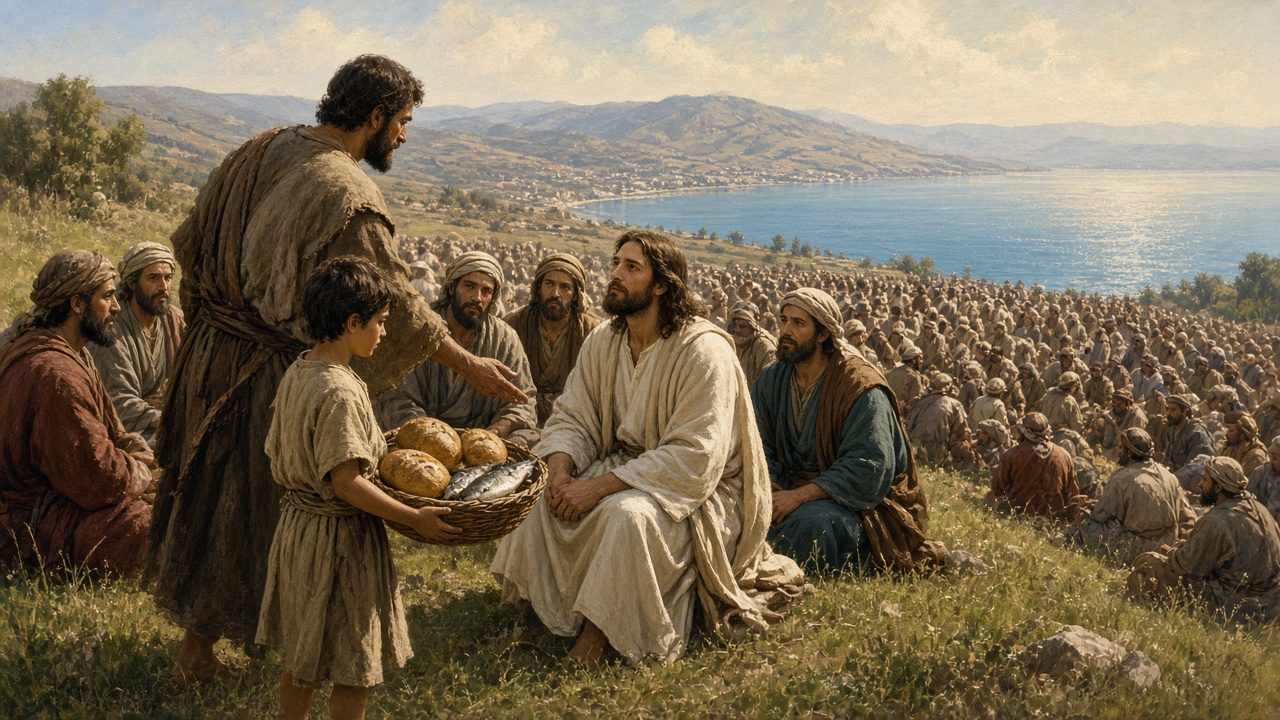
- As the crowd drew near, Jesus asked Philip where they could buy bread, a question the narrative says was meant to test him, for Jesus already knew what he would do. Philip, like Andrew and Peter, was from Bethsaida; he answered that two hundred denarii would not buy enough for each person to have a small piece. Andrew, Peter's brother, then pointed out a boy with five barley loaves and two small fish, and Easton's Bible Dictionary, citing this exchange among other passages, says Philip seems to have held a prominent place among the apostles.Sources: the Bible text itself · Phillip the Apostle · Andrew · Simon Peter
Notes written with AI assistance from open sources (Theographic Bible Metadata, CC BY-SA 4.0; Easton’s Bible Dictionary, public domain) and reviewed before publishing.
Places in this chapter
Only places identified with high confidence are shown (90% or more according to the scholarly sources compiled by OpenBible). Period map: DARE (Digital Atlas of the Roman Empire), CC BY 4.0; modern map: © OpenStreetMap contributors; places: OpenBible.info (CC BY 4.0).
Credits and license for this translation
Bangwinji
The New Testament in the Bangwinji language of Nigeria
copyright © 2020 Door43 Worldwide Mission Community
Language: Bangunji (Bangwinji)
Translation by: Door43 Worldwide Mission Community
Contributor: Bangunji, RUMTONG, Bangwinji, Kunini
This translation is made available to you under the terms of the
Creative Commons Attribution Share-Alike license 4.0.
You have permission to share and redistribute this Bible translation in any format and to make reasonable revisions and adaptations of this translation, provided that:
You include the above copyright and source information.
If you make any changes to the text, you must indicate that you did so in a way that makes it clear that the original licensor is not necessarily endorsing your changes.
If you redistribute this text, you must distribute your contributions under the same license as the original.
Pictures included with Scriptures and other documents on this site are licensed just for use with those Scriptures and documents.
For other uses, please contact the respective copyright owners.
Note that in addition to the rules above, revising and adapting God's Word involves a great responsibility to be true to God's Word. See Revelation 22:18-19.
2024-05-01
Source: http://ebible.org/bsj/ · eBible.org