Malachi 1
Luda yã takada kũ Bisã yão · Tap a verse to see its cross-references.
About this book
About Malachi
- Easton's Bible Dictionary (1897) presents Malachi, a name meaning "messenger" or "angel," as the last of the minor prophets and the writer of the last book of the Old Testament canon. Nothing is known of him beyond what is contained in his book of prophecies.Sources: Easton: Malachi · Malachi
- Some have supposed that the name is simply a title for a messenger of Jehovah, not a proper name. Easton's Bible Dictionary (1897) concludes, however, that there is reason to regard Malachi as the prophet's ordinary name.Sources: Easton: Malachi · Malachi
- Easton's Bible Dictionary (1897) dates the prophecies to about 420 B.C., after Nehemiah's second return from Persia, or possibly before that return. Because Ezra does not mention him and he does not mention the restoration of the temple, the dictionary infers that he prophesied after Haggai and Zechariah.Sources: Easton: Malachi
- Easton's Bible Dictionary (1897) treats Malachi as a contemporary of Nehemiah, comparing Malachi 2:8 with Nehemiah 13:15 and Malachi 2:10-16 with Nehemiah 13:23. It also notes that the temple services were still in existence, citing Malachi 1:10, 3:1 and 3:10.Sources: Easton: Malachi
Notes written with AI assistance from open sources (Theographic Bible Metadata, CC BY-SA 4.0; Easton’s Bible Dictionary, public domain) and reviewed before publishing.
Sa'ona yã
1Yã kũ Dikiri ò Isarailanↄnɛ Malaki gãin dí. 2Makũ Dikiri ma pì má yeái, akũ a pì ma yeái deramɛɛ? Makũ Dikiri ma pì Isau bi Yakubu vĩ̀ninloo? Bee kũ abireo Yakubun má yei 3ma gi Isaui, akũ ma a gusĩsĩde lì gugbagaraga ũ, ma a bùsuu kɛ̀ gbáranna gbɛ̃gbonnↄ kúki ũ. 4Ɛdↄmu gbɛ̃ pìnↄ pì ò ń wɛ̃tɛnↄ dúgu zↄ̃̀, oni ɛra ò ń bɛzĩnↄ futɛ. Akũ makũ Dikiri Zĩ̀karide ma pì: Tó ò kɛ̀kɛ ò kàtɛ, mani gboro, oni pińnɛ Bùsu Vãnidenↄ, gbɛ̃ kũ Dikiri pɛ̃tɛ̃ kɛ̀ kũńwo ari gↄrↄ sĩnda pínkinↄ! 5Á wɛ́ ni yã pì e à pi Dikiri zↄ̃kↄ̃ ari Isarailanↄ bùsu lɛ́ dire kpa.
6Nɛ́ dì a de kpe ta akũsↄ̃ zↄ̀blerii dì a dikiri kpe ta. Kũ má de á De ũ, átɛni ma kpe ta yá? Kũ má de á Dikiri ũ, á ma vĩna vĩ yá? Makũ Dikiri Zĩ̀karide makũ mɛ́ matɛni á la. Ákↄ̃nↄ sa'orinↄ ákↄ̃nↄ mɛ́ átɛni ma gya bo. Adì pi: Deran o n gya bòo? 7Kũ a ma teburu gya bò yãimɛ. Adì su ma gbagbakia kũ pↄ́ble gbãsĩo. Adì pi: Deran o n gbagbaki gbã̀a lɛ̀ɛ? 8Kũ a su sa oma kũ pↄ́ vĩ̀nanↄ, yã vãnin gweroo? Kũ a sa òma kũ pↄ́ ɛrɛnↄ kũ a gyãrenↄ, yã vãnin gweroo? À gɛ́ kpá bùsu gbɛ̃ zↄ̃kↄ̃ↄa à gwa! Á yã ni káagu yá? Ani á sáabu kpá yá? Makũ Dikiri Zĩ̀karide makũ mɛ́ matɛni á la.
9À kútɛ kɛmɛnɛ mà á wɛ̃nda gwa. Ama tó pↄ́ dí takanↄn kú á ↄĩ, mani sí yá? Makũ Dikiri Zĩ̀karide makũ mɛ́ matɛni á la. 10Ò pi á gbɛ̃ke gɛ̀ɛ à ma ↄn zɛ́ tàta yã, de òsun gɛ̃ ò tɛ́ ká ma gbagbakia pãro. Abirekũ sã̀na. Makũ Dikiri Zĩ̀karide makũ mɛ́ ma ò. Á yã tɛn kɛmɛnɛ nnaro, mani á gba síro. 11Zaa ifãboki kpa ari a lɛ́tɛ kpa ma tↄ́ nigↄ̃ zↄ̃kↄ̃ burinↄ tɛ́. Oni turaretiti kpátamɛnɛ oni sumɛnɛ kũ gba gbãsĩsarinↄ gu sĩnda pínkia, zaakũ ma tↄ́ nigↄ̃ zↄ̃kↄ̃ burinↄ tɛ́. Makũ Dikiri Zĩ̀karide makũ mɛ́ ma ò. 12Ama ákↄ̃nↄ adì dↄkɛ kũ ma tↄ́o adì pi ma teburuu gbãsĩ vĩ, akũ adì sa oa kũ pↄ́kãde ginanↄ. 13Makũ Dikiri Zĩ̀karide ma pì: Adì pi á kpasa kũ yã pìio, akũ adì lɛ́zuki kɛa. Tó a su ma gbagba kũ pↄ́ kↄ̃̀nↄkunanↄ kũ pↄ́ ɛrɛnↄ kũ pↄ́ gyãrenↄ, mani abirenↄ sí yá? Makũ Dikiri makũ mɛ́ matɛni á la. 14Manafikide kũ à pↄ́ sà vĩ a kpàsan kũ à lɛ́ sɛ̀mɛnɛ, akũ à gɛ̀ɛ à ma gbagba kũ pↄ́ mamberudeo a gɛ̃nɛ ũ, ma láari bò adea. Zaakũ makũmɛ Kína zↄ̃kↄ̃ ũ, ma tↄ́ dì burinↄ naasi kũ. Makũ Dikiri Zĩ̀karide makũ mɛ́ ma ò.
Did you know?
Honoring God and Defective Offerings
- The name Malachi means messenger or angel. While some have suggested it was a title rather than a proper name, scholars and traditions widely treat it as the prophet's personal name, placing his ministry during the period of Nehemiah, after Haggai and Zechariah.Sources: Malachi
- The opening dispute recalls the twin brothers Jacob and Esau, the ancestors of Israel and Edom. The text contrasts God's covenant love for Israel with the judgment and desolation coming upon the mountainous region of Edom.Sources: Esau (Edom) · Jacob (Israel) · Edom · the Bible text itself
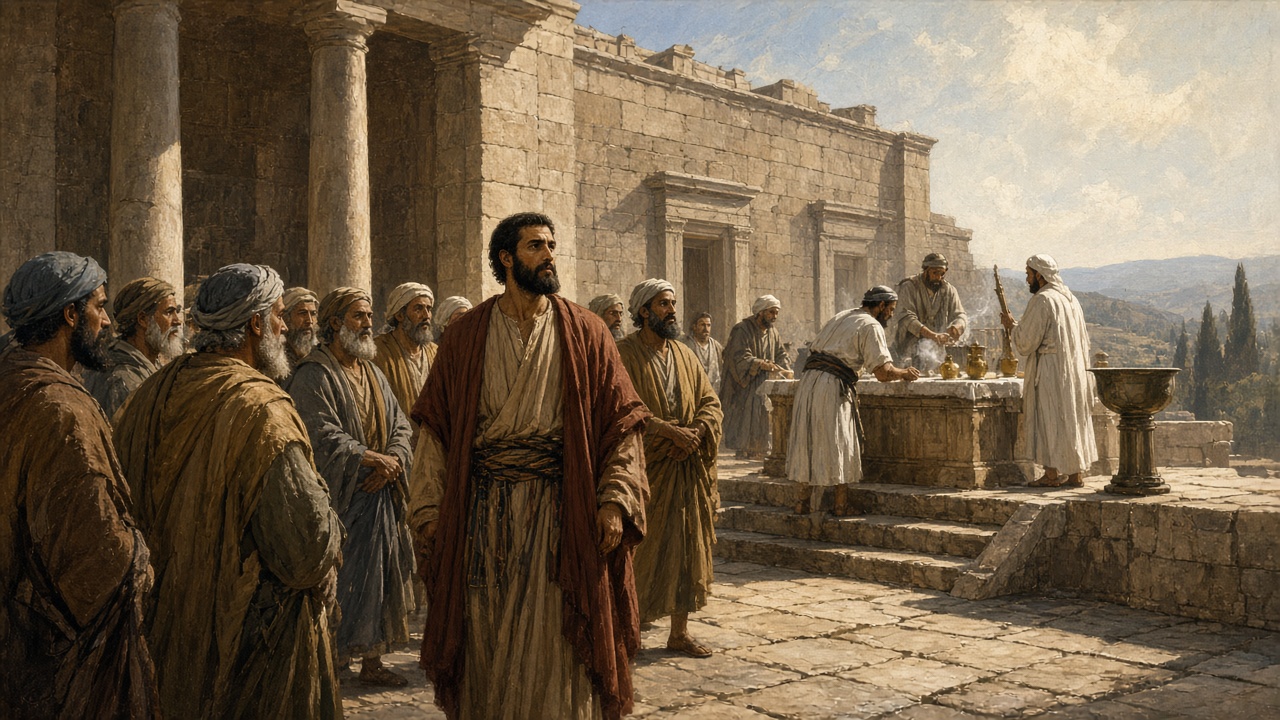
- The priests are rebuked for offering blind, lame, and diseased animals on the altar rather than unblemished livestock. Malachi exposes their disrespect by asking whether a civil governor would accept such inferior gifts.Sources: the Bible text itself
Notes written with AI assistance from open sources (Theographic Bible Metadata, CC BY-SA 4.0; Easton’s Bible Dictionary, public domain) and reviewed before publishing.
Places in this chapter
- Edom · 30.746, 35.604 · verse 4
Only places identified with high confidence are shown (90% or more according to the scholarly sources compiled by OpenBible). Period map: DARE (Digital Atlas of the Roman Empire), CC BY 4.0; modern map: © OpenStreetMap contributors; places: OpenBible.info (CC BY 4.0).
Credits and license for this translation
Luda yã takada kũ Bisã yão
Portions of the Holy Bible in the Busa language of Nigeria
copyright © 2005 SIM International
Language: Bisã (Busa)
Translation by: SIM
This translation text is made available to you under the
terms of the Creative Commons License: Attribution-Noncommercial-No Derivative Works.
( http://creativecommons.org/licenses/by-nc-nd/3.0/ )
In addition, you have permission to port the text to different file formats, as long as you
do not change any of the text or punctuation of the Bible.
You may share, copy, distribute, transmit, and extract portions
or quotations from this work, provided that you include the above copyright
information:
You must give Attribution to the work.
You do not sell this work for a profit.
You do not make any derivative works that change any of the actual words or punctuation of the Scriptures.
Permissions beyond the scope of this license may be
available if you contact
us with your request.
This translation is made available to you under the terms of the
Creative Commons Attribution-Noncommercial-No Derivatives license 4.0.
You may share and redistribute this Bible translation or extracts from it in any format, provided that:
You include the above copyright and source information.
You do not sell this work for a profit.
You do not change any of the words or punctuation of the Scriptures.
Pictures included with Scriptures and other documents on this site are licensed just for use with those Scriptures and documents.
For other uses, please contact the respective copyright owners.
2014-10-10
Source: http://ebible.org/bqp/ · eBible.org