Haggai 2
Luda yã takada kũ Bisã yão · Tap a verse to see its cross-references.
Sɑ̃ɑ yee kpɑɑ ten girimɑ
1Wɔ̃ɔn suru nɔɔbɑ yirusen sɔ̃ɔ yɛndɑ tiɑse sɔɔrɑ Yinni Gusunɔ u Asee sɔ̃ɔwɑ u nɛɛ, 2ɑ Sorobɑbɛli, Seɑlitiɛlin bii, Yudɑbɑn kpɑro, kɑ yɑ̃ku kowo tɔnwero Yosue, Yosɑdɑkin bii, kɑ sere Isireli be bɑ tie sɔ̃ɔwɔ ɑ nɛɛ, 3be, be bɑ tie sɔɔ, ben wɑrɑ u sɑ̃ɑ yee ten yellu yɛ̃ ten girimɑ gbiikɑɑ sɔɔ. Tɛ̃, ɑmɔnɑ bɑ tu wɑɑsinɛ. Nge mɛ tɑ sɑ̃ɑ mi, tɑ ǹ sɑ̃ɑre kɑm dirum ben nɔni sɔɔ? 4Yen sɔ̃ tɛ̃, nɛ, Gusunɔ wɔllu kɑ tem Yinni, nɑ nɛɛ, Sorobɑbɛli, kɑ Yosue, kɑ Isireli be bɑ tie, bu tii dɑm kɛ̃ɛyɔ, kpɑ bu sɔmburu ko. Domi nɑ wɑ̃ɑ kɑ be. 5Nge mɛ nɑ bu nɔɔ mwɛɛru kuɑ sɑnɑm mɛ nɑ bu yɑrɑmɑ Egibitin di, nge mɛyɑ nɑ mɑɑ bu sɔ̃ɔmɔ gisɔ mɑ nɛn Hunde wɑ̃ɑ kɑ be. Yen sɔ̃, bu ku bɛrum ko. 6Nɛ, Gusunɔ wɔllu kɑ tem Yinni, nɑ ǹ mɑɑ tɛɛmɔ n kɑ wɔllu kɑ tem kɑ nim wɔ̃ku sirɑ. 7Kon bwesenu kpuro sirɑ kpɑ n de bu nin dukiɑ geɑ kpuro gurɑmɑ bu kɑ nɑ nɛn sɑ̃ɑ yeru mini. Kpɑ n sɑ̃ɑ yee te girimɑ yibiɑ. Nɛ, Gusunɔ wɔllu kɑ tem Yinniwɑ nɑ yeni geruɑ. 8Nɛnɑ nɑ sii geesu kɑ wurɑ mɔ. 9Tɛ̃, dii ten girimɑ yɑ koo yellugiɑ kerɑ. Miyɑ kon tɔmbu bɔri yɛndu wɛ̃. Nɛ, Gusunɔ wɔllu kɑ tem Yinniwɑ nɑ yeni geruɑ.
Tɔn be bɑ ǹ dɛɛre
10Dɑrusin bɑndun wɔ̃ɔ yirusen suru nɔɔbɑ nnɛsen sɔ̃ɔ yɛndɑ nnɛse sɔɔrɑ Yinni Gusunɔ u kɑ win sɔmɔ Asee gɑri kuɑ u nɛɛ, 11ɑ yɑ̃ku kowobu woodɑn gɑri yini bikio ɑ nɛɛ, 12goo ù n yɑ̃ku yɑɑ bɔkuɑ win yɑberun kɑsɑɔ, mɑ win yɑbe kɑsɑ ye, yɑ pɛ̃ɛ bɑbɑ, ǹ kun mɛ kpee, ǹ kun mɛ tɑm, ǹ kun mɛ gum, ǹ kun mɛ dĩɑnu gɑnu, bɑ tɑmɑɑ dĩɑ ni, nu kuɑ Yinni Gusunɔginu?
Ye Asee u bu bikiɑ mɛ, yerɑ bɑ wisɑ bɑ nɛɛ, ɑɑwo!
13Mɑ Asee u mɑɑ bu bikiɑ u nɛɛ, goo ù n disi duurɑ yèn sɔ̃ u goru bɑbɑ, mɑ u seewɑ u mɑɑ dĩɑ ni bɑbɑ, dĩɑ nin tii nu kuɑ disiginu?
Mɑ yɑ̃ku kowo be, bɑ wisɑ bɑ nɛɛ, oo, dĩɑ nin tii nu disi duurɑwɑ mi.
14Yerɑ Asee u mɑɑ nɛɛ, ɑmɛniwɑ Yinni Gusunɔ u geruɑ u nɛɛ, nge mɛyɑ bɛɛ Isirelibɑ i sɑ̃ɑ win nɔni sɔɔ. Mɛyɑ mɑɑ bɛɛn nɔmɑn sɔmɑ yɑ sɑ̃ɑ. Ye i nùn wɛ̃ɛmɔ kpuro, yɑ disi mɔ.
I lɑɑkɑri koowo sɑɑ tɛ̃n di
15Ǹ n mɛn nɑ, i bwisikuo ye yɑ bɛɛ deemɑ n kɑ gisɔ girɑri i sere kpenu mɛnnɑ i kɑ sɑ̃ɑ yee te bɑni. 16Wee bɛɛn goo ù n seewɑ u ɑlikɑmɑn sɑkɑku yɛndu kɑsum dɑ birɑrɔ, mɑ u ye so, wɔkurɑ u rɑ wɑ. Ù n mɑɑ seewɑ u tɑm ditiri weerɑɑkuru kɑsum dɑ resɛm gɑmɑ yerɔ, ditiri yɛndɑ u rɑ wɑ. 17Nɛ, Gusunɔ nɑ bɛɛn sɔmburu kɑm koosiɑ. Nɑ derɑ guru kpenu bɛɛn dĩɑnu sɑnkɑ nu kɔ̃sɑ, nu bukusɑ duurɑ. Adɑmɑ kɑ mɛ, i ǹ wurɑmɛ nɛn mi. Nɛ, Yinni Gusunɔwɑ nɑ yeni geruɑ. 18Yen sɔ̃, i bwisikuo ye yɑ bɛɛ deemɑ n kɑ gisɔ girɑri sɑɑ mìn di bɑ kɑ sɑ̃ɑ yee ten kpɛɛkpɛɛku swĩi bɑ deri. Gisɔn tɔ̃ru tɑ sɑ̃ɑwɑ wɔ̃ɔn suru nɔɔbɑ nnɛsen sɔ̃ɔ yɛndɑ nnɛseru. I de i bwisiku. 19I mɑɑ dĩɑnu mɔ birɑnu sɔɔ? Bɛɛn gbeɑn dɑ̃ɑ binuginu mɑrɑ? Aɑwo, ɑdɑmɑ sɑɑ gisɔn di, kon bɛɛ durom kuɑ.
Nɔɔ mwɛɛ ni Yinni Gusunɔ
u Sorobɑbɛli kuɑ
20Yinni Gusunɔ u kpɑm kɑ Asee gɑri kuɑ nɔn mɛɛruse suru win sɔ̃ɔ yɛndɑ nnɛse te sɔɔ u nɛɛ, 21ɑ Sorobɑbɛli, Yudɑbɑn kpɑro sɔ̃ɔwɔ ɑ nɛɛ, nɛ, Yinni Gusunɔ kon wɔllu kɑ tem sirɑ. 22Kon sinɑmbu kpuron bɑndu fukɑ kpɑ n ben dɑm kpeesiɑ. Kon bɛɛn tɑbu kɛkɛ yi dumi gɑwe kɑ be bɑ duɑ yi sɔɔ fukiri kɑ sere mɑɑ dumi kɑ yin mɑɑsɔbu. Ben tii tiinɛwɑ bɑ koo goonɑ kɑ tɑkobibɑ. 23Yen tɔ̃ɔ te, kon nɛn sɔm kowo Sorobɑbɛli, Seɑlitiɛlin bii suɑ kpɑ n nùn ko nɛn yĩreru. Domi wiyɑ nɑ gɔsɑ. Nɛ, Gusunɔ wɔllu kɑ tem Yinniwɑ nɑ yeni geruɑ.
Did you know?
The Promise of Future Glory
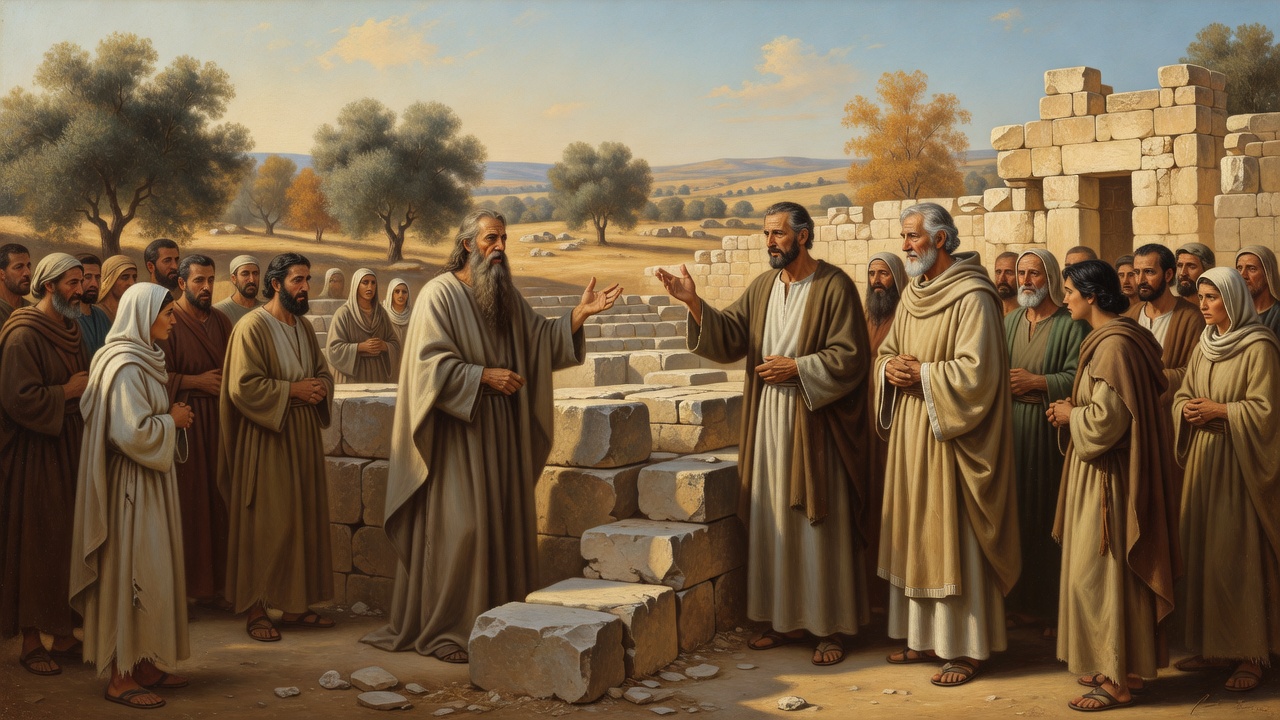
- When the foundation of the second temple was laid after the return from Babylon, older members of the community could still remember the magnificence of the original temple destroyed by Nebuchadnezzar. In response to their discouragement at the modest new structure, Haggai declared that the future glory of this house would surpass its former splendor.Sources: the Bible text itself · Zerubbabel · Haggai
- Haggai consulted the priests on questions of ritual law to illustrate a moral point. According to their rulings, holiness was not easily transmitted through indirect contact, whereas ceremonial defilement—such as from touching a corpse—spread immediately, mirroring how their past neglect had affected their offerings and harvests.Sources: the Bible text itself
- The restoration of the community was led by two key figures: Zerubbabel son of Shealtiel, who served as the civil governor, and Joshua son of Jehozadak, the high priest. At the end of the chapter, Haggai addresses Zerubbabel with the royal imagery of a signet ring, symbolizing divine authority and choice.Sources: the Bible text itself · Zerubbabel · Joshua
Notes written with AI assistance from open sources (Theographic Bible Metadata, CC BY-SA 4.0; Easton’s Bible Dictionary, public domain) and reviewed before publishing.
Places in this chapter
- Egypt · 30.129, 31.308 · verse 5
Only places identified with high confidence are shown (90% or more according to the scholarly sources compiled by OpenBible). Period map: DARE (Digital Atlas of the Roman Empire), CC BY 4.0; modern map: © OpenStreetMap contributors; places: OpenBible.info (CC BY 4.0).
Credits and license for this translation
Luda yã takada kũ Bisã yão
Portions of the Holy Bible in the Busa language of Nigeria
copyright © 2005 SIM International
Language: Bisã (Busa)
Translation by: SIM
This translation text is made available to you under the
terms of the Creative Commons License: Attribution-Noncommercial-No Derivative Works.
( http://creativecommons.org/licenses/by-nc-nd/3.0/ )
In addition, you have permission to port the text to different file formats, as long as you
do not change any of the text or punctuation of the Bible.
You may share, copy, distribute, transmit, and extract portions
or quotations from this work, provided that you include the above copyright
information:
You must give Attribution to the work.
You do not sell this work for a profit.
You do not make any derivative works that change any of the actual words or punctuation of the Scriptures.
Permissions beyond the scope of this license may be
available if you contact
us with your request.
This translation is made available to you under the terms of the
Creative Commons Attribution-Noncommercial-No Derivatives license 4.0.
You may share and redistribute this Bible translation or extracts from it in any format, provided that:
You include the above copyright and source information.
You do not sell this work for a profit.
You do not change any of the words or punctuation of the Scriptures.
Pictures included with Scriptures and other documents on this site are licensed just for use with those Scriptures and documents.
For other uses, please contact the respective copyright owners.
2014-10-10
Source: http://ebible.org/bqp/ · eBible.org