Genesis 29
Luda yã takada kũ Bisã yão · Tap a verse to see its cross-references.
Yakubu kana Labã bɛa
1Yakubu ɛ̀ra à dà zɛ́n à gɛ̀ɛ ifãbokikpadenↄ bùsun. 2Kũ à kà gwe, à lↄ̀gↄↄ è sɛ̃̀n sã kpàsa lɛu aakↄ̃ katɛna a sarɛ, zaakũ lↄ̀gↄↄ pì ín òdi kpáḿma. Gbɛ̀ zↄ̃kↄ̃ ta lↄ̀gↄↄ pìlɛ. 3Tó kpàsaa pìnↄ kàkara gwe pínki, akũ òdi gbɛ̀ɛ pì go lↄ̀gↄↄ pì lɛ́a, ò í kpáḿma, akũ òdi ɛra ò gbɛ̀ɛ pì tarɛ a gbɛ̀n. 4Akũ Yakubu sãdãrinↄ là à pì: Gbɛ̃nↄ, a bo mámɛɛ? Ò wèa ò pì: O bo Aranamɛ. 5Akũ à ń lá à pì: Á Nao daikore Labã dↄ̃ yá? Ò wèa ò pì: Ó a dↄ̃. 6Akũ à ń lá à pì: À aafia yá? Ò pì: À aafia. Ǹ a nɛ́ Rahila gwa, àtɛn su kũ sãnↄ zã̀ dire. 7Akũ Yakubu pì: Ifãntɛ̃ kpɛ́ gbãna, sãnↄ tágↄrↄ dí ká kↄ̀ro. À í kpáḿma à gɛ́ ń dã. 8Akũ ò pì: Óni fↄ̃ro. Tó adi kɛ sã kpàsanↄ kàkara pínki baasiro, òdi gbɛ̀ go lↄ̀gↄↄ pì lɛ́a ò í kpáḿmaro.
9Kũ àtɛn yã ońnɛ lɛ, Rahila sù kũ a de sãnↄ, zaakũ sãdãriimɛ a ũ. 10Kũ Yakubu a disɛ̃ Labã nɛ́nↄgbɛ̃ Rahila è kũ a de sãnↄ, à nà lↄ̀gↄↄi à gbɛ̀ɛ gò lↄ̀gↄↄ pì lɛ́a, akũ à í kpà a disɛ̃ sãnↄa. 11Akũ à lɛ́ pɛ̀ Rahilaa à pↄnna ↄ́ↄ dↄ̀. 12Akũ à ònɛ kũ a de danɛ Rɛbɛka nɛ́n a ũ. Akũ Rahila bàa lɛ̀ à gɛ̀ɛ à ò a denɛ. 13Kũ Labã a dãre nɛ́ Yakubu baaruu mà, à bàa lɛ̀ à gɛ̀ɛ daalɛ. Kũ à kà, akũ à kùsia à lɛ́ pɛ̀a à tà kãao a bɛa. Akũ Yakubu yã kũ ò kɛ̀nↄ ònɛ pínki. 14Akũ Labã pìnɛ: Ma arumɛ n ũ yãpura.
Yakubu Lea kũ Rahilao sɛnaa
Yakubu kɛ̀ Labã bɛa mↄ do, 15akũ Labã pìnɛ: Kũ ń de ma danɛ ũ yãin ĩni zĩ kɛmɛnɛ pã yá? Dera mani fĩna bonnɛ nà ǹ omɛnɛ. 16Labã sↄ̃ à nɛ́nↄgbɛ̃nↄ vĩ gbɛ̃nↄn pla. Yↄ̃ↄ tↄ́n Lea, Bãna sↄ̃ Rahila. 17Lea wɛ́ busana, Rahila sↄ̃ nↄkpare manamɛ, akũ a kakana mana. 18Yakubu ye Rahilai, akũ à pì Labãnɛ: Mani zĩ kɛnnɛ wɛ̃̀ suppla n nɛ́ bãnade Rahila yãi. 19Labã pì: À sã̀na mà a kpámma de mà a kpá gbɛ̃ pãndeala. Ǹgↄ̃ kú ma bɛa la.
20Akũ Yakubu zĩ kɛ̀nɛ wɛ̃̀ suppla Rahila yãi, ase à kɛ̀nɛ lán gↄrↄ pla bàmɛ kũ à yei yãi. 21Akũ à pì Labãnɛ: Kũ ma zĩgↄrↄ pàpa, ǹ ma nↄ kpáma mà sɛ́. 22Akũ Labã gwedenↄ kàkara ń pínki à nↄsɛpↄble kɛ̀ńnɛ. 23Kũ ↄkↄsi kɛ̀, akũ à a nɛ́ Lea sɛ̀ à kpàa, akũ Yakubu wùtɛ kãao. 24Labã a nↄgbɛ̃ zĩkɛri Zilipa kpà Leanɛ zĩkɛri ũ. 25Kũ gu dↄ̀ Yakubu è Leamɛ, akũ à pì Labãnɛ: Bↄ́yãi n kɛ̀mɛnɛ lɛɛ? Rahila yãin ma zĩ kɛ̀nnɛroo? Bↄ́ mɛ́ à tò n ma kɛkɛɛ? 26Labã pì: Ó kĩnaa òdi Bãna kpá gↄ̃a Yↄ̃ↄ ãro. 27Ǹ azuma do kɛ kũ gbɛ̃ dio gĩa, mani a gbɛ̃ndo kpámma zĩ kũ ĩni ɛra ǹ kɛmɛnɛ wɛ̃̀ suppla pãnde pↄ́ ũ. 28Yakubu wè à azuma do pìi kɛ̀ kũ Leao, akũ Labã a nɛ́ Rahila kpàa nↄ ũ. 29Labã a nↄgbɛ̃ zĩkɛri Bila kpà Rahilaa zĩkɛri ũ. 30Yakubu wùtɛ kũ Rahilao sↄ̃, akũ à yei de Leala. Akũ à ɛ̀ra à zĩ kɛ̀ Labãnɛ ari wɛ̃̀ suppla dↄ.
Yakubu nɛ́nↄ
31Dikiri è Yakubu ye Leairo, akũ à a kɛ̀ nɛ́rande ũ, Rahila sↄ̃ paramɛ. 32Lea nↄ̀ↄ sì à nɛ́ ì gↄ̃gbɛ̃ ũ, akũ à tↄ́ kpànɛ Rubɛni, zaakũ à pì: Dikiri ma warikɛnaa gwà. Ma zã nigↄ̃ yemai sà. 33Kũ à nↄ̀ↄ sì dↄ, à nɛ́ ì gↄ̃gbɛ̃ ũ, akũ à pì: Dikiri mà ma zã yemairo, akũ à ɛ̀ra à nɛ́ díkĩna kpàma dↄ. Akũ à tↄ́ kpànɛ Simɛↄ. 34Kũ à ɛ̀ra à nↄ̀ↄ sì dↄ, à nɛ́ ì gↄ̃gbɛ̃ ũ à pì: Adikĩna sà ma zã ni ma ditɛki ero, zaakũ ma nɛ́gↄ̃gbɛ̃ ì kãao mɛ̀n aakↄ̃. Akũ à tↄ́ kpànɛ Levi. 35À ɛ̀ra à nↄ̀ↄ sì dↄ à nɛ́ ì gↄ̃gbɛ̃ ũ à pì: Adikĩna sà ma Dikiri sáabu kpà, akũ à tↄ́ kpànɛ Yuda. Akũ a nɛ́'i zɛ̀.
Did you know?
Jacob’s Marriages in Haran
- Jacob fled to Haran, where his uncle Laban lived, in the land of the people of the east. The city, also called the city of Nahor and identified with Harran, stood on the Belik, a tributary of the Euphrates, about seventy miles above the Belik’s junction with that river, in Upper Mesopotamia. Laban was the son of Bethuel and the grandson of Nahor, Abraham’s brother; Laban’s sister Rebekah was Isaac’s wife.Sources: Haran · Laban · Nahor (brother of Abraham) · the Bible text itself
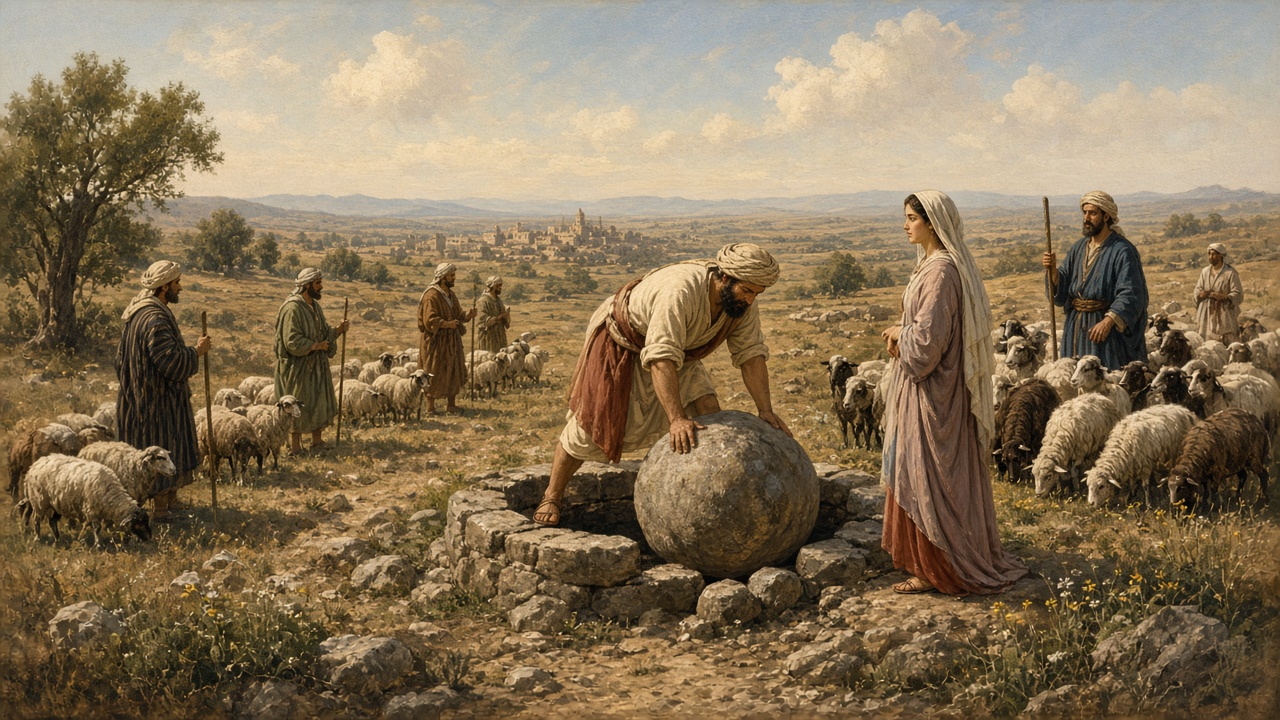
- The well was closed by a large stone that the shepherds rolled away only after all the flocks had gathered, then put back in place. Rachel, whose name is given as “ewe,” was a shepherdess bringing her father’s sheep, and Jacob, who had himself lived as a shepherd, moved the stone and watered his uncle’s flock.Sources: Rachel · Jacob (Israel) · the Bible text itself
- Leah, the elder sister, is called “weary,” and she is described as weak-eyed, or tender-eyed; Rachel, the younger, was shapely and beautiful. Jacob served seven years for Rachel, but at the evening feast Laban gave him Leah, saying it was not the custom there to give the younger daughter in marriage before the older, and then gave him Rachel for another seven years—fourteen in all. Leah’s first sons were Reuben, whose name is given as “Behold a son,” and then Simeon, Levi, and Judah; in naming them she spoke of the LORD seeing her affliction, hearing that she was unloved, her husband becoming attached to her, and her praise of the LORD.Sources: Leah · Rachel · Reuben · the Bible text itself
Notes written with AI assistance from open sources (Theographic Bible Metadata, CC BY-SA 4.0; Easton’s Bible Dictionary, public domain) and reviewed before publishing.
Places in this chapter
- East · Today: region around Amman · 31.955, 35.934 · verse 1
- Haran · Today: Harran · 36.864, 39.033 · verse 4
Only places identified with high confidence are shown (90% or more according to the scholarly sources compiled by OpenBible). Period map: DARE (Digital Atlas of the Roman Empire), CC BY 4.0; modern map: © OpenStreetMap contributors; places: OpenBible.info (CC BY 4.0).
Credits and license for this translation
Luda yã takada kũ Bisã yão
Portions of the Holy Bible in the Busa language of Nigeria
copyright © 2005 SIM International
Language: Bisã (Busa)
Translation by: SIM
This translation text is made available to you under the
terms of the Creative Commons License: Attribution-Noncommercial-No Derivative Works.
( http://creativecommons.org/licenses/by-nc-nd/3.0/ )
In addition, you have permission to port the text to different file formats, as long as you
do not change any of the text or punctuation of the Bible.
You may share, copy, distribute, transmit, and extract portions
or quotations from this work, provided that you include the above copyright
information:
You must give Attribution to the work.
You do not sell this work for a profit.
You do not make any derivative works that change any of the actual words or punctuation of the Scriptures.
Permissions beyond the scope of this license may be
available if you contact
us with your request.
This translation is made available to you under the terms of the
Creative Commons Attribution-Noncommercial-No Derivatives license 4.0.
You may share and redistribute this Bible translation or extracts from it in any format, provided that:
You include the above copyright and source information.
You do not sell this work for a profit.
You do not change any of the words or punctuation of the Scriptures.
Pictures included with Scriptures and other documents on this site are licensed just for use with those Scriptures and documents.
For other uses, please contact the respective copyright owners.
2014-10-10
Source: http://ebible.org/bqp/ · eBible.org