Genesis 25
Luda yã takada kũ Bisã yão · Tap a verse to see its cross-references.
Ibrahĩ ganaa
1Ibrahĩ nↄ pãnde sɛ̀ dↄ a tↄ́n Kɛtura. 2Nɛ́ kũ à ì kãaonↄ tↄ́n dí: Zimlã, Yↄkↄsã, Mɛdã, Midiã, Isibaki, Sua. 3Yↄkↄsã mɛ́ à Seba kũ Dedão ì. Dedã burinↄn Asirianↄ kũ Lɛtusinↄ kũ Lɛuminↄ ũ. 4Midiã nɛ́gↄ̃gbɛ̃nↄ tↄ́n dí: Efa, Ɛfa, Anↄku, Abida, Ɛlɛda. Ń pínki Kɛtura burinↄmɛ.
5Ibrahĩ a aruzɛkɛ kpà Isaakua pínki, 6akũ à gba dà a nↄ yìgisaride nɛ́nↄnɛ à ń gbárɛ ifãboki kpa de à kpɛ́ à ga, de òsungↄ̃ kú kũ Isaakuoro yãi.
7Ibrahĩ kɛ̀ wɛ̃̀ bakɛ̃ndo sↄↄro sari, 8akũ à gà. À zĩ kũ̀ yúkuyuku, gbasa à kà a gbɛ̃nↄla gyãwãn. 9A nɛ́nↄ Isaaku kũ Sumailao a vĩ̀ Makpɛla gbɛ̀wɛɛ gũn, Mamare ifãboki kpa, bura kũ à de Iti buri Zoa nɛ́ Ɛflↄnu pↄ́ ũ yã 10kũ Ibrahĩ pìi lù Itinↄa. Gwen ò a vĩ̀n kũ a nanↄ Sarao. 11Ibrahĩ ganaa gbɛra Luda arubarikaa dà a nɛ́ Isaakun. À vutɛna Ludabɛ̃nɛkũadima'e lↄ̀gↄↄ sarɛ.
Sumaila burinↄ
12Ibrahĩ nɛ́ Sumaila burinↄ yãn dí. Sara zĩkɛri Hazara, Misila nↄgbɛ̃ mɛ́ à nɛ́ pìi ì kãao. 13Sumaila nɛ́gↄ̃gbɛ̃nↄ tↄ́n dí lákũ ò ń í nà. A daudu tↄ́n Nɛbayo. A dakũnanↄ tↄ́n dí: Keda, Adabɛli, Mibisamu, 14Misima, Duma, Masa, 15Adada, Tema, Yetu, Nafisi kũ Kedemao. 16Sumaila nɛ́gↄ̃gbɛ̃nↄ tↄ́n gwe. Ń baadi a tↄ́ kpà a lakutu ke a bùraanɛ. Mↄ́kↄ̃nↄmɛ a buri kuri awɛɛplanↄ kínanↄ ũ.
17Sumaila kɛ̀ wɛ̃̀ basuddo akuri awɛɛsuppla, akũ à gà à kà a gbɛ̃nↄla gyãwãn. 18A burinↄ vùtɛ zaa Avila ari à gɛ̀ɛ pɛ́ Surua, Misila ifãboki kpa gɛna Asiria bùsu kpa. Òdi kↄ̃ tɛ́ kpákpa kũ Ibrahĩ buri kparanↄro.
Isau kũ Yakubuo inaa
19Ibrahĩ nɛ́ Isaaku burinↄ yãn dí. Ibrahĩ Isaaku ì. 20Kũ Isaaku kà wɛ̃̀ bupla, akũ à Labã dãre Rɛbɛka sɛ̀. Àkũmɛ Siria bùsu gbɛ̃ Bɛtuɛli kũ à bò Mɛsↄpↄtamia bùsun nɛ́ ũ. 21Isaaku wɛ́ kɛ̀ Dikiria a nanↄnɛ, zaakũ paramɛ, akũ Dikiri a adua sì, a nanↄ pìi nↄ̀ↄ sì. 22Sìkanↄ tɛn ↄsi ká a gbɛrɛn, akũ à pì: Bↄ́ yã mɛ́ à tò yã bire taka ma lee? Akũ à gɛ̀ɛ à Dikiri là. 23Dikiri pìnɛ:
Buri mɛ̀n pla kú n nɛ́'isↄn,
gbɛ̃nↄn pla kũ ò kú n gbɛrɛn pìnↄ ni kɛ̃kↄ̃a.
Buri mɛ̀n do gbãna nigↄ̃ de a dola,
a kũ à bò káaku nigↄ̃ nɛ́ ũ gbɛ̃ kpɛdenɛ.
24Kũ a nɛ́'igↄrↄ kà, akũ à sìkanↄ ì gↄ̃gbɛ̃nↄ ũ. 25Kũ gbɛ̃ káaku tɛn bo, à bò tɛ̃ɛ zónzon. À mɛ̀kã vĩ lán uta kãde bà, akũ ò tↄ́ kpànɛ Isau. 26Abire gbɛra kũ nɛ́ plade tɛn bo, à dↄ̀ Isau gbátokia, akũ ò tↄ́ kpànɛ Yakubu. Isaaku wɛ̃̀ baaakↄ̃de gũnn à nɛ́ pìnↄ ì.
27Nɛ́ pìnↄ zↄ̃kↄ̃ kũ̀. Isau kɛ̀ tofekari gbãna kũ àdi kɛ̃ sɛ̃̀ntɛaro ũ. Yakubu sↄ̃ bɛgwariimɛ. 28Isaaku ye Isaui kũ à nↄ̀bↄ lɛ́'i vĩ yãi. Rɛbɛka sↄ̃ à ye Yakubui.
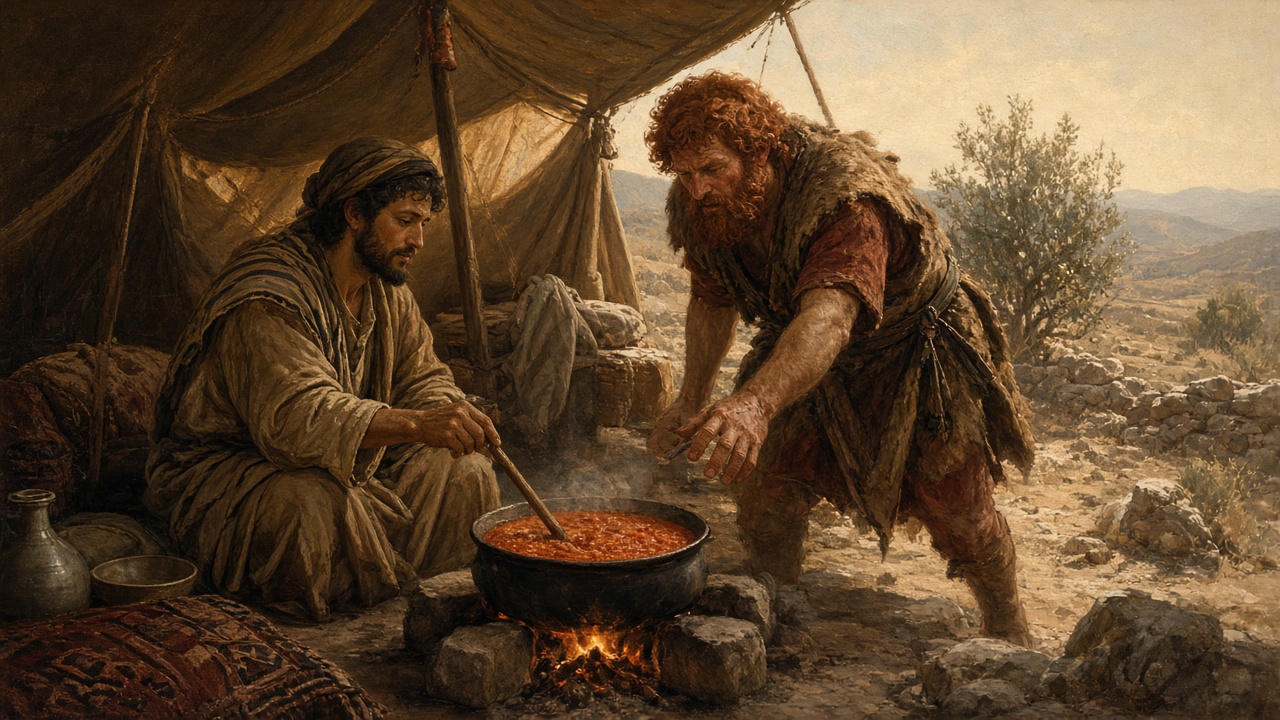
29Zĩkea Yakubu tɛn dòo kuku, akũ Isau sù kũ sɛ̃̀ntɛo nà tɛni a dɛ. 30Akũ à pì Yakubunɛ: N yã nna! Ǹ tó mà dò tɛ̃ra bire ble, zaakũ nà tɛni ma dɛmɛ. A yã mɛ́ à tò, ò tↄ́ kpà Isaunɛ Ɛdↄmu. 31Yakubu pì: Ǹ n daudukɛzɛ kpáma gĩa. 32Akũ Isau pì: Má kú ga lɛ́i, bↄ́n ma daudukɛzɛ ni kɛmɛnɛɛ? 33Akũ Yakubu pìnɛ: Ǹ la damɛnɛ gĩa. Akũ à la dànɛ à a daudukɛzɛ kpàa. 34Akũ Yakubu burodii kpàa kũ bládoo pìio. À blè à í mì, akũ à fùtɛ à bò. Lɛmɛ Isau kɛ̀ lɛ, à a daudukɛzɛ dìtɛ pã.
Did you know?
Abraham’s heirs and the twin brothers
- Keturah, whose name Easton's Bible Dictionary (1897) explains as “incense,” is introduced here as another wife of Abraham. That dictionary says he probably married her after Sarah’s death, though her nationality is unknown, and notes that 1 Chronicles calls her a concubine. She bore him six sons, including Jokshan and Midian, the father of the Midianites; while Abraham was still alive he gave gifts to the sons of his concubines and sent them away from Isaac to the land of the east.Sources: Keturah · Midian · the Bible text itself
- Isaac and Ishmael together buried Abraham in the cave of Machpelah near Mamre, in the field Abraham had bought from Ephron the Hittite, where Sarah already lay. Easton's Bible Dictionary (1897) explains Machpelah as “portion” or “double cave,” set on a hillside east of Hebron and facing Mamre, a place called the oaks—or, in a margin, the terebinths—of Mamre.Sources: Machpelah · Mamre · the Bible text itself
- Esau, Rebekah’s firstborn twin, was born red and covered with hair like a fur coat. Easton's Bible Dictionary (1897) links the further name Edom, “red,” to the red lentil stew for which he sold his birthright, and explains Jacob as “one who follows on another’s heels” or “supplanter,” matching the report that Jacob was born grasping Esau’s heel. Esau grew up as a skillful hunter and a man of the field, while Jacob was a quiet man who stayed at home.Sources: Esau (Edom) · Jacob (Israel) · the Bible text itself
Notes written with AI assistance from open sources (Theographic Bible Metadata, CC BY-SA 4.0; Easton’s Bible Dictionary, public domain) and reviewed before publishing.
Places in this chapter
- East · Today: region around Amman · 31.955, 35.934 · verse 6
- Machpelah · Today: Cave of the Patriarchs · 31.525, 35.111 · verse 9
- Negeb · 31.245, 34.841 · verse 11
- Assyria · 36.359, 43.153 · verse 18
- Egypt · 30.129, 31.308 · verse 18
Only places identified with high confidence are shown (90% or more according to the scholarly sources compiled by OpenBible). Period map: DARE (Digital Atlas of the Roman Empire), CC BY 4.0; modern map: © OpenStreetMap contributors; places: OpenBible.info (CC BY 4.0).
Credits and license for this translation
Luda yã takada kũ Bisã yão
Portions of the Holy Bible in the Busa language of Nigeria
copyright © 2005 SIM International
Language: Bisã (Busa)
Translation by: SIM
This translation text is made available to you under the
terms of the Creative Commons License: Attribution-Noncommercial-No Derivative Works.
( http://creativecommons.org/licenses/by-nc-nd/3.0/ )
In addition, you have permission to port the text to different file formats, as long as you
do not change any of the text or punctuation of the Bible.
You may share, copy, distribute, transmit, and extract portions
or quotations from this work, provided that you include the above copyright
information:
You must give Attribution to the work.
You do not sell this work for a profit.
You do not make any derivative works that change any of the actual words or punctuation of the Scriptures.
Permissions beyond the scope of this license may be
available if you contact
us with your request.
This translation is made available to you under the terms of the
Creative Commons Attribution-Noncommercial-No Derivatives license 4.0.
You may share and redistribute this Bible translation or extracts from it in any format, provided that:
You include the above copyright and source information.
You do not sell this work for a profit.
You do not change any of the words or punctuation of the Scriptures.
Pictures included with Scriptures and other documents on this site are licensed just for use with those Scriptures and documents.
For other uses, please contact the respective copyright owners.
2014-10-10
Source: http://ebible.org/bqp/ · eBible.org