Exodus 9
Luda yã takada kũ Bisã yão · Tap a verse to see its cross-references.
Pↄ́kãdenↄ gaganaa
1Dikiri pì Musanɛ: Ǹ gɛ́ ǹ Firi'auna le ǹ onɛ Dikiri Eberunↄ Luda pì, à ma gbɛ̃nↄ gbarɛ ò gɛ́ donyĩ kɛmɛnɛ. 2Tó à gì ń gbarɛi, tó à kpɛ́ ń kũna ari tera, 3mani ↄ tↄ̃ a pↄ́kãdenↄa a buran. Mani gagagyã pãsĩ ká a sↄ̃nↄn kũ a zaakinↄ kũ a lakuminↄ kũ a zùnↄ kũ a sãnↄ kũ a blènↄ. 4Mani Isaraila pↄ́kãdenↄ dↄ̃kↄ̃nɛ kũ Misilanↄ pↄ́nↄo. Isarailanↄ pↄ́kãdenↄ ke ni garo. 5Makũ Dikiri ma a gↄrↄ dìtɛ. Zian mani abire kɛ bùsun la.
6Kũ gu dↄ̀, akũ Dikiri kɛ̀ lɛ. Misilanↄ pↄ́kãdenↄ gàga pínki, ama Isarailanↄ pↄ́kãdenↄ ke dí garo. 7Firi'auna yã kũ à kɛ̀ pìi gbɛ̀ka, à mà Isarailanↄ pↄ́kãdenↄ ke dí garo, ama a sã kpɛ́ gbãna, à gì gbɛ̃ pìnↄ gbarɛi.
Bↄ̀bũnu kana Misilanↄgu
8Dikiri pì Musanɛ kũ Harunao: À tãmakpɛ túbu dã okũ dodo, Musa fã Firi'auna arɛ. 9Ani da Misila bùsula pínki lán lukutɛ̃ bà, ani kɛ bisãsirinↄnɛ kũ nↄ̀bↄnↄ bↄ̀bũnu ũ gu sĩnda pínkia. 10Akũ ò tãmakpɛ túbu sɛ̀tɛ ò gɛ̀ɛo Firi'auna kĩnaa. Kũ Musa túbu pìi fã̀ musu, akũ à kɛ̀ bisãsirinↄnɛ kũ nↄ̀bↄnↄ bↄ̀bũnu ũ. 11Ɛzɛdenↄ dí fↄ̃ ò gɛ̀ɛ Musa kĩnaaro bↄ̀bũnu pìnↄ yãi, zaakũ à dàńla kũ Misilanↄ ń pínki. 12Akũ Dikiri Firi'auna kùu kɛ̀ gbãna, lákũ à ò Musanɛ nà, akũ à gì ń yã mai.
Legũgbɛ manaa
13Dikiri pì Musanɛ: Ǹ futɛ kↄnkↄkↄnkↄ ǹ gɛ́ ǹ Firi'auna le, ǹ onɛ makũ Dikiri Eberunↄ Luda ma pì, à ma gbɛ̃nↄ gbarɛ ò gɛ́ donyĩ kɛmɛnɛ. 14Tera sà mani yã pãsĩ pínki daala kũ a ìbanↄ kũ a gbɛ̃nↄ, de àgↄ̃ dↄ̃ kũ andunia gũn pínki gbɛ̃ke de lán ma bàro. 15Zaakũ tó ma ↄ tↄ̃̀ḿma ma gagagyã kàńgu yã, de àkũ kũ a gbɛ̃nↄ làka andunia gũn. 16Ma a kà kpatan de mà a gbãna mↄnɛ, ò ma tↄ́ kpá andunia gũn pínki. 17Lákũ àtɛni a zĩda bi, à gì ma gbɛ̃nↄ gbarɛi ari tera, 18zia mandara'i mani tó legũgbɛ pãsĩ ma manamana, legũgbɛ kũ a taka buri dí ma Misila zikiro zaa lákũ ò a kàtɛ nà ari kũ a gbãrao. 19Ǹ onɛ à gbɛ̃nↄ zĩ ò a pↄ́kãdenↄ kũ pↄ́ kũ à vĩ buranↄ sɛ́tɛ ò káka kpɛ́n pínki. Bisãsirinↄ kũ pↄ́ kũ ò kú bàainↄ, tó òdi gɛ̃ kũńwo kpɛ́nlo, legũgbɛ ni maḿma oni gagamɛ.
20Firi'auna ìba kenↄ vĩna kɛ̀ Dikiri yãnɛ, ò ń zĩkɛrinↄ kũ ń pↄ́kãdenↄ kàka kpɛ́n. 21Ama gbɛ̃ kũ odi Dikiri yã daronↄ ń zĩkɛrinↄ kũ ń pↄ́kãdenↄ tò bàai. 22Akũ Dikiri pì Musanɛ: Ǹ ↄ sɛ́ musu, legũgbɛ ni ma bisãsirinↄ kũ pↄ́kãdenↄ kũ burapↄnↄa Misila bùsu gu sĩnda pínkia. 23Kũ Musa a gòo dↄ̀ musu, Dikiri tò legũ tɛn pũtã, àtɛn ma kũ gbɛ̀ɛo, àtɛn pí, akũ sura tɛn kipa zĩtɛ. Dikiri legũgbɛ kà Misilanↄgu. 24Legũgbɛ tɛn ma, legũ tɛn pí. Legũgbɛ pì pãsĩ. Zaa lákũ Misila bùsu kun nà, legũ dí taka buri dí ma zikiro. 25Legũgbɛɛ pì pↄ́ kũ ò kú bàai Misila bùsu gũnnↄ ásaru kɛ̀ pínki, bisãsirinↄ kũ pↄ́kãdenↄ kũ burapↄnↄ pínki. À sɛ̃̀ntɛ línↄ ɛ̀'ɛ pínki. 26Gosɛ̃ bùsu gu kũ Isarailanↄn kunn legũgbɛɛ pì dí kánlo ado.
27Firi'auna Musa kũ Harunao sìsi à pìńnɛ: Tera sà ma durunna kɛ̀. Dikiri yã mɛ́ à nna, makũ kũ ma gbɛ̃nↄ taaridenↄn ó ũ. 28À kútɛ kɛnɛ. Legũpũtãna kũ legũgbɛ díkĩnao mↄ̀ lɛ. Mani á gbarɛ sa, mani gíárɛ doro. 29Musa pìnɛ: Tó ma bo wɛ̃tɛ kpɛ, mani ma ↄnↄ sɛ́ lei gɛna Dikiri kĩnaa, legũpũtãna ni zɛ, legũgbɛ ni láka, de ǹgↄ̃ dↄ̃ kũ zĩtɛ bi Dikiri pↄ́mɛ. 30Ama má dↄ̃ kũ mↄkↄ̃n kũ n ìbanↄ, átɛn vĩna kɛ Dikiri Ludanɛro ari tera.
31Nagã kũ gbadoo yàka, zaakũ nagã gĩnakɛ à pìa, gbado mure bò. 32Ése kũ werao dí yakaro, kũ òdi ma kpɛkpɛ yãi. 33Musa bò Firi'auna kĩnaa à gɛ̀ɛ wɛ̃tɛ kpɛ, à a ↄnↄ sɛ̀ lei gɛna Dikiri kĩnaa, akũ legũpũtãna kũ legũgbɛɛo zɛ̀, legũ dí ma doro. 34Kũ Firi'auna è legũ kũ legũgbɛɛo kũ legũpũtãnaao zɛ̀, akũ à kpɛ́ àtɛn durunna kɛ, a sã kpɛ́ gbãna, àkũ kũ a ìbanↄ. 35A kù kpɛ́ gbãna à gì Isarailanↄ gbarɛi, lákũ Luda dà Musanɛ à ònɛ nà.
Did you know?
Livestock, Boils, and Hail
- This chapter draws a sharp line between Egypt and the Israelites: all the livestock of the Egyptians die, but not one animal belonging to the Israelites dies, and the hail falls on all the land of Egypt except Goshen, where the Israelites lived. Goshen, also called the land of Rameses, lay east of the Nile and apparently not far from the royal residence, and it had been assigned to Jacob’s family as the best of the land.Sources: the Bible text itself · Goshen · Moses
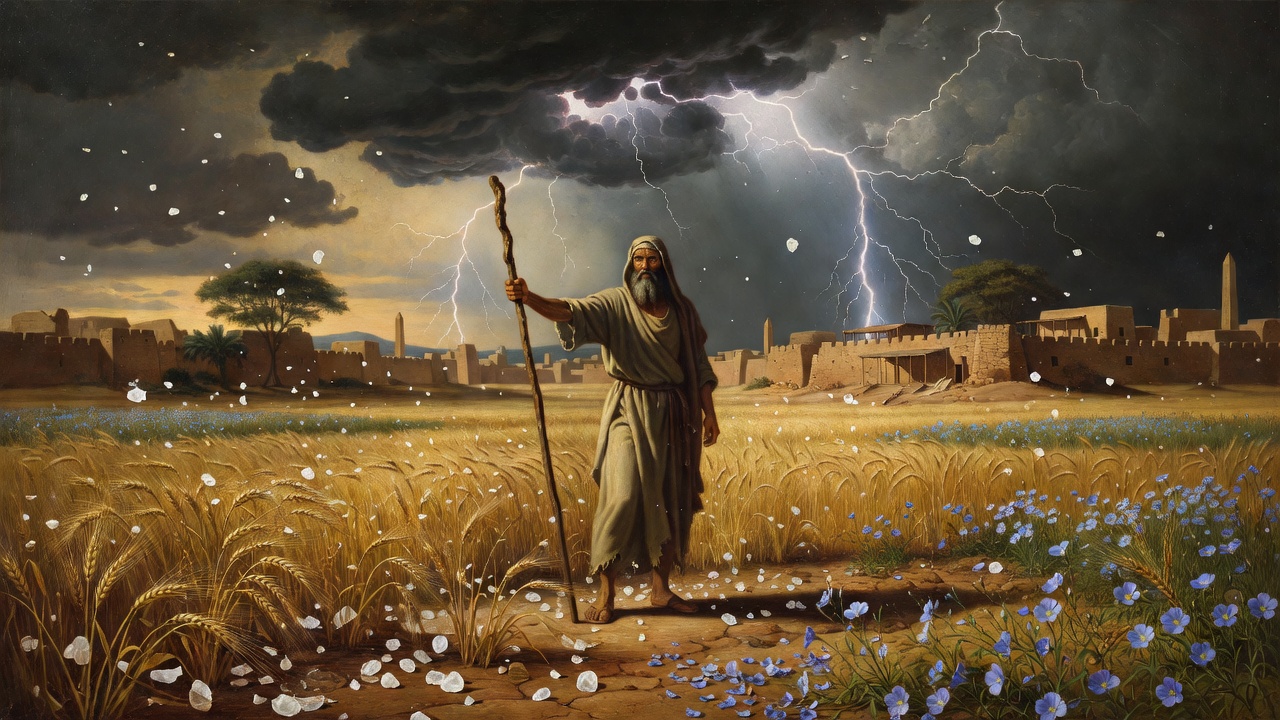
- The Pharaoh whom Moses and Aaron confront is not named in the chapter. Easton's Bible Dictionary (1897) identifies him as probably Menephtah I, a son of Rameses II, who lived at Zoan, where his interviews with Moses and Aaron took place, and notes that some instead favor Seti II. After the hail, Moses leaves the city and spreads out his hands to the LORD until the thunder and hail cease.Sources: the Bible text itself · Pharaoh (of the Exodus)
- The hail destroyed the flax and the barley, but not the wheat and the spelt. The narrative explains the difference: the barley was already ripe and the flax was in bloom, while the wheat and spelt were late crops.Sources: the Bible text itself
Notes written with AI assistance from open sources (Theographic Bible Metadata, CC BY-SA 4.0; Easton’s Bible Dictionary, public domain) and reviewed before publishing.
Places in this chapter
- Egypt · 30.129, 31.308 · verses 4, 6, 9, 18, 22, 23, 24, 25
- Goshen · Today: Goshen 1 · 30.799, 31.834 · verse 26
Only places identified with high confidence are shown (90% or more according to the scholarly sources compiled by OpenBible). Period map: DARE (Digital Atlas of the Roman Empire), CC BY 4.0; modern map: © OpenStreetMap contributors; places: OpenBible.info (CC BY 4.0).
Credits and license for this translation
Luda yã takada kũ Bisã yão
Portions of the Holy Bible in the Busa language of Nigeria
copyright © 2005 SIM International
Language: Bisã (Busa)
Translation by: SIM
This translation text is made available to you under the
terms of the Creative Commons License: Attribution-Noncommercial-No Derivative Works.
( http://creativecommons.org/licenses/by-nc-nd/3.0/ )
In addition, you have permission to port the text to different file formats, as long as you
do not change any of the text or punctuation of the Bible.
You may share, copy, distribute, transmit, and extract portions
or quotations from this work, provided that you include the above copyright
information:
You must give Attribution to the work.
You do not sell this work for a profit.
You do not make any derivative works that change any of the actual words or punctuation of the Scriptures.
Permissions beyond the scope of this license may be
available if you contact
us with your request.
This translation is made available to you under the terms of the
Creative Commons Attribution-Noncommercial-No Derivatives license 4.0.
You may share and redistribute this Bible translation or extracts from it in any format, provided that:
You include the above copyright and source information.
You do not sell this work for a profit.
You do not change any of the words or punctuation of the Scriptures.
Pictures included with Scriptures and other documents on this site are licensed just for use with those Scriptures and documents.
For other uses, please contact the respective copyright owners.
2014-10-10
Source: http://ebible.org/bqp/ · eBible.org