Exodus 15
Luda yã takada kũ Bisã yão · Tap a verse to see its cross-references.
Isarailanↄ lɛ̀ɛ
1Akũ Musa kũ Isarailanↄ ń pínki lɛ̀ dí sì Dikirinɛ ò pì:
Mani lɛ̀ sí Dikirinɛ, zaakũ a tↄ́ bona,
à sↄ̃denↄ kũ ń sↄ̃nↄ kà ísiran.
2Dikiri mɛ́ à ma gbãna ũ, mani a táaki lɛ́,
àkũ mɛ́ à ma sura bà.
Àkũmɛ ma Luda ũ, mani a tↄ́ kpá.
Àkũmɛ ma de Luda ũ, mani a tↄ́ sɛ́ lei.
3Dikiri bi zĩ̀kariimɛ, a tↄ́n Dikiri.
4À Firi'auna sↄ̃gonↄ kũ a zĩ̀karinↄ kà ísiran,
à zĩ̀kari gbɛ̃ zↄ̃kↄ̃nↄ vlɛ̃̀ Isira Tɛ̃ran.
5Í lòkotoo pìi dàńla,
ò kpàtɛ zĩtɛ lán gbɛ̀ɛ bà.
6Dikiri, n ↄplan gbãna kun kũ zↄ̃kↄ̃kɛo,
Dikiri, n n ibɛrɛnↄ kàkatɛ kũ n ↄplao.
7N n zãngurinↄ nɛ̀ n gakuri zↄ̃kↄ̃ↄ gũn,
n pↄ fɛ̃̀ n ń nátɛ lán sɛ̃̀ɛ bà.
8N pↄ́ bò n yĩn, akũ í zↄ̃̀kↄ̃rɛ,
à gↄ̃̀ zɛna lán bĩni bà,
ísira ì ari a guragura.
9Ó ibɛrɛ pìnↄ pì,
oni pɛ́tɛwái ò ó lemɛ,
oni ó pↄ́nↄ sɛ́tɛ lákũ ò yei nà,
oni ń fɛ̃nɛdanↄ bo ò ó dɛdɛo.
10N n lɛ́'ĩa vù, akũ ísira dàńla,
ò kpàtɛ lán darumaa bà í zↄ̃kↄ̃ↄ pìn.
11Dikiri, tãnanↄ tɛ́ a kpate mɛ́ à de lán n bàa?
Dín oni lɛkↄ̃a kũnwoo?
Yãbonsarɛkɛri, n zↄ̃kↄ̃kɛ adona,
n gakuri naasi vĩ.
12N n ↄpla pòro, akũ zĩtɛ ń mↄ́mↄ.
13Ókↄ̃nↄ kũ n ó bó zↄ̀blennↄ
ĩni dowɛrɛ arɛ n gbɛ̃kɛ gũn,
ĩni gɛ́ kũoo n bùsun kũ n gbãnao.
14Tó burinↄ mà, oni lukaluka,
í wãna ni ká Filisitini bùsudenↄ pↄa.
15Ɛdↄmunↄ kínanↄ ni vĩna kɛ,
swɛ̃̀ ni kɛ̃ Mↄabu don'arɛdenↄn,
Kanaanↄ bùsudenↄ mɛ̀ ni yↄ́ ń pínki.
16Vĩna zↄ̃kↄ̃ ni ń kũ, swɛ̃̀ ni kɛ̃ńgu,
oni gↄ̃ kítikiti lán gbɛ̀ɛ bà
n gbãna zↄ̃kↄ̃ yãi Dikiri,
ari ókↄ̃nↄ kũ n ó sɛ́ n pↄ́ ũnↄ ni gɛ̃tɛ.
17Dikiri, ĩni gɛ́ kũoo kpi kũ n sɛ̀ n pↄ́ ũ kĩnaa,
ĩni ó zĩni pɛ́tɛ gu kũ n dìtɛ n vutɛki ũn,
n kúki kũ n kɛ̀kɛ n zĩdanɛɛ pìi.
18Dikiri nigↄ̃ kí ble gↄrↄ sĩnda pínkimɛ.
19Kũ Firi'auna sↄ̃nↄ kũ a sↄ̃gonↄ kũ a sↄ̃denↄ gɛ̃̀ ísira gũn, akũ Dikiri sù kũ ío à dàńla, ama Isarailanↄ táa ò gukoria ísira pìi gũn. 20Akũ annabi Miriamu, Haruna dãre, a sɛ̃̀gɛ̃ɛ sɛ̀, akũ nↄgbɛ̃nↄ bò ò tɛ́i ń pínki, òtɛn sɛ̃̀gɛ̃ pá òtɛn ũ wã. 21Miriamu lɛ̀ɛ sìńnɛ à pì:
À lɛ̀ sí Dikirinɛ, zaakũ a tↄ́ bona,
à sↄ̃denↄ kũ ń sↄ̃nↄ kà ísiran.
Í kyã̀kyãa
22Musa dà zɛ́n kũ Isarailanↄ, ò kɛ̃̀kↄ̃a kũ Isira Tɛ̃rao ò gɛ̃̀ Suru gbárannan. Ò táa ò gↄrↄ aakↄ̃ gbáranna pìn odi í ero. 23Kũ ò kà gu kũ òdi pi Mara, odi fↄ̃ ò a í mìro kũ à kɛ̀ kyã̀kyã yãi. A yã mɛ́ à tò ò tↄ́ kpà gu pìinɛ Mara. 24Akũ gbɛ̃nↄ zuka kà Musai ò pì: Bↄ́n óni mii? 25Musa wiki lɛ̀ Dikiria, akũ Dikiri lí mↄ̀nɛ. Kũ Musa lí pìi zù ín, akũ í pìi kɛ̀ nna. Gwen Dikiri yã dìtɛńnɛ kũ dokao à ń yↄ̃ à ń gwá 26à pì: Tó a laakarii dↄ̀ makũ Dikiri á Luda yãa átɛn yã kũ má yei kɛ, tó a yã kũ ma dìtɛnↄ mà, akũ á ma dokanↄ kũna pínki, mani gyã kũ ma kà Misilanↄn ke kááguro, zaakũ makũmɛ Dikiri kũ àdi á gba aafia ũ. 27Abire gbɛra ò kà Ɛlimu, gu kũ ísɛ̃boki mɛ̀n kuri awɛɛplanↄn kun kũ domina lí mɛ̀n baaakↄ̃ akurinↄo. Akũ ò bùraa kàtɛ í pìi sarɛ gwe.
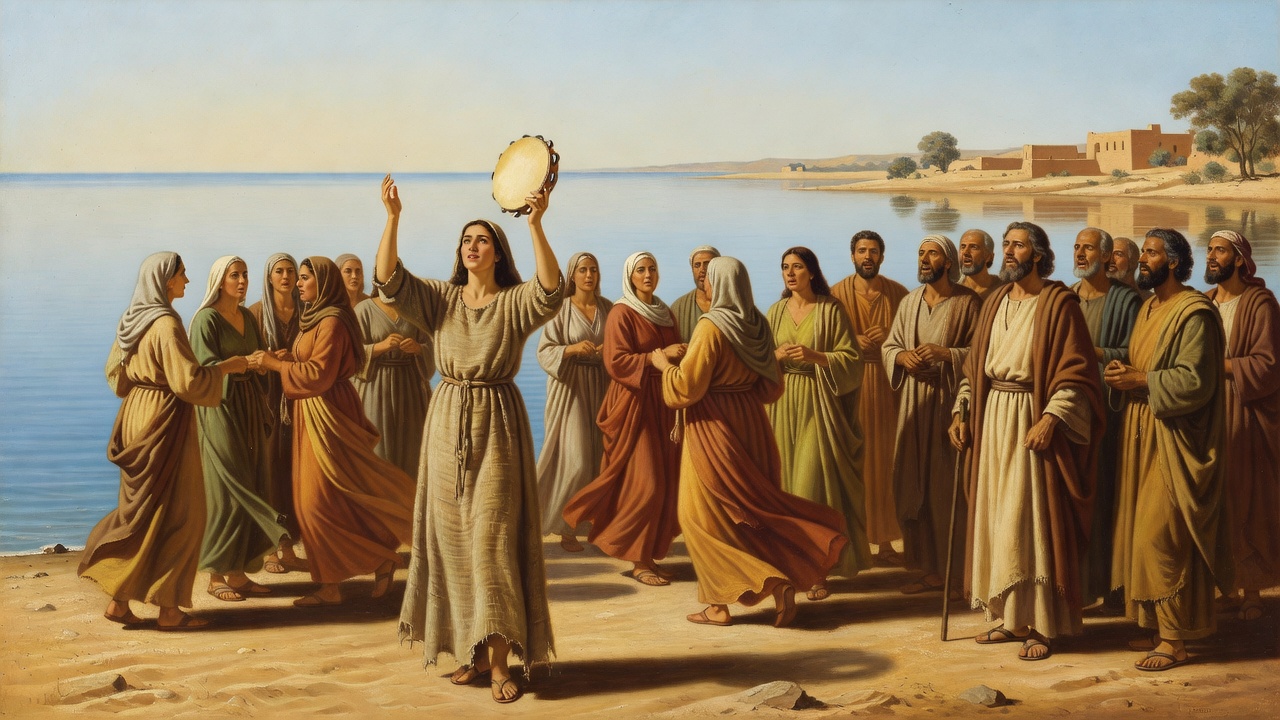
Did you know?
The Song at the Red Sea
- Miriam, sister of Moses and Aaron, is called a prophetess in this chapter. She took the lead in the song of triumph after Israel passed through the Red Sea, and the women followed her with tambourines and dancing.Sources: Miriam · the Bible text itself
- From the Red Sea, Moses led Israel into the Desert of Shur, a wilderness on Egypt’s northeastern border extending toward Philistia. The name, meaning a wall, was probably taken from Egyptian fortifications, running from Pelusium to Heliopolis, built to defend that frontier from desert tribes. For three days they walked without finding water, and at Marah the water was bitter, which is why the place was so named.Sources: Shur · the Bible text itself
- The song says that anguish will grip Philistia, the land of the Philistines; that the chiefs of Edom, a rugged mountain land on the east side of the Arabah, from the head of the Gulf of Akabah to the foot of the Dead Sea, will be dismayed; and that trembling will seize the leaders of Moab, east of the Jordan and the Dead Sea and south of the Arnon. It also says that those who dwell in Canaan will melt away.Sources: the Bible text itself · Philistia · Edom · Moab
Notes written with AI assistance from open sources (Theographic Bible Metadata, CC BY-SA 4.0; Easton’s Bible Dictionary, public domain) and reviewed before publishing.
Places in this chapter
- Philistia · 31.664, 34.546 · verse 14
- Canaan · 32.767, 35.333 · verse 15
- Edom · 30.746, 35.604 · verse 15
- Moab · Today: Moab 1 · 31.181, 35.701 · verse 15
- Egypt · 30.129, 31.308 · verse 26
Only places identified with high confidence are shown (90% or more according to the scholarly sources compiled by OpenBible). Period map: DARE (Digital Atlas of the Roman Empire), CC BY 4.0; modern map: © OpenStreetMap contributors; places: OpenBible.info (CC BY 4.0).
Credits and license for this translation
Luda yã takada kũ Bisã yão
Portions of the Holy Bible in the Busa language of Nigeria
copyright © 2005 SIM International
Language: Bisã (Busa)
Translation by: SIM
This translation text is made available to you under the
terms of the Creative Commons License: Attribution-Noncommercial-No Derivative Works.
( http://creativecommons.org/licenses/by-nc-nd/3.0/ )
In addition, you have permission to port the text to different file formats, as long as you
do not change any of the text or punctuation of the Bible.
You may share, copy, distribute, transmit, and extract portions
or quotations from this work, provided that you include the above copyright
information:
You must give Attribution to the work.
You do not sell this work for a profit.
You do not make any derivative works that change any of the actual words or punctuation of the Scriptures.
Permissions beyond the scope of this license may be
available if you contact
us with your request.
This translation is made available to you under the terms of the
Creative Commons Attribution-Noncommercial-No Derivatives license 4.0.
You may share and redistribute this Bible translation or extracts from it in any format, provided that:
You include the above copyright and source information.
You do not sell this work for a profit.
You do not change any of the words or punctuation of the Scriptures.
Pictures included with Scriptures and other documents on this site are licensed just for use with those Scriptures and documents.
For other uses, please contact the respective copyright owners.
2014-10-10
Source: http://ebible.org/bqp/ · eBible.org